

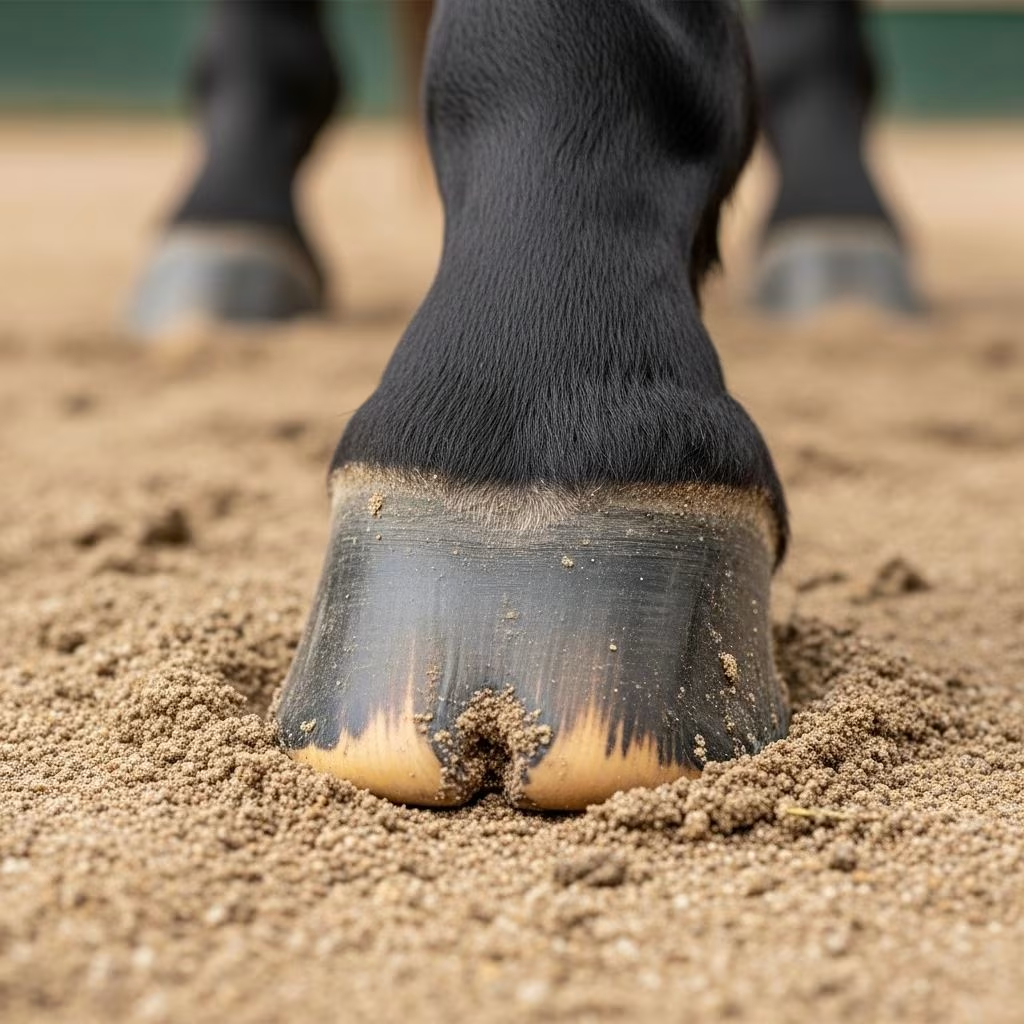
The equine hoof serves as the foundation of a horse’s mobility, absorbing shock and supporting weight during movement. When imbalance occurs, it disrupts this critical function, often leading to discomfort, reduced performance, or outright lameness. Understanding the mechanics of hoof alignment is essential for horse owners, trainers, and farriers to maintain soundness.
Fundamentals of Hoof Anatomy and Alignment
A healthy horse hoof features a balanced capsule that aligns properly with the underlying bones and soft tissues. Key components include the hoof wall, sole, frog, and digital cushion, all working in harmony to distribute forces evenly. Ideal alignment ensures the center of rotation falls correctly, allowing smooth breakover and even ground contact.
Imbalance manifests in two primary planes: sagittal (front-to-back) and medial-lateral (side-to-side). Sagittal issues involve mismatches between toe length and heel height, while medial-lateral problems create uneven sides, distorting the hoof’s shape over time.
Primary Types of Hoof Imbalance
- Sagittal Plane Imbalance: Characterized by a long toe and low heel configuration, this type delays breakover, straining the deep digital flexor tendon (DDFT). It promotes excessive toe drag and heel slippage, accelerating wear on the front of the hoof.
- Medial-Lateral Imbalance: One side of the hoof grows faster or wears unevenly, causing the foot to land tilted. This leads to rotational forces on joints like the fetlock and hock, potentially resulting in sheared heels or flares.
Both types can affect front or hind feet, with front hooves more prone due to higher weight-bearing demands.
Root Causes of Imbalance
Several factors contribute to hoof distortion, often interacting cumulatively.
| Cause | Description | Impact |
|---|---|---|
| Poor Farriery | Incorrect trimming angles or improper shoe placement | Alters natural growth patterns, exacerbating distortions |
| Conformational Faults | Offset limbs, cow hocks, or base-narrow stance | Forces uneven loading from the start, hard to fully correct |
| Injuries and Wounds | Cracks, punctures, or distal limb trauma | Localizes growth changes, leading to flares or underrun heels |
| Environmental Factors | Hard, dry ground vs. wet, soft surfaces | Promotes cracks or thrush, indirectly causing imbalance |
Neglected shoeing intervals compound these issues, allowing distortions to become chronic.
Recognizing Symptoms and Complications
Early detection hinges on observing gait changes and hoof appearance. Horses may show subtle signs like intermittent stumbling, shortened strides, or reluctance to turn sharply. Advanced cases present with obvious lameness, heat in the hoof, or digital pulses.
- Visual Indicators: Flares on one side, collapsed heels, or a ‘dished’ toe.
- Behavioral Cues: Toe-first landing, heel pain on flexion tests, or shifting weight.
Untreated imbalance invites secondary problems: abscesses from weakened white line, thrush in frog fissures, or navicular strain from poor heel support. Chronic cases link to laminitis, where lamellar separation causes coffin bone rotation.
Diagnostic Approaches
Veterinarians employ a multi-step process to pinpoint imbalance.
- Physical Exam: Hoof testers reveal tender spots; gait analysis notes asymmetry.
- Radiography: Lateral and skyline views measure hoof-pastern axis (HPA), palmar angle, and bone alignment. A broken-back HPA exceeds 5-7 degrees.
- Venography or MRI: For vascular or soft tissue involvement in severe cases.
Farrier input complements diagnostics, assessing growth rings and wall thickness.
Corrective Strategies and Treatments
Restoring balance requires teamwork between vets and skilled farriers. Interventions focus on realignment, support, and addressing triggers.
Trimming and Shoeing Techniques
Corrective trims shorten flares, level heels, and roll toes for easier breakover. Shoes like heart-bars, egg-bars, or wedges redistribute load, supporting the frog and heels.
- Shorten intervals to 4-5 weeks initially for reshaping.
- Use pads or impression material for sole protection.
Therapeutic Interventions
For infections or cracks, resect damaged wall and apply antiseptics. NSAIDs manage pain, while controlled exercise promotes even wear. Metabolic horses need dietary tweaks to curb laminitis risk.
Preventive Measures for Long-Term Soundness
Proactive care minimizes imbalance risks.
- Regular Farrier Visits: Every 6-8 weeks, tailored to growth rate.
- Nutrition Optimization: Balance methionine and biotin for horn strength; avoid excess sugars.
- Environment Management: Rotate footing types; clean hooves daily to prevent thrush.
- Conformation Monitoring: Young horses benefit from early intervention.
Holistic approaches, like balanced movement training, address posture-linked issues.
Case Studies: Real-World Applications
Consider a performance horse with medial-lateral imbalance from base-wide conformation. Initial radiographs showed 10-degree HPA deviation. After three shoeing cycles with lateral extensions and heel wedges, lameness resolved, restoring competitive form.
In contrast, a pasture horse with long-toe/low-heel from neglect developed white line disease. Resection, bar shoes, and dietary methionine supplements yielded regrowth without rotation. These examples underscore timely correction’s value.
FAQs
How often should I check my horse’s hooves for imbalance?
Weekly visual inspections and professional farrier checks every 6 weeks detect issues early.
Can hoof imbalance cause navicular syndrome?
Yes, poor heel support and long toes strain the navicular bone, contributing to syndrome development.
Is corrective shoeing permanent?
No, it often requires 3-6 cycles to stabilize growth; conformational cases may need ongoing maintenance.
What role does diet play in hoof health?
Adequate amino acids like methionine strengthen walls, reducing crack susceptibility.
When should I call a vet for hoof issues?
Immediately for sudden lameness, swelling, or heat to prevent complications like laminitis.
Advanced Considerations for Breeders and Trainers
Breeds like Thoroughbreds face higher risks from speed-related stresses, while drafts suffer conformationally. Integrating thermography tracks inflammation progress. Research emphasizes bio-tensegrity: hoof-body posture interlinks, where upper limb muscle imbalances perpetuate foot distortion.
Future trends include 3D scanning for precise trims and regenerative therapies like stem cells for chronic damage. Owners should prioritize farriers certified in equine podiatry for complex cases.
References
- 7 Common Hoof Problems in Horses – Signs & Treatment — Mad Barn. 2023. https://madbarn.com/hoof-problems-in-horses/
- Tips for Managing Hoof Imbalance and Lost Shoes — Just Horse Riders. 2023. https://www.justhorseriders.co.uk/blogs/news/navigating-equine-hoof-health-tips-for-managing-hoof-imbalance-and-lost-shoes
- Nerve Compression and Hoof Balance – What’s the Relationship? — Holistic Equine. 2023. https://www.holisticequine.co.uk/post/nerve-compression-and-hoof-balance-what-s-the-relationship
- Hoof Imbalance in Horses — MSD Veterinary Manual. 2024-02-01. https://www.msdvetmanual.com/musculoskeletal-system/disorders-of-the-foot-in-horses/hoof-imbalance-in-horses
- Disorders of the Foot in Horses — Merck Veterinary Manual. 2024. https://www.merckvetmanual.com/horse-owners/bone-joint-and-muscle-disorders-in-horses/disorders-of-the-foot-in-horses
- Hoof Problems and Diseases in Horses — Pine Ridge Equine Hospital. 2023. https://www.pineridgeequine.com/blog/hoof-problems-and-diseases-in-horses
- Understanding Hoof Balance — Horse & Hound. 2023. https://www.horseandhound.co.uk/horse-care/horse-care-tips/understanding-hoof-balance-47715



