

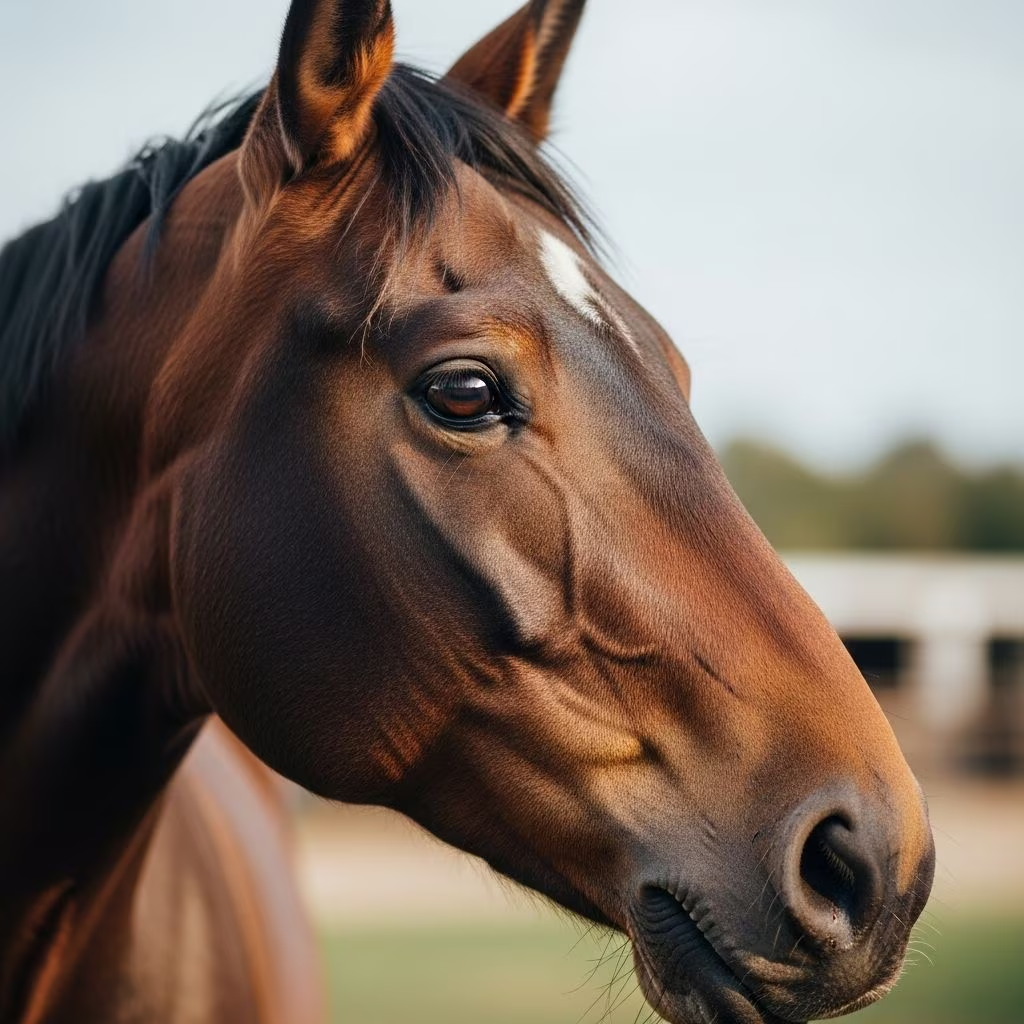
Equine herpesvirus (EHV) represents a significant health concern for horse owners worldwide, capable of manifesting in multiple forms that affect the respiratory system, reproductive health, and nervous system. Primarily caused by strains EHV-1 and EHV-4, this highly contagious virus spreads rapidly in equine populations, particularly in settings like shows, races, and boarding facilities. Understanding its biology, clinical presentations, and control strategies is crucial for safeguarding horse health.
The Nature and Strains of Equine Herpesvirus
EHVs belong to the herpesvirus family, known for establishing lifelong latency in infected hosts after initial exposure. Nearly all horses carry at least one strain latently, with reactivation triggered by stress, immunosuppression, or advancing age. Key strains include:
- EHV-1: The most problematic, causing respiratory illness, abortions, and the severe neurologic condition equine herpesvirus myeloencephalopathy (EHM).
- EHV-4: Primarily respiratory, especially in young horses, with occasional links to abortion or mild neurologic issues.
- EHV-2 and EHV-5: Associated with milder respiratory symptoms or conditions like multinodular pulmonary fibrosis, though their exact roles remain under study.
- EHV-3: Leads to coital exanthema, a venereal disease affecting breeding.
These viruses target epithelial cells in the respiratory tract initially, leading to viremia where they disseminate systemically. Latency occurs in lymphocytes, evading immune detection until conditions favor reactivation.
Transmission Pathways and Risk Factors
EHV spreads via direct nose-to-nose contact, aerosolized respiratory secretions from coughing or sneezing, or indirect fomites like shared tack, buckets, clothing, and trailers. Virus survival outside the host varies: up to a week in cool, moist environments, but less in dry or sunny conditions. Foals can acquire infection transplacentally from carrier mares, often leading to severe neonatal pneumonia.
Risk escalates in dense populations: shows, sales, and transports facilitate outbreaks. Stressors such as travel, weaning, intense training, or corticosteroid use promote shedding from latently infected carriers, who may spread virus days before symptoms appear. Pregnant mares face heightened abortion risk late-term, while weanlings and yearlings suffer most from respiratory forms.
Recognizing Clinical Manifestations
Incubation spans 1-10 days, typically 2-5, with shedding up to 28 days post-onset. Symptoms vary by form:
Respiratory Form
The most common presentation, especially in youngsters, features fever exceeding 102°F (up to 105°F), clear nasal discharge progressing to mucopurulent, cough, depression, anorexia, and submandibular lymphadenopathy. Secondary bacterial infections prolong recovery.
Reproductive Form
In unvaccinated pregnant mares, EHV-1 triggers sudden late-gestation abortion, stillbirth, or weak foals. Mares often show minimal systemic signs.
Neurologic Form (EHM)
The gravest outcome, EHM arises from vasculitis and thrombosis in central nervous system vessels, causing ischemia. Signs emerge rapidly post-fever: hindlimb ataxia, weakness, recumbency, urine dribbling from bladder atony, tail paresis, and edema in limbs. Cranial nerve deficits or seizures occur in severe cases. Older horses are prone during reactivations.
| Form | Key Symptoms | High-Risk Groups |
|---|---|---|
| Respiratory | Fever, nasal discharge, cough, lymph node swelling | Young horses (<2 years) |
| Abortion | Sudden fetal loss, minimal mare illness | Pregnant mares |
| EHM (Neurologic) | Ataxia, urine dribbling, recumbency, limb edema | Stressed/adult carriers |
Veterinary Diagnosis and Differential Considerations
Diagnosis combines history, clinical signs, and lab tests: PCR on nasal swabs, blood, or tissues detects viral DNA; serology tracks antibody rises; virus isolation confirms shedding. Differentiate from strangles, influenza, or Rhodococcus equi pneumonia via targeted testing. Early fever monitoring (twice daily, avoiding NSAIDs that mask it) aids outbreak detection.
Treatment Approaches for Affected Horses
No antiviral cure exists; management is supportive. Isolate cases immediately for 21+ days post-exposure.
- Respiratory: Stall rest 4-6 weeks, anti-inflammatories (avoid masking fever initially), broad-spectrum antibiotics for secondaries, IV fluids for dehydration.
- EHM: Intensive care: slings for recumbents, bladder catheterization, anti-thrombotics (aspirin), DMSO for vasculitis. 60-70% recover with prompt intervention, though some retain deficits.
- Abortion: Monitor mare for metritis; rebreeding post-recovery.
Prognosis excels for respiratory cases (near 100% survival); EHM mortality hits 30-40%, higher without treatment.
Vaccination: A Cornerstone of Prevention
Modified-live or killed vaccines against EHV-1/4 reduce respiratory severity, viral shedding, and abortion risk but don’t prevent latency or all EHM. Protocols:
- Primary series: 2 doses 3-4 weeks apart for naive horses.
- Boosters: Annually or semi-annually for adults, especially pregnant mares (5th/7th/9th months gestation).
- Foals: Start at 4-6 months with boosters.
Vaccinate 2-4 weeks pre-travel/shows. No EHM-specific vaccine exists.
Biosecurity Protocols to Curb Outbreaks
Prevention hinges on vigilance:
- Quarantine new arrivals 3 weeks; test if from outbreak areas.
- Monitor temperatures bidaily (>101.5°F flags risk).
- Disinfect with bleach (1:32), accelerate, or virucides; virus resists soap alone.
- Avoid nose-to-nose contact; dedicate equipment/personnel per group.
- Limit commingling; halt events at fever detection.
Post-outbreak: 21-day hold on premises. Report to authorities per state regs.
Frequently Asked Questions (FAQs)
Can humans or other animals catch EHV from horses?
No, EHV affects only equids; no zoonotic risk.
How long is an infected horse contagious?
Up to 28 days, often 7-14; test negative PCRs thrice before release.
Does vaccination guarantee protection against EHM?
No, but it lowers overall viral load and outbreak scale.
What triggers EHV reactivation?
Stress (travel, illness), steroids, age.
Is EHV reportable?
Yes, especially EHM; notify vets/state officials promptly.
Long-Term Management and Research Outlook
Horse owners must integrate vaccination, biosecurity, and monitoring into routines. Ongoing research probes EHM pathogenesis, superior vaccines, and antivirals like valacyclovir. Stay informed via AAEP or state ag depts. Proactive steps minimize EHV’s impact, preserving equine welfare.
References
- Equine Herpesvirus (EHV) – PetMD — PetMD. 2023. https://www.petmd.com/horse/conditions/reproductive/equine-herpesvirus-ehv
- Disease Alert: Equine Herpesvirus – USDA APHIS — USDA APHIS. 2024-02-15. https://www.aphis.usda.gov/livestock-poultry-disease/equine/herpesvirus
- Equine herpesvirus – What to know | Oklahoma State University — Oklahoma State University. 2025. https://news.okstate.edu/articles/veterinary-medicine/2025/ehv_info.html
- Equine Herpesvirus Myeloencephalopathy (EHM) Outbreak — Equine Disease Communication Center. 2023. https://equinediseasecc.org/news/article/Equine-Herpesvirus-Myeloencephalopathy-(EHM)-Outbreak
- Equine Herpes Virus — Michigan State University. 2024. https://www.canr.msu.edu/equine_herpes_virus
- Equine Herpesvirus in Horses | New Mexico State University — NMSU Cooperative Extension. 2022-06-01. https://pubs.nmsu.edu/_b/B716/index.html
- Equine Herpes Virus Outbreak – Colorado Department of Agriculture — Colorado Dept. of Agriculture. 2024. https://ag.colorado.gov/animal-health/reportable-diseases/equine-neurologic-disease/equine-herpes-virus-outbreak



