

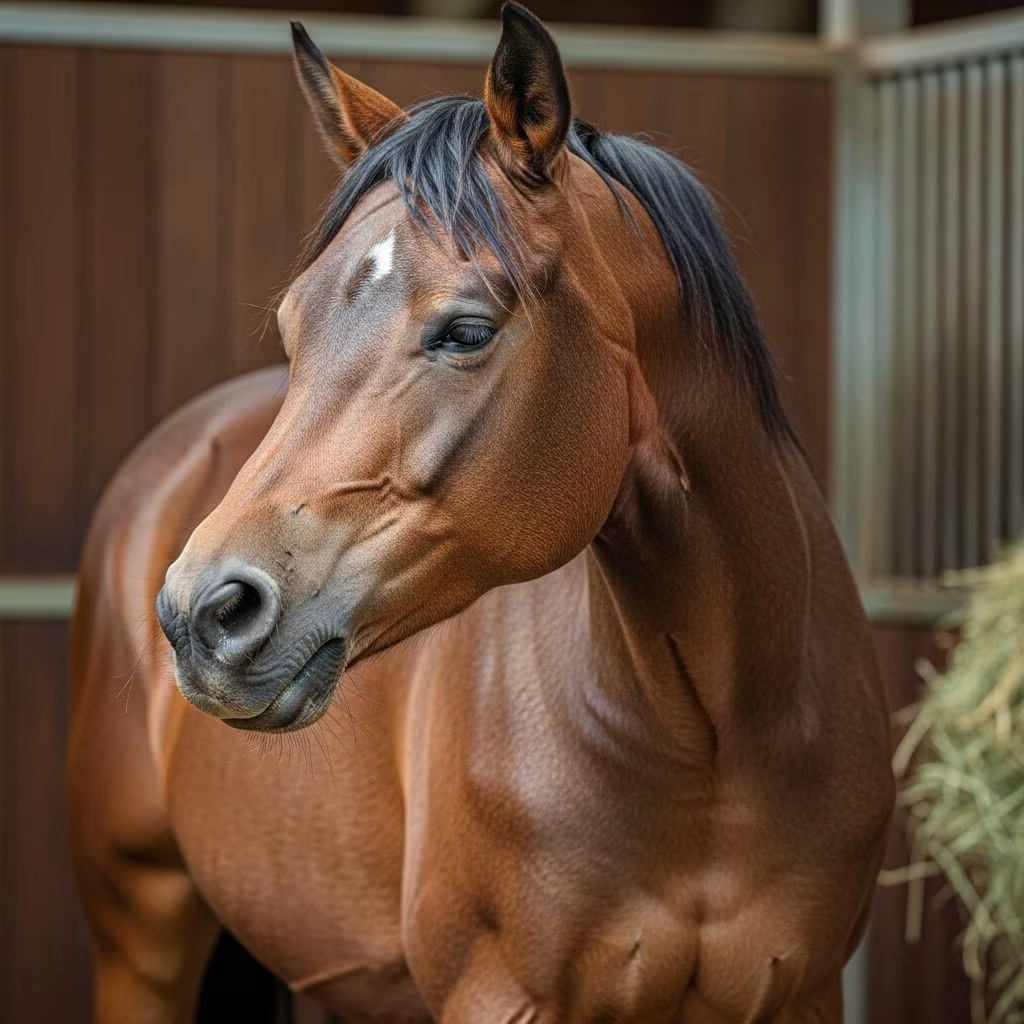
What Is Recurrent Airway Obstruction?
Recurrent airway obstruction, commonly referred to as heaves or equine asthma, represents a chronic inflammatory condition that significantly impacts a horse’s respiratory function and overall quality of life. This condition develops when a horse’s immune system responds excessively to inhaled irritants, triggering a cascade of inflammatory responses within the lungs and airways. The disease shares notable similarities with asthma in human patients, where exposure to environmental triggers initiates an allergic reaction in sensitive individuals.
The pathophysiology of this condition involves complex changes within the respiratory tract. When horses with this condition are exposed to dust, mold, pollen, or other airborne particles, specialized cells in the lungs release inflammatory mediators that cause the airway walls to swell, thicken, and produce excessive mucus. This combination of tissue swelling and mucus accumulation creates an environment where air becomes trapped within the passages, forcing affected horses to expend considerable effort during exhalation. The repeated exposure to allergens progressively sensitizes the respiratory system, potentially worsening the condition over time.
This condition predominantly affects mature and geriatric horses, with prevalence increasing substantially in older equine populations. Unlike other respiratory ailments that may resolve with appropriate treatment, heaves remains a chronic disease requiring ongoing management and environmental modification.
Distinguishing Heaves from Other Respiratory Conditions
While recurrent airway obstruction represents one form of equine asthma, veterinarians also recognize inflammatory airway disease (IAD), which differs in several important aspects. IAD tends to manifest in younger performance horses rather than aged individuals, and its etiology remains less clearly understood than heaves. Some research suggests that inhalation of dust, mold, and bacterial agents may contribute to IAD development, and in racing populations, recurrent bacterial infections involving Streptococcus species have been associated with the condition.
The underlying inflammatory mechanisms differ between the two conditions as well. In horses with heaves, neutrophils represent the primary inflammatory cells observed during diagnostic evaluation, whereas IAD may involve neutrophils, mast cells, or combinations thereof. Despite these distinctions, treatment approaches and environmental management strategies show considerable overlap between conditions.
Recognizing Clinical Manifestations
Owners and handlers should remain alert for specific clinical indicators that may suggest respiratory compromise. The most obvious sign involves abnormal breathing patterns, particularly increased effort during exhalation. Affected horses may demonstrate a distinctive heave line—a muscular indentation along the flank that develops from chronic use of abdominal muscles to force air from the lungs. Coughing, both spontaneous and exercise-induced, frequently accompanies the condition.
Additional observable signs may include nasal discharge, exercise intolerance, and reduced performance capacity. Some horses display air hunger, where they appear to struggle obtaining sufficient oxygen despite adequate atmospheric availability. The severity of clinical signs often correlates with environmental conditions, with symptoms frequently worsening during times of poor air quality or increased dust exposure.
Diagnostic Evaluation Approaches
Veterinary diagnosis requires systematic evaluation combining physical examination findings with specialized diagnostic procedures. During clinical examination, practitioners assess respiratory rate and effort, auscultate lung sounds, and evaluate the presence of abdominal heave lines. However, definitive diagnosis extends beyond these clinical observations.
A bronchoalveolar lavage (BAL) procedure, also termed a lung wash, provides critical diagnostic information by directly sampling airway secretions and inflammatory cells. This technique involves introducing fluid into the lungs through an endoscope, allowing veterinarians to collect samples for cytological analysis. The inflammatory cell patterns observed during BAL help confirm the diagnosis and differentiate heaves from other respiratory conditions.
Endoscopic examination enables direct visualization of the airways, allowing practitioners to assess mucosal changes, accumulation of secretions, and overall airway architecture. Radiographic imaging may help exclude alternative diagnoses, though subtle changes characteristic of heaves may not always be apparent on standard radiographs.
Environmental Modifications: Foundation of Management
Effective management of recurrent airway obstruction begins with environmental intervention, which often provides sufficient control for mildly to moderately affected horses without requiring extensive pharmacological treatment. Since the condition fundamentally involves allergic responses to airborne irritants, reducing exposure to known triggers represents the most logical initial approach.
Housing considerations prove essential, as stalls should be positioned away from indoor arenas where dust concentrations reach elevated levels. Hay storage overhead in the same building should be avoided, as dust from stored hay creates pervasive airborne particles. Traditional straw bedding should be eliminated in favor of alternative bedding materials that produce minimal dust, such as pelleted products or shavings.
Nutritional modifications involving forage replacement can significantly impact clinical signs. Soaking hay with water prior to feeding helps reduce dust and may prove effective for mildly affected horses, though this approach demonstrates limited efficacy in severely sensitized individuals. Hay cubes and hay silage offer low-allergen alternative roughage sources that many horses readily consume. Complete pelleted feeds provide another option while minimizing dust exposure during feeding.
Optimizing pasture turnout when environmental conditions permit allows horses to breathe cleaner air, though this must be balanced against seasonal pollen counts and regional environmental factors.
Pharmacological Treatment Strategies
Medications for Mild to Moderate Disease
When environmental modifications alone prove insufficient, pharmacological intervention becomes necessary. Medical management typically employs two primary drug categories that often work synergistically to address different aspects of the condition.
Bronchodilators function by relaxing the smooth muscles surrounding airways, thereby opening passages and facilitating air movement through the respiratory tract. Clenbuterol represents a commonly prescribed oral bronchodilator that provides the additional benefit of reducing mucus production. These medications provide rapid relief during episodes of acute airway obstruction.
Corticosteroids address the underlying inflammatory process by suppressing immune responses to allergens and reducing airway wall thickening and mucus production. Oral corticosteroids such as dexamethasone and prednisone represent standard choices for managing inflammation. Dexamethasone demonstrates greater potency but should be avoided in horses predisposed to founder and should not be used for extended periods. Prednisone offers a safer alternative for long-term maintenance therapy, though it demonstrates less potent effects than dexamethasone.
Expectorants thin and break down accumulated mucus within the lungs, facilitating expectoration and helping eliminate bacteria trapped in secretions. These medications may be obtained over-the-counter or through veterinary prescription in stronger formulations. Ensuring adequate water availability supports natural secretion hydration and movement.
Antibiotics may be necessary when bacterial infection complicates the primary condition. Ideally, veterinarians should obtain airway samples to identify the specific organism and select the most appropriate antibiotic agent rather than employing empirical treatment.
Advanced Treatment Options
Horses demonstrating severe disease or inadequate response to oral medications benefit from inhaled therapies delivered via specialized masks. This delivery method allows medications to reach the lungs directly, maximizing therapeutic benefit while permitting lower systemic doses and reducing side effect risk.
Aerosolized corticosteroids such as betamethasone dipropionate, ciclesonide, or fluticasone propionate target inflammation at its source within the lungs. Specialized masks including the Equine AeroMask, Equine Haler, and AeroHippus facilitate treatment administration. Horses without active symptoms may benefit from low-dose, long-term aerosolized corticosteroid maintenance therapy to prevent exacerbations.
Aerosolized bronchodilators enhance airway diameter through the same mechanisms as oral formulations. When combined with corticosteroids, bronchodilators should be administered first to open airways, allowing subsequent corticosteroid doses to penetrate more deeply into the respiratory tract for optimal effectiveness.
Emerging Therapeutic Approaches
Novel treatment options continue to emerge as veterinary science advances. Alpha-2 macroglobulin represents a biologic anti-inflammatory molecule derived from the patient’s own blood. Early research demonstrated promising results when horses were nebulized every other day for one week, with subsequent treatments repeated when clinical signs returned. Some evidence suggests monthly nebulizer treatments may effectively control symptoms.
Treatment Effectiveness and Long-Term Prognosis
While heaves cannot be cured, the condition can often be successfully managed through combined environmental and pharmacological approaches. However, even when horses enter clinical remission, abnormal lung function can be detected through objective testing, indicating that structural changes within the respiratory tract persist despite symptomatic improvement.
The chronic inflammation associated with heaves produces progressive changes including increased airway smooth muscle, fibrous tissue deposition, and epithelial thickening. While medications can reverse bronchospasm from smooth muscle contraction and reduce mucus production, the fibrosis and epithelial changes prove more resistant to reversal. This reality emphasizes the importance of early intervention and consistent environmental management to minimize disease progression.
Frequently Asked Questions
Can heaves be cured?
No, heaves remains a chronic condition that cannot be completely cured. However, clinical signs can often be effectively managed through environmental modifications and medication combinations, allowing affected horses to maintain reasonable quality of life.
Is heaves the same as asthma in humans?
While heaves shares similarities with human asthma in terms of allergic mechanisms and inflammatory responses, the conditions are distinct entities. However, the parallels in pathophysiology and treatment approaches make the comparison clinically useful.
Do all horses with heaves require medication?
Not necessarily. Mildly affected horses may respond adequately to environmental modifications alone, particularly when allergen exposure is substantially reduced. However, more severely affected individuals typically require pharmacological intervention.
How long do horses remain on medications?
Treatment duration varies depending on disease severity and individual response. Some horses may eventually require only seasonal medication, while others need year-round management. Veterinarians adjust protocols based on clinical response and environmental factors.
What is the prognosis for horses with heaves?
With appropriate management, many horses with heaves can maintain acceptable performance and quality of life. However, severely affected individuals may have limitations on athletic activity and require intensive ongoing management.
Comparative Treatment Approaches
| Treatment Type | Mechanism of Action | Administration Route | Best For |
|---|---|---|---|
| Oral Bronchodilators | Relaxes airway smooth muscle | Oral feed supplement | Mild to moderate disease, rapid symptom relief |
| Oral Corticosteroids | Reduces inflammation and mucus | Oral medication | Long-term inflammation control |
| Inhaled Corticosteroids | Targets lungs directly | Specialized mask delivery | Moderate to severe disease, targeted therapy |
| Expectorants | Thins mucus secretions | Oral or feed additive | Supplementary mucus clearance |
| Antibiotics | Eliminates bacterial infection | Oral or injection | Secondary bacterial complications |
Conclusion: Comprehensive Management Strategy
Successfully managing equine heaves requires a multifaceted approach combining environmental modification, pharmacological intervention, and ongoing veterinary oversight. While environmental controls form the foundation, many horses benefit from medication to achieve clinical stability. Advanced therapies including inhaled medications and emerging biologic approaches provide additional options for horses with severe or refractory disease. By understanding the disease mechanisms and available treatment options, horse owners and veterinarians can work collaboratively to optimize outcomes and maintain quality of life for affected equines.
References
- Horse Heaves Symptoms and Treatment — Horse and Rider. https://horseandrider.com/horse-health/horse-heaves-symptoms-and-treatment/
- Heaves in Horses: Symptoms, Treatment & How to Manage — Mad Barn. https://madbarn.com/equine-heaves/
- Equine Asthma — Cummings School of Veterinary Medicine, Tufts University. https://vet.tufts.edu/tufts-equine-center/specialty-services/respiratory-health/equine-asthma
- Symptoms and Treatments for Heaves in Horses — BreathEazy. https://www.breatheazy.co.uk/what-do-you-do-for-a-horse-with-asthma-symptoms-and-treatments-for-heaves-in-horses/
- Recurrent Airway Obstruction (Heaves) in Horses — Merck Veterinary Manual. https://www.merckvetmanual.com/horse-owners/lung-and-airway-disorders-of-horses/recurrent-airway-obstruction-heaves-in-horses
- How to Manage Equine Asthma (RAO or Heaves) — Foundation Equine. https://foundationequine.com/equine-asthma



