
Equine Fundus Disorders: Retina, Choroid, Optic Issues
Explore vital insights into retinal, choroidal, and optic disk problems in horses, from causes and symptoms to advanced management strategies for optimal eye health.
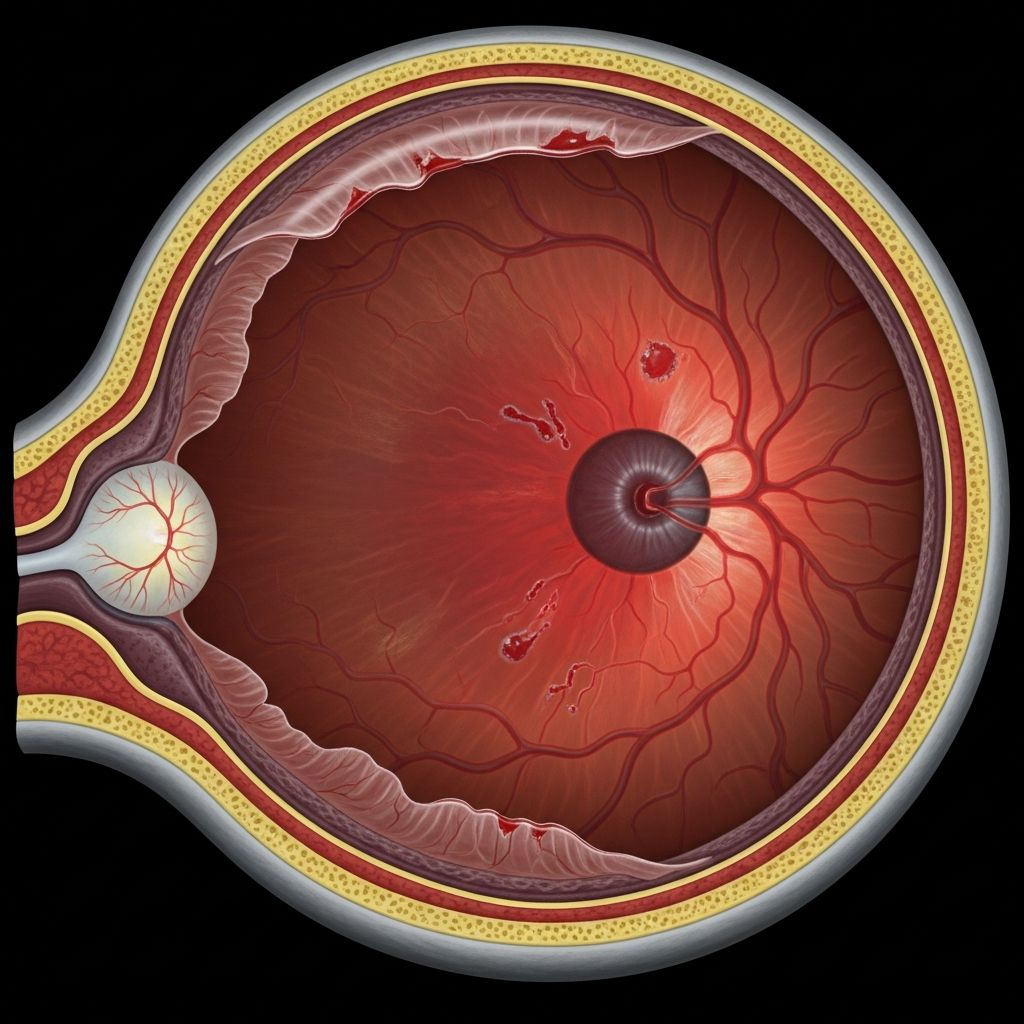
The ocular fundus represents the innermost structures of the horse’s eye, encompassing the retina, choroid, and optic disk. These components are crucial for vision, processing light and transmitting signals to the brain. Disruptions in this area can lead to partial or complete vision loss, often stemming from trauma, infections, or systemic conditions. Understanding these disorders empowers horse owners to recognize early signs and pursue timely veterinary intervention.
Fundamentals of Equine Eye Anatomy
To grasp fundus disorders, familiarize yourself with the eye’s posterior layout. The retina, a multilayered neural tissue, converts light into electrical impulses. Beneath it lies the choroid, a vascular layer nourishing the retina and featuring the tapetum—a reflective layer enhancing low-light vision in horses. The optic disk, where nerve fibers converge, marks the exit point for visual signals.
- Retina: Sensory layers detect light; pigment epithelium supports photoreceptors.
- Choroid: Supplies blood; tapetum aids night vision.
- Optic Disk: Nerve head; absence of photoreceptors creates physiologic ‘blind spot’.
These structures are visible via ophthalmoscopy, a key diagnostic tool. Horses’ large eyes make fundus evaluation feasible, though sedation may be needed for thorough exams.
Primary Causes of Fundus Abnormalities
Fundus issues in horses arise from diverse etiologies. Trauma tops the list, often from blunt head impacts or surgical complications. Systemic infections, including bacterial, viral, fungal, or parasitic agents, spread to the eye. Equine recurrent uveitis (ERU), a chronic inflammatory condition, frequently culminates in posterior segment damage.
| Cause Category | Examples | Impact on Fundus |
|---|---|---|
| Trauma | Blunt injury, surgery | Detachment, hemorrhage, nerve damage |
| Infections | Herpesvirus, leptospirosis, fungi | Inflammatory lesions, necrosis |
| Inflammatory | ERU, onchocerciasis | Degeneration, scarring |
| Systemic | Septicemia, hypertension, toxins | Vascular occlusion, atrophy |
| Congenital | Dysplasia, atrophy | Structural malformation |
Nutritional deficits or blood disorders exacerbate vulnerabilities, while hypertension induces vascular changes. Genetic predispositions, though rare, manifest as progressive atrophies.
Chorioretinitis: Inflammatory Assault on Posterior Eye
Chorioretinitis involves simultaneous inflammation of choroid and retina, often signaling systemic disease. In horses, it presents subtly unless extensive, preserving outward normalcy despite inner turmoil. Characteristic lesions guide diagnosis: focal ‘bullet-hole’ spots evoke herpesvirus; linear bands suggest vascular blocks; diffuse haze indicates trauma or uveitis.
Pathogens like Leptospira or Onchocerca trigger immune responses damaging fundus tissues. Foals with septicemia risk multifocal spots. Parasitic migrations deposit antigens, fostering chronic inflammation. Without addressing the root cause, vision erodes progressively.
Veterinarians deploy targeted antimicrobials or antiparasitics alongside anti-inflammatories. Monitoring via serial ophthalmoscopy tracks resolution. Prognosis hinges on lesion extent and optic nerve sparing—focal cases often recover fully.
Retinal Detachment: A Vision-Threatening Separation
Retinal detachment occurs when neurosensory retina lifts from underlying epithelium, severing nutrient flow. In equines, culprits include direct trauma, post-surgical effusion, or ERU-induced vitreous shrinkage pulling the retina.
Clinical hallmarks encompass mydriasis (pupil dilation), anisocoria (unequal pupils), hyphema (intraocular blood), and blindness. Detached retina appears as mobile veils or folds under ophthalmoscopy. Ultrasound confirms extent in hazy media.
Treatment prioritizes underlying pathology: corticosteroids curb exudation in uveitis; surgery like vitrectomy or scleral buckling reattaches in select cases. Guarded prognoses prevail, with reattachment success under 50% due to equine eye size and fibrosis risks.
Optic Nerve Degeneration and Atrophy
Optic neuropathies compromise the nerve head, relaying retinal signals. Traumatic avulsion or ischemia induces atrophy: disc pales yellow, vessels attenuate, peripapillary retina thins. Chronic ERU or glaucoma accelerates this via recurrent ischemia.
Symptoms mimic blindness: fixed pupils, maze navigation failure. Symmetric bilateral involvement suggests toxicity or heredity; unilateral points to trauma. NSAIDs or steroids post-injury mitigate swelling, but chronic cases yield poor visual recovery.
Progressive retinal atrophy (PRA), akin to canine forms, erodes photoreceptors bilaterally, culminating in night blindness then total loss. No cure exists; breeding avoidance curbs incidence.
Diagnostic Approaches for Fundus Evaluation
Direct/indirect ophthalmoscopy illuminates fundus details. Pupillary dilation enhances views. Electroretinography quantifies retinal function; fluorescein angiography maps vessels. Ultrasonography penetrates opacities for detachment sizing.
Systemic workups—bloodwork, serology, CSF analysis—unmask infections. Genetic testing screens heritable atrophies. Early detection via routine exams prevents irreversible damage.
Management and Therapeutic Strategies
Therapy tailors to etiology. Anti-inflammatories (topical/systemic steroids, NSAIDs) control exudation. Antimicrobials combat infections: fluoroquinolones for bacteria, antifungals for keratomycosis extensions.
ERU management incorporates cyclosporine implants or suprachoroidal corticosteroids, slashing recurrences. Surgical options encompass enucleation for blind, painful globes or vitreous taps for debris. Supportive care—stall rest, fly masks—abates aggravators.
Prognoses vary: acute trauma detachments reattach occasionally; chronic degenerations doom vision. Blind horses adapt well, navigating via memory and senses.
Preventive Measures for Equine Ocular Health
Prophylaxis trumps cure. Vaccinate against herpesvirus; deworm for Onchocerca. Shield eyes from trauma via fly masks, padded stalls. Routine ophthalmologic checks, biannual for ERU-suspect breeds like Appaloosas, catch subclinical changes.
Nutritional balance—vitamin E, selenium—bolsters retinal resilience. Prompt trauma response with ice and anti-inflammatories preserves tissue.
Frequently Asked Questions (FAQs)
What triggers most retinal detachments in horses?
Trauma, eye surgery, and equine recurrent uveitis predominantly cause detachments by accumulating subretinal fluid or vitreous traction.
Can horses regain vision post-fundus damage?
Partial recovery occurs in reversible inflammation; degenerations or detachments often yield permanent deficits, though adaptation compensates.
How is chorioretinitis diagnosed?
Ophthalmoscopy reveals focal lesions; serology confirms systemic infections like leptospirosis.
Is optic atrophy treatable?
Acute cases respond to anti-inflammatories; chronic atrophy resists, prioritizing pain management.
Which breeds face higher fundus disorder risks?
Appaloosas and drafts suffer elevated ERU incidence, fostering secondary fundus pathology.
References
- Disorders of the Retina, Choroid, and Optic Disk (Ocular Fundus) in Horses — Merck Veterinary Manual. 2025. https://www.merckvetmanual.com/horse-owners/eye-disorders-of-horses/disorders-of-the-retina-choroid-and-optic-disk-ocular-fundus-in-horses
- DIAGNOSTIC OPHTHALMOLOGY — PMC – NIH (PubMed Central). 2005-07-01. https://pmc.ncbi.nlm.nih.gov/articles/PMC341950/
- Retina and Optic Nerve Disease in Horses — The Horse. 2019-01-10. https://thehorse.com/130780/retina-and-optic-nerve-disease/
- 8 Common Equine Eye Conditions & Vision Problems — Mad Barn. 2023. https://madbarn.com/eye-conditions-in-horses/
- HORSEREPORT – UC Davis Center for Equine Health — UC Davis Veterinary Medicine (.edu). 2017. https://ceh.vetmed.ucdavis.edu/sites/g/files/dgvnsk4536/files/local_resources/pdfs/pubs-HR27-1-bkm-sec.pdf
Similar Articles








Read full bio of medha deb


