

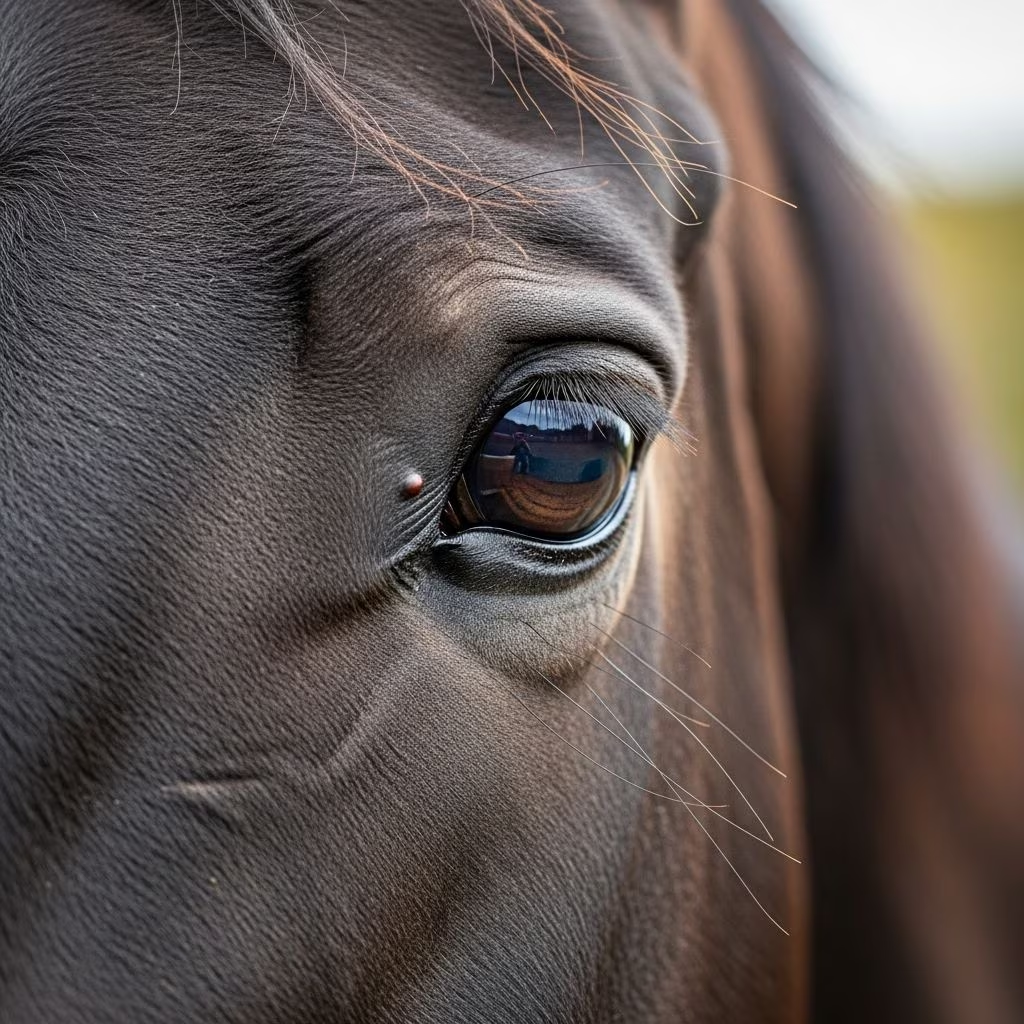
Eye tumors represent a significant health challenge for horses, potentially leading to discomfort, vision loss, or more severe complications if not addressed promptly. Among the most prevalent are squamous cell carcinoma (SCC) and sarcoids, which frequently target the eyelids, conjunctiva, and surrounding tissues. Early recognition and intervention are crucial for preserving ocular function and overall equine welfare.
Prevalent Types of Ocular Neoplasms in Horses
Horses are prone to specific neoplastic growths around the eyes, with SCC emerging as the predominant malignancy. This cancer originates in the squamous epithelium, the outer skin layer or mucous membranes, and commonly manifests on the eyelids, conjunctivae, or nictitating membrane (third eyelid). Lighter-pigmented equines, particularly those with white faces, face heightened susceptibility due to reduced natural UV protection.
Sarcoids, while not true cancers, are aggressive fibroblastic tumors that mimic malignancy through local invasion and recurrence. These lumpy, fibrous proliferations often afflict periocular regions, presenting as raised, ulcerated, or cauliflower-like masses. Lymphoma, though rarer in ocular sites, can involve intraocular structures or orbital extensions, contributing to systemic illness.
Less common are melanomas, typically benign but capable of malignancy within the globe, and extensions from sinus or generalized neoplasms into the orbit. Understanding these distinctions aids in tailored management strategies.
Risk Factors Driving Ocular Tumor Development
Several environmental and genetic elements predispose horses to eye tumors. Chronic ultraviolet (UV) radiation exposure stands out as a primary culprit for SCC, especially in unpigmented periorbital skin. Horses in sunny climates or those spending extended time outdoors without shelter are at elevated risk. Breeds like Appaloosas, Paints, and draft horses with pink skin around the eyes show higher incidence rates.
Sarcoid development links to bovine papillomavirus, though transmission modes remain under investigation. Genetic predisposition influences both tumor types, with familial patterns observed. Age plays a role; SCC predominates in older horses over 8 years, while sarcoids affect younger animals. Compromised immunity or prior trauma may exacerbate susceptibility.
- UV exposure: Primary trigger for SCC in lightly pigmented areas.
- Breed genetics: Higher rates in Appaloosas and similar breeds.
- Viral factors: Papillomavirus implicated in sarcoids.
- Age and environment: Older horses in sunny regions most vulnerable.
Recognizing Clinical Signs of Eye Tumors
Initial symptoms often subtle, progressing to overt indicators of distress. For SCC, owners may note pinkish, fleshy masses, red scabs, or proliferative lesions on eyelids or conjunctiva. Affected eyes exhibit epiphora (excessive tearing), blepharospasm (squinting), corneal opacity, or mucopurulent discharge. Horses display head shyness, facial asymmetry, or reluctance to tack up due to pain.
Sarcoid lesions appear as thickened, alopecic (hairless), or ulcerated plaques, varying from quiescent to aggressive forms. Intraocular involvement signals advanced disease with uveitis, hyphema, or glaucoma. Systemic signs like weight loss accompany lymphoma or metastatic SCC.
| Tumor Type | Common Signs | Progression Risk |
|---|---|---|
| Squamous Cell Carcinoma | Squinting, tearing, raised red masses, ulceration | Local invasion, rare metastasis |
| Sarcoid | Lumpy fibrous growths, ulceration, recurrence | High local aggression |
| Melanoma/Lymphoma | Intraocular changes, orbital swelling, systemic illness | Potential malignancy spread |
Diagnostic Approaches for Accurate Identification
Veterinary assessment begins with a thorough ophthalmic exam, including slit-lamp biomicroscopy, tonometry for intraocular pressure, and fluorescein staining to detect ulceration. Fine-needle aspiration or biopsy confirms histopathology, distinguishing SCC (keratin pearls, atypical squamous cells) from sarcoids (fibroblastic proliferation).
Advanced imaging like ocular ultrasound or CT scans delineates tumor extent, especially for orbital involvement or bony invasion, guiding surgical planning. Schirmer tear tests evaluate lacrimal function, while regional lymphadenopathy prompts lymph node aspirates to rule out metastasis.
Comprehensive Treatment Modalities
Therapy selection hinges on tumor type, size, location, and horse temperament. Multimodal approaches yield superior outcomes over monotherapy, combating high recurrence rates.
Surgical Interventions
Excisional biopsy or debulking removes accessible masses, prioritizing clear margins. For extensive SCC, enucleation (eye removal) proves curative when orbit remains uninvolved, allowing normal adaptation with monocular vision. Laser surgery precisely ablates sarcoids, minimizing hemorrhage.
Chemotherapeutic Options
Intralesional cisplatin beads or injections target residual cells post-surgery, with 5-fluorouracil (5-FU) creams effective for superficial lesions. Oral piroxicam inhibits prostaglandin-mediated growth. Systemic chemotherapy addresses lymphoma.
Physical and Thermal Therapies
Cryotherapy employs freeze-thaw cycles (nitrous oxide or liquid nitrogen), boasting 86% success for small SCC. Hyperthermia or radiofrequency elevates tissue temperatures to necrose tumors. Photodynamic therapy (PDT) combines photosensitizers with laser activation, sparing healthy tissue.
Immunotherapeutic Advances
BCG immunotherapy stimulates antitumor immunity, achieving 70% remission for sarcoids and periocular SCC. Sarcoid vaccines implant autologous tissue to provoke responses. Emerging interferon therapies mirror human protocols.
Radiation and Emerging Techniques
Though less common due to logistics, strontium-90 plaque brachytherapy or electron beam radiation controls recalcitrant cases. Research explores immunotherapy combinations and novel antineoplastics.
Post-treatment monitoring is essential, with recurrence possible within months. Protective fly masks with UV blockers aid prevention in at-risk horses.
Prognostic Factors and Long-Term Management
Early, superficial lesions carry excellent prognoses, often resolving without enucleation. Extensive tumors invading bone portend poor outcomes, necessitating aggressive intervention. SCC recurrence plagues 30-50% of cases, lower with adjuncts. Sarcoids defy complete cures but stabilize with vigilance.
Owners should implement UV-protective measures from foalhood, schedule annual ophthalmic exams for light-faced horses, and promptly report ocular changes. Multidisciplinary care involving equine ophthalmologists optimizes results.
Frequently Asked Questions (FAQs)
What causes most eye tumors in horses?
UV light exposure primarily drives SCC, while viral factors contribute to sarcoids.
Can horses live normally with one eye removed?
Yes, enucleation yields good quality of life; horses adapt rapidly.
How effective is cryotherapy for these tumors?
It achieves high cure rates for small lesions, around 86%.
Are there preventive steps for at-risk breeds?
UV-blocking masks and shaded stabling reduce SCC incidence.
What if the tumor recurs after treatment?
Repeat therapies or escalation to enucleation manages most recurrences.
References
- Squamous Cell Carcinoma in Horses — PetMD. 2023. https://www.petmd.com/horse/conditions/cancer/squamous-cell-carcinoma-horses
- Tumors Affecting Your Horse’s Eyes — Veterinary Vision Center. 2024. https://veterinaryvisioncenter.com/tumors-affecting-your-horses-eyes/
- Cancers and Tumors of the Eye in Horses — Merck Veterinary Manual. 2025-02-01. https://www.merckvetmanual.com/horse-owners/eye-disorders-of-horses/cancers-and-tumors-of-the-eye-in-horses
- Equine Ocular Squamous Cell Carcinoma (OSCC) FAQs — University of Tennessee College of Veterinary Medicine. 2023. https://vetmed.tennessee.edu/wp-content/uploads/sites/4/UTCVM_EquineOSCC_FAQs.pdf
- Ocular Squamous Cell Carcinoma — UC Davis School of Veterinary Medicine. 2024. https://ceh.vetmed.ucdavis.edu/health-topics/ocular-squamous-cell-carcinoma



