
Equine Eye Anatomy: Essential Guide For Horse Owners
Discover the remarkable structure of the horse's eye, its vital functions, and why understanding it matters for equine care and vision health.
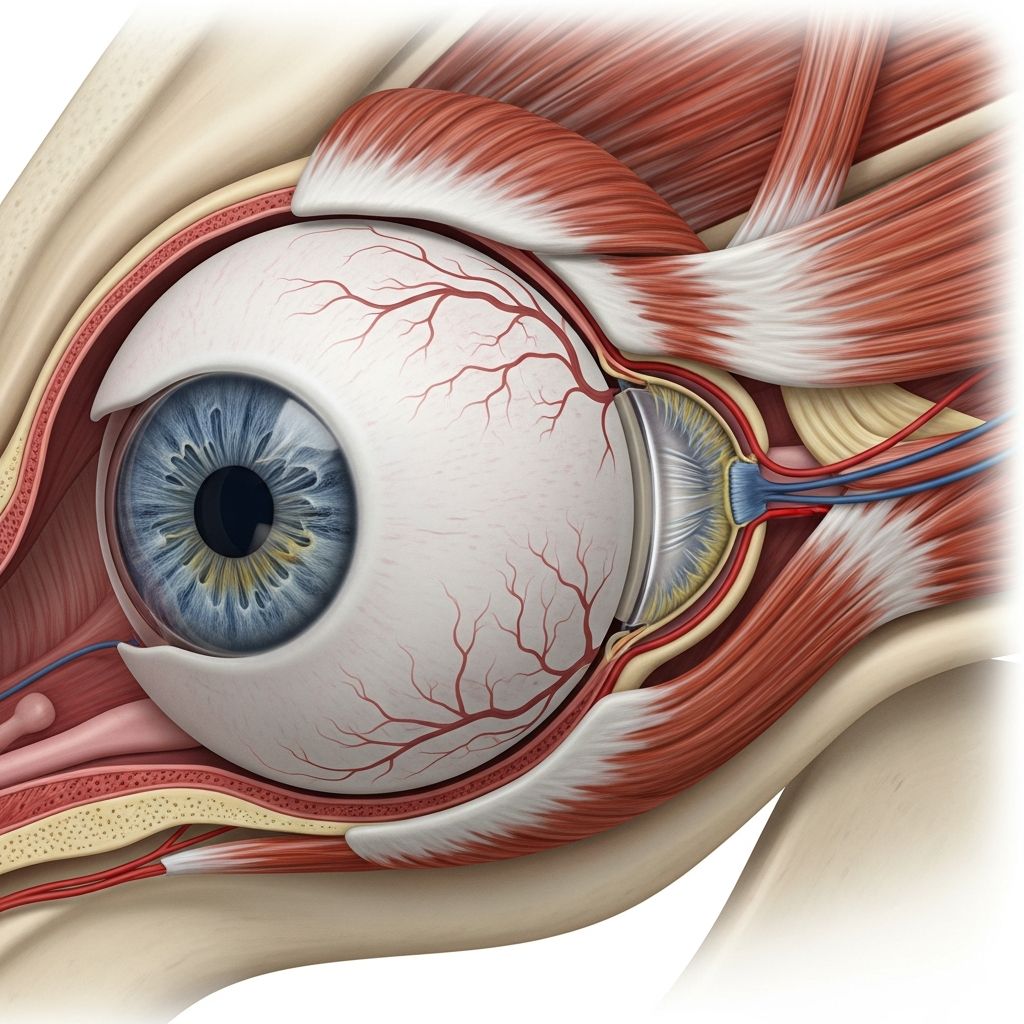
The horse’s eye stands out as one of the largest among land mammals, perfectly engineered for a life in vast open spaces where quick detection of threats is crucial. This organ not only facilitates a panoramic view but also incorporates specialized features that boost low-light vision and resilience against environmental hazards. Owners and caretakers benefit greatly from grasping these details to spot potential issues early and ensure optimal welfare.
Positioning and Overall Design
Horses possess laterally placed eyes on the sides of their heads, granting a nearly 360-degree field of vision. This setup supports both monocular vision—where each eye views distinct areas—and binocular vision in a limited frontal overlap, ideal for grazing while monitoring predators. The eyeball, or globe, measures about 50 mm in diameter, housing transparent fluids and tissues that maintain shape and clarity.
- Monocular zones: Cover most of the visual field, processing independent images from left and right eyes.
- Binocular zone: Narrow forward area for depth perception during precise tasks like jumping.
- Blind spots: Directly ahead and behind the head, necessitating head movements for full awareness.
External Protective Layers
The outermost defenses include eyelids, a nictitating membrane, and surrounding skin. Upper and lower eyelids feature lashes and glands producing lubricating tears, while the third eyelid—a translucent pink fold from the medial canthus—sweeps across the cornea during sleep or threats, offering extra shielding without blocking sight.
| Structure | Function | Key Feature |
|---|---|---|
| Eyelids | Blink reflex protection | Oil and mucus glands |
| Third Eyelid | Passive coverage | Moves nasally to temporally |
| Tear Ducts | Drain excess fluid | Empty into nasal cavity |
Tears, secreted continuously, nourish the cornea and flush debris via the nasolacrimal system, preventing dryness or irritation common in dusty stables.
The Cornea: Gateway to Clarity
This dome-shaped, avascular front layer, roughly 1 mm thick, refracts incoming light and acts as a barrier. Composed of stratified epithelium, a collagen-rich stroma, Descemet’s membrane, and endothelium, it stays transparent through precise dehydration by endothelial pumps. Damage here leads to haze, impairing vision like fogged lenses.
- Epithelium: Regenerates quickly from stem cells.
- Stroma: Provides strength with orthogonal fibers.
- Endothelium: Single-cell layer, non-regenerative in adults.
Internal Fluids and Chambers
Two chambers sustain intraocular pressure: the anterior filled with aqueous humor (produced by ciliary processes, draining via trabecular meshwork) and the posterior with vitreous humor—a gel stabilizing the globe. Aqueous nourishes avascular tissues and maintains 15-25 mmHg pressure; imbalances cause glaucoma. Vitreous, at 26 cc, cushions the lens and retina.
Lens and Focusing Mechanism
Positioned behind the pupil, the biconvex lens adjusts shape via zonular ligaments and ciliary muscles for accommodation—flattening for distance, rounding for near. Its nucleus and cortex change with age, potentially leading to cataracts. Horses rely less on accommodation than humans, prioritizing motion detection.
Iris and Pupil Dynamics
The colored iris controls light entry through pupil dilation (sympathetic nerves) or constriction (parasympathetic via CN III). Horizontal oval shape aids wide-angle intake. In dilute breeds, vessel patterns show through thin pigmentation. Pupil light reflex tests neural integrity: direct and consensual constriction indicates healthy pathways.
Inner Wall: Uvea, Retina, and Sclera
The uvea comprises choroid (vascular nourishment), ciliary body (humor production, accommodation), and iris. Beneath lies the retina—neural tissue extending from the brain—split into optic (image-capturing) and non-visual parts. A tapetum lucidum, iridescent layer temporal to the optic disc, reflects light for enhanced night vision, causing eyeshine.
The optic disc, a pink hub of exiting nerve fibers and entering vessels, marks the blind spot. Fundus pigmentation varies: tapetal blue-green sheen contrasts non-tapetal dark area.
Nerve Supply and Visual Pathway
Cranial nerves govern movement: oculomotor (III) for most extraocular muscles and levator palpebrae; abducens (VI) for lateral rectus; trochlear (IV) for dorsal oblique. Visual signals travel via optic nerve (CN II) to optic chiasm, tracts, lateral geniculate nucleus, and cortex for processing.
| Muscle | Nerve | Action |
|---|---|---|
| Dorsal Rectus | CN III | Elevation and adduction |
| Ventral Rectus | CN III | Depression and adduction |
| Lateral Rectus | CN VI | Abduction |
| Ventral Oblique | CN III | Outward rotation |
Autonomic balance dilates (fight/flight) or constricts (rest) the pupil, crucial for light adaptation.
Unique Adaptations for Equine Survival
Horses excel in panoramic, motion-sensitive vision suited to prey life. Low reliance on color and fine detail favors threat detection across horizons. The massive globe maximizes light capture, while robust sclera withstands trauma.
- 350-degree panorama aids predator vigilance.
- Tapetum boosts dusk/dawn sight.
- Third eyelid protects during flight.
Maintaining Eye Health in Horses
Regular checks reveal cloudiness, discharge, or pupil irregularities signaling infection, ulcers, or uveitis. Stable hygiene, fly control, and UV protection via shade prevent common woes. Prompt vet intervention preserves vision.
Trauma risks include scratches from branches or kicks; ulcers heal slowly due to constant motion. Nutritional deficits in vitamin A impair epithelium.
Common Eye Conditions Overview
Understanding anatomy aids diagnosis:
- Corneal ulcers: Epithelial defects from trauma.
- Uveitis: Inflammation of uvea, often recurrent.
- Cataracts: Lens opacities.
- Glaucoma: Pressure spikes from poor drainage.
FAQs
Why do horse eyes glow in the dark?
The tapetum reflects light back through the retina, amplifying photons for better night vision.
How can I check my horse’s vision?
Observe menace response, pupil reflexes, and obstacle navigation; consult vets for fundoscopy.
What causes cloudy corneas in horses?
Endothelial dysfunction or edema from injury/inflammation disrupts transparency.
Do horses see color?
Limited dichromatic vision detects blue/green but not red nuances.
How often should I inspect horse eyes?
Daily during grooming, especially in fly season or dusty environments.
References
- Basic Equine Eye Anatomy — The Horse. 2019-10-01. https://thehorse.com/195550/basic-equine-eye-anatomy/
- Equine Eye – Horse Anatomy — WikiVet English. 2023-01-15. https://en.wikivet.net/Equine_Eye_-_Horse_Anatomy
- Ophthalmology — The Brooke. 2022-05-20. https://www.thebrooke.org/sites/default/files/Professionals/Working%20Equid%20Veterinary%20Manual/WEVM-chapter-9.pdf
- The Equine Eye: What Horse Owners Should Know — THA Equine. 2021-11-10. https://thalequine.com/163132-the-equine-eye-what-horse-owners-should-know/
- Basic Horse Anatomy: The Eye — The Open Sanctuary Project. 2024-03-05. https://opensanctuary.org/horse-anatomy-the-eye/
Similar Articles








Read full bio of medha deb


