

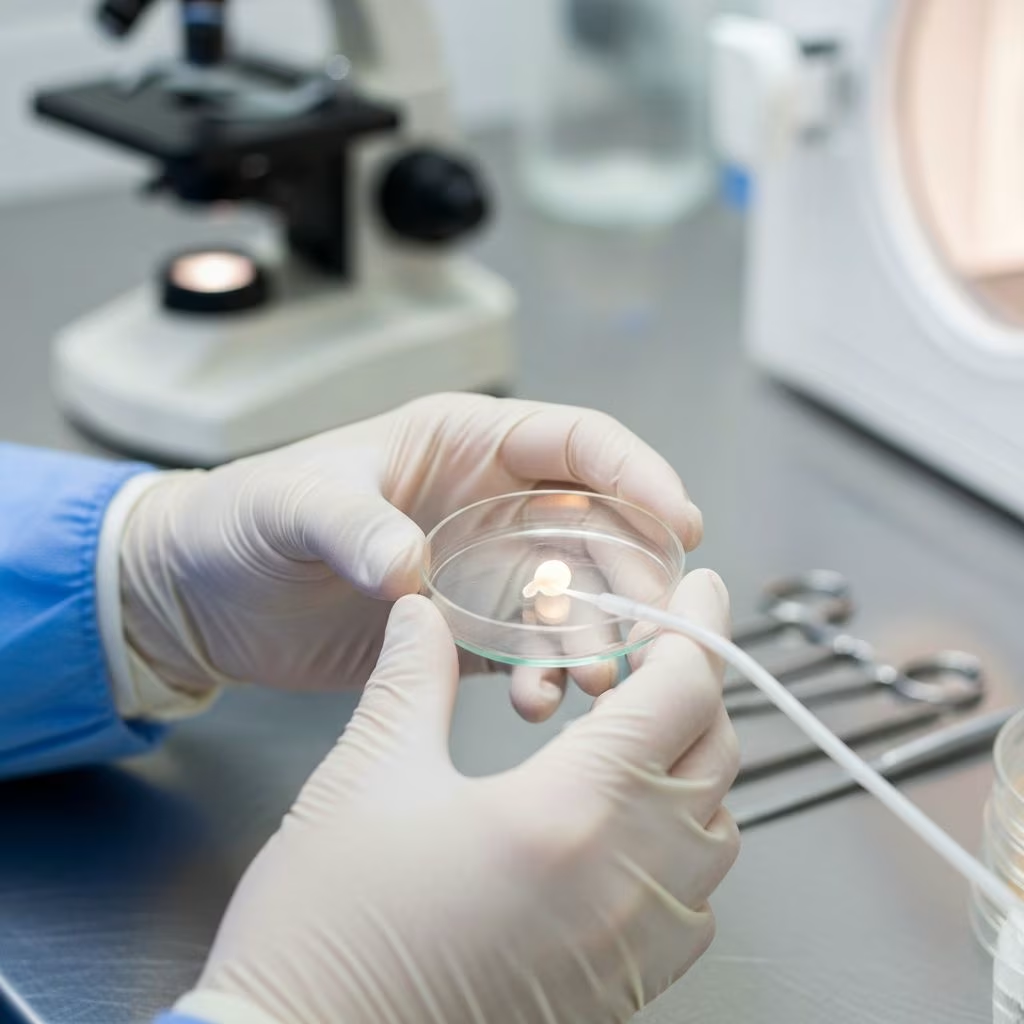
Equine embryo transfer represents a cornerstone of modern horse breeding, allowing valuable donor mares to produce offspring without interrupting their competitive or training schedules. This technique involves recovering embryos from genetically superior donors and implanting them into healthy recipient mares, maximizing genetic potential while minimizing risks associated with pregnancy in performance animals.
Fundamentals of Embryo Transfer in Horses
The process begins with precise synchronization of reproductive cycles between donor and recipient mares. Veterinary monitoring via ultrasound tracks follicular development and ovulation, ensuring optimal timing for insemination and embryo recovery. Typically, embryos are collected 6-8 days post-ovulation when they reach the blastocyst stage, ideal for transfer due to their developmental robustness.
Key benefits include producing multiple foals annually from a single donor—up to 5-10 in some programs—far exceeding natural limits. This is particularly advantageous for sport mares in disciplines like show jumping or racing, where gestation could sideline them for nearly a year.
Selecting and Preparing Donor Mares
Choosing the right donor starts with a thorough reproductive soundness examination. Vets assess uterine health, ovarian function, and history of fertility. Mares with proven track records of producing desirable traits, such as speed or conformation, are prioritized.
- Health Screening: Ultrasound to confirm clean uterus free of endometritis or cysts.
- Cycle Management: Teasing and hormone protocols like prostaglandins or progestins to control estrus.
- Insemination: Fresh, cooled, or frozen semen from selected stallions, often via artificial insemination 24-36 hours pre-ovulation.
Post-insemination, daily checks confirm ovulation, triggering the flush procedure around day 7.
Embryo Recovery Procedures
Recovery is nonsurgical, using transcervical lavage. A specialized catheter (28-37F diameter, 28-34 inches long) with an inflatable cuff is passed through the cervix into the uterus. The cuff inflates with 60-80 mL of air or medium to seal the os, preventing fluid leakage.
Sterile flush medium—typically lactated Ringer’s or commercial solutions enriched with nutrients—is infused (2-4 liters total, in 500-1000 mL aliquots). Rectal massage distributes the fluid into both uterine horns, dislodging the embryo, which drains out via gravity and filtration.
In the lab, fluid passes through double gauze or embryo filters. Under 15x stereomicroscope magnification, the embryo (300-500 microns) is located in a gridded dish, washed 3+ times in holding medium (PBS with 10-20% fetal bovine serum or commercial albumin-based), graded (1=excellent to 5=degenerate), and staged (morula to expanded blastocyst).
| Embryo Stage | Days Post-Ovulation | Typical Size | Transfer Suitability |
|---|---|---|---|
| Morula | 5-6 | <300 μm | Moderate |
| Early Blastocyst | 6-7 | 300-500 μm | High |
| Expanded Blastocyst | 7-8 | >500 μm | Optimal |
Recipient Mare Management
Recipients must mimic the donor’s cycle, ideally ovulating 1-3 days later (day 4-6 diestrus optimal). They undergo similar health checks: no infections, strong uterine tone, and history of easy foaling.
- Synchronization: Progesterone implants or oral progestins align cycles.
- Quality Assurance: Pre-transfer ultrasound verifies ovulation and uterine edema regression.
- Herd Dynamics: Maintain 60-70% recipient pool to match donor flush rates.
Pregnancy confirmation occurs at days 10-14 post-transfer via ultrasound, monitoring heartbeat by day 25.
Nonsurgical Transfer Techniques
The gold standard is transcervical transfer. The washed embryo loads into a 0.25-0.5 mL straw with medium-air-medium columns to protect it. Fitted to a gun with a side-delivery sheath, it’s guided ultrasound-assisted into the uterine horn base.
Mild sedation keeps the mare stock-still; success hinges on cervical passage without prostaglandin release, which could lyse the embryo. Transfer completes in 10-15 minutes, followed by 3-7 day ultrasound checks.
Surgical alternatives—flank incision and horn exteriorization—are rare today due to recovery needs and comparable nonsurgical rates (60-70%).
Cryopreservation and Transport Innovations
Fresh transfers yield 60-80% pregnancies, but cryopreservation expands options. Embryos vitrify post-dehydration with cryoprotectants (glycerol, ethylene glycol), plunging into liquid nitrogen at -196°C. Post-thaw survival: ~50% for blastocysts.
Short-term cooling uses semen shippers at 5-15°C for 24-hour transport. Protocols: embryo in holding medium within cryotubes, packed in insulated containers with ice packs.
Advanced Methods: OPU-IVF and ICSI
Oocyte pickup (OPU) aspirates follicles transvaginally, followed by in vitro fertilization (IVF) or intracytoplasmic sperm injection (ICSI). Cultured 7+ days to blastocysts, these yield ~1 transferable embryo per session, with 60-70% pregnancy rates fresh and 50% frozen-thawed.
Ideal for mares with poor flush records or valuable oocytes.
Success Rates and Influencing Factors
Average flush success: 60-80% per cycle; transfer: 70% for grade 1-2 embryos. Factors boosting outcomes:
- Donor age under 15 years.
- Recipient synchrony within 24-48 hours.
- Experienced technicians (success scales with volume).
- Season (higher spring-fall).
| Method | Pregnancy Rate | Notes |
|---|---|---|
| Fresh Nonsurgical | 70-80% | Grade 1 embryos |
| Frozen-Thawed | 50% | Blastocysts only |
| OPU-ICSI | 60-70% | Per session |
Costs, Risks, and Ethical Considerations
Per-cycle costs: $2,000-5,000 USD, covering flushes, transfers, vet fees. Risks include donor endometritis (1-2%), recipient mismatches, or twin reductions. Ethical breeding prioritizes mare welfare, limiting donors to 6-8 cycles/year.
Registries like AQHA register ET foals with notations, ensuring transparency.
Future Directions in Equine ET
Advancements include sexed semen integration, AI-enhanced cycle prediction, and bioreactor culture for mass embryo production. Gene editing via CRISPR on embryos looms, pending regulations.
Frequently Asked Questions (FAQs)
What is the ideal timing for embryo flushing?
Days 6-8 post-ovulation, targeting blastocysts for best viability.
Can all mares be donors?
No; requires excellent fertility, screened uterus, and owner commitment to protocols.
How many foals can one donor produce yearly?
Up to 5-10 with multiple cycles and recipients.
Is cryopreservation reliable?
Yes, 50% success post-thaw, improving with vitrification.
Does ET affect foal quality?
No evidence; foals match donor genetics and thrive equivalently.
References
- Embryo Transfer for Sport Mares: A Smart Breeding Solution — Equine Clinic. 2023. https://equineclinic.com/embryo-transfer-for-sport-mares-a-smart-breeding-solution/
- Embryo Transfer in Horses — Merck Veterinary Manual. 2023-10-01. https://www.merckvetmanual.com/management-and-nutrition/embryo-transfer-in-farm-animals/embryo-transfer-in-horses
- Equine Embryo Transfers: Advanced Techniques — IMV Technologies Academy. 2022. https://www.imv-technologies.com/academy/embryo-transfers-in-equine-2-3
- Embryo Transfer in Horses: What You Need to Know — The Horse. 2022-05-15. https://thehorse.com/1109695/embryo-transfer-in-horses-what-you-need-to-know/
- Embryo Transfer — AQHA. 2023. https://www.aqha.com/-/embryo-transfer



