

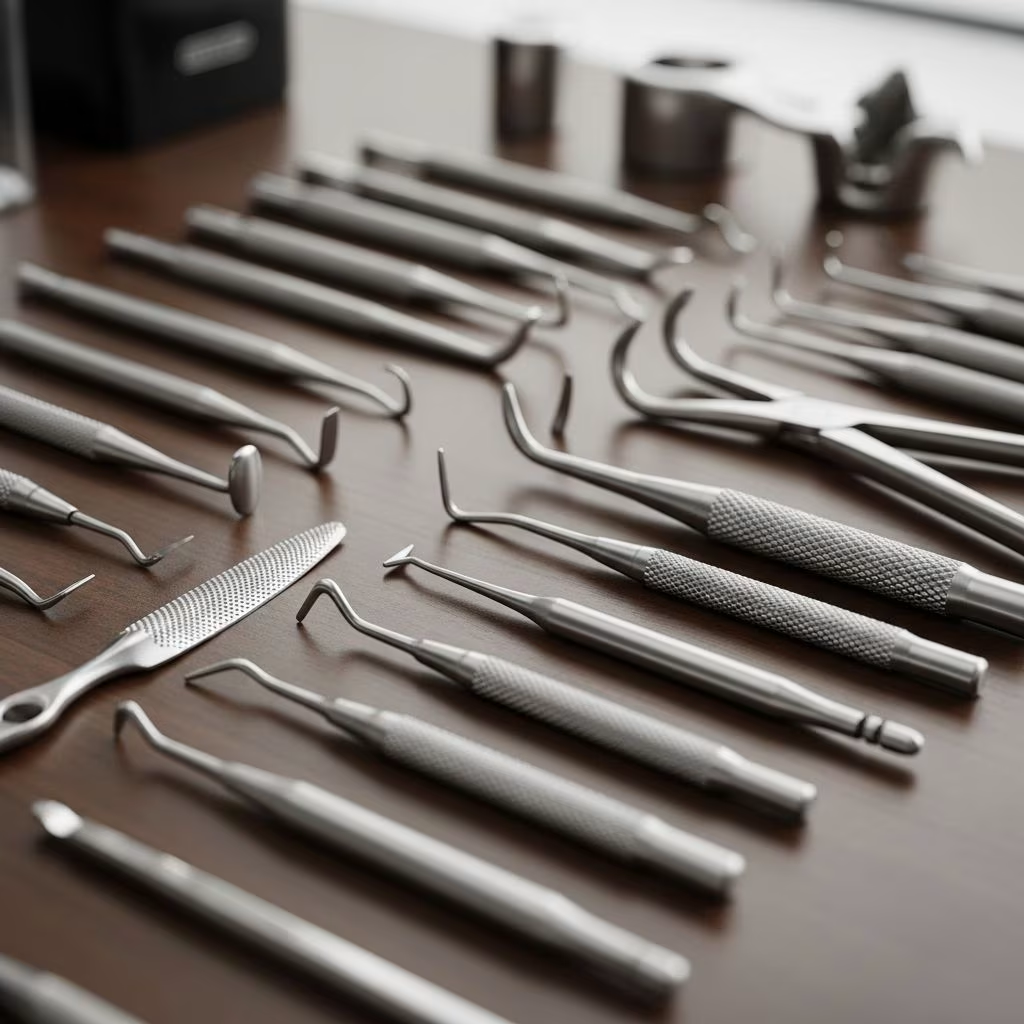
Proper dental care is crucial for horses to maintain optimal health, comfort, and performance. Horses’ teeth continuously grow throughout their lives, leading to unique challenges like sharp edges and uneven wear that can cause pain, weight loss, and behavioral issues if untreated. Modern equine dentistry relies on specialized tools designed to address these problems safely and effectively. This article delves into the core instruments used by professionals, explaining their functions, benefits, and best practices for use.
Understanding Horse Dental Anatomy Basics
Before exploring the tools, it’s important to grasp basic equine dental anatomy. Horses have hypsodont teeth, meaning they erupt continuously from reserves in the jaw, with incisors, canines, premolars, and molars. Common issues include wave mouth, ramps, hooks, and diastemas—gaps between teeth that trap food. Regular check-ups every 6-12 months help prevent these from escalating. Tools must accommodate the horse’s powerful bite and large mouth size while minimizing stress.
Core Examination Instruments
Accurate diagnosis starts with thorough visualization and probing. These foundational tools allow vets to identify problems before they worsen.
- Intraoral Lighting: Bright, focused lights mounted on speculums or headlamps illuminate hidden areas like the back molars, revealing issues undetectable by touch alone. Essential for precise work.
- Dental Mirrors: Angled, anti-fog mirrors (typically 47-50 cm long) reflect light into occlusal surfaces, checking for fractures, decay, or excessive enamel points. They come with protective pouches for hygiene.
- Dental Explorers and Picks: Slender probes detect surface irregularities, remove debris from periodontal pockets, and test tooth integrity. Lengths around 46-47 cm provide reach without discomfort.
These instruments form diagnostic kits, often including cheek retractors and rinsing tools for comprehensive exams.
Mouth Prop Systems: Speculums Explained
Speculums are indispensable for safe access during procedures. They hold the mouth open without risking tooth damage.
| Type | Features | Best For | Safety Notes |
|---|---|---|---|
| McPherson Speculum | Full-mouth access, padded bars, adjustable ratchet | Molar floating, extractions | Safest; no bite risk on molars |
| Swales Speculum | Metal coil or rubber wedge, partial access | Quick exams, incisors | Rubber version safer; limited caudal reach |
| Curved Speculums | 17-45 cm, angled for precision | Wolf teeth, incisors | Ideal for targeted extractions |
Choosing the right speculum depends on the procedure; McPherson models dominate for routine care due to superior safety and visibility.
Manual Floating and Rasp Tools
Hand floats are traditional rasps for smoothing enamel points. Made from high-carbon steel, they come in various profiles for different teeth.
- Flat and Universal Floats: 26-inch lengths for broad surfaces; tungsten carbide blades resist wear.
- Specialized Rasps: Curved or angled for ramps and hooks, ensuring even occlusion.
Skilled operators achieve good results, but they require strength and time. Regular use prevents quidding (dropping food) and ulcers.
Advanced Power Tool Systems
Power floats revolutionized equine dentistry over the last decade, offering speed and precision with reduced tissue trauma.
- Electric and Pneumatic Units: Foredom-style motors with adjustable speeds drive diamond-coated burrs. Compact heads (e.g., Polyfloat, 52 cm long, 487g) feature 360° rotation for hard-to-reach areas.
- Burr Types: Applecore for profiling, decay-specific discs (high-diamond, lasting ~900 horses), diastema burrs in classic (10 types) and compact (8 types) ranges. Minimize soft tissue damage.
- Handpieces: Vestibular (less guarded for comfort), canine mini-handpieces (29 cm), and rinsing-integrated systems cool during use.
Power tools demand training to avoid heat buildup; paired with flushing systems, they excel in complex cases like waves or decay.
Extraction Instruments for Problem Teeth
Some teeth must be removed: wolf teeth (interfere with bits), caps, or diseased molars.
- Wolf Tooth Elevators: Paired sets (#1 straight, #2 angled) loosen small canines gently.
- Forceps and Gouges: Spring-loaded for grip; bone curettes clean sockets post-extraction.
- Molar Tools: Heavy-duty forceps, dental pics with ergonomic handles (46.5 cm, 8 cm grip) for leverage.
Kits like Burgess or LeClair bundle these with cases for portability.
Supportive Equipment for Comprehensive Care
Beyond primaries, adjuncts enhance procedures:
- Flushing Systems: 200 mL pistols or pumps clear debris, vital for diastema treatment.
- Periodontal Probes: Banded explorers measure pocket depths; Equijet water scalers remove calculus.
- Storage and Trolleys: Instrument cases, headstands for speculums keep setups organized.
Endoscopic tools add internal views for advanced diagnostics.
Choosing Quality Equipment: Sets and Kits
Professionals opt for curated sets matching skill levels:
| Kit Level | Includes | Ideal User |
|---|---|---|
| Diagnostic | Mirror, pick, retractor, bucket | Beginner vets |
| Classic Level 4 | Polyfloat engine, burrs, case | Routine practitioners |
| Extraction | Elevators, forceps, speculums | Advanced users |
Durable materials like diamond burrs ensure longevity; warranties cover heavy use.
Best Practices for Safe Equine Dentistry
Safety prioritizes horse and operator well-being:
- Sedation for anxious horses; monitor vitals.
- Cool power tools continuously to prevent pulpal damage.
- Post-procedure: Soft feeds, recheck in 2-4 weeks.
- Training: Power tools require certification to avoid iatrogenic injury.
Integrate routine exams with farrier work for holistic care.
Benefits of Professional Dental Maintenance
Well-maintained teeth improve mastication, reduce colic risk, enhance bit acceptance, and boost performance in disciplines like racing or dressage. Early intervention with proper tools prevents costly extractions.
Frequently Asked Questions (FAQs)
What is the most important equine dental tool?
The speculum, especially McPherson type, for safe access.
Hand vs. power floats: which is better?
Power for efficiency in skilled hands; hand for simple cases.
How often should horses get dental checks?
Every 6-12 months, or sooner if issues arise.
Can wolf teeth cause problems?
Yes, they interfere with bits; extraction often recommended.
Are diamond burrs worth the cost?
Yes, they last longer (~900 uses) and reduce tissue trauma.
References
- Enhancing Equine Health with Leading Dental Products — Eickemeyer Canada. Accessed 2026. https://eickemeyercanada.ca/chomping-at-the-bit-enhancing-equine-health-with-leading-dental-products/
- HDE Catalogue 2025-2026 — Horse Dental Equipment. 2025. https://www.horse-dental-equipment.com/wp-content/uploads/2025/09/CATALOGUE-2025-2026-LD.pdf
- Equine Dental Equipment: What You Need to Know — VetVoice. Accessed 2026. https://www.vetvoice.com.au/ec/horses/equine-dental-equipment/
- The Basics of Equine Dentistry — University of Minnesota Pressbooks (Dr. Linn). 2019. https://pressbooks.umn.edu/app/uploads/sites/7/2019/08/8_Equine-Dentistry_Dr.-Linn.pdf
- Equine Dental Instruments & Tools — Jorvet. Accessed 2026. https://jorvet.com/product-category/large-animal/equine-dental-instruments/



