

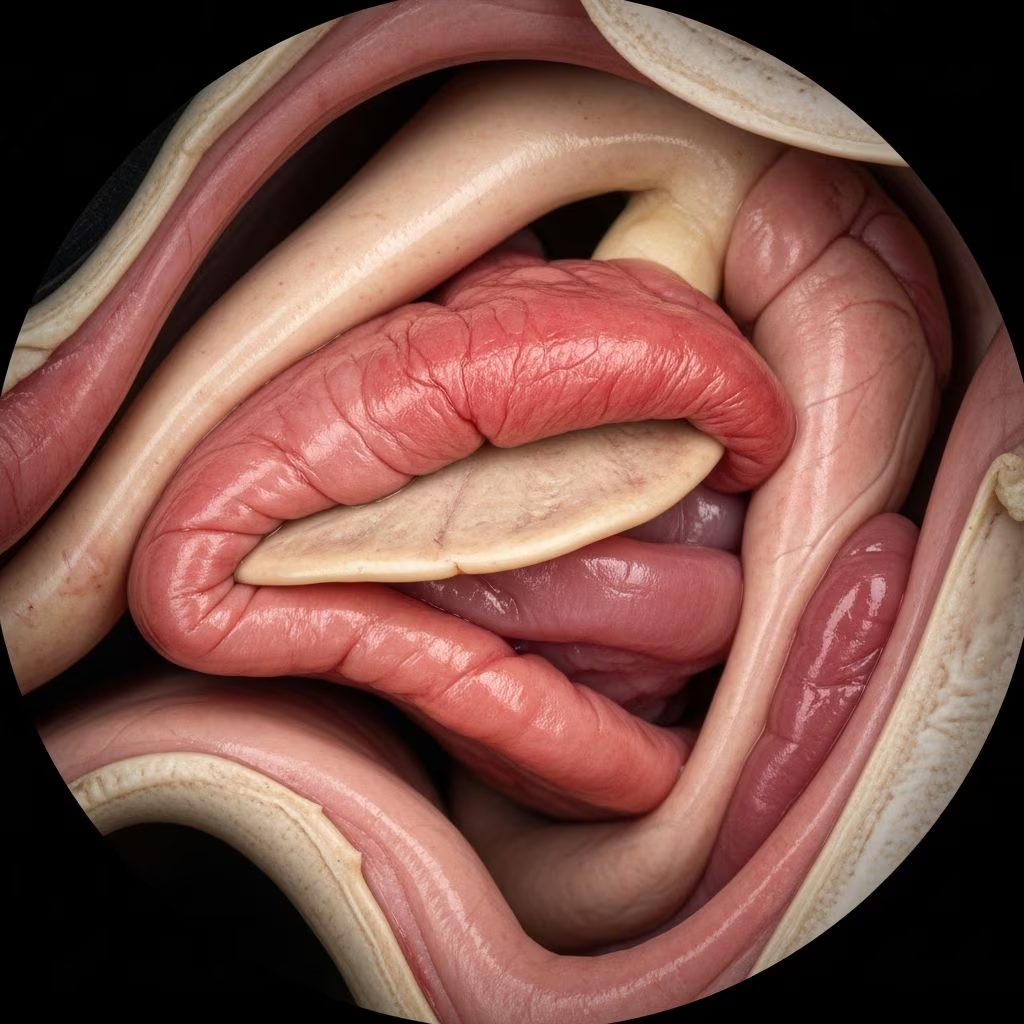
The epiglottis serves as a vital guardian in a horse’s throat, acting as a flexible flap that seals the windpipe during swallowing to prevent aspiration of food or water. When this structure becomes ensnared by surrounding mucosal folds, known as epiglottic entrapment, it disrupts normal airflow, particularly under exertion. This condition, though not widespread, poses significant hurdles for athletic horses, manifesting as audible breathing irregularities and diminished stamina.
Understanding the Anatomy Involved
In healthy equines, the epiglottis positions itself precisely at the entrance to the larynx. During rest, it rests downward, facilitating smooth inhalation and exhalation. Upon swallowing, it elevates to cover the glottis, ensuring safe passage of bolus into the esophagus. The aryepiglottic folds, thin mucosal membranes connecting the epiglottis to the arytenoids, maintain structural integrity without impeding motion.
Entrapment occurs when these folds overly adhere to or envelop the epiglottis, obscuring its characteristic serrated edges and vascular markings. This binding restricts the flap’s ability to reposition dynamically, narrowing the airway and generating turbulent airflow. Chronic cases may lead to secondary inflammation, ulceration, or tissue thickening, exacerbating the obstruction.
Potential Causes and Risk Factors
Although the precise etiology remains elusive, several predisposing elements contribute. Anatomical variations, such as epiglottic hypoplasia—a shorter or malformed epiglottis—increase susceptibility by altering tissue dynamics. Inflammation from recurrent airway infections or intense training episodes can cause mucosal laxity, promoting fold adhesion.
- Conformational anomalies: Shorter epiglottis or lax aryepiglottic tissue heightens risk.
- Inflammatory triggers: Upper respiratory infections or exercise-induced irritation.
- Developmental factors: Some foals exhibit innate predispositions, emerging clinically later in life.
- Intermittent triggers: Swallowing or exertion may temporarily induce entrapment in borderline cases.
Breeds engaged in high-speed disciplines, like Thoroughbreds, encounter this more frequently due to performance demands amplifying subtle flaws.
Recognizing Clinical Manifestations
Horses with epiglottic entrapment often perform suboptimally, especially during intense workouts. Primary indicators include harsh respiratory sounds—described as rattling, gurgling, or wheezing—predominantly on exhalation but sometimes inhalation. Owners or riders note a ‘ballooning’ vibration from the entrapped fold, audible over exercise noise.
Performance deficits are hallmark: horses tire prematurely, resist acceleration, or display headshaking. Less frequent signs encompass coughing, mucopurulent nasal discharge, or rare aspiration events where feed appears from nostrils. In non-racing adults, cough predominates at rest, contrasting with exercise-centric symptoms in racers.
| Symptom | Frequency | Context |
|---|---|---|
| Respiratory noise (gurgling/wheezing) | Common | During exercise, esp. exhalation |
| Poor performance/exercise intolerance | Common | Fast work or racing |
| Cough | Less common | Rest or mild activity |
| Nasal discharge | Rare | Chronic cases |
| Headshaking | Rare | Associated discomfort |
Secondary complications like dorsal displacement of the soft palate (DDSP) may coincide, compounding airway instability during speedwork.
Diagnostic Approaches
Confirmation hinges on visual inspection via endoscopy. A flexible endoscope inserted transnasally reveals the epiglottis blanketed by smooth mucosa, masking its dorsal vessels and notched borders. Resting exams suffice for persistent cases, but intermittent entrapment demands dynamic evaluation.
Over-ground or treadmill endoscopy captures real-time abnormalities during simulated exercise, essential for subtle presentations. Swallowing provocation during scoping can transiently replicate entrapment, aiding detection. Ancillary imaging, like radiography, assesses epiglottic length or cysts, while ultrasound rules out abscesses.
Treatment Strategies: From Conservative to Surgical
Management varies by severity. Mild, intermittent entrapment may respond to rest, anti-inflammatories (e.g., NSAIDs), and controlled exercise resumption, averting progression. However, persistent cases necessitate intervention to liberate the epiglottis.
Laser transection reigns as the gold standard: under standing sedation, a diode or Nd:YAG laser fiber, delivered transendoscopically, axially divides the aryepiglottic fold. This precise incision severs the trap without damaging adjacent structures like the soft palate, boasting a mere 5% relapse.
Alternatives include:
- Transnasal hooked bistoury: Effective under anesthesia, low relapse (0-15%), but risks palate injury if unanesthetized.
- Electrocautery division: Higher 40% recurrence due to thermal spread.
- Transoral wire snare or laryngotomy: Reserved for complex scenarios, involving general anesthesia.
Post-procedure, horses receive antimicrobials, anti-inflammatories, and stall rest (1-2 weeks), progressing to light lunging by week 3. Full athletic return typically spans 4-6 weeks.
Prognosis and Long-Term Outcomes
Success rates excel with laser methods, restoring normal airflow and performance in over 95% of cases. Recurrence is infrequent unless underlying malformations persist. Monitoring via follow-up endoscopy ensures efficacy, particularly in elite athletes.
Factors tempering outlook include concurrent DDSP, epiglottic hypoplasia, or delayed intervention fostering fibrosis. Early detection optimizes recovery, minimizing career interruptions.
Preventive Measures and Owner Vigilance
While not entirely preventable, routine laryngeal exams during prepurchase or annual wellness checks catch predispositions. Promptly addressing respiratory infections curtails inflammation. Trainers should log performance dips or noises, facilitating swift veterinary consults.
Nutritional support bolstering mucosal health—via omega-3s or antioxidants—may mitigate risks, though evidence is anecdotal.
Frequently Asked Questions (FAQs)
What exactly is epiglottic entrapment?
A condition where the epiglottis is bound by aryepiglottic mucosal folds, hindering its movement and airflow.
Can it resolve without surgery?
Intermittent forms may with rest and medication, but surgery is standard for reliability.
How quickly do horses recover post-treatment?
Light work in 2-3 weeks; full training in 4-6 weeks.
Is it hereditary?
Conformational links suggest partial genetic influence, common in racing breeds.
Does it affect all horse ages?
Often diagnosed in yearlings to adults, peaking in performance horses.
Advancements in Equine Airway Care
Recent innovations, like high-definition dynamic endoscopy, enhance diagnostic precision. Laser refinements minimize complications, while research probes genetic markers for breeding selections. Collaborative studies emphasize multidisciplinary approaches, integrating surgery with rehabilitation protocols.
References
- Epiglottic Entrapment in Horses – Merck Veterinary Manual — Merck & Co. 2023. https://www.merckvetmanual.com/horse-owners/lung-and-airway-disorders-of-horses/epiglottic-entrapment-in-horses
- Epiglottic Entrapment in Horses – Respiratory System — Merck Veterinary Manual. 2023. https://www.merckvetmanual.com/respiratory-system/respiratory-diseases-of-horses/epiglottic-entrapment-in-horses
- Epiglottic Entrapment – Texas A&M Veterinary Medical Teaching Hospital — Texas A&M University (.edu). 2024. https://vethospital.tamu.edu/large-animal/equine-soft-tissue-surgery/epiglottic-entrapment/
- Epiglottic Entrapment in Horses: What it is and how its treated — YouTube (Veterinary Channel). 2019. https://www.youtube.com/watch?v=sVXnEHvDrVg
- Epiglottic entrapment in horses — Vet Times (.pdf). 2022. https://www.vettimes.co.uk/app/uploads/wp-post-to-pdf-enhanced-cache/1/epiglottic-entrapment-in-horses.pdf
- Epiglottic entrapment – Surgery – Services — Equitom (.be academic/vet). 2023. https://www.equitom.be/en/medical-services/surgery/epiglottis-entrapment/
- Dorsal Displacement of the Soft Palate in Horses (DDSP) — Mad Barn (equine nutrition/vet reference). 2024. https://madbarn.com/dorsal-displacement-of-the-soft-palate-in-horses/
- Equine epiglottitis: Diagnosis, treatment and outcome — BEVA (Wiley peer-reviewed). 2026. https://beva.onlinelibrary.wiley.com/doi/10.1111/evj.14528



