

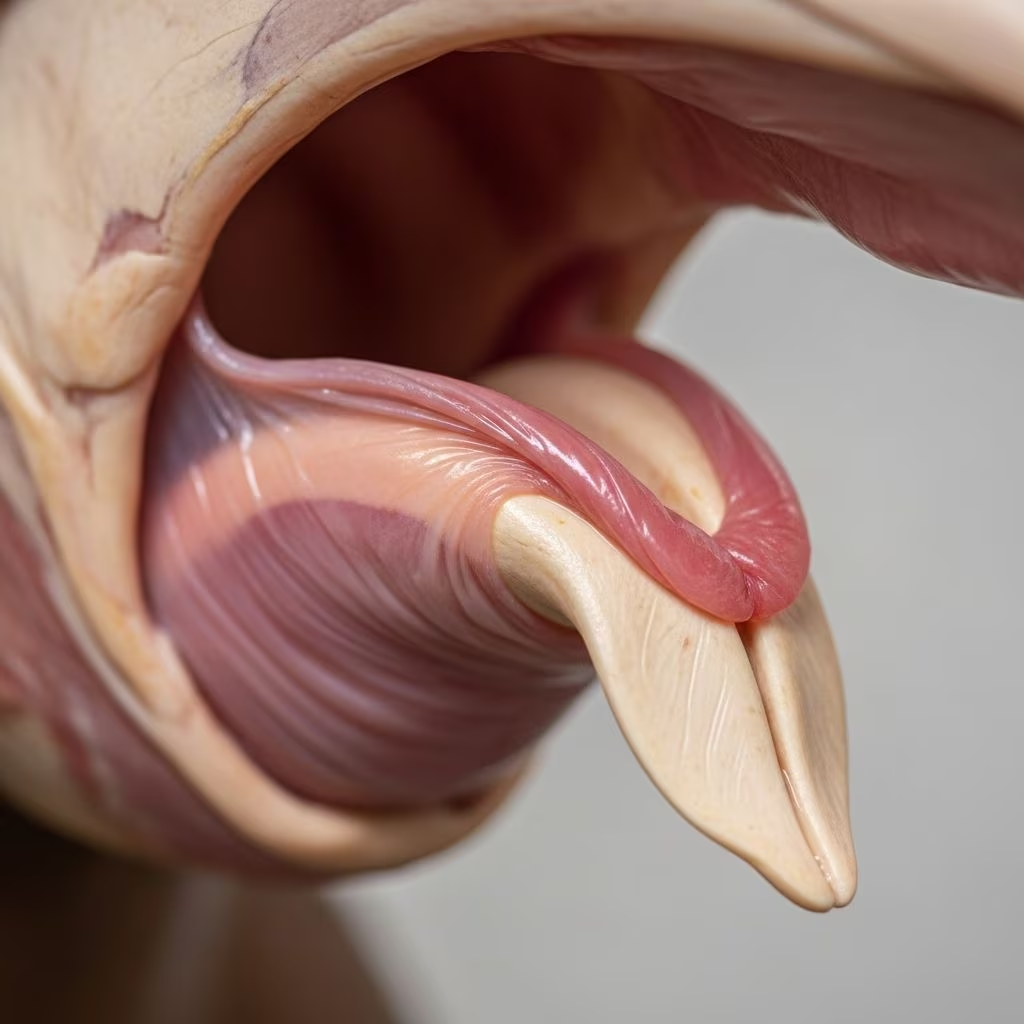
The epiglottis serves as a vital guardian in a horse’s throat, acting as a flexible flap that seals off the windpipe during swallowing to prevent aspiration. When this structure becomes entrapped by surrounding mucosal folds, it disrupts normal airflow, leading to compromised breathing and diminished athletic capability. This condition, though not widespread, poses significant challenges for performance horses, manifesting as audible respiratory sounds and fatigue under exertion.
Understanding the Anatomy of the Equine Upper Airway
To grasp epiglottic entrapment, one must first appreciate the intricate design of the horse’s larynx. The epiglottis projects upward from the base of the tongue, positioning itself over the glottis—the airway entrance—during rest and exercise. Flanking it are the aryepiglottic folds, thin layers of tissue that normally support mobility without obstruction.
In health, the epiglottis snaps into place with each breath, optimizing oxygen intake crucial for high-intensity activities like racing or jumping. Entrapment occurs when these folds overgrow or adhere abnormally, binding the epiglottis and restricting its pivotal motion. This anomaly alters aerodynamics in the pharynx, reducing airflow efficiency by up to notable degrees during peak demand.
Recognizing the Signs: Symptoms in Affected Horses
Horses with epiglottic entrapment often reveal their plight through distinct behavioral and auditory cues, particularly under physical stress. Primary indicators include:
- Respiratory noise: A characteristic gurgling, rattling, or wheezing sound, most evident on inspiration or expiration during trotting or galloping.
- Performance decline: Sudden drops in speed, endurance, or willingness to extend effort, as the jockey senses labored breathing or a ‘giving up’ sensation.
- Less frequent signals: Occasional coughing, nasal discharge containing feed material, or head shaking, hinting at chronic irritation.
In non-racing equines, coughing emerges as the predominant symptom, while racehorses prioritize noise and stamina loss. Symptoms may wax and wane, sometimes resolving momentarily with swallowing, underscoring the intermittent nature that complicates early detection.
Causes and Risk Factors Behind Entrapment
While the precise etiology remains elusive in many cases, several predisposing elements contribute to epiglottic entrapment. Chronic inflammation from recurrent airway infections may thicken the aryepiglottic folds, fostering adhesion. Young Thoroughbreds and Standardbreds appear particularly susceptible, possibly due to rapid growth phases or intense training schedules that exacerbate subtle anatomical variances.
Genetic predispositions cannot be discounted, as certain bloodlines show higher incidence. Additionally, concurrent issues like soft palate displacement or subepiglottic cysts can mimic or compound entrapment, necessitating thorough evaluation. Environmental irritants, such as dusty stables, may inflame tissues, indirectly promoting the condition.
Diagnostic Approaches: Confirming the Condition
Definitive diagnosis hinges on visual inspection via endoscopy, the gold standard for unveiling hidden laryngeal pathologies. A flexible endoscope navigates through the nostril to the pharynx, revealing hallmark changes: the epiglottis loses its serrated edges and prominent blood vessels, obscured by smooth, entrapping mucosa.
Standard resting endoscopy suffices for persistent cases, but dynamic or over-ground endoscopy captures intermittent entrapments triggered by exercise. Veterinarians induce swallowing repeatedly to provoke repositioning, distinguishing true entrapment from related anomalies like cysts. Radiography complements in obscure scenarios, though endoscopy reigns supreme for precision.
| Method | Advantages | Limitations | Best For |
|---|---|---|---|
| Resting Endoscopy | Quick, non-invasive, cost-effective | Misses dynamic issues | Persistent entrapment |
| Dynamic Endoscopy | Captures exercise-induced changes | Requires specialized equipment | Intermittent cases |
| Radiography | Visualizes bone/soft tissue | Less specific for mucosa | Rule out fractures/cysts |
Treatment Strategies: Restoring Airway Function
Conservative management suits transient or mild entrapments, but persistent cases demand surgical liberation of the epiglottis. The preferred modern technique involves transendoscopic laser division—employing Nd:YAG or diode lasers under standing sedation—to axially transect the aryepiglottic fold. This minimally invasive approach severs the entrapping tissue precisely, minimizing complications and boasting a mere 5% relapse rate.
Alternative methods include:
- Hook bistoury transection: Transnasal under general anesthesia or per os in sedated horses, offering near-zero relapse but higher anesthesia risks.
- Electrocautery or wire-snare: Effective yet prone to higher recurrence (up to 40%).
- Invasive options: Laryngotomy for direct excision, reserved for complex cases.
Post-procedure, horses receive anti-inflammatories and antimicrobials to curb swelling and infection. Recent innovations, like shielded bistouries from University of Montreal, enhance safety for standing surgeries.
Recovery Timeline and Post-Operative Care
Recovery is swift for laser-treated horses, with light exercise resuming in 2-3 weeks and full training in 4-6 weeks. Owners monitor for hemorrhage, swelling, or recurrent noise, administering systemic NSAIDs as prescribed. Convalescent periods vary by procedure invasiveness:
- Standing laser: 2-4 weeks restricted work.
- Anesthetized bistoury: 4-6 weeks, with box rest initially.
Follow-up endoscopy verifies success, ensuring the epiglottis moves freely.
Prognosis and Long-Term Outcomes
Prognosis shines brightly, with over 90% of treated racehorses returning to competition. Relapse is infrequent (5-15%), often linked to incomplete division or comorbidities. Studies on Thoroughbreds report 91.6% racing resumption, though 33% face re-admission, half for epiglottitis recurrence. Early intervention maximizes success, preventing chronic performance deficits.
Preventive Measures for Horse Owners
Proactive care mitigates risks: Maintain clean, dust-free environments to avert inflammation. Regular veterinary check-ups, especially pre-training, catch subclinical issues. Balanced nutrition supports mucosal health, while avoiding overtraining in juveniles preserves anatomical integrity.
Frequently Asked Questions (FAQs)
What triggers epiglottic entrapment in horses?
Inflammation thickens aryepiglottic folds, binding the epiglottis; young performance breeds are prone.
Is surgery always required?
No, mild cases may self-resolve, but persistent ones need surgical correction for optimal performance.
How soon can a horse race post-treatment?
Laser procedures allow return in 4-6 weeks; confirm via follow-up endoscopy.
Can it recur after surgery?
Relapse rates are low (5%), minimized by precise techniques.
Does it affect non-racing horses?
Yes, causing cough or mild exercise intolerance; treatment improves quality of life.
Latest Advances in Equine Laryngeal Surgery
Standing laser transections dominate, with tools like diode fibers reducing risks. Research into anti-inflammatory regimens, including inhaled therapies, enhances outcomes for inflammatory variants akin to epiglottitis. Ongoing trials refine bistoury designs for broader accessibility.
This condition underscores the importance of airway health in equines. Prompt diagnosis and targeted surgery restore vitality, enabling horses to thrive in their disciplines.
References
- Epiglottic Entrapment in Horses — Merck Veterinary Manual. 2023. https://www.merckvetmanual.com/horse-owners/lung-and-airway-disorders-of-horses/epiglottic-entrapment-in-horses
- Epiglottic Entrapment in Horses – Respiratory System — Merck Veterinary Manual. 2023. https://www.merckvetmanual.com/respiratory-system/respiratory-diseases-of-horses/epiglottic-entrapment-in-horses
- New Surgical Tool for Treating Epiglottic Entrapments in Standing Horses — The Horse. 2018-06-01. https://thehorse.com/150761/new-surgical-tool-for-treating-epiglottic-entrapments-in-standing-horses/
- Epiglottic Entrapment — Texas A&M Veterinary Medical Teaching Hospital. 2023. https://vethospital.tamu.edu/large-animal/equine-soft-tissue-surgery/epiglottic-entrapment/
- Epiglottic Entrapment in Horses: What it is and how its treated — YouTube (Educational Video). 2019. https://www.youtube.com/watch?v=sVXnEHvDrVg
- Epiglottic Entrapment in Horses — Vet Times (PDF). 2023. https://www.vettimes.co.uk/app/uploads/wp-post-to-pdf-enhanced-cache/1/epiglottic-entrapment-in-horses.pdf
- Equine epiglottitis: Diagnosis, treatment and outcome — Mad Barn (Research Summary). 2023. https://madbarn.com/research/equine-epiglottitis-diagnosis-treatment-and-outcome/



