

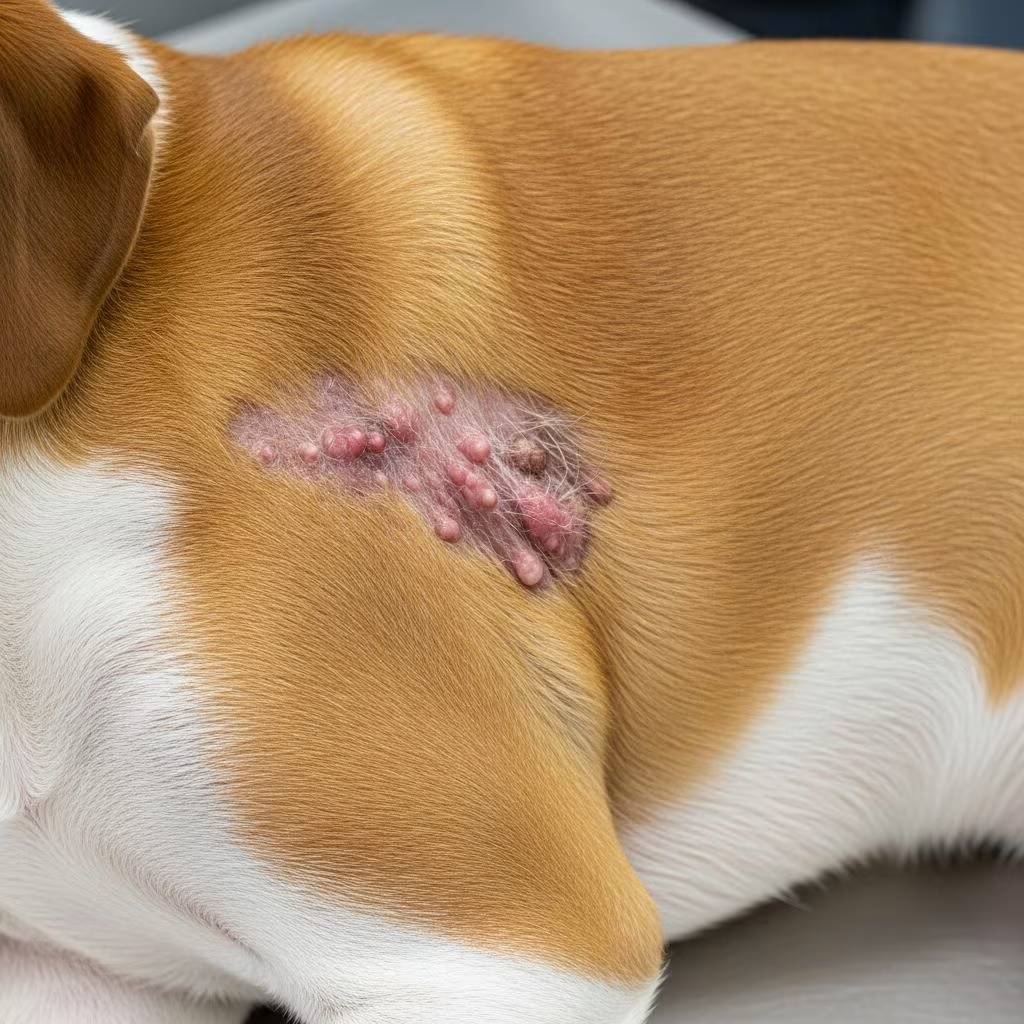
Eosinophilic skin conditions in dogs represent a group of rare inflammatory disorders characterized by the accumulation of eosinophils, a type of white blood cell, in the skin tissues. These conditions often manifest suddenly, causing discomfort and visible lesions that require prompt veterinary attention. Understanding these diseases helps pet owners recognize early signs and seek appropriate care.
Understanding Eosinophils and Their Role in Canine Skin Health
Eosinophils are granular leukocytes primarily involved in combating parasitic infections and modulating allergic responses. In dogs, excessive eosinophil infiltration into the skin can trigger inflammatory cascades leading to tissue damage. While normally protective, dysregulated eosinophil activity underlies various dermatoses, distinguishing them from bacterial or fungal infections through the absence of pathogens on initial exams.
These disorders are termed “sterile” when no infectious agents are detected, highlighting an immune-mediated or hypersensitivity origin. Factors like arthropod bites or environmental allergens may initiate the response, particularly in dogs with outdoor exposure.
Primary Types of Eosinophilic Dermatoses in Canines
Canine eosinophilic skin diseases encompass several distinct presentations, each with unique lesion patterns and affected areas.
- Acute Eosinophilic Dermatitis with Edema (CAEDE): This rapidly progressing condition often follows gastrointestinal upset, featuring edematous, erythematous plaques on the ventral abdomen, thorax, and pinnae. Lesions appear as bright red, arciform patches with marked swelling.
- Eosinophilic Folliculitis and Furunculosis: Common in young, large-breed dogs aged 2-5 years, this involves hair follicle inflammation leading to papules, pustules, and erosions, typically on the trunk and limbs. Outdoor access correlates with higher incidence, suggesting insect-related triggers.
- Eosinophilic Granulomas: These present as firm nodules or plaques, often on the thighs, hips, or oral mucosa, with crusting and ulceration. They differ from plaques by their raised, proliferative nature.
Overlap exists between these forms, with some dogs exhibiting mixed features, complicating initial classification.
Recognizing Clinical Signs and Symptoms
Owners often notice sudden onset of skin changes, sometimes accompanied by fever or lethargy. Key indicators include:
- Pruritus or pain, leading to self-trauma.
- Erythema, edema, and honeycomb-like erosions.
- Hair loss in focal or generalized patterns.
- Secondary crusting or ulceration from prolonged inflammation.
In CAEDE cases, gastrointestinal symptoms like vomiting or diarrhea precede or coincide with dermatologic signs in many patients. Folliculitis cases show peracute development, with lesions clustering in seborrheic areas. Peripheral eosinophilia on bloodwork, though uncommon, supports suspicion in select cases.
Lesion Distribution Patterns
| Condition | Common Sites | Lesion Characteristics |
|---|---|---|
| CAEDE | Ventral abdomen, thorax, pinnae | Edematous plaques, erythema |
| Folliculitis/Furunculosis | Trunk, limbs, back | Papules, pustules, erosions |
| Granuloma | Hips, thighs, mucosa | Nodules, ulcers, crusts |
This table summarizes distribution for quick reference, aiding differentiation from atopic dermatitis or pyoderma.
Pathophysiology: What Drives Eosinophil Infiltration?
The precise etiology remains elusive, but hypersensitivity to insect bites, arthropods, or drugs is implicated. Histologically, lesions reveal perivascular to diffuse eosinophilic infiltrates, flame figures (eosinophil degranulation around collagen), edema, and occasional vasculitis. In folliculitis, eosinophils target follicles, causing furunculosis without initial bacterial involvement. Secondary infections arise from barrier disruption in chronic cases.
CAEDE mirrors human Wells syndrome, with profound dermal edema and collagen degeneration. Gastrointestinal links suggest systemic triggers, possibly immune dysregulation post-enteritis. Genetic predispositions are unproven, but large breeds predominate in folliculitis reports.
Diagnostic Approaches for Accurate Identification
Diagnosis integrates history, cytology, and histopathology, as clinical overlap with sterile neutrophilic dermatoses or drug eruptions exists.
- Clinical Evaluation: Assess lesion acuity, distribution, and concurrent signs like fever or GI issues.
- Cytology: Impression smears show abundant eosinophils, few neutrophils, and no bacteria in early stages.
- Skin Biopsies: Punch biopsies (6-mm) confirm eosinophilic inflammation, furunculosis, or granulomas. Key features: ulceration, mucinosis, flame figures.
- Bloodwork: Leukograms may reveal eosinophilia, as in novel CAEDE reports. Rule out parasites or hypereosinophilic syndrome.
Imaging or allergy testing is ancillary, focusing on excluding mimics like pemphigus or leishmaniasis.
Treatment Strategies: From Supportive Care to Immunosuppression
Glucocorticoids form the cornerstone, offering rapid resolution.
- Systemic Steroids: Prednisone or prednisolone at 1-2 mg/kg PO daily until remission (typically 2-4 weeks), then taper.
- Topical Therapies: For mild cases, steroid sprays or shampoos soothe pruritus.
- Antibiotics: Added if secondary infection suspected, despite initial sterility.
- Supportive Measures: Edema reduction with antihistamines; prevent self-trauma via e-collars.
One case resolved fully post-prednisone over 24 days. Recurrence risks warrant monitoring; alternatives like cyclosporine are explored in refractory instances, though data is limited.
Prognosis and Long-Term Management
Most dogs achieve complete resolution with early intervention, but relapses occur in 20-30% of cases. Young patients with folliculitis fare well, while CAEDE ties to GI recovery. Owners should minimize outdoor exposure during peak insect seasons and monitor for triggers.
Follow-up includes serial cytology and gradual steroid withdrawal to avoid rebound. Nutritional support aids hypoproteinemic cases linked to enteropathy.
Preventive Measures for At-Risk Dogs
While not fully preventable, strategies include:
- Regular flea/tick preventives.
- Limiting access to arthropod-heavy areas.
- Balanced diet to bolster immunity.
- Prompt GI treatment to avert CAEDE progression.
Frequently Asked Questions (FAQs)
What causes eosinophilic skin diseases in dogs?
Triggers likely include insect bites, allergies, or hypersensitivity reactions, though exact causes vary.
Is eosinophilic folliculitis contagious?
No, these are sterile, immune-mediated conditions not transmissible to other pets or humans.
How long does treatment take?
Improvement often occurs within days; full resolution in 2-4 weeks with steroids.
Can these conditions recur?
Yes, especially if triggers persist, requiring vigilant monitoring.
Is surgery ever needed?
Rarely; medical management suffices for most cases.
Eosinophilic skin issues, though uncommon, demand swift diagnosis to prevent progression. Collaboration between owners and veterinarians ensures optimal outcomes.
References
- Eosinophilic Folliculitis/Furunculosis in a Dog — Today’s Veterinary Practice. 2023. https://todaysveterinarypractice.com/dermatology/eosinophilic-folliculitis-furunculosis-in-a-dog/
- Peripheral Eosinophilia in a Confirmed Case of Canine Acute Eosinophilic Dermatitis with Edema — PMC (PubMed Central). 2024. https://pmc.ncbi.nlm.nih.gov/articles/PMC12227095/
- Eosinophilic Lesions in Dogs — Merck Veterinary Manual. 2023. https://www.merckvetmanual.com/integumentary-system/eosinophilic-inflammatory-skin-diseases/eosinophilic-lesions-in-dogs
- Eosinophilic Lesions in Dogs — MSD Veterinary Manual. 2023. https://www.msdvetmanual.com/integumentary-system/eosinophilic-inflammatory-skin-diseases/eosinophilic-lesions-in-dogs
- Eosinophilic folliculitis with multifocal distribution in a dog — Wiley Online Library (BVA Journals). 2021. https://bvajournals.onlinelibrary.wiley.com/doi/10.1002/vrc2.1088



