

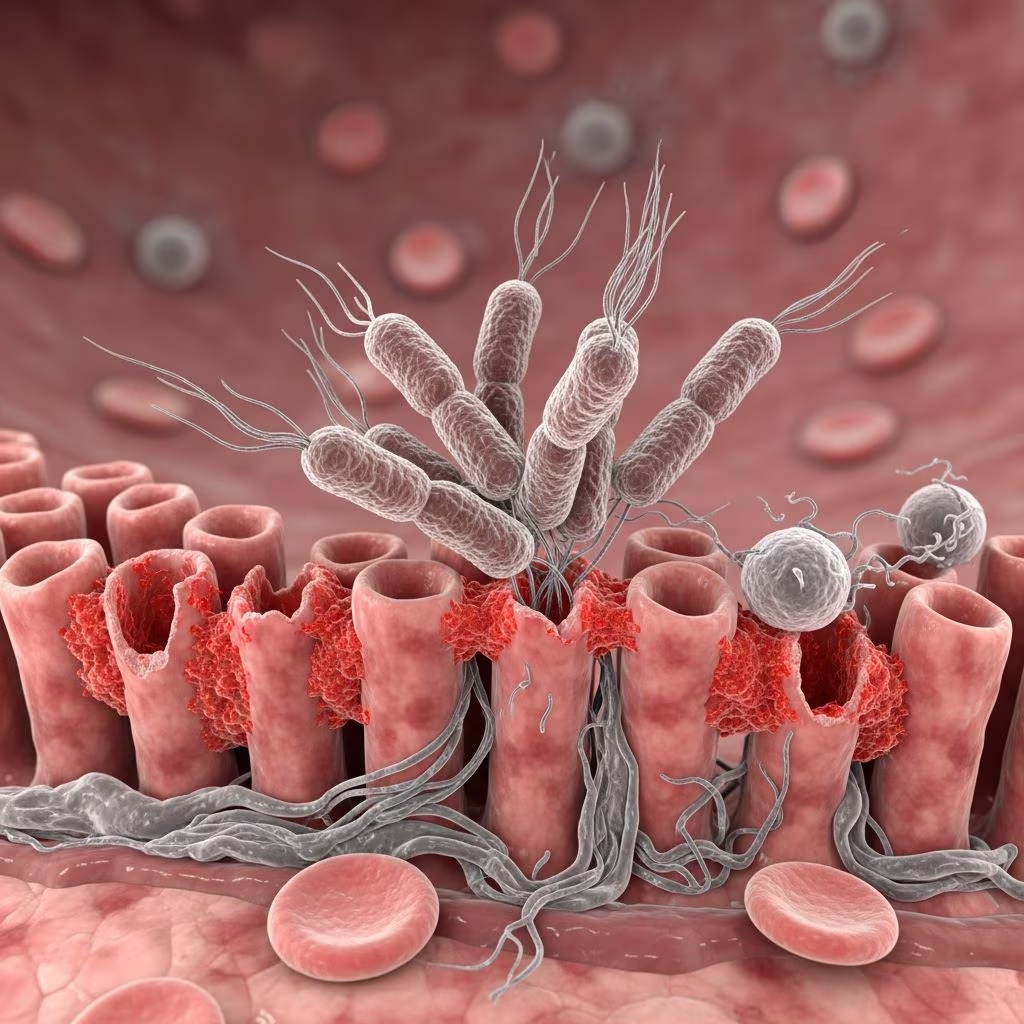
Enteric colibacillosis represents one of the most prevalent and economically damaging gastrointestinal disorders in swine production, particularly impacting nursing piglets and those recently weaned. This condition arises from the invasion of the small intestine by specific pathogenic strains of Escherichia coli, known as enterotoxigenic E. coli (ETEC). These bacteria adhere to the intestinal lining, releasing toxins that disrupt fluid balance, leading to profuse diarrhea, rapid dehydration, and high mortality rates if not addressed promptly.
Understanding the Pathophysiology
The core mechanism of enteric colibacillosis involves ETEC strains equipped with fimbriae—hair-like structures that enable bacterial attachment to enterocytes in the small intestine. Common fimbrial types include F4 (K88), F5 (K99), F6 (987P), F18, and F41, with F4 and F18 predominant in post-weaning cases. Once attached, these bacteria produce enterotoxins such as heat-labile (LT) and heat-stable (STa, STb) toxins, which trigger excessive secretion of water and electrolytes into the gut lumen, resulting in the characteristic watery diarrhea.
In neonatal piglets, the disease often strikes within the first week of life, exacerbated by underdeveloped immunity and passive antibody transfer from colostrum. Weanling pigs face heightened vulnerability due to stress from dietary shifts, environmental changes, and abrupt separation from sows, creating ideal conditions for ETEC proliferation. Genetic susceptibility plays a role; for instance, pigs lacking specific receptors for F4 or F18 fimbriae exhibit natural resistance.
Recognizing Clinical Manifestations
Clinical signs emerge acutely, often within hours of infection. Affected piglets display yellow to grayish, watery diarrhea with a distinctive foul odor, accompanied by lethargy, anorexia, and huddling behavior. Dehydration progresses swiftly, manifesting as sunken eyes, cool extremities, and skin tenting. Acidosis from fluid loss can lead to collapse and sudden death, sometimes without prior diarrhea. In outbreaks, morbidity can exceed 50%, with mortality rates up to 20-30% in untreated litters.
Older weaners may show milder symptoms initially, but progression to severe dehydration remains a risk, especially in dense housing. Subclinical infections contribute to poor growth and feed efficiency, amplifying long-term production losses.
Gross and Microscopic Pathology
Post-mortem examination reveals hallmark lesions: the small intestine is dilated and fluid-filled with thin, yellowish, watery to mucoid contents. The colon mirrors this, while the stomach appears distended with undigested feed. Mesenteric lymph nodes may be edematous, and sudden deaths feature patchy skin erythema.
Histologically, villi maintain normal length, distinguishing this from villus atrophy seen in other enteropathies. Enterocytes host adherent coccobacilli, confirmed via special stains. Bacterial culture and PCR genotyping identify ETEC virulence factors, essential for definitive diagnosis.
Diagnostic Approaches
Accurate diagnosis hinges on integrating history, clinical signs, and laboratory confirmation. Fecal cultures quantify E. coli counts (>106 CFU/g suggests pathogenicity), but genotyping for fimbriae and toxin genes is crucial to differentiate ETEC from commensal strains. Necropsy of 3-5 early-affected pigs (within 12-24 hours of diarrhea onset) optimizes lesion detection and sampling from ileum, colon, and lymph nodes.
Antimicrobial susceptibility testing via minimum inhibitory concentration (MIC) guides therapy, given rising multidrug resistance. Differential diagnoses include rotavirus, Clostridium perfringens, and coccidiosis, ruled out via multiplex PCR or histopathology.
Treatment Protocols
Treatment prioritizes rapid intervention to curb mortality. Parenteral antibiotics are preferred for sick piglets with poor intake, targeting small intestinal infection sites. Common agents include enrofloxacin, apramycin, ceftiofur, neomycin, gentamicin, amoxicillin-clavulanate, trimethoprim-sulfadiazine, and colistin, selected based on MIC results. Metaphylaxis—treating all pen mates during outbreaks—prevents spread.
Supportive care is vital: oral or intravenous electrolytes combat dehydration, often administered via syringe to severely affected individuals. Clean, fresh solutions must be provided continuously. Avoid under-dosing oral antibiotics, which fosters resistance.
| Antibiotic | Route | Key Considerations |
|---|---|---|
| Enrofloxacin | Parenteral | Effective against resistant strains; monitor residues |
| Apramycin | Oral/Parenteral | High resistance in PWD ETEC |
| Ceftiofur | Parenteral | Broad-spectrum; use judiciously |
| Colistin | Oral | Intestinal target; emerging resistance |
Prevention Strategies
Proactive management trumps reactive treatment. Key pillars include:
- Colostrum Intake: Ensure vigorous piglets nurse within hours of birth for maternal antibodies.
- Hygiene: Disinfect farrowing crates, maintain dry bedding, and cull carrier sows.
- Nutrition: High-quality creep feed, acidified water, and probiotics stabilize gut microbiota.
- Vaccination: Sow vaccination with inactivated ETEC vaccines boosts colostral immunity. Oral live vaccines prime gut mucosa against fimbrial adherence.
Innovative alternatives like fermented soybean meal (FSBM), organic acids (e.g., formic/propionic blends), essential oils (cinnamaldehyde, thymol), and phytogenics (clove, fenugreek) reduce diarrhea incidence and improve growth by modulating microbiota and inflammation.
Nutritional Additives Table
| Additive | Benefits | Evidence |
|---|---|---|
| FSBM | Improves growth, reduces diarrhea via microbiota modulation | Weaned piglets challenged with ETEC K88 |
| Organic Acids (Formic/Propionic) | Lowers rectal temp, inflammation, diarrhea | 30 weaned piglets study |
| Essential Oils (Cinnamon, Thymol) | Enhances digestibility, immunity | 144 weaned piglets |
| Calcium Butyrate + Tannins | Boosts histology, reduces cytokines | Piglet performance trial |
Vaccination Options
Vaccines fall into three categories: intramuscular inactivated types for systemic antibodies, oral live attenuated strains for mucosal immunity, and fimbrial-competitive exclusions. Products like Coliprotec F4 significantly cut diarrhea, ileal colonization, and shedding post-challenge. Vaccinate sows 4-6 weeks pre-farrowing; boosters enhance protection.
Farm Management Best Practices
All-in-all-out systems, reduced stocking density, and water quality monitoring minimize transmission. Genetic selection for fimbriae-receptor negative pigs offers long-term resilience. Regular herd profiling for ETEC strains informs tailored protocols.
Frequently Asked Questions (FAQs)
What causes enteric colibacillosis in pigs?
Primarily enterotoxigenic E. coli (ETEC) with fimbriae like F4, F18, producing toxins that cause diarrhea.
How do I diagnose it on my farm?
Combine clinical signs, necropsy lesions, bacterial culture, and PCR for virulence genes.
Are antibiotics always necessary?
Yes for clinical cases; select based on sensitivity testing to combat resistance.
Can vaccination prevent outbreaks?
Sow vaccination provides colostral protection; oral vaccines target weaners effectively.
What supportive care is most important?
Electrolyte rehydration to counter dehydration, alongside hygiene.
Emerging Challenges and Future Directions
Antimicrobial resistance, particularly to apramycin and colistin in post-weaning diarrhea (PWD), necessitates stewardship. Research into bacteriophages, CRISPR-edited resistant pigs, and microbiome therapeutics promises sustainable control. Integrated approaches combining nutrition, vaccines, and biosecurity yield the best outcomes, safeguarding swine health and profitability.
References
- Enteric Colibacillosis in Pigs — Merck Veterinary Manual. 2023. https://www.merckvetmanual.com/digestive-system/intestinal-diseases-in-pigs/enteric-colibacillosis-in-pigs
- Swine enteric colibacillosis: Current treatment avenues — PMC (NCBI). 2022-10-27. https://pmc.ncbi.nlm.nih.gov/articles/PMC9650617/
- Swine enteric colibacillosis: diagnosis, therapy and prevention — PMC (NCBI). 2017-08-01. https://pmc.ncbi.nlm.nih.gov/articles/PMC5547460/
- Neonatal Colibacillosis — The Pig Site. 2023. https://www.thepigsite.com/articles/neonatal-colibacillosis
- Colibacillosis – Swine Diseases — University of Minnesota Libraries Publishing. 2022. https://open.lib.umn.edu/swinedisease/chapter/colibacillosis/



