

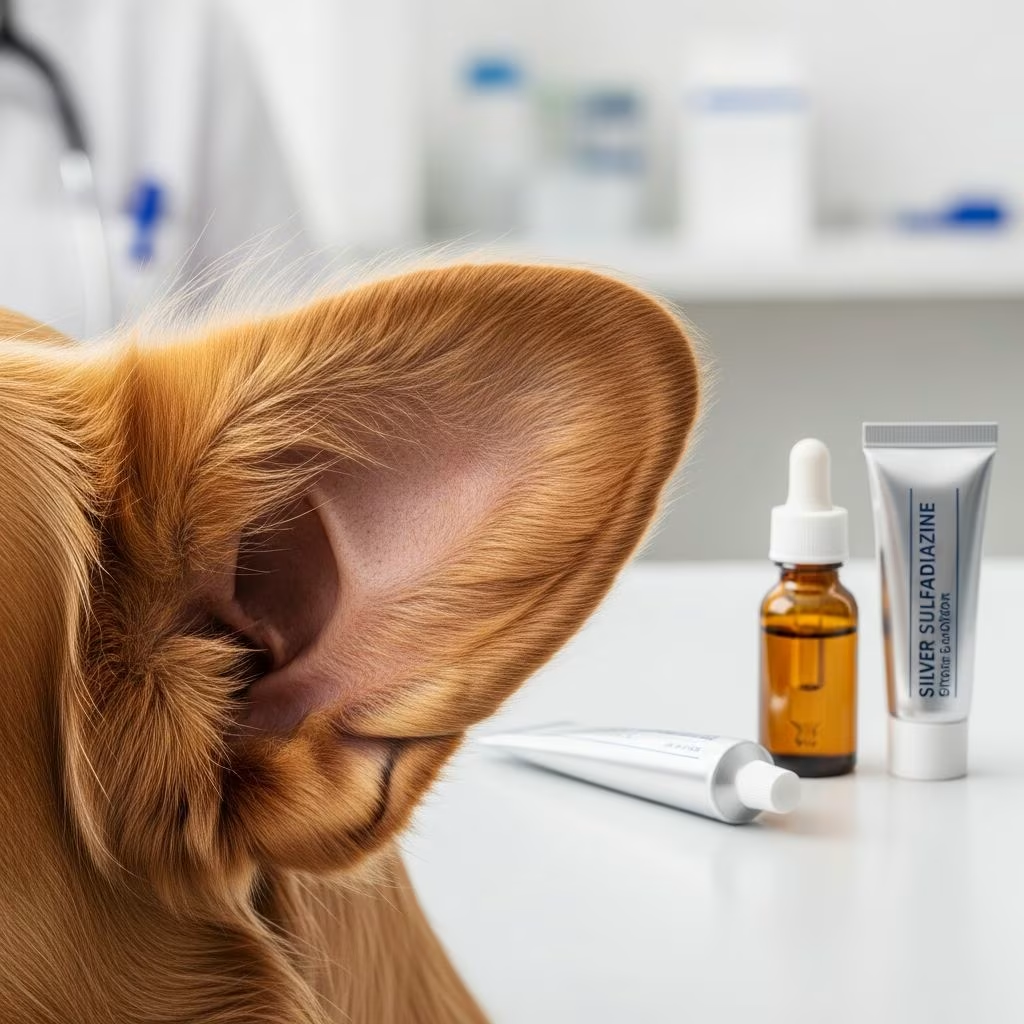
Understanding Enrofloxacin and Silver Sulfadiazine Otic Emulsion
Enrofloxacin and silver sulfadiazine otic emulsion is a specialized veterinary medication designed to treat canine otitis externa complicated by bacterial and fungal organisms. This combination therapy represents an important advancement in veterinary dermatology, offering a dual-action approach to ear infections that affect many dogs. The medication combines two proven antimicrobial agents in an emulsion formulation that penetrates deep into the external ear canal, providing effective relief from ear inflammation and infection.
Otitis externa, commonly known as an ear infection, occurs when inflammation affects the external portion of the ear canal. When both bacterial and fungal organisms are present, treatment becomes more complex and requires a comprehensive approach. This is where the combination of enrofloxacin and silver sulfadiazine proves particularly valuable, as it addresses multiple infectious agents simultaneously.
What is Enrofloxacin and Silver Sulfadiazine?
Enrofloxacin is a fluoroquinolone antibiotic that works by targeting bacterial DNA and preventing bacterial reproduction. Silver sulfadiazine is a potent antifungal and antibacterial agent that operates through a different mechanism, making the combination particularly effective against resistant organisms. When combined in an otic (ear) formulation, these two active ingredients work synergistically to eliminate infections.
The medication is marketed under the brand name Baytril Otic and contains specific concentrations of active ingredients: 5 mg of enrofloxacin (0.5% w/v) and 10 mg of silver sulfadiazine (1.0% w/v) per milliliter. The formulation is suspended in a neutral oil and purified water emulsion, with benzyl alcohol serving as a preservative and cetylstearyl alcohol as a stabilizer. This formulation allows the medication to adhere to the ear canal walls and deliver sustained therapeutic action.
Indications and Uses
Enrofloxacin and silver sulfadiazine otic emulsion is specifically indicated for the treatment of canine otitis externa when the infection is complicated by bacterial and fungal organisms susceptible to either enrofloxacin or silver sulfadiazine. This includes infections caused by common pathogens such as Pseudomonas aeruginosa, Staphylococcus species, and Malassezia (a common fungal organism in dog ears).
The medication is particularly valuable for Pseudomonas infections, which represent one of the most challenging ear infections in veterinary medicine. Pseudomonas is inherently resistant to many conventional antibiotics, making the dual-action approach of enrofloxacin and silver sulfadiazine especially important. The combination is the only otic preparation that fights Pseudomonas with two distinct mechanisms of action, with enrofloxacin attacking from within the bacterial cell while silver sulfadiazine attacks from the outside.
This product is approved exclusively for use in dogs and is a prescription medication, meaning it requires veterinary authorization for purchase and use.
How the Medication Works
Dual-Action Mechanism
The effectiveness of this combination therapy lies in its dual-action approach. Enrofloxacin penetrates bacterial cells and interferes with DNA gyrase and topoisomerase IV, enzymes essential for bacterial DNA replication. This disrupts the bacterial cell’s ability to reproduce and repair itself, leading to bacterial death. Silver sulfadiazine operates through a complementary mechanism, disrupting bacterial cell membranes and inhibiting microbial growth from the outside.
This two-pronged approach is particularly important for difficult-to-treat infections and helps reduce the likelihood of antimicrobial resistance development. When organisms are exposed to multiple mechanisms simultaneously, they have a significantly lower probability of developing resistance compared to single-agent therapy.
Deep Penetration and Distribution
The emulsion formulation is specifically designed to distribute deep into the ear canal, ensuring that the medication reaches all affected areas. Unlike aqueous solutions that may drain quickly from the ear, the emulsion adheres to the ear canal epithelium, providing prolonged contact and therapeutic effect. This characteristic allows for lower dosing frequency while maintaining therapeutic efficacy.
Clinical Effectiveness
The clinical effectiveness of enrofloxacin and silver sulfadiazine otic was established through rigorous, controlled clinical trials. In a double-blind, multi-site clinical trial, 169 dogs with naturally occurring active otitis externa participated in the study. The presence of active disease was verified through aural cytology, microbial culture, and otoscopy with clinical scoring.
The results demonstrated significant superiority over placebo. After 14 days of treatment, therapeutic success occurred in 67% of cases treated with enrofloxacin and silver sulfadiazine otic compared to only 14% with placebo. This substantial difference (with an r-value of 0.001) underscores the medication’s effectiveness in managing canine otitis externa complications. The medication successfully eliminated or reduced clinical signs associated with otitis externa in the majority of treated dogs.
Dosage and Administration
Dosing Guidelines
The dosing of enrofloxacin and silver sulfadiazine otic is based on the dog’s body weight. As a general guide:
For dogs weighing 35 lbs. or less: Administer 5-10 drops per treatment
For dogs weighing more than 35 lbs.: Administer 10-15 drops per treatment
Application Procedure
Proper administration technique is essential for optimal results. The following steps should be followed:
1. Preparation: Shake the bottle well before each use to ensure uniform distribution of the active ingredients and stabilizers.
2. Positioning: Tilt the dog’s head so that the affected ear is presented in an upward orientation, allowing gravity to assist medication flow into the canal.
3. Application: Administer the prescribed number of drops directly into the external auditory canal. Ensure sufficient quantity to coat the aural lesions and the entire canal.
4. Distribution: Following treatment, gently massage the ear to ensure complete and uniform distribution of the medication throughout the external ear canal.
5. Frequency: Apply twice daily for a duration of up to 14 days or as directed by the veterinarian.
It is recommended practice to confirm Pseudomonas ear infections with cytology before beginning treatment, as this inexpensive test can identify specific bacteria, yeast, and inflammatory cells present, helping ensure the best course of treatment.
Safety and Precautions
Important Safety Considerations
Before administering enrofloxacin and silver sulfadiazine otic, the integrity of the tympanic membrane should be evaluated. The use of this medication in dogs with perforated tympanic membranes has not been evaluated, and administration in such cases could potentially lead to complications.
If hearing or vestibular dysfunction (balance problems) is noted during the course of treatment, use of the medication should be discontinued immediately and a veterinarian contacted.
Breeding, Pregnancy, and Lactation
The safe use of enrofloxacin and silver sulfadiazine otic in dogs used for breeding purposes, during pregnancy, or in lactating bitches has not been evaluated. Veterinarians should exercise caution when considering this medication for breeding animals or pregnant/nursing dogs.
Target Animal Safety Studies
Comprehensive safety studies have been conducted to evaluate the medication’s safety profile. In a target animal safety study, the medication was administered to both ears of 24 clinically normal beagle dogs at recommended dosages (10, 30, or 50 drops applied twice daily for 42 consecutive days) and exaggerated dosages. A control group received vehicle only. Erythema (redness) was noted in all groups, including both treated and untreated ears in controls, which resolved following termination of treatment.
An oral safety study was also conducted to test safety in case of accidental ingestion. The medication was administered twice daily for 14 consecutive days to the dorsum of the tongue and left buccal mucosa of six clinically normal dogs. No adverse local or systemic reactions were reported, indicating good safety even if the medication is accidentally swallowed.
Adverse Reactions and Side Effects
During clinical trials, adverse reactions were minimal. Only 2 of 113 dogs (1.7%) exhibited reactions potentially resulting from treatment with enrofloxacin and silver sulfadiazine otic. Both cases displayed local hypersensitivity responses of the aural epithelium to components within the formulation. The reactions were characterized by acute inflammation of the ear canal and pinna (external ear).
These hypersensitivity responses represent isolated cases and do not suggest widespread safety concerns. The overall adverse reaction rate of less than 2% indicates that the medication is generally well-tolerated by most dogs.
Microbiology and Spectrum of Activity
Enrofloxacin and silver sulfadiazine otic demonstrates in vitro activity against cultured organisms commonly encountered in canine otitis externa. Due to its combination of active ingredients, the medication provides antimicrobial therapy against bacteria and fungi, including yeast species, that are frequently isolated from infected ears.
The antimicrobial concentrations achieved through topical application to an exudate and debris-free canal generally result in local antimicrobial concentrations that greatly exceed serum and tissue levels resulting from systemic therapy. This is a critical advantage of topical administration, as high local concentrations ensure effective antimicrobial action at the site of infection.
When interpreting susceptibility data for this medication, it is important to recognize that minimum inhibitory concentrations (MICs) used for systemically administered antimicrobials may not directly translate to topical otic preparations. The substantially higher local concentrations achieved through direct ear canal application often result in efficacy even against organisms that might appear resistant based on systemic MIC interpretations.
Contraindications and Restrictions
Enrofloxacin and silver sulfadiazine otic is approved for use only in dogs and should not be used in cats or other species unless specifically directed by a veterinarian. Young, growing animals should not receive this medication due to potential for cartilage abnormalities associated with fluoroquinolone use.
Federal law restricts this drug to use by or on the order of a veterinarian. It is not available for over-the-counter purchase and requires a valid veterinary prescription. Federal law also prohibits the extralabel use of this drug in food-producing animals.
Storage and Handling
Enrofloxacin and silver sulfadiazine otic should be stored according to the manufacturer’s recommendations, typically at controlled room temperature. The medication should be kept in its original container and protected from light. Shake well before each use to ensure proper dispersion of the formulation. The medication should be used only as directed by a veterinarian and should not be used beyond the expiration date printed on the container.
Comparison with Other Treatment Options
| Treatment Option | Active Ingredients | Spectrum | Formulation | Frequency |
|---|---|---|---|---|
| Enrofloxacin/Silver Sulfadiazine | Dual-action combination | Bacteria and fungi (including Pseudomonas) | Otic emulsion | Twice daily, up to 14 days |
| Single-agent fluoroquinolone | Enrofloxacin only | Primarily bacterial | Solution or suspension | Varies by product |
| Antifungal agents | Various antifungal compounds | Primarily fungal | Otic solution | Varies by product |
Frequently Asked Questions
Q: Can enrofloxacin and silver sulfadiazine otic be used in cats?
A: No, this product is approved for use only in dogs. Cats should not receive this medication unless a veterinarian specifically directs otherwise.
Q: How long does it typically take to see improvement?
A: Most dogs show therapeutic success within 14 days of treatment, though individual response may vary. Your veterinarian will assess progress and determine if continued treatment is necessary.
Q: What should I do if my dog’s hearing decreases during treatment?
A: If you notice hearing loss or vestibular dysfunction (balance problems) during treatment, discontinue use immediately and contact your veterinarian right away.
Q: Is this medication safe if accidentally swallowed?
A: Yes, safety studies have shown that even accidental ingestion does not result in adverse local or systemic reactions in dogs.
Q: Why is it important to shake the bottle before use?
A: Shaking ensures that the active ingredients and stabilizers are uniformly distributed throughout the emulsion, providing consistent dosing with each application.
Q: Can this medication be used preventatively?
A: This medication is indicated for treatment of active infections, not prevention. Use should be directed by a veterinarian based on clinical need.
Q: Why is a cytology test recommended before treatment?
A: Cytology helps identify the specific organisms present, confirming that Pseudomonas or other susceptible organisms are involved, ensuring appropriate treatment selection.
References
- ENROFLOXACIN AND SILVER SULFADIAZINE OTIC EMULSION — National Library of Medicine DailyMed. 2025. https://dailymed.nlm.nih.gov/dailymed/drugInfo.cfm
- Baytril® Otic (enrofloxacin/silver sulfadiazine) Emulsion — Elanco Animal Health. 2025. https://my.elanco.com/us/baytril-otic
- Silva-Tarouca M, Wolf G, Mueller R. Determination of minimum inhibitory concentrations for silver sulfadiazine and other topical antimicrobial agents against strains of Pseudomonas aeruginosa isolated from canine otitis externa. — Veterinary Dermatology. 2019. DOI: 10.1111/vde.12745
- Enrofloxacin (Baytril®) for Dogs and Cats — PetMD. 2025. https://www.petmd.com/pet-medication/enrofloxacin-baytril-for-dogs-cats



