

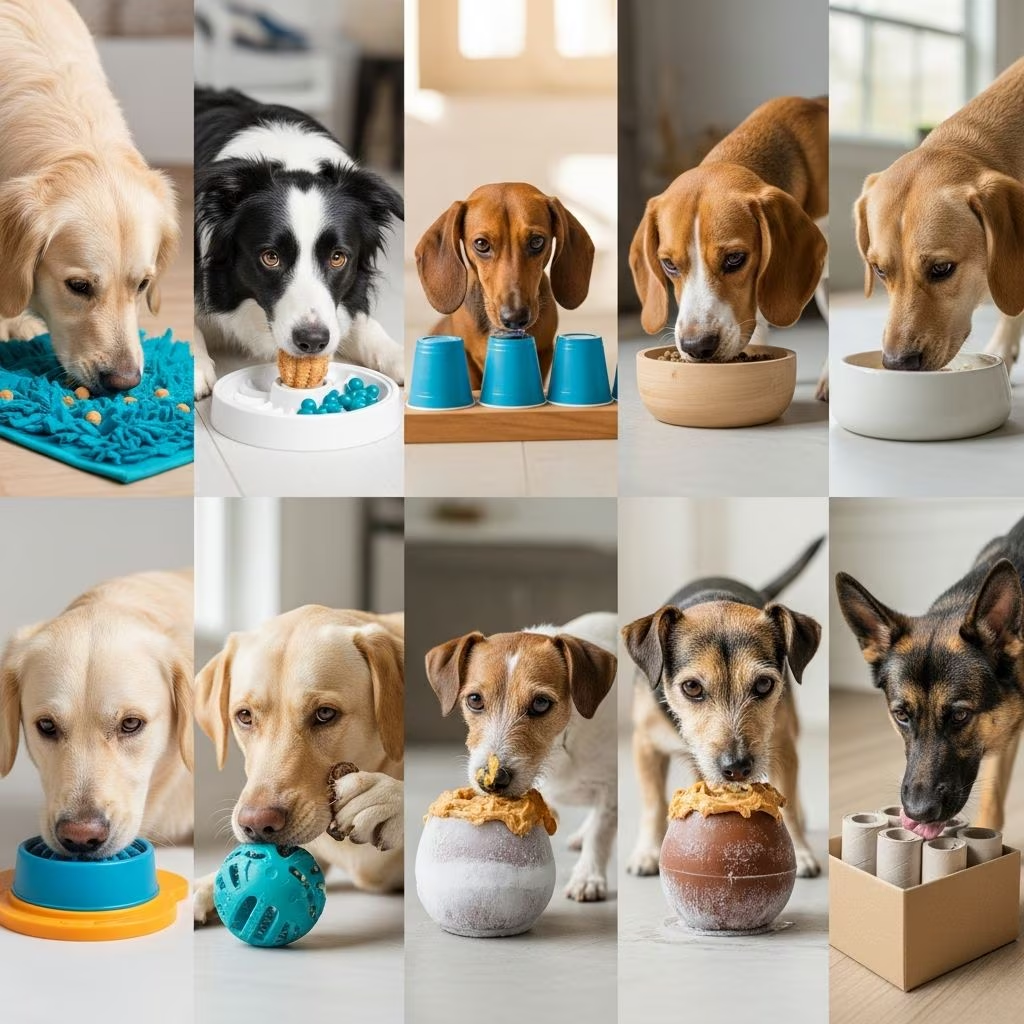
Enrichment games are more than just cute ways to pass the time with your dog. Thoughtfully designed play can exercise your dog’s body and brain, strengthen your bond, and build reliable manners that carry over into everyday life. Many behavior professionals now consider mental stimulation through enrichment a core welfare need, just like food, water, and medical care.
This guide walks you through seven enrichment games inspired by the original Kinship article—plus training tips, variations, and safety notes—so you can turn playtime into a powerful tool for learning and well‑being.
Why Enrichment Games Matter for Dogs
Dogs who regularly engage in interactive, mentally challenging activities tend to show:
- Lower stress levels and fewer boredom-related behaviors, such as destructive chewing or pacing
- Improved emotional balance, especially when physical exercise alone isn’t enough
- Better problem-solving skills and increased confidence in new situations
- Stronger human–dog relationships through cooperative play and communication
Research on environmental enrichment in companion animals and shelter dogs shows that puzzle activities, scent games, and interactive play can reduce stress-related behaviors and improve overall welfare. By pairing games with training, you also make learning more enjoyable and memorable for your dog.
Game 1: Chase (You)
Chase‑the‑human is a simple game that taps into many dogs’ natural desire to move and follow, while keeping the focus safely on you—not on wildlife, cars, or joggers.
What This Game Teaches
- Staying close to you even when excited
- Responding to your body language and voice
- Building enthusiasm for engaging with you instead of the environment
How to Play Chase Safely
- Start in a secure, low-distraction area (indoors or a fenced yard).
- Stand a few steps away from your dog and invite them to play using an upbeat voice, clapping, or patting your legs.
- The moment they move toward you, turn and jog away for a few steps.
- Let them catch up, then reward with praise, gentle play, or a treat.
- Pause, reset, and repeat for short bursts.
Tips and Variations
- Keep movements curved and moderate to avoid triggering overly intense chasing.
- Use a harness and long line if recall is still unreliable outdoors.
- Mix in cues like sit or touch between chases to build impulse control.
| Good For | Use Caution If |
|---|---|
| Dogs who seem “not playful” and need encouragement | Dogs with a history of chasing joggers, cyclists, or wildlife |
| Shy dogs who need confidence around people they trust | Large dogs playing with small children (risk of knocking over) |
Game 2: Fetch
Fetch is one of the most popular dog games, but many dogs only play half of it—they run after the ball, then refuse to return or drop it. True fetch is a cooperative sequence that can teach patience, impulse control, and reliable cues.
Skills Built Through Fetch
- Take it: picking up a toy or ball on cue
- Come when called: returning with an item
- Drop it: releasing the object on cue
- Wait or stay: holding position before the throw
Step‑by‑Step: Teaching a Cooperative Fetch
- Build value in the toy: Wiggle it, toss it short distances, and praise any interest.
- Reward returns: When your dog moves toward you with the toy, back up a step and praise. Offer a treat or a second toy when they reach you.
- Teach “drop” separately: Trade the toy for a treat. As they let go, say your cue (such as “drop”). Repeat until the dog willingly releases the toy on cue.
- Link the chain: Toss, encourage them to pick it up, call them back, cue “drop,” then toss again as the reward.
- Add brief training breaks: After a few successful reps, pause and ask for a sit, down, or high‑five before resuming play.
Enrichment and Safety Notes
- Use soft, dog‑safe toys to reduce impact on joints and teeth.
- Limit repetitive high-impact throws (especially for growing puppies and seniors).
- Vary the environment (indoors, hallway, yard) to add mental challenge without overexertion.
Game 3: Tug
Tug of war is an excellent enrichment game when played with rules. It channels natural grabbing and pulling behaviors in a controlled way and can teach self-control and mouth awareness.
Benefits of Tug
- Teaches impulse control: waiting to start, stopping mid‑game, and calming afterward
- Builds reliable cues like take it and drop it
- Provides intense physical and mental exercise in a short time
- Strengthens the bond through cooperative play rather than competition
Rules for Safe Tug
- Start on cue: Ask for a sit or wait before saying “take it.”
- Use a designated tug toy: This helps your dog distinguish tug time from other objects (like clothing).
- Keep the toy low and move it side-to-side rather than up-and-down to reduce neck strain.
- Practice “drop it” often: Trade for a treat, then restart tug as the real reward.
- End while it’s still fun: Ask for a final drop, reward, and store the toy away.
When to Modify or Skip Tug
- If your dog becomes overly aroused or struggles to release the toy, shorten sessions and emphasize calm breaks.
- If there are any signs of resource guarding around toys, work with a qualified professional before playing tug.
Game 4: Hide-and-Seek (Find You)
Hide‑and‑seek turns recall practice into a fun search game. Your dog learns that finding you is rewarding—even when you’re out of sight—and that listening to their recall cue always pays off.
How to Start Indoors
- Begin when your dog already understands a basic come cue.
- Have another person gently hold your dog or ask them to stay.
- Hide somewhere easy—partially behind a chair or doorframe where you are still somewhat visible.
- Call your dog once, cheerfully: “Come!”
- When they find you, reward with high‑value treats, toys, or brief play.
- Gradually make hiding spots more challenging as they succeed.
Progressing the Game
- Increase distance and complexity: other rooms, upstairs, behind doors.
- Play in a safe, enclosed outdoor area for real‑world practice.
- Add a “stay” before you hide to strengthen stay and impulse control.
Benefits Beyond Fun
- Improves recall reliability, including when you are not in plain sight.
- Teaches your dog to “check in” and look for you if you become separated.
- Helps build confidence in dogs who may be unsure in new spaces.
Game 5: Family Circle (Find a Specific Person)
Family Circle is a social version of hide‑and‑seek. Your dog learns to locate a specific person by name, which can be both enriching and practical in busy households.
What You Need
- At least two people (three or more is even better)
- A dog who already responds fairly well to their come cue
- Small treats or a favorite toy
How to Play Family Circle
- Everyone spreads out around the room or yard.
- Decide whose turn it is to be found (for example, “Karen”).
- Another person asks, “Where’s Karen?” and then Karen calls the dog once.
- If the dog goes to Karen, she rewards generously.
- If the dog goes to someone else, that person stays neutral.
- Repeat with other names: “Where’s Rob?” followed by Rob calling the dog.
Training Goals of Family Circle
- Helps your dog learn and discriminate between family member names.
- Builds strong recall to multiple people, not just one handler.
- Teaches dogs to listen for both verbal cues (“Where’s…?”) and the follow‑up recall cue.
Game 6: Scent & Object Searches
The original article includes several search‑style games. Here we group them under scent and object searches, which all capitalize on your dog’s powerful sense of smell and natural foraging instincts.
Why Nose-Based Games Are So Powerful
- Sniffing and hunting for food or toys provides intense mental stimulation and natural enrichment.
- Nose work can help reduce anxiety and promote calm behavior afterward.
- These games are low-impact and suitable for many dogs with physical restrictions.
Easy Scent Game Ideas
- Treat scatter: Scatter treats over a small area of grass or around a room and encourage your dog to “find it.”
- Hidden toy search: Start with a favorite toy in plain sight, then partially hide it behind furniture, and gradually make hiding spots harder.
- Box or towel puzzles: Place treats in a box or under towels so your dog must sniff and move objects to uncover them.
How to Build Difficulty
- Begin with visible or easy hides to build confidence.
- Move to partially hidden items where scent must guide the dog.
- Introduce multiple hiding locations, with only one containing a treat or toy.
- Eventually, add a cue like “search” or “find it” to start the game.
Game 7: Red Light, Green Light
Red Light, Green Light is borrowed from the children’s game and teaches your dog to shift quickly between excitement and calm. This repeated starting and stopping is excellent for impulse control and focus.
Skills Practiced
- Responding quickly to sit or down cues even while excited
- Controlling arousal during high‑energy play
- Watching and listening to you instead of the environment
How to Play Red Light, Green Light
- Make sure your dog knows at least one reliable position cue, such as sit or down.
- Begin walking or jogging with your dog beside or in front of you—this is green light.
- Say your cue (“sit!”). This is red light. Stop moving.
- When your dog sits, mark and reward (treat, toy, or resuming movement).
- Say a release word (“okay” or “let’s go”) and immediately start moving again.
- Repeat, varying the duration and speed of the green‑light portion.
Where to Play
- Indoors in a hallway or living room
- On walks (using stops and sits instead of a formal start line)
- In a class or group setting as a fun team competition
Making Enrichment Games Safe and Successful
To keep enrichment games beneficial rather than overwhelming, consider your dog’s age, health, and temperament. Welfare organizations emphasize that enrichment should be individualized and adjustable based on how the dog responds.
General Guidelines
- Keep sessions short and end before your dog is exhausted or frustrated.
- Watch for signs of stress (panting, avoidance, pacing) and lower the difficulty if needed.
- Use soft, non‑slip surfaces for high‑energy games to protect joints.
- Introduce new games gradually, especially with shy or fearful dogs.
- Consult your veterinarian before starting intense physical games with puppies, seniors, or dogs with medical conditions.
Sample Weekly Enrichment Plan
Use this simple table as inspiration to blend physical and mental exercise throughout your week.
| Day | Primary Game | Focus |
|---|---|---|
| Monday | Chase (you) | Engagement and following your movement |
| Tuesday | Fetch | Cooperation, drop cue, basic obedience between throws |
| Wednesday | Tug | Impulse control and mouth control |
| Thursday | Hide-and-seek | Recall and confidence |
| Friday | Family Circle | Recall to multiple people and name recognition |
| Saturday | Scent & object searches | Mental enrichment and scenting skills |
| Sunday | Red Light, Green Light | Impulse control and focus on walks |
Frequently Asked Questions (FAQs)
Q: How often should I play enrichment games with my dog?
A: Aim for daily enrichment, even if it is just 10–15 minutes of a simple scent game or training play. Research on environmental enrichment suggests that regular, varied activities provide the best welfare benefits, especially for dogs with limited outdoor freedom.
Q: Can enrichment games replace walks?
A: Enrichment games are a powerful supplement but rarely a full replacement for walks. Walks offer fresh smells, social exposure, and low‑intensity movement that many dogs need. On days when walks are limited, mental games can help prevent boredom and restlessness.
Q: Are these games suitable for senior dogs?
A: Yes, with adjustments. For older or arthritic dogs, prioritize low‑impact games like gentle scent searches, slow hide‑and‑seek, or calmly played Red Light, Green Light. Always consult your veterinarian about new activities if your dog has health issues.
Q: What if my dog gets too excited during games like tug or chase?
A: Build in frequent breaks. Ask for a sit, down, or hand target, reward calm behavior, then resume play. If your dog struggles to settle, shorten sessions and choose more nose‑based games, which tend to promote calmer states.
Q: Do enrichment games help with behavior problems?
A: Enrichment alone does not “cure” behavior problems, but it can significantly reduce stress and frustration, making training and behavior modification more effective. Work with a qualified trainer or behavior professional for issues like aggression, severe fear, or resource guarding, and use these games as part of a broader plan.
References
- Challenges and Solutions Surrounding Environmental Enrichment for Dogs and Cats — Waltham Petcare Science Institute / Newbury et al. 2021-10-13. https://pmc.ncbi.nlm.nih.gov/articles/PMC8532686/
- Enrichment Activities — Animal Friends. 2020-05-01. https://thinkingoutsidethecage.org/resources/enrichment/
- Enrichment ideas for dogs — Guide Dogs UK. 2023-06-01. https://www.guidedogs.org.uk/getting-support/information-and-advice/dog-care-and-welfare/dog-enrichment-ideas/
- How to Make Your Dog’s Life Better with Canine Enrichment — Kinship. 2022-08-10. https://www.kinship.com/dog-behavior/enrichment-ideas-for-dogs
- Choose Your Enrichment Wisely — CattleDog Publishing. 2017-04-12. https://cattledogpublishing.com/blog/choose-your-enrichment-wisely/
- Dog Enrichment: Family-Friendly Games and Activities for You and Your Dog — Dogwise Publishing. 2020-01-01. https://www.dogwise.com/dog-enrichment-family-friendly-games-and-activities-for-you-and-your-dog/



