Enriching Rodent Lives: Toys and Habitats for Rats and Mice
Discover essential toys, habitats, and strategies to boost the well-being of pet rats and mice through thoughtful environmental enrichment.
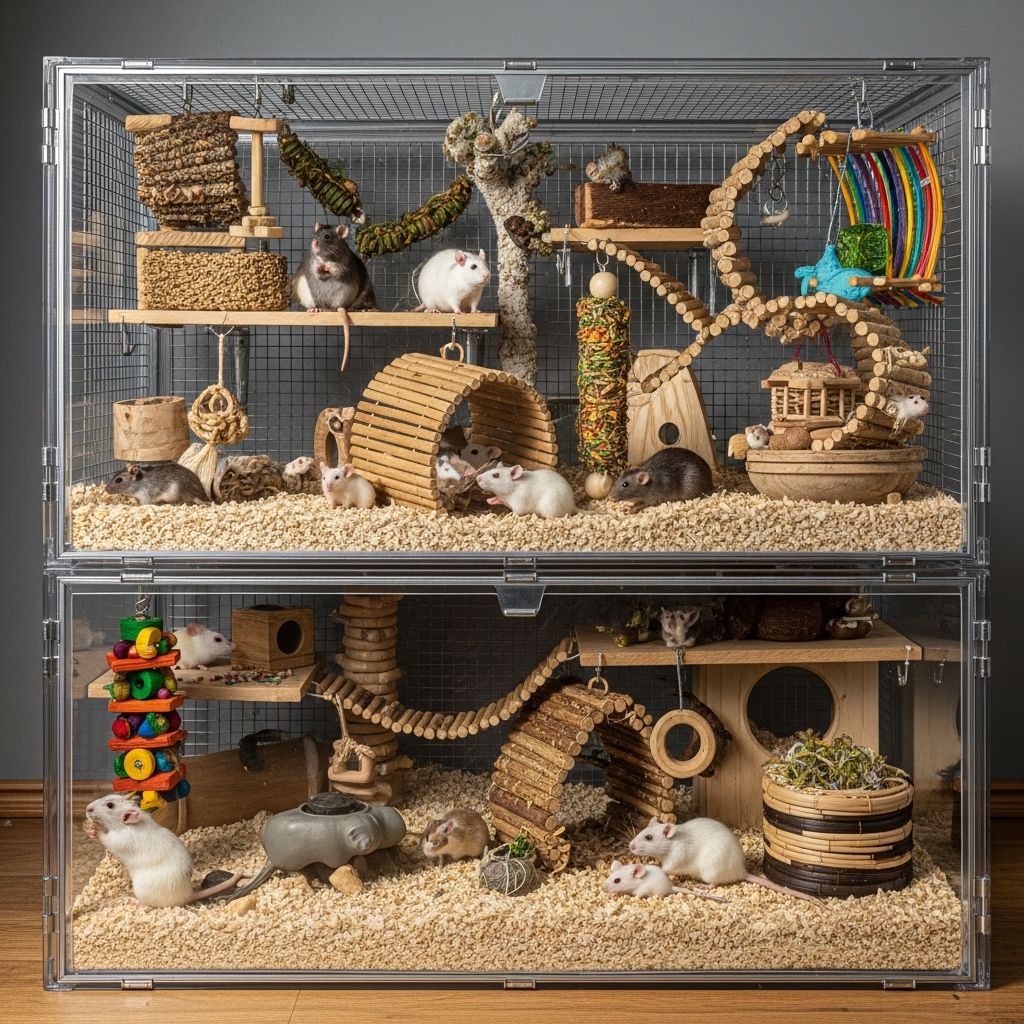
Pet rats and mice flourish when their enclosures mimic natural habitats, promoting physical activity, mental engagement, and social interaction. Environmental enrichment involves providing stimuli that encourage species-specific behaviors, reducing stress and enhancing overall health.
Why Environmental Enrichment Matters for Rodents
Rodents like rats and mice are highly intelligent and active animals in the wild, constantly foraging, exploring, and socializing. In captivity, barren cages can lead to boredom, stereotypic behaviors such as excessive bar-gnawing or pacing, and diminished well-being. Enrichment counters this by offering opportunities for natural behaviors, which studies show improves physical health, cognitive function, and emotional resilience.
Research from laboratory settings, applicable to pets, emphasizes that enrichment should aim to increase positive behaviors, decrease abnormalities, and help animals cope with confinement. Key benefits include stronger immune responses, better weight management, and reduced aggression in group housing.
Core Principles of Rodent Enrichment
Effective enrichment follows guidelines prioritizing safety, affordability, and compatibility with the animal’s age, strain, and health. It must not introduce disease risks or excessive variability in behavior that could stress sensitive pets. Always monitor usage and rotate items to maintain interest.
- Safety first: Choose non-toxic, chewable materials free of small parts that could be ingested.
- Species-specific: Rats prefer complex structures; mice favor nesting and burrowing.
- Rotation schedule: Refresh items biweekly to prevent habituation and sanitation issues.
- Observation: Track preferences via nest quality, item wear, or behavioral changes.
Essential Enrichment Categories for Rats
Rats are social explorers that benefit from multi-level setups encouraging climbing, tunneling, and manipulation. Start with basics and layer in variety.
Social Housing and Companions
Group housing with compatible same-sex rats promotes grooming and play, mimicking wild colonies. Introduce pairs or small groups gradually to avoid fights, providing multiple hides for retreats.
Nesting and Hiding Structures
Provide polycarbonate tubes, cardboard huts, or loft-style platforms large enough for one rat to enter comfortably. These offer security and thermoregulation, changed every two weeks or when soiled.
Chewing and Gnawing Options
Nylabones, untreated wood blocks, or apple branches satisfy dental needs and prevent overgrown teeth. Untreated hardwoods like maple are ideal; avoid softwoods with resins.
| Chew Item | Benefits | Replacement Frequency |
|---|---|---|
| Nylabones | Durable, promotes jaw exercise | Every 2 weeks |
| Wood sticks | Natural flavor, inexpensive | Weekly if heavily used |
| Polycarbonate chews | Safe for nude strains | Biweekly |
Foraging and Puzzle Feeders
Scatter high-fiber treats like hay cubes or seeds in bedding, or use Kong toys stuffed with veggies. This extends feeding time, reducing obesity risks.
Tailored Enrichment for Pet Mice
Mice are burrowers and nesters, thriving on soft materials and simple hides. Their smaller size demands scaled-down items to prevent injury.
Nesting Materials as a Foundation
Cotton squares, shredded paper, or Crink-l’Nest provide insulation and comfort. Mice build elaborate nests, signaling good welfare when nests are tight and domed.
- Nude mice: Use dust-free Bed’r Nest to avoid eye irritation.
- Breeding pairs: Add disposable huts alongside nesting for privacy.
Running Wheels and Exercise
Silent, wire-free wheels (12cm diameter minimum) support nocturnal activity without tail entanglement. Combine with foraging mix for dual purpose.
Manipulanda and Toys
Small balls, tunnels, or climbing ropes encourage play. Plastic chains or forage boards with treat pockets add cognitive challenges.
Advanced Enrichment Techniques
Beyond basics, innovate with sensory stimuli while adhering to safety protocols. Consult vets for protocol approvals.
Sensory and Olfactory Stimulation
Safe scents like vanilla extract on paper or herbal bedding variety stimulate exploration. Positive human interaction via tunnel handling reduces fear.
Structural Modifications
For larger enclosures, add shelves, ramps, or hammocks. In innovive cages, incorporate Innorichment paper for seamless integration.
Handling Refinements
Cup or tunnel handling minimizes tail stress, fostering trust. Pre-socialization with gentle petting enhances adaptability.
| Enrichment Type | Rats | Mice | Evaluation Method |
|---|---|---|---|
| Social | Groups of 2-4 | Pairs or trios | Observe grooming rates |
| Nesting | Huts/tubes | Cotton/paper | Nest quality score |
| Exercise | Wheels, lofts | Small wheels | Usage wear monitoring |
| Foraging | Puzzle feeders | Scattered seeds | Time to forage |
Implementing a Enrichment Program
Develop a routine: baseline with nesting/chewing, add one new item weekly. Budget-friendly options like DIY tunnels from PVC keep costs low. Track via journals noting behavior pre/post-enrichment.
For multi-pet households, ensure scalability. Nude or hairless varieties need adjusted items sans fibers.
Common Pitfalls and Solutions
- Aggression spikes: Increase hides; separate if needed.
- Item neglect: Rotate and observe preferences.
- Sanitation issues: Choose autoclavable or disposable materials.
- Over-enrichment: Avoid excess to prevent obesity or injury.
FAQs on Rodent Enrichment
Can all rats use paper-based nests?
No, nude rats risk fiber inhalation; opt for Nylabones or plastic.
How often to change enrichment?
Biweekly or when soiled, per institutional guidelines.
Is running wheel safe for mice tails?
Yes, with solid-surface models to prevent slipping.
What if my rodent ignores new toys?
Pair with treats initially; test preferences systematically.
Does enrichment affect breeding?
It supports it via reduced stress; add extra hides for moms.
Monitoring Success
Success shows in shiny coats, active play, and complex nests. Use preference tests: offer choices and measure interaction time. Adjust based on data for personalized care.
References
- Environmental Enrichment for Rats and Mice Housed in Laboratories — National Library of Medicine. 2022-02-22. https://pmc.ncbi.nlm.nih.gov/articles/PMC8868396/
- Appendix 1: Environmental Enrichment for Rodents — NIH OACU. 2023-07. https://oacu.oir.nih.gov/system/files/media/file/2023-07/d4a_environmental_enrichment_of_rodents.pdf
- Environmental Enrichment for Rats — University of Washington IACUC. Accessed 2026. https://sites.uw.edu/oawrss/iacuc/environmental-enrichment-sops/environmental-enrichment-for-rats/
- Caring Hands: Environmental Enrichment — Animal Welfare Institute. 2012-03-29. https://www.awionline.org/sites/default/files/products/Pub-CaringHands-Part2-032912.pdf
- Environmental Enrichment — UCLA Research Safety & Animal Welfare. Accessed 2026. https://rsawa.research.ucla.edu/arc/enrichment/
- Choosing Appropriate Enrichment — NC3Rs. Accessed 2026. https://nc3rs.org.uk/3rs-resource-library/evaluating-environmental-enrichment/choosing-appropriate-enrichment
- Rodent Enrichment Policy — University of Rochester Medical Center. Accessed 2026. https://www.urmc.rochester.edu/MediaLibraries/URMCMedia/ucar/policies/documents/Rodent-Enrichment.pdf
Similar Articles








Read full bio of Sneha Tete