

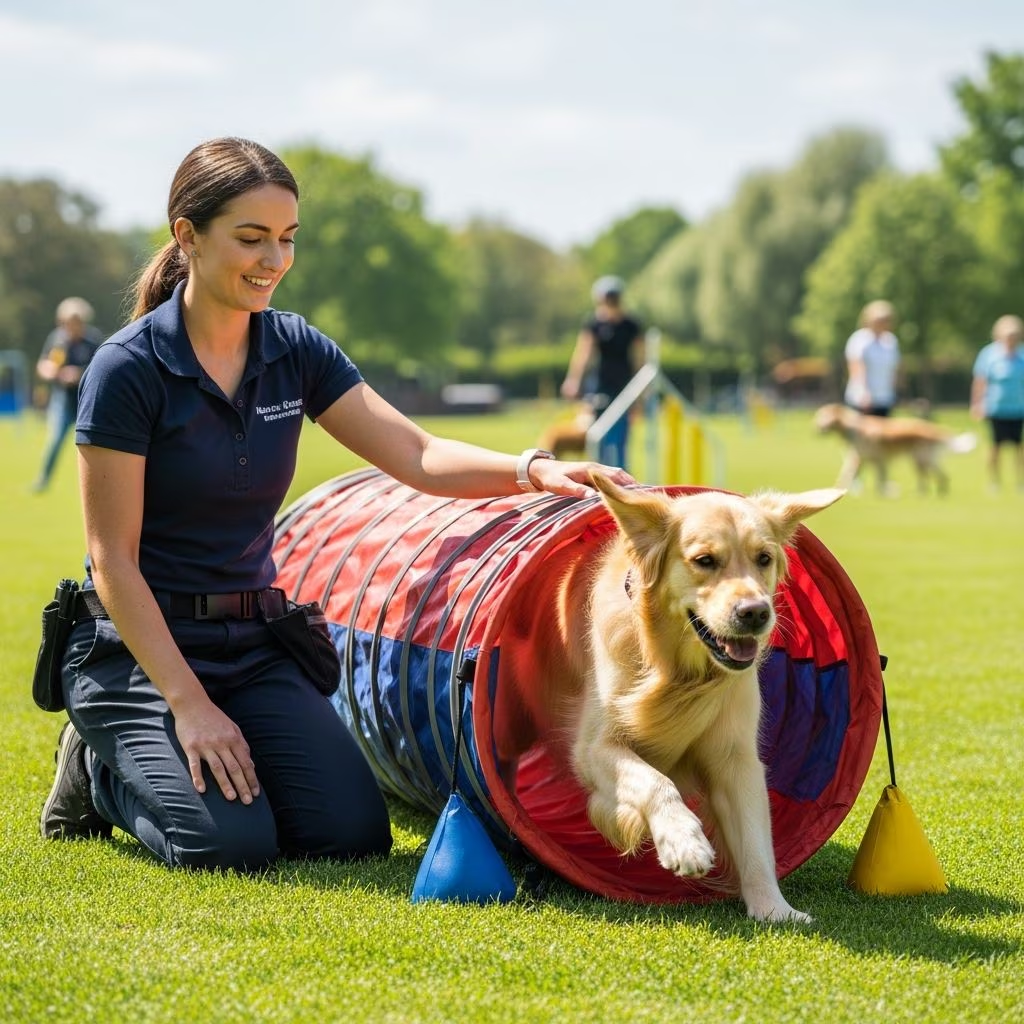
Dogs thrive when their natural instincts are fulfilled through purposeful enrichment, which directly tackles common behavioral challenges like excessive barking, destructive chewing, and anxiety without relying on punishment. This approach enhances mental sharpness, physical fitness, and emotional balance, leading to calmer, more confident companions.
Why Dogs Need Enrichment Daily
Modern dogs often lack the outlets their ancestors had for hunting, exploring, and socializing, resulting in frustration that manifests as problem behaviors. Enrichment restores these opportunities, promoting relaxation and resilience by engaging a dog’s innate drives.
- Modern lifestyles limit natural activities, causing boredom and stress.
- Fulfilling species-typical behaviors, or telos, supports overall health.
- Studies show enriched dogs rest more and exhibit fewer stress signals.
Without it, dogs may develop stereotypic habits like pacing or digging indoors, but regular enrichment reverses these trends effectively.
Key Benefits Backed by Research
Enrichment yields measurable improvements in dog welfare, from reduced cortisol levels to better learning capacity. Veterinary studies confirm it outperforms isolation in shelters, where enriched dogs showed 65% more quiet resting time.
| Benefit | Impact | Evidence |
|---|---|---|
| Stress Reduction | Activates relaxation response via sniffing and chewing. | Shelter study: less alert/stress behaviors. |
| Behavior Improvement | Cuts barking, digging, aggression. | Promotes natural outlets. |
| Cognitive Health | Slows age-related decline. | Problem-solving tasks enhance memory. |
| Physical Fitness | Builds muscle, prevents obesity. | Agility and play boost stamina. |
| Bonding | Strengthens human-dog trust. | Joint activities improve communication. |
These outcomes make enrichment a cornerstone of proactive pet care, especially for high-energy breeds.
Physical Enrichment for Energy Release
Physical activities mimic a dog’s need for movement, channeling excess energy into positive outlets that prevent hyperactivity or destruction. Start with breed-appropriate exercises to match their working heritage.
- Daily walks or hikes on varied terrain.
- Fetch, tug-of-war, or flirt pole games for bursts of speed.
- Swimming or agility setups for low-impact cardio.
- Digging pits outdoors to satisfy instinctive burrowing.
Combine with routines: 30 minutes twice daily tires dogs mentally and physically, reducing unwanted arousal.
Sensory Stimulation to Calm the Mind
Dogs experience the world primarily through senses, especially smell, which comprises 40% of their brain processing. Sensory enrichment soothes anxiety by engaging these pathways gently.
- Sniff walks: Let dogs explore bushes and grass at their pace.
- Textured mats or safe herbs for touch and scent play.
- Calming music or nature sounds via playlists.
- Window perches for people-watching.
Such activities lower heart rates faster than plain exercise, ideal for reactive dogs.
Food-Based Foraging to Slow and Engage
Wild dogs spend hours foraging; replicating this with food puzzles extends meals, curbs gulping, and provides mental workouts. Research indicates these tools enhance learning without diminishing training drive.
- Scatter kibble in grass or snuffle mats.
- Lick mats with yogurt or wet food for prolonged licking.
- Puzzle toys that dispense treats upon manipulation.
- Stuffed frozen toys for chew satisfaction.
Owners report fewer begging incidents as dogs stay occupied longer.
Cognitive Challenges for Sharp Minds
Mental tasks build problem-solving skills and confidence, equivalent in fatigue to physical exertion. Suitable for all ages, they prevent boredom in seniors and overexcitement in pups.
- Teach object names or simple tricks like “spin.”
- Hide-and-seek with toys or treats.
- Mazes or interactive feeders.
- Nosework games progressing to basic scents.
Short, frequent sessions (5-10 minutes) suit short attention spans, yielding calmer evenings.
Social Interactions Done Right
Positive social exposure prevents fear or overstimulation, tailored to each dog’s personality. Not all dogs love groups; prioritize quality over quantity.
- Supervised playdates with compatible dogs.
- Structured daycare or classes like obedience.
- Human-focused games like cooperative tug.
- Visits to dog-friendly public spots.
Well-socialized dogs adapt better to changes, reducing reactivity.
Tailoring Enrichment to Your Dog’s Profile
Consider age, breed, health, and personality for optimal results. Puppies need frequent, brief sessions; seniors benefit from low-impact sensory work.
| Dog Type | Recommended Focus | Examples |
|---|---|---|
| Puppy | Short cognitive/social | Quick tricks, playgroups |
| Working Breed | Occupational/physical | Herding games, agility |
| Senior | Sensory/food | Lick mats, sniff walks |
| Rescue/Anxious | Calming sensory | Snuffling, music |
Rotate activities weekly to maintain novelty and interest.
Implementing a Daily Enrichment Plan
Consistency is key: integrate 20-60 minutes across types into routines. Track progress with a journal noting behavior changes.
- Assess current issues and needs.
- Schedule morning physical, midday cognitive, evening sensory.
- Monitor and adjust based on responses.
- Involve family for bonding multiplier.
Shelter pilots confirm combined activities yield the best relaxation gains.
Overcoming Common Hurdles
Busy schedules? Use no-prep options like scatter feeding. Resource-limited? DIY with household items. Frustration in new tasks? Start simple and reward heavily.
- Cost barrier: Cardboard boxes as puzzles.
- Time crunch: 5-minute sessions add up.
- Non-food motivated: Praise or toy rewards.
Patience ensures long-term success over quick fixes.
FAQs on Dog Enrichment
Can enrichment replace walks?
No, but it complements them by adding mental depth to physical exercise.
How quickly do results show?
Often within days for stress reduction, weeks for habit changes.
Is it safe for puppies or old dogs?
Yes, adapt intensity to their capabilities.
What if my dog ignores toys?
Build interest by playing together first.
Does it work for aggressive dogs?
It supports management but pair with professional training.
Long-Term Wellness Through Enrichment
Consistent enrichment fosters resilient, joyful dogs less prone to health issues tied to stress. It empowers owners with humane tools, transforming challenges into shared fun.
References
- Using Predictability, Scheduling, and Enrichment to Train Your Dog — VCA Animal Hospitals. Accessed 2026. https://vcahospitals.com/know-your-pet/using-enrichment-predictability-and-scheduling-to-train-your-dog
- Dog Enrichment: What It Is, Benefits, and Activity Ideas — PetSuites of America. Accessed 2026. https://www.petsuitesofamerica.com/blog/what-is-dog-enrichment
- Why is enrichment important for dogs? — RSPCA Knowledgebase. Accessed 2026. https://kb.rspca.org.au/categories/companion-animals/dogs/caring-for-my-dog/why-is-enrichment-important-for-dogs
- 5 Types of Dog Enrichment & Their Benefits — Outward Hound. Accessed 2026. https://outwardhound.com/furtropolis/health-wellness/5-types-of-dog-enrichment
- Effects of Environmental Enrichment on Dog Behaviour: Pilot Study — PMC (PubMed Central). 2022. https://pmc.ncbi.nlm.nih.gov/articles/PMC8772568/
- Healthy Minds, Happy Pets: The Benefits of Pet Enrichment — HP Animal Hospital. Accessed 2026. https://www.hpanimalhospital.com/services/blog/healthy-minds-happy-pets-benefits-pet-enrichment
- Why is enrichment so important for your dog? — Animal Humane Society. Accessed 2026. https://www.animalhumanesociety.org/resource/why-enrichment-so-important-your-dog
- Canine Enrichment — Anti-Cruelty Society. Accessed 2026. https://anticruelty.org/pet-library/canine-enrichment



