

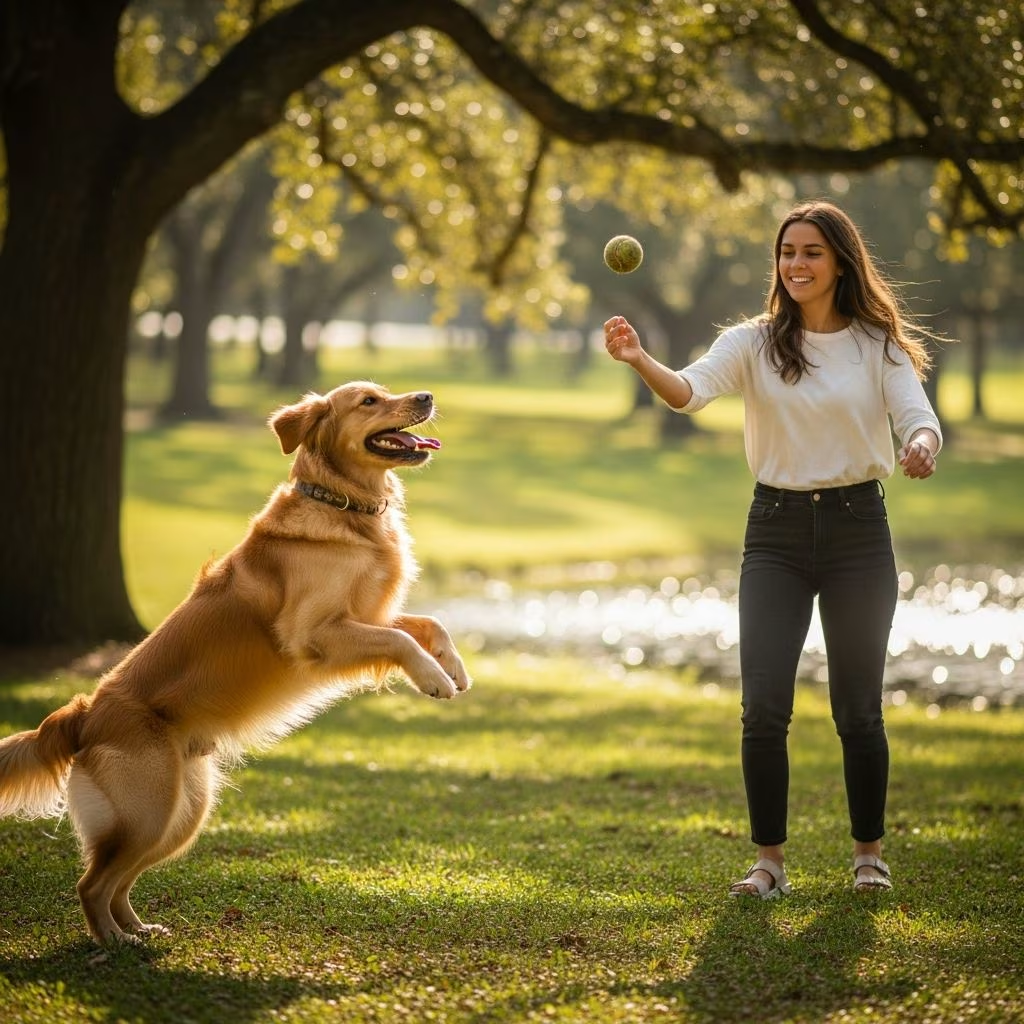
Dog enrichment involves providing structured activities that tap into a dog’s natural instincts, promoting mental sharpness, physical fitness, and emotional stability to prevent and resolve common behavioral challenges like excessive barking, chewing, and anxiety.
The Science of Enrichment in Canine Care
Modern veterinary and behavioral research underscores enrichment as a cornerstone of dog health, far beyond mere playtime. Studies reveal that dogs engaged in enrichment routines exhibit markedly lower stress levels, with shelter dogs showing 65% more resting time after just three days of twice-daily activities. This approach activates the parasympathetic nervous system through actions like sniffing and licking, fostering relaxation and resilience.
Environmental enrichment (EE) significantly boosts relaxation behaviors while curbing alert and stress indicators, as demonstrated in pilot studies where novel activities like playhouses outperformed food-based ones. Cognitive tasks, meanwhile, tire the brain equivalently to physical exertion, building confidence and countering age-related decline.
Key Benefits for Behavior and Health
Enrichment addresses root causes of misbehavior by fulfilling innate needs, leading to transformative outcomes:
- Stress Reduction: Sensory engagements lower cortisol, promoting calm.
- Boredom Prevention: Targeted stimulation averts destruction and hyperactivity.
- Cognitive Boost: Problem-solving enhances learning and slows dementia.
- Physical Wellness: Integrated movement supports weight control and vitality.
- Stronger Bonds: Shared activities improve human-dog communication.
Unlike punishment-based methods, enrichment builds positive associations, making dogs more adaptable and less reactive.
Essential Categories of Dog Enrichment
Effective programs blend multiple enrichment types for comprehensive coverage. Here’s a breakdown:
| Type | Description | Examples | Primary Benefits |
|---|---|---|---|
| Physical | Movement-focused to enhance stamina and coordination | Fetch, swimming, flirt poles, agility courses | Builds fitness, burns energy |
| Sensory | Stimulates smell, touch, sound, and taste | Sniff walks, textured mats, classical music, herb scents | Reduces anxiety, increases engagement |
| Foraging/Food | Mimics hunting via food delivery challenges | Puzzle feeders, snuffle mats, lick mats, scatter feeding | Slows meals, mental workout |
| Cognitive | Brain games and skill acquisition | Trick training, mazes, object naming, hide-and-seek | Boosts problem-solving, confidence |
| Social | Controlled interactions with peers or humans | Playgroups, cooperative games, daycare | Improves social skills, tailored to personality |
Implementing Enrichment for Everyday Routines
Start small by assessing your dog’s preferences and energy levels. Puppies thrive on brief, frequent sessions due to short attention spans, while seniors benefit from low-impact cognitive tasks. Rotate activities weekly to avoid habituation, ensuring sustained novelty as seen in studies favoring new items like bubble machines.
Daily Physical Enrichment Ideas
Incorporate movement without overexertion. A 20-minute flirt pole session rivals a long hike for high-drive dogs, combining chase instincts with interval training. Swimming suits joint-sensitive pets, providing resistance-free cardio.
Sensory Stimulation Techniques
Leverage dogs’ superior olfactory sense—40 times stronger than humans’. ‘Sniffari’ walks, where dogs lead to explore scents, double as calming exercises. Introduce safe textures like bubble wrap or herbs in a ‘sensory garden’ for tactile discovery.
Food-Based Foraging Strategies
Transform mealtimes into hunts. Snuffle mats hide kibble in fabric, extending eating time and reducing gulping risks. Lick mats with pureed wet food activate soothing licking behaviors, ideal post-exercise. Research confirms these enhance learning without diminishing training drive.
Cognitive Challenges for Mental Fitness
Teach names of 10+ toys for vocabulary building, or shape simple mazes from boxes. Scent games progress from basic hides to complex trails, sharpening detection skills akin to working dogs.
Socialization Done Right
Match interactions to temperament—solitary dogs prefer human tricks over dog parks. Structured daycare with supervised play ensures positive experiences, reducing home reactivity.
Tailoring Enrichment to Specific Behavior Issues
Customization amplifies results. For anxious diggers, provide supervised dirt pits; barkers benefit from scent work diverting vocal energy. Hyperactive pups need cognitive puzzles pre-walk to focus minds before bodies.
In daycare settings, enrichment curtails evening restlessness, with owners reporting better sleep and fewer destructions. For rescues, initial low-pressure sensory items ease transitions, mirroring shelter successes.
Common Pitfalls and Best Practices
- Avoid Overloading: Balance types; excess food enrichment may lead to weight gain.
- Monitor Responses: Track behaviors via journals to refine approaches.
- Safety First: Supervise novel items, choose non-toxic materials.
- Consistency Matters: Daily integration yields compounding benefits.
Measuring Success and Long-Term Impact
Track metrics like resting time, destructiveness, and enthusiasm. Studies show rapid shifts: reduced stereotypes in kennels, improved cognition in labs. Long-term, enriched dogs display resilience, adaptability, and deeper family ties.
Frequently Asked Questions (FAQs)
What if my dog ignores enrichment toys?
Introduce gradually with high-value treats; demonstrate use yourself. Persistence pays off as confidence grows.
Can enrichment replace walks?
No—combine both for holistic health. Mental tasks complement physical outlets.
Is enrichment suitable for senior dogs?
Absolutely; gentle cognitive games combat decline without strain.
How much time daily?
15-30 minutes suffices, split across types. Quality trumps quantity.
Does it work for aggressive dogs?
Yes, by reducing frustration; consult pros for tailored plans.
Enrichment empowers dogs to thrive, turning potential problems into opportunities for joy and connection.
References
- Using Predictability, Scheduling, and Enrichment to Train Your Dog — VCA Animal Hospitals. Accessed 2026. https://vcahospitals.com/know-your-pet/using-enrichment-predictability-and-scheduling-to-train-your-dog
- Dog Enrichment: What It Is, Benefits, and Activity Ideas — PetSuites of America. Accessed 2026. https://www.petsuitesofamerica.com/blog/what-is-dog-enrichment
- Why is enrichment important for dogs? — RSPCA Knowledgebase. Accessed 2026. https://kb.rspca.org.au/categories/companion-animals/dogs/caring-for-my-dog/why-is-enrichment-important-for-dogs
- Effects of Environmental Enrichment on Dog Behaviour: Pilot Study — PMC (NCBI). 2022-01-11. https://pmc.ncbi.nlm.nih.gov/articles/PMC8772568/
- Healthy Minds, Happy Pets: The Benefits of Pet Enrichment — HPA Animal Hospital. Accessed 2026. https://www.hpanimalhospital.com/services/blog/healthy-minds-happy-pets-benefits-pet-enrichment
- The Science Behind Dog Enrichment — Tenaker Pet Care. Accessed 2026. https://tenakerpetcare.com/dog-enrichment-activities-for-daycare/
- Why is enrichment so important for your dog? — Animal Humane Society. Accessed 2026. https://www.animalhumanesociety.org/resource/why-enrichment-so-important-your-dog



