

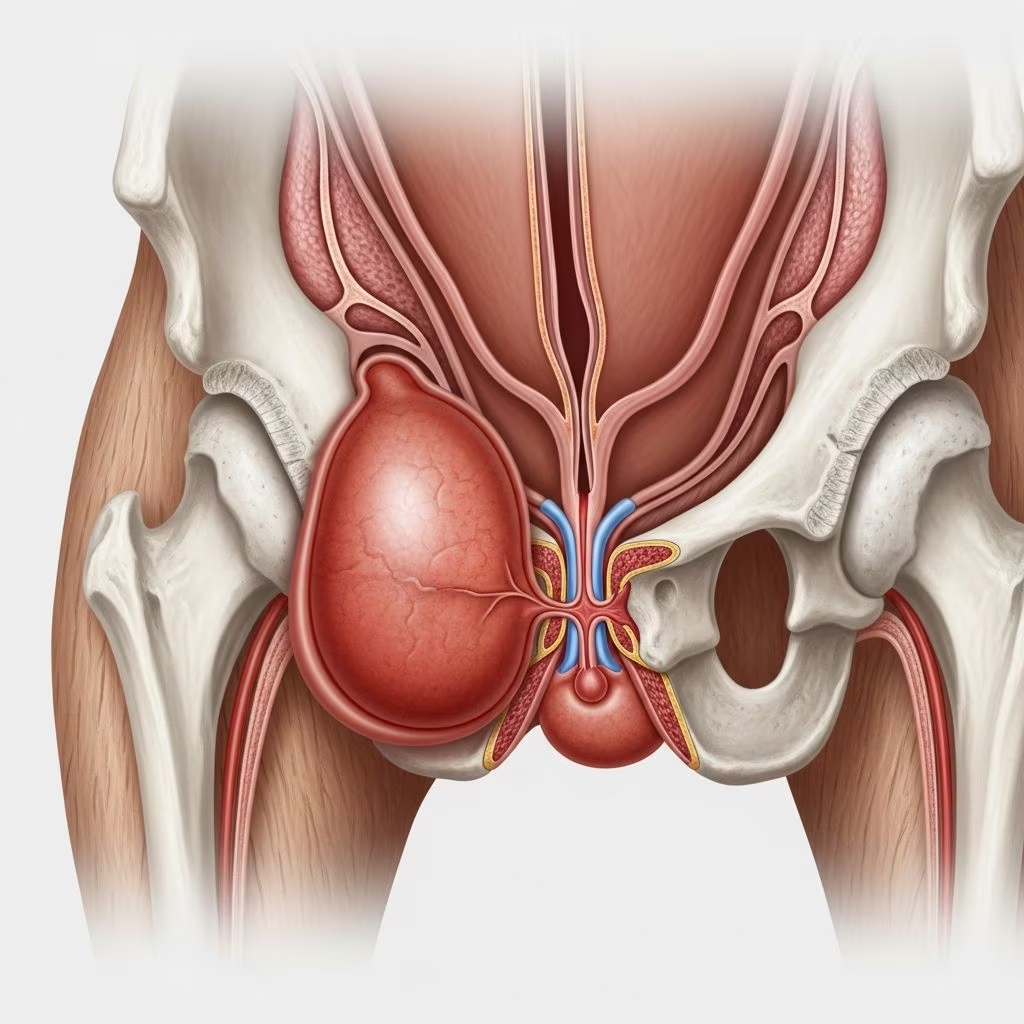
The prostate gland plays a vital role in male canine reproductive function, yet it becomes increasingly susceptible to disease as dogs age. Prostate-related conditions represent a significant health concern for intact male dogs, with benign prostatic hyperplasia being particularly prevalent. Understanding the nature of these conditions, recognizing warning signs, and knowing available treatment approaches empowers dog owners to make informed decisions about their pet’s health.
The Connection Between Testosterone and Prostate Disease
Testosterone dependency is the fundamental factor underlying most prostate disorders in male dogs. Unlike their neutered counterparts, intact dogs maintain continuous testosterone production throughout their lives, which directly stimulates prostate tissue growth. As a dog ages, this prolonged hormonal exposure leads to progressive enlargement of the gland, particularly in dogs over five years old.
This hormonal relationship explains why benign prostatic hyperplasia occurs almost exclusively in uncastrated males and why surgical castration remains the most effective preventive and curative intervention. Understanding this connection provides the foundation for comprehending all subsequent diagnostic and treatment decisions.
Types of Prostate Disorders and Their Characteristics
Benign Prostatic Hyperplasia: The Most Common Condition
Benign prostatic hyperplasia, commonly abbreviated as BPH, represents the most frequently encountered prostate disease in intact male dogs. This condition involves non-cancerous enlargement of the prostate gland that progresses gradually over time. While many dogs with mild BPH experience minimal or no symptoms, others develop increasingly problematic signs as the gland expands.
BPH typically develops slowly and may progress unnoticed for extended periods. Some dogs remain asymptomatic for years, while others begin showing clinical signs relatively early in the disease process. This variability underscores the importance of regular veterinary check-ups for intact males.
Prostatitis: Infection and Inflammation
Prostatitis, defined as inflammation of the prostate gland, represents the second most common prostatic disease in sexually intact male dogs. This condition can develop acutely or progress chronically, with markedly different clinical presentations depending on its severity.
Acute prostatitis presents dramatically, typically involving severe abdominal pain, fever, malaise, and in severe cases, dehydration, septicemia, and shock. Dogs with acute presentations often require immediate veterinary intervention and may need hospitalization for supportive care.
Chronic bacterial prostatitis may cause no observable clinical signs except recurrent urinary tract infections, or symptoms may closely resemble benign prostatic hyperplasia. This insidious presentation can make chronic prostatitis difficult to identify without proper diagnostic testing.
Prostatic Cancer: A Serious Complication
Prostatic tumors represent a more serious form of prostate disease in dogs. Unlike BPH, which is hormone-dependent and non-cancerous, prostatic cancer carries a poor prognosis even with aggressive treatment. Early detection and intervention provide the best outcomes, though even with multimodal therapy, survival times remain limited.
Recognizing Symptoms of Prostate Disease
Dogs experiencing prostate problems often display characteristic warning signs that warrant veterinary evaluation. The spectrum of symptoms can range from subtle to severe depending on disease type and progression.
Urinary Signs
Urinary symptoms frequently represent the first indicators of underlying prostate disease. Stranguria—difficulty urinating or adopting a urination stance without producing urine—occurs when enlarged prostate tissue obstructs the urethra. Dogs may strain repeatedly without results, causing obvious discomfort and frustration.
Bloody urine signals inflammation or damage within the urinary tract or prostate itself. While this symptom is unspecific and may result from various conditions, its presence always warrants professional investigation.
Increased frequency of urination or prolonged bathroom breaks often accompany prostate enlargement as the gland’s pressure irritates the bladder, creating a constant sensation of fullness.
Gastrointestinal and Behavioral Signs
Abdominal pain frequently accompanies prostate disease, particularly in cases of infection or significant enlargement. Affected dogs may cry or vocalize when their abdominal area is touched, demonstrating clear discomfort. Constipation also commonly develops as the enlarged prostate exerts pressure on the colon and rectum, making defecation difficult and uncomfortable.
Hind leg weakness or lameness can develop in dogs with significantly enlarged prostates or advanced cancer. This occurs because nerve pathways and blood vessels supporting rear limb function may be compressed by an abnormally large gland.
Additional behavioral changes may include lethargy, reluctance to move, depression, and stiff gaits, particularly affecting the hind limbs.
Diagnostic Approach to Prostate Problems
Accurate diagnosis requires a systematic approach combining physical examination with targeted laboratory and imaging studies. A veterinarian cannot reliably identify prostate disease through history and observation alone.
Physical Examination Techniques
Diagnosis begins with manual palpation of the prostate gland through both abdominal and rectal examination. These techniques allow the veterinarian to assess gland size, symmetry, consistency, and sensitivity to touch. Rectal palpation provides particularly valuable information about prostate dimensions and surface characteristics.
Imaging Studies
Abdominal ultrasound and radiography confirm suspected prostate enlargement and help assess the severity of changes. Ultrasound provides superior soft-tissue detail and allows visualization of internal gland structure, which is particularly valuable for identifying fluid accumulation, abscesses, or cystic changes.
Radiographs help evaluate the impact of prostate enlargement on surrounding structures, including the urethra, bladder, and colon, and assess for any calcifications within the gland.
Laboratory Analysis
Determining the underlying cause of prostate enlargement requires laboratory investigation. These procedures include:
• Urine culture to identify bacterial infection
• Microscopic urinalysis to assess for inflammatory cells, bacteria, and blood
• Microscopic examination of prostatic fluid obtained through prostatic wash or ejaculate collection
• Tissue biopsy for definitive diagnosis when cancer is suspected
Blood tests provide baseline information about the dog’s overall health and may reveal evidence of systemic infection or kidney involvement.
Treatment Strategies for Prostate Disease
Treatment selection depends fundamentally on the specific diagnosis, disease severity, and the individual dog’s circumstances.
Castration: The Gold Standard for BPH
For dogs with benign prostatic hyperplasia, surgical castration represents the first-choice treatment and delivers outstanding results. Castration permanently eliminates testosterone production, removing the hormonal stimulus driving prostate growth.
Response to castration is rapid and predictable: prostate inflammation decreases by more than 50 percent within three weeks and exceeds 70 percent reduction by nine weeks. This dramatic response rate makes castration curative for BPH in most cases, with dogs experiencing full recovery within several weeks.
For breeding dogs or those for whom anesthesia poses significant risk, alternative medications can manage symptoms without surgical intervention.
Pharmaceutical Approaches
Finasteride represents the most extensively studied medical alternative to castration. This 5-alpha reductase inhibitor blocks the conversion of testosterone to dihydrotestosterone (DHT), the form that directly stimulates prostate growth. Depending on dosage, finasteride reduces DHT levels, shrinks prostate size, and alleviates symptoms while typically preserving testosterone levels and maintaining reproductive potential.
Osaterone acetate functions as a steroidal antiandrogen that produces rapid improvement in BPH symptoms. Some research indicates temporary effects on testosterone levels and sperm quality, requiring careful consideration before use in breeding animals.
Antibiotics form the cornerstone of prostatitis treatment. Veterinarians typically prescribe antibiotics that effectively penetrate prostate tissue, including enrofloxacin, clindamycin, chloramphenicol, ciprofloxacin, and trimethoprim-sulfonamides. Treatment duration typically spans one to two months.
Non-steroidal anti-inflammatory drugs (NSAIDs) such as meloxicam and piroxicam reduce inflammation associated with prostate disease and cancer, improving comfort and potentially extending lifespan in cancer patients.
Innovative Non-Pharmaceutical Therapy
Pulsed electromagnetic field (PEMF) therapy has emerged as a promising non-surgical, non-pharmaceutical approach for BPH management. Research examining PEMF treatment in dogs with enlarged prostates showed that twice-daily 5-minute sessions for three weeks resulted in approximately 50 percent prostate volume reduction, with effects persisting for months. This non-invasive option may appeal to owners seeking alternatives to medication or surgery.
Surgical Interventions
Beyond castration, several surgical procedures address specific prostate complications. Periprostatic cysts and prostatic abscesses require surgical drainage or removal to alleviate symptoms and prevent serious complications. Marsupialization—creating an opening that allows continued drainage—may be performed on cysts causing persistent symptoms.
Prostatic cancer management may involve surgical removal of affected tissue or the entire prostate when disease hasn’t metastasized. Combined with chemotherapy or radiation therapy, surgery offers the best outcome for some cancer patients, though prognosis remains guarded.
Specialty hospitals may place urethral stents to relieve obstruction, while stool softeners and laxatives manage constipation-related complications.
Managing Complications and Aftercare
Untreated or poorly managed prostate disease can trigger serious secondary complications requiring additional intervention.
Potential Complications
Enlarged prostate tissue exerts constant pressure on the bladder, causing overactive bladder with involuntary contractions and urinary incontinence. The pressure also impedes complete urine drainage, creating urinary tract infections through urine stasis. In rare cases, bacteria from prostatitis can enter the bloodstream, causing septicemia—a life-threatening systemic infection. Additionally, untreated urinary tract infections may ascend to the kidneys, causing irreversible damage.
Recovery and Long-Term Management
Recovery timelines vary by condition and treatment type. Dogs treated with castration for BPH typically recover within weeks, returning to normal activity levels completely. Dogs with acute prostatitis requiring hospitalization may need several days of supportive care, including intravenous fluids, pain medications, nutritional management, and possibly urinary catheters to ensure adequate drainage.
Chronic prostatitis often requires extended antibiotic therapy combined with BPH treatment through castration or long-term medications like finasteride. Regular veterinary monitoring ensures appropriate healing and early detection of any recurrence.
Prevention and Long-Term Health Considerations
Early castration provides complete prevention of benign prostatic hyperplasia and significantly reduces prostatitis risk in intact males. Discussing spay and neuter timing with a veterinarian helps balance reproductive considerations against prostate health protection.
Regular veterinary check-ups allow early identification of prostate disease before serious complications develop. Dogs experiencing any urinary symptoms, abdominal discomfort, or hind limb problems warrant prompt professional evaluation.
References
- Prostate Problems in Male Dogs: Diagnosis and Treatment — Total.Vet. 2024. https://total.vet/dog-reproductive-anatomy-prostate-problems-in-male-dogs/
- Medical Treatments for Dogs with Enlarged Prostate — Parsemus Foundation. 2025. https://www.parsemus.org/2025/09/medical-treatments-for-dogs-with-enlarged-prostate/
- Prostate Disorders in Dogs — Mallard Creek Animal Hospital. https://www.mallardcreekvet.com/dr-waldens-blog/prostate-disorders-in-dogs
- Prostate Enlargement in Dogs — PetMD. https://www.petmd.com/dog/conditions/reproductive/prostate-enlargement-dogs
- Prostate Disease in Dogs — Joii Pet Care. https://www.joiipetcare.com/blogs/health-conditions/prostate-disease-in-dogs
- Prostatitis in Dogs — Reproductive System — Merck Veterinary Manual. https://www.merckvetmanual.com/reproductive-system/prostatic-diseases-in-small-animals/prostatitis-in-dogs
- Prostatic Disease in Dogs — VCA Animal Hospitals. https://vcahospitals.com/know-your-pet/prostatic-disease-in-dogs



