

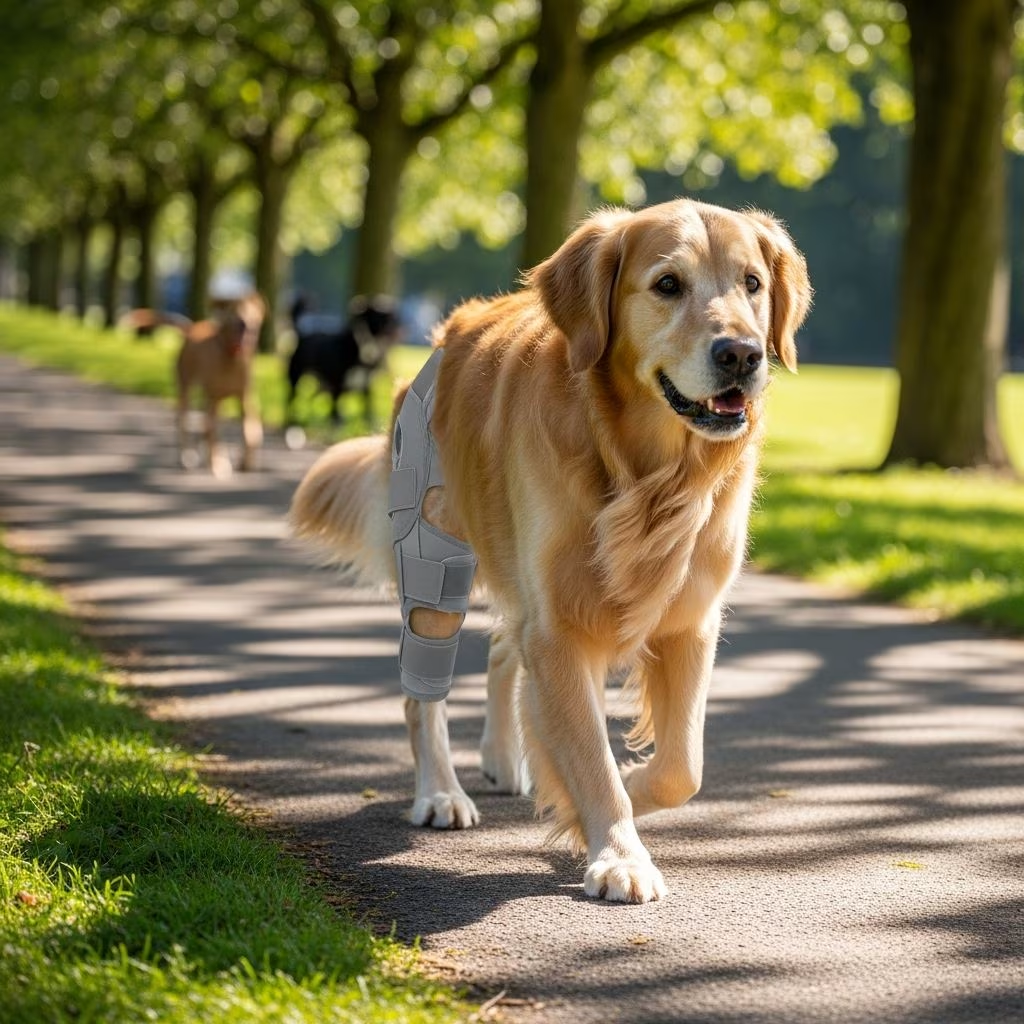
Orthopedic equipment plays a vital role in helping dogs maintain activity levels despite joint issues, injuries, or age-related decline. These devices, ranging from braces to supportive harnesses, offer stability, pain relief, and enhanced movement without invasive procedures.
Why Dogs Need Orthopedic Assistance
Many dogs face mobility challenges due to conditions like arthritis, ligament tears, hip dysplasia, or post-surgical recovery. Braces and supports stabilize joints, reduce inflammation, and promote muscle engagement around affected areas. For instance, in cases of cranial cruciate ligament (CCL) injuries, a brace limits excessive joint movement, mimicking the role of damaged tissues to aid healing.
Owners report significant improvements in their dog’s quality of life (QOL) and their own when using these devices. A study surveying owners found high satisfaction, with many willing to recommend orthotics for positive outcomes in pet comfort and daily function.
Types of Orthopedic Braces for Specific Joints
Dogs benefit from targeted braces designed for particular body areas. These devices vary in rigidity—rigid for severe instability, flexible for mild support—and are customized by size for optimal fit.
- Knee (Stifle) Braces: Essential for CCL deficiencies, these prevent forward tibia slippage relative to the femur, improving stability and reducing pain during recovery.
- Hip Braces: Support weakened hips from dysplasia or arthritis, engaging surrounding muscles and boosting confidence in movement.
- Elbow Braces: Protect against hygromas (fluid-filled swellings from pressure on hard surfaces) and arthritis, providing padding and joint coverage.
- Ankle (Hock) and Wrist (Carpal) Braces: Aid tendon injuries, hyperextension, or post-surgical needs in lower limbs.
- Back Braces: Alleviate spinal pressure from intervertebral disc disease (IVDD), paralysis, or weakness, supporting the torso for better posture.
| Brace Type | Common Conditions | Key Benefits |
|---|---|---|
| Knee Brace | CCL injury, arthritis | Joint stabilization, pain reduction |
| Hip Brace | Dysplasia, limping | Muscle support, mobility improvement |
| Elbow Brace | Hygroma, instability | Padding, ulcer prevention |
| Hock/Wrist Brace | Tendon rupture, hyperextension | Flexibility aid, post-op support |
| Back Brace | IVDD, back pain | Spinal relief, walking ease |
Supportive Harnesses and Slings for Daily Mobility
Beyond braces, harnesses like back support models provide rear-end assistance for dogs with weak hindquarters. Made from durable neoprene and webbing, these feature extended handles to help owners lift without strain, fitting both genders comfortably.[10]
These tools are ideal for seniors or recovering pets, enabling walks, stairs, and standing. They distribute weight evenly, preventing further injury while building strength.[10]
Fitting and Using Orthopedic Gear Effectively
Proper fitting is crucial for efficacy. Measure your dog’s limbs accurately and consult a vet or rehab specialist for custom options. Start with short wear times to acclimate, gradually increasing as tolerated.
Combine with rehab exercises, weight management, and anti-inflammatory diets for best results. Veterinary guidance ensures the device suits the condition—surgery may still be preferable for acute cases, but braces shine for geriatrics or non-surgical candidates.
Benefits Backed by Evidence and Owner Experiences
Orthotics improve joint function, protect limbs, and support weak areas, often as alternatives to costly surgeries (e.g., TPLO at $2,500–$6,500 vs. braces at $195–$325). Owners perceive enhanced QOL, with 100% in one study recommending them.
For chronic issues, braces slow disease progression in young dogs and extend active years for seniors by reducing pain and maintaining muscle.
Comparing Braces to Surgical Options
| Option | Cost Range | Recovery Time | Suitability |
|---|---|---|---|
| Braces/Orthotics | $195–$325 | Minimal, immediate use | Chronic, geriatric, non-surgical |
| Surgery (e.g., TPLO) | $2,500–$6,500 | Weeks to months | Acute, young/healthy dogs |
Care, Maintenance, and When to Seek Professional Help
Clean braces regularly with mild soap, air-dry, and inspect for wear. Monitor for skin irritation or fit issues. If mobility doesn’t improve or worsens, consult a vet—devices supplement, not replace, professional care.
Real-World Applications in Rehabilitation
In rehab programs, braces post-surgery accelerate healing by stabilizing limbs during exercises. Case studies show dogs regaining normal gaits faster with combined brace and therapy use.
Frequently Asked Questions (FAQs)
Are orthopedic braces comfortable for dogs?
Yes, well-fitted braces provide compression that many dogs find soothing, with adjustable designs for comfort.
Can braces replace surgery entirely?
For some chronic cases, yes, but discuss with a vet; surgery is often best for severe acute injuries.
How long should my dog wear a brace?
Typically 4–8 hours daily initially, building up; follow vet advice for your dog’s condition.
Do these devices work for all dog sizes?
Most are size-adjustable, from puppies to large breeds.
What if my dog resists the brace?
Introduce gradually with treats and positive reinforcement; professional fitting helps.
Choosing the Right Equipment for Your Dog
Assess your dog’s specific needs: joint location, severity, and activity level. Prioritize vet-recommended, adjustable products from reputable sources. Early intervention maximizes benefits, especially for developmental issues like hip dysplasia.
Integrate with holistic care—hydrotherapy, acupuncture, or supplements—for comprehensive support. Track progress with mobility scores or vet check-ins.
References
- Complete Guide to Dog Leg Braces, Injuries & Recovery — OrthoDog. 2023. https://orthodog.com/pages/the-complete-guide-to-dog-leg-braces
- Dog Braces and Orthotic Devices — TopDog Health. 2023. https://topdoghealth.com/dog-braces-orthotics-prosthetic-devices/
- Orthopedic Equipment for Dogs that Increase Joint Support — Whole Dog Journal. 2023. https://www.whole-dog-journal.com/lifestyle/dog-gear/orthopedic-equipment-for-dogs-that-increase-joint-support-and-overall-mobility/
- Orthotic Device Use in Canine Patients: Owner Perception — PMC (NCBI). 2021-11-10. https://pmc.ncbi.nlm.nih.gov/articles/PMC8600258/
- Orthotic Devices for Dogs Braces — VCA Animal Hospitals. 2023. https://vcahospitals.com/know-your-pet/orthotic-devices-for-dogs-braces
- Braces, Prosthetics, and Wheelchairs for Rehabilitation — Royal Canin Academy. 2023. https://academy.royalcanin.com/en/veterinary/braces-prosthetics-and-wheelchairs-for-rehabilitation
- Canine Orthopedic Devices — Today’s Veterinary Practice. 2016. https://todaysveterinarypractice.com/orthopedics/practice-to-practice-canine-orthopedic-devices/



