

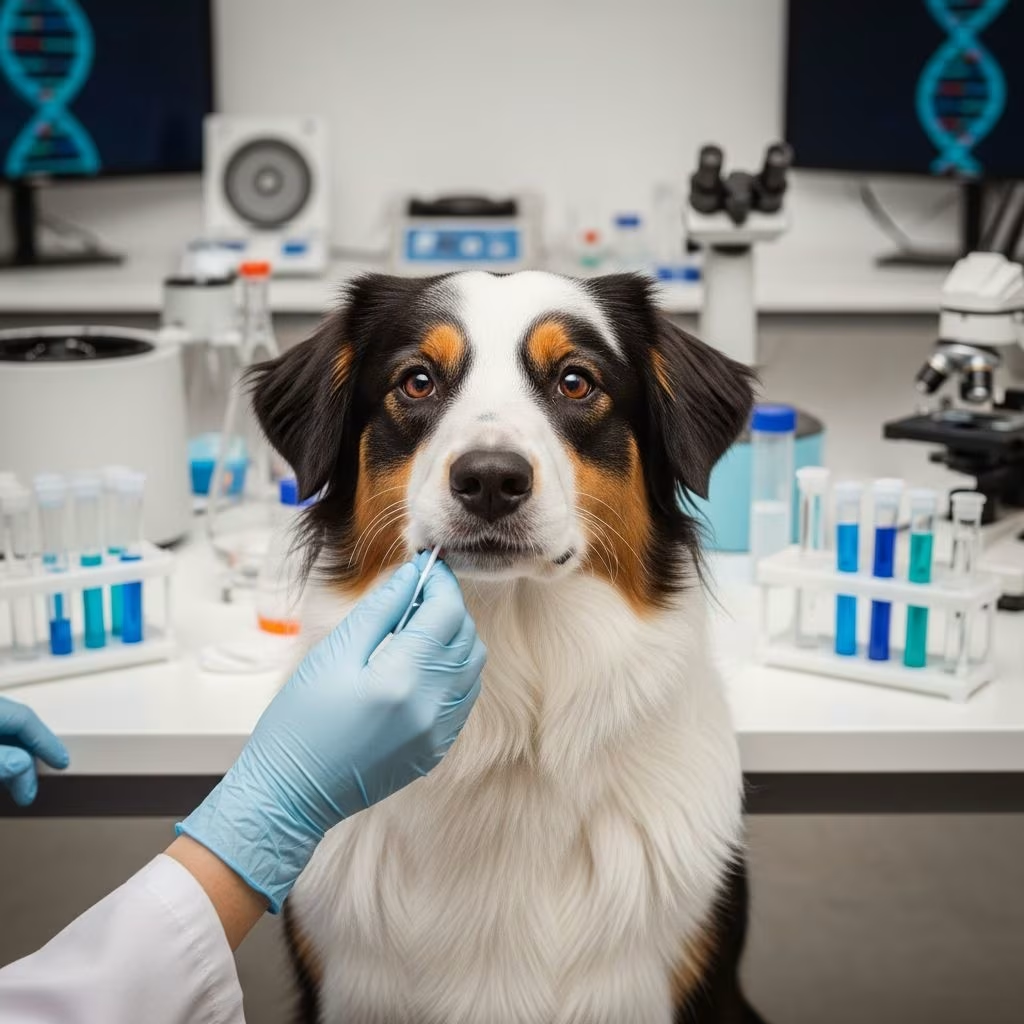
Progressive retinal atrophy (PRA) poses a significant threat to English Shepherd dogs, leading to inevitable blindness without treatment. Recent breakthroughs by University of Cambridge researchers have identified the specific genetic mutation responsible, enabling a simple DNA test that can eradicate this disease from the breed through informed breeding decisions.
What is Progressive Retinal Atrophy (PRA) in English Shepherds?
Progressive retinal atrophy is a group of inherited degenerative eye diseases affecting the retina, the light-sensitive tissue at the back of the eye. In English Shepherds, PRA specifically targets photoreceptor cells—rods responsible for night and peripheral vision, and cones for daylight and color vision—leading to their gradual degeneration.
Dogs with PRA are born with normal vision. Symptoms typically emerge between 4-5 years of age, starting with night blindness and progressing to total blindness by middle age. Unlike other conditions, PRA is non-painful but devastating, as affected dogs lose independence, particularly working breeds like English Shepherds used in herding or search-and-rescue.
- Night blindness: Difficulty navigating in low light, bumping into objects.
- Day vision loss: Dilated pupils, hesitant movement, reluctance to climb stairs.
- Total blindness: No menace response, reliance on smell and hearing.
The condition’s late onset historically allowed carriers to breed unknowingly, perpetuating the gene. English Shepherds’ inbred populations increase recessive disease risk compared to outbred humans.
The Genetic Cause: FAM161A Mutation
University of Cambridge researchers pinpointed an exonic Short Interspersed Nuclear Element (SINE) insertion in the FAM161A gene as the cause of PRA in English Shepherds. This autosomal recessive mutation requires two copies for disease expression: dogs with one copy are asymptomatic carriers, while two copies lead to full PRA.
The study began after a search-and-rescue English Shepherd retired due to blindness. Researchers collected DNA from 6 affected and 20 unaffected dogs, using whole-genome sequencing to identify the mutation. Published in Genes, this marks the 33rd canine inherited disease mutation discovered by the team, 23 involving eyes, highlighting breeding impacts on dog health.
| Genotype | Status | Breeding Risk |
|---|---|---|
| Normal/Normal | Clear | No risk |
| Mutant/Normal | Carrier | 50% chance to pass mutation |
| Mutant/Mutant | Affected | Develops PRA |
Carrier pairings yield 25% affected, 50% carrier, and 25% clear puppies, underscoring testing’s value.
Signs and Symptoms of PRA in Dogs
Early detection is challenging as initial signs mimic aging. Owners notice:
- Cataracts (secondary to retinal degeneration).
- Reluctance to enter dark rooms.
- Increased vocalization or anxiety at night.
- Clumsiness, enlarged pupils in bright light.
Progression varies; rods degenerate first (night blindness), followed by cones. Veterinary ophthalmologists confirm via electroretinography (ERG), measuring retinal electrical responses, or fundus exams showing thinned blood vessels and pigment changes.
Diagnosis: From Vet Exam to DNA Testing
Traditional diagnosis involves:
- Ophthalmic exam: Indirect ophthalmoscopy reveals retinal thinning.
- ERG: Confirms photoreceptor dysfunction under anesthesia.
- DNA test: Gold standard for English Shepherd PRA, detecting FAM161A mutation via cheek swab.
Commercial tests, available for £48 (~$61 USD), process in days. Results classify dogs as clear, carrier, or affected, guiding breeding. Wisdom Panel collaborated, integrating genotyping data.
DNA Testing for English Shepherd PRA
Testing is simple: swab the cheek, mail to lab. Benefits include:
- Pre-breeding screening: Avoid carrier matings.
- Early detection: Manage affected dogs’ environments.
- Elimination strategy: Breed clear dogs to carriers (all puppies carriers or clear), then clear-to-clear for PRA-free lines.
Cost-effective prevention: ‘For the price of a decent bag of dog food,’ per researcher Katherine Stanbury. Labs offer tests directly to owners/vets.
Breeding Responsibly: Preventing PRA
Breeders can eradicate PRA swiftly:
- Test all breeding stock.
- Breed carriers only to clears.
- Phase out carriers over generations.
- Share results transparently.
Since the mutation is breed-specific, population-wide testing could eliminate it within years, unlike historical challenges. This preserves English Shepherds’ working abilities without vision loss.
Treatment and Management Options
No cure exists; degeneration is irreversible. Management focuses on quality of life:
- Environmental adaptations: Consistent furniture layout, verbal cues, textured paths.
- Supplements: Antioxidants like vitamin E, lutein (efficacy unproven but safe).
- Avoid secondary issues: Monitor for cataracts, glaucoma.
- Behavioral training: Enhance hearing/smell reliance.
Gene therapy trials in other PRA forms show promise, potentially adaptable via canine-human parallels.
Why English Shepherds Are Susceptible
English Shepherds, versatile herders, face higher recessive risks from closed gene pools. Selective breeding prioritized traits over genetic diversity, amplifying mutations like FAM161A. PRA affects over 100 breeds; English Shepherd variant newly identified. Predisposed breeds include Poodles, Labradors, Corgis.
Frequently Asked Questions (FAQs)
What is PRA in English Shepherd dogs?
PRA is a recessive genetic disease causing retinal degeneration and blindness, linked to FAM161A mutation in this breed.
How do I know if my English Shepherd has PRA?
Watch for night blindness, dilated pupils, clumsiness. Vet exam, ERG, or DNA test confirms.
Can PRA be cured?
No, but DNA testing prevents it in puppies via breeding choices.
How much does the DNA test cost?
Around £48 ($61 USD), simple cheek swab.
Is my carrier dog safe to breed?
Yes, to clear dogs—puppies won’t be affected, though half may carry.
Does PRA hurt my dog?
No, it’s painless; dogs adapt well using other senses.
Future Implications: From Dogs to Humans
Canine PRA models human retinitis pigmentosa. Cambridge’s findings may advance gene therapies, benefiting both species. With 23 eye mutations identified, genetic testing revolutionizes breed health.
English Shepherd owners/breeders: Test now to safeguard futures. Prevention trumps cure.
References
- Genetic test eliminates progressive retinal atrophy in English shepherd dogs — dvm360. 2015-06-02. https://www.dvm360.com/view/genetic-test-eliminates-progressive-retinal-atrophy-in-english-shepherd-dogs
- How genetic testing can eliminate inherited blindness in English Shepherds — Wisdom Panel. N/A. https://www.wisdompanel.com/en-us/blog/blindness-in-english-shepherds
- Worried about having a blind dog? Now there is a genetic screening for inherited disease — Genetic Literacy Project. 2024-07-31. https://geneticliteracyproject.org/2024/07/31/worried-about-having-a-blind-dog-now-there-is-a-genetic-screening-for-inherited-disease/
- Progressive retinal atrophy — Cornell University College of Veterinary Medicine. N/A. https://www.vet.cornell.edu/departments-centers-and-institutes/riney-canine-health-center/canine-health-topics/progressive-retinal-atrophy
- Developing DNA Test to Eliminate Inherited Blindness in English Shepherd Dogs — AZoLifeSciences. 2024-07-22. https://www.azolifesciences.com/news/20240722/Developing-DNA-Test-to-Eliminate-Inherited-Blindness-in-English-Shepherd-Dogs.aspx
- Exonic Short Interspersed Nuclear Element Insertion in FAM161A Is Associated with Autosomal Recessive Progressive Retinal Atrophy in the English Shepherd — PubMed/Genes. 2024. https://pubmed.ncbi.nlm.nih.gov/39062732/



