

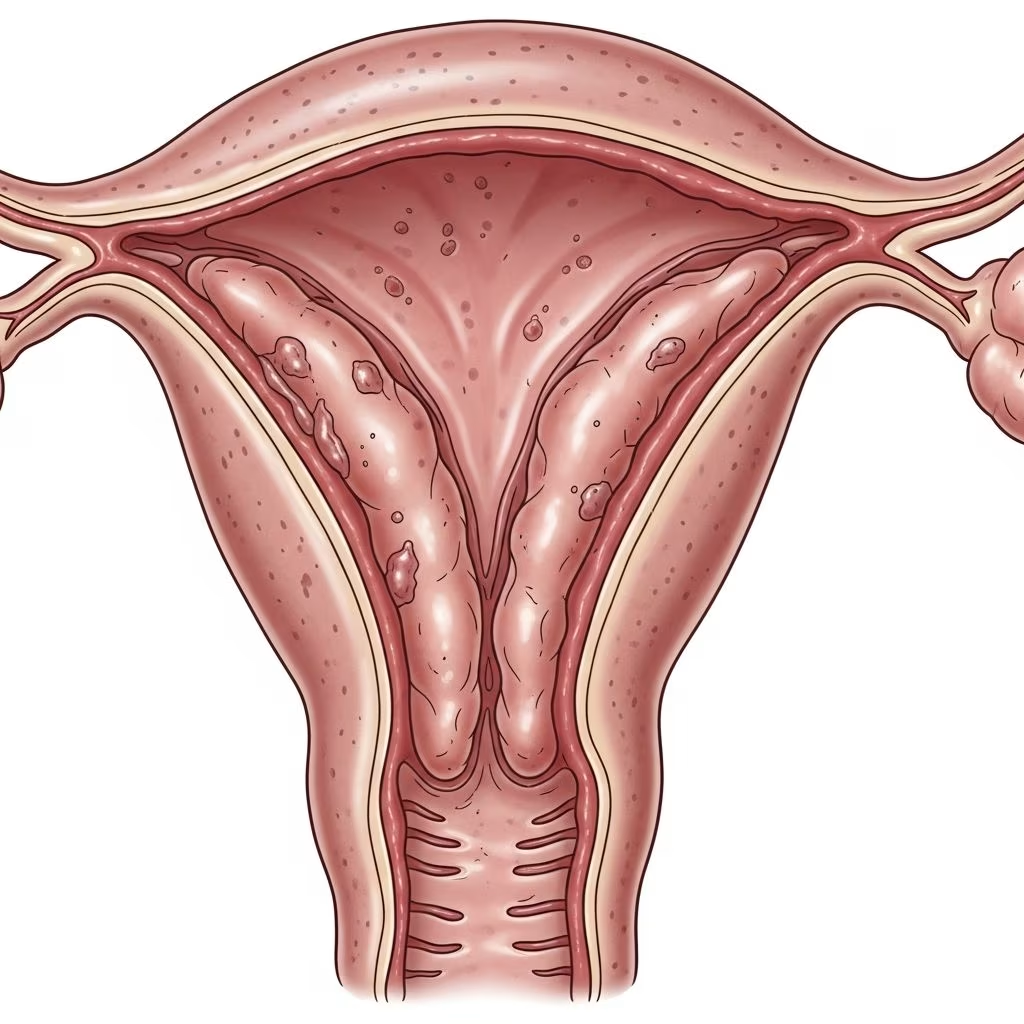
Endometritis represents a significant challenge in equine reproduction, characterized by inflammation of the uterine lining that can severely impact a mare’s ability to conceive and maintain pregnancy. This condition often arises post-breeding or after foaling, leading to substantial economic losses for breeders due to reduced pregnancy rates. Understanding its mechanisms, identification, and management is crucial for veterinary professionals and horse owners aiming to enhance breeding outcomes.
Defining the Condition and Its Impact
At its core, endometritis involves an inflammatory response in the endometrium, the inner layer of the uterus. While a brief inflammatory reaction is normal after mating to clear bacteria, persistent inflammation disrupts the uterine environment, preventing embryo implantation. In mares, this can manifest as acute or chronic forms, with chronic cases particularly prevalent in older, multiparous animals. The condition’s prevalence underscores its role as a primary cause of infertility, affecting up to significant portions of breeding populations.
Primary Causes and Risk Factors
Several factors contribute to the development of endometritis. Bacterial infections are foremost, with pathogens like Streptococcus zooepidemicus, Escherichia coli, Pseudomonas aeruginosa, and Klebsiella pneumoniae commonly implicated, especially following retained placenta or difficult foaling. Non-infectious triggers include persistent mating-induced endometritis (PMIE), where the uterus fails to clear inflammatory debris within 48 hours post-breeding.
- Bacterial invasions: Often introduced during breeding, foaling, or veterinary procedures, exploiting anatomical weaknesses like poor vulval conformation that allows bacterial ascent.
- Post-partum complications: Retained placenta or fetal membranes create ideal conditions for metritis, a deeper uterine infection.
- Age and parity: Older mares with multiple foalings develop conformational changes such as pendulous uterus or incompetent cervix, predisposing them to chronic issues.
- Biofilm formation: Certain bacteria, notably Pseudomonas aeruginosa, form protective biofilms resistant to antibiotics and immune responses.
Susceptible mares exhibit delayed uterine clearance, accumulating fluid and neutrophils that foster an inhospitable environment for embryos. Research highlights increased mast cells in affected uteri, releasing pro-inflammatory chemicals that impair contractions and promote scarring.
Recognizing Clinical Signs
Mares with endometritis may show subtle or overt symptoms. Post-foaling, signs include fever, lethargy, and purulent vaginal discharge signaling acute metritis. In breeding scenarios, infertility despite repeated matings is a hallmark, often accompanied by ultrasonographic detection of free uterine fluid. Chronic cases present with recurrent infections, poor conception rates, and endometrial scarring visible on biopsy. Owners should monitor for abnormal discharge, especially post-breeding, as it correlates with inflammation confirmed via cytology.
Diagnostic Approaches
Accurate diagnosis relies on a multi-modal strategy combining clinical evaluation and advanced tools. Initial assessment involves transrectal palpation, ultrasonography to detect fluid or thickening, and temperature monitoring.
| Method | Purpose | Key Findings |
|---|---|---|
| Ultrasonography | Visualize uterine fluid, edema | Intrapelvic fluid accumulation >48h post-breeding indicates PMIE |
| Cytology (swabs/biopsy) | Assess inflammatory cells | >1 PMN per 5 epithelial cells confirms active inflammation |
| Bacterial culture | Identify pathogens | Guides targeted antibiotic therapy |
| Endometrial biopsy | Grade chronic changes (Kenney system) | Assesses fibrosis, scarring for prognosis |
Laboratory tests, including culture and sensitivity, are essential for chronic cases to detect biofilms. Recent studies emphasize mast cell evaluation in PMIE suspects.
Treatment Strategies: Acute vs. Chronic
Treatment varies by type and severity, focusing on pathogen elimination, inflammation reduction, and uterine clearance.
Acute Endometritis Management
For post-breeding or post-foaling cases, protocols emphasize mechanical clearance. Uterine lavage with lactated Ringer’s solution (2L on days 2-3 post-event) removes debris, followed by ecbolics like oxytocin to enhance contractions. Antibiotics such as trimethoprim-sulfadiazine (systemic, 5+ days) target common gram-negatives. Anti-inflammatories control swelling.
Chronic Endometritis Protocols
Chronic forms require aggressive intervention. Chelating agents like Tris-EDTA disrupt biofilms, infused prior to antibiotics (e.g., gentamicin), improving efficacy 1000-fold against Pseudomonas. Mucolytics such as N-acetylcysteine (NAC) address mucus and biofilms, though trials show mixed results on mast cell reduction. Immunomodulators, including steroids, may shorten PMIE by blocking inflammatory pathways, but use cautiously to avoid worsening bacterial infections.
- Day 1-2: Tris-EDTA infusion (250-500ml), lavage if efflux cloudy.
- Day 3+: Antibiotics post-irrigation, 5-day minimum.
- Ongoing: Oxytocin (20-60 IU IV q2-4h) for fluid evacuation.
Success restores pregnancy rates to normal levels in treated mares.
Prevention Techniques for Breeders
Proactive measures mitigate risks. Maintain vulval integrity via perineoplasty in at-risk mares. Use sterile techniques during breeding; prefer fresh-cooled semen over frozen to retain anti-inflammatory seminal plasma. Post-breeding, administer prophylactic oxytocin and lavage susceptible mares. Vaccinations against key pathogens and routine uterine cultures pre-breeding aid early detection. Anatomical corrections, like Caslick’s operation, prevent pneumovagina.
Recent Research and Emerging Therapies
Ongoing studies explore novel treatments. A 2023 trial investigates non-antibiotic anti-inflammatories targeting proteins in PMIE. Biofilm disruptors like DMSO show promise alongside EDTA. Immunomodulation via steroids enhances clearance in select cases. These advancements aim to reduce antibiotic reliance, combating resistance.
Prognosis and Long-Term Outlook
Early intervention yields high success; untreated endometritis drastically lowers foaling rates. Chronic, fibrotic uteri (Kenney grades II-III) carry guarded prognoses due to scarring. Regular monitoring and tailored breeding management optimize outcomes, particularly in valuable mares.
Frequently Asked Questions (FAQs)
What is the most common cause of endometritis in mares?
Bacterial infections, especially Streptococcus zooepidemicus, post-foaling or breeding.
How soon after breeding should endometritis be checked?
48-96 hours; persistent fluid or PMNs indicate issues.
Can endometritis be cured in older mares?
Yes, with biofilm-targeted therapies, though scarring may persist.
Is frozen semen riskier for causing inflammation?
Yes, due to absent seminal plasma suppressing inflammation.
What home signs should owners watch for?
Vaginal discharge, infertility, fever post-foaling.
References
- Endometritis in Horses – Horse Owners – Merck Veterinary Manual — Merck & Co. 2023. https://www.merckvetmanual.com/horse-owners/reproductive-disorders-of-horses/endometritis-in-horses
- Endometritis Classifications and Treatment — The Horse. 2013. https://thehorse.com/14445/endometritis-classifications-and-treatment/
- Dr. Tracey Chenier Researches Infertility in Mares Due To Endometritis — Ontario Veterinary College, University of Guelph. 2023. https://ovc.uoguelph.ca/news/node/2989
- Diagnostic and Treatment Practices of Equine Endometritis—A Questionnaire-Based Survey — PMC/Frontiers in Veterinary Science. 2020-09-11. https://pmc.ncbi.nlm.nih.gov/articles/PMC7492380/
- Treatment of acute and chronic endometritis (Proceedings) — dvm360. 2011. https://www.dvm360.com/view/treatment-acute-and-chronic-endometritis-proceedings
- Challenges of Chronic Endometritis: Novel Tools — Florida Veterinary Medical Association. N/A. https://fvma.org/challenges-of-chronic-endometritis-novel-tools/
- Endometritis in Mares Hewitt, TX 76643 — Judd Veterinary Clinic. N/A. https://juddvetclinic.com/hewitt-tx-veterinary-endometritis-in-mares/



