

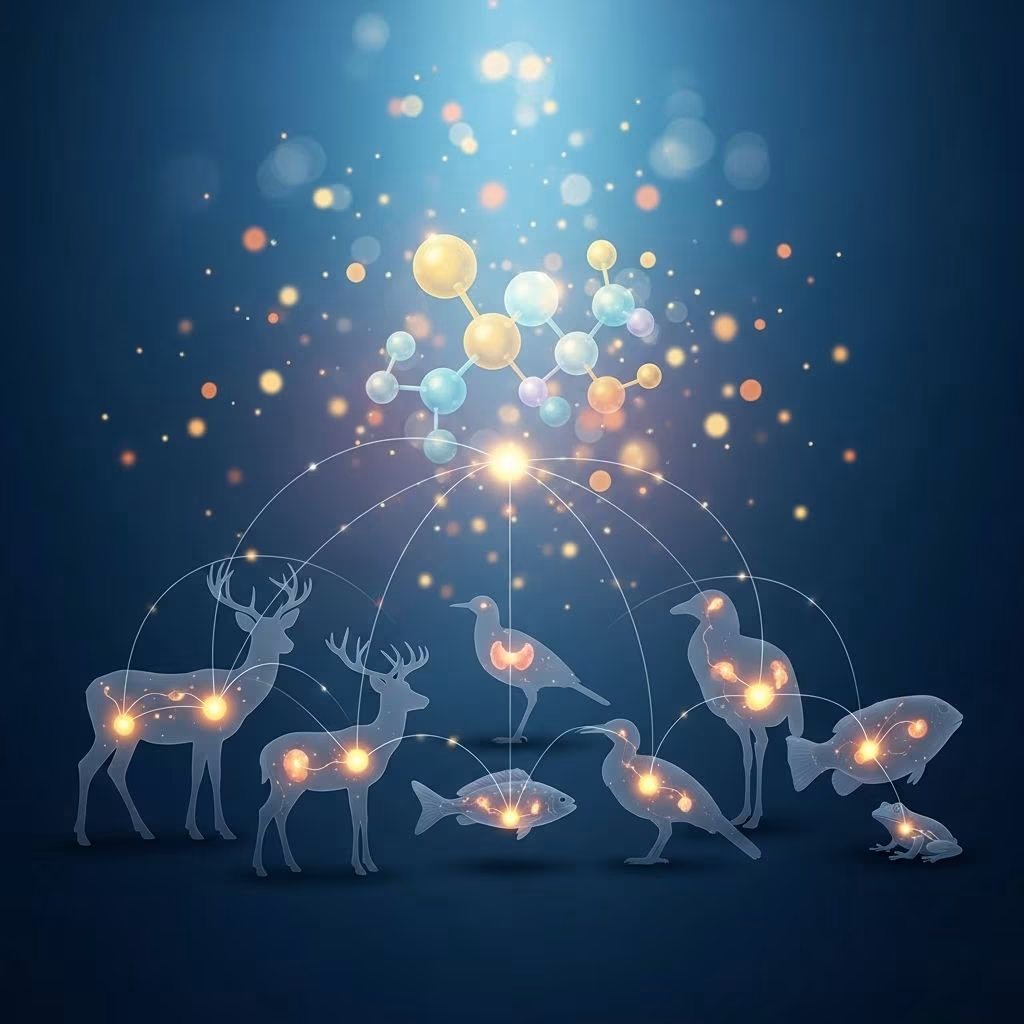
The endocrine system in animals orchestrates a symphony of chemical signals to uphold bodily equilibrium, responding to internal shifts and external pressures with precision. This network of glands and hormones works in tandem with the nervous system to regulate everything from metabolism to reproduction, adapting across species from insects to mammals.
Foundational Principles of Hormonal Control
At its core, the endocrine system relies on hormones—messenger molecules released into the bloodstream to influence distant target cells. These chemicals vary in structure, including peptides, steroids, and amines, each dictating unique modes of action. Peptide hormones bind to surface receptors, sparking rapid intracellular cascades, while steroid hormones penetrate cells to modulate gene expression directly. This duality enables both swift adjustments and enduring physiological reprogramming.
Vertebrates feature key endocrine hubs like the hypothalamus, pituitary, thyroid, adrenals, pancreas, and gonads. The hypothalamus bridges neural and hormonal realms, secreting releasing or inhibiting factors that command the pituitary. In turn, the anterior pituitary dispatches tropic hormones to stimulate peripheral glands, while the posterior pituitary stores and releases neurohormones like antidiuretic hormone (ADH) and oxytocin.
Neural Influences on Endocrine Outputs
The nervous system exerts profound control over endocrine activity through direct innervation and hypothalamic oversight. Sympathetic nerves trigger adrenal medulla to unleash catecholamines during ‘fight-or-flight’ scenarios, boosting heart rate and energy mobilization. Parasympathetic inputs fine-tune digestive hormone release, such as gastrin from stomach distension.
In a unified neuroendocrine framework, feedback operates across scales—from fleeting synaptic events to annual reproductive cycles. This integration fosters resilience, allowing animals to navigate stressors like migration or fasting. For instance, birds elevate glucocorticoids like corticosterone to fuel long flights, conserving energy by dampening immunity.
Stimuli Driving Hormone Synthesis and Secretion
Endocrine glands respond to three primary triggers: humoral, hormonal, and neural. Humoral stimuli involve blood-borne cues, like elevated glucose prompting insulin from pancreatic beta cells or low glucose eliciting glucagon from alpha cells. These pancreatic hormones maintain glycemic stability: insulin promotes nutrient storage post-meal, while glucagon mobilizes reserves during famine.
Hormonal stimuli form hierarchical cascades. Hypothalamic factors drive pituitary hormones, which then activate target glands—a classic tropic chain. Neural stimuli provide immediate overrides, as seen in acute stress activating the hypothalamic-pituitary-adrenal (HPA) axis.
| Stimulus Type | Description | Examples |
|---|---|---|
| Humoral | Blood chemistry changes | Glucose on insulin/glucagon; Ca2+ on parathyroid hormone |
| Hormonal | Other hormones as signals | TRH on TSH; ACTH on cortisol |
| Neural | Nerve impulses | Sympathetic on adrenaline; vagus on gastric secretions |
Dominance of Negative Feedback Loops
Negative feedback predominates, curbing hormone levels to prevent excess. In the thyroid axis, hypothalamic thyrotropin-releasing hormone (TRH) prompts pituitary thyroid-stimulating hormone (TSH), which drives thyroid T3/T4 production. Rising T3/T4 inhibits TRH and TSH, stabilizing output. Similarly, cortisol rise from adrenal cortex suppresses hypothalamic CRH and pituitary ACTH.
This self-regulation ensures homeostasis within narrow bounds. In intermittent feeders like predators, glucagon counters insulin to sustain energy during hunts. Disruptions, such as endocrine disruptors, can derail these loops, causing developmental woes in wildlife.
Steroid Hormones and Metabolic Mastery
Steroids, lipid-soluble messengers from adrenals and gonads, excel in genomic effects. Glucocorticoids like cortisol, induced by stress, spur gluconeogenesis—crafting glucose from proteins and fats—vital for endurance in migrating fish or birds. Mineralocorticoids like aldosterone retain sodium via kidneys, preserving blood volume.
Testosterone and estrogen orchestrate reproduction and behavior. Testosterone fuels aggression and courtship in males, while estrogens prime female receptivity. These steroids diffuse into cells, binding receptors that translocate to nuclei, tweaking gene transcription for sustained impacts.
Gastrointestinal Hormones in Nutrient Processing
Digestion hinges on enteroendocrine signals. Gastrin, spurred by proteins in the stomach, ramps up acid secretion for proteolysis. In the duodenum, cholecystokinin (CCK) responds to fats, contracting the gallbladder for bile release and curbing stomach motility. Gastric inhibitory peptide (GIP) tempers acid post-meal. These local loops optimize assimilation across carnivores to herbivores.
Comparative Insights: Vertebrates vs. Invertebrates
While vertebrates boast centralized glands, invertebrates employ dispersed endocrine cells. Ecdysone and juvenile hormone govern insect metamorphosis, mirroring thyroid roles in amphibian transformation. Shared feedback principles underscore evolutionary conservation, with divergences suiting ecological niches.
Behavioral Modulation by Endocrine Signals
Hormones sculpt phenotypes. Baseline corticosterone handles daily metabolism, peaking pre-dawn in diurnal species for activity prep. Elevated levels during chronic stress alter foraging and parental care. Testosterone boosts territoriality, its absence fostering nurturing in some species.
- Corticosterone: Daily rhythms, stress response, energy partitioning.
- Testosterone: Aggression, mating displays, muscle anabolism.
- Oxytocin: Social bonding, uterine contractions, milk ejection.
Pathophysiology: When Regulation Falters
Dysregulation yields hyper- or hypofunction. Primary hyperfunction stems from glandular overactivity; secondary from excess tropins. Hypofunction follows suit. Capen’s laws frame these: autonomous tumors or feedback lesions disrupt balance. Veterinary interventions target axes, like insulin for diabetes or levothyroxine for hypothyroidism.
Future Horizons in Neuroendocrine Science
Advances herald brain-computer interfaces for hormone modulation and bioengineered glands. Precision chronotherapy aligns treatments with circadian peaks, tackling metabolic woes amid climate shifts. These innovations promise enhanced welfare for production animals and companions.
Frequently Asked Questions (FAQs)
What is the main control mechanism in the endocrine system?
Negative feedback loops primarily regulate hormone levels, inhibiting further release once targets are met.
How do neural and endocrine systems interact?
The hypothalamus integrates inputs, directing pituitary hormones and direct neural gland innervation.
Why are pancreatic hormones crucial for animals?
Insulin and glucagon balance blood sugar, essential for intermittent feeders.
What roles do steroid hormones play in stress?
Glucocorticoids mobilize energy, supporting survival during prolonged challenges.
Can endocrine issues affect behavior?
Yes, hormones like testosterone drive aggression, while glucocorticoids modulate activity.
References
- The Role of the Nervous and Endocrine Systems in Animal Homeostasis — EcoEvoRxiv. 2023. https://ecoevorxiv.org/repository/view/9613/
- Endocrine Systems of Vertebrates — EBSCO Research Starters. Accessed 2026. https://www.ebsco.com/research-starters/anatomy-and-physiology/endocrine-systems-vertebrates
- Regulation of Hormone Production — University of Oregon Open Text. 2023. https://opentext.uoregon.edu/animalphysiology/chapter/7-4-regulation-of-hormone-production/
- Endocrine Mechanisms, Behavioral Phenotypes and Plasticity — PMC (NIH). 2016-01-12. https://pmc.ncbi.nlm.nih.gov/articles/PMC4722346/
- Animal Hormones — Georgia Tech Organismal Biology. 2023. https://organismalbio.biosci.gatech.edu/chemical-and-electrical-signals/animal-hormones/
- General Chemical Structure and Function of the Endocrine System of Animals — MSD Veterinary Manual. Accessed 2026. https://www.msdvetmanual.com/endocrine-system/endocrine-system-introduction/general-chemical-structure-and-function-of-the-endocrine-system-of-animals



