

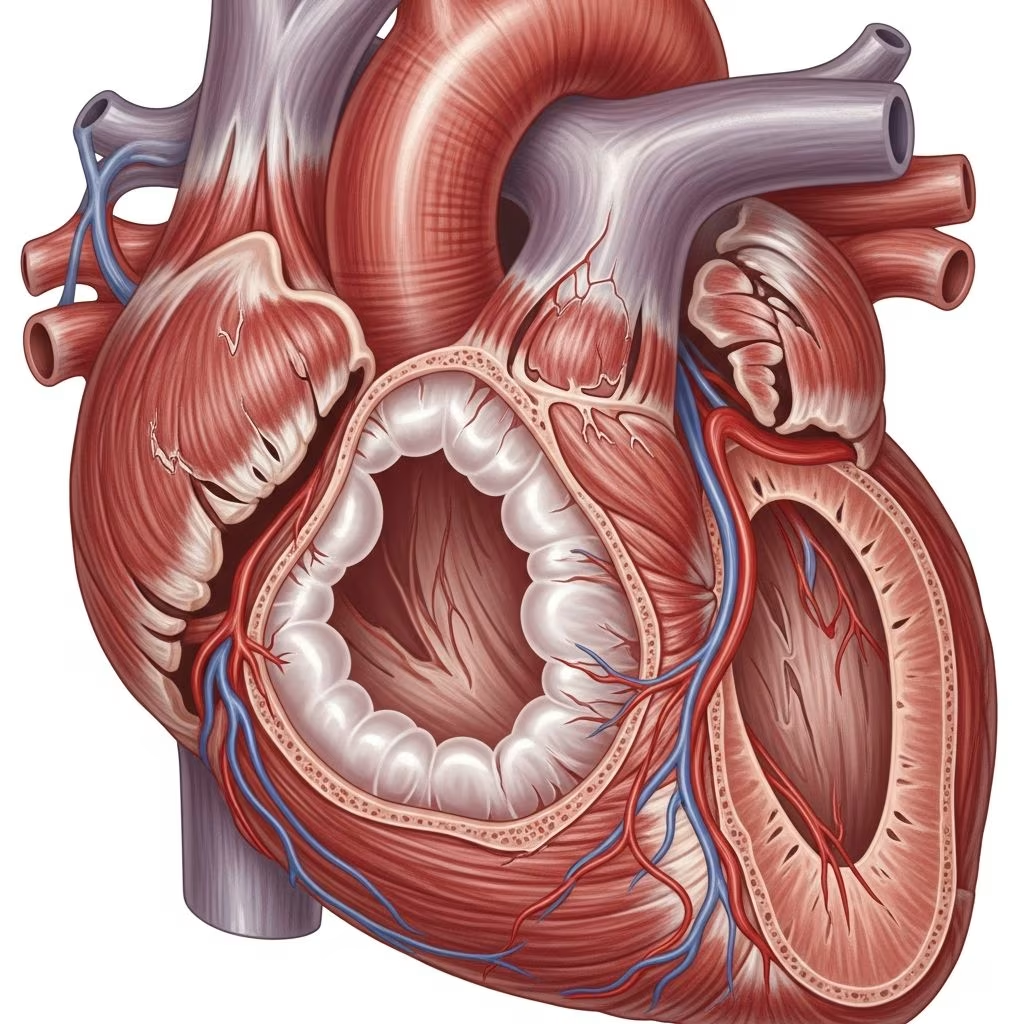
Endocardial fibroelastosis (EFE) represents a rare congenital cardiac disorder primarily observed in young cats, characterized by abnormal thickening of the heart’s inner lining due to excessive deposition of fibrous and elastic tissues. This condition impairs ventricular function, often culminating in congestive heart failure (CHF) at an early age. While more prevalent in felines, particularly certain breeds, isolated cases occur in dogs, highlighting the need for veterinary awareness in differential diagnoses of pediatric heart issues.
Pathophysiology and Tissue Changes
The core pathology of EFE involves proliferation of collagen and elastin fibers within the endocardium, predominantly affecting the left ventricle. This thickening restricts myocardial relaxation and contraction, leading to systolic and diastolic dysfunction. In cats, lesions may appear microscopically as early as one day post-birth, becoming grossly visible by three weeks. Initial lymphatic obstruction in the subendocardium triggers fibroblast activity, progressing to diffuse fibrosis.
Histologically, the endocardium exhibits marked elastin and collagen accumulation, with a greyish-white appearance on gross examination. Left ventricular walls thin severely, atria dilate, and chambers enlarge without primary valvular defects. Secondary EFE can arise from prolonged chamber dilatation due to other cardiomyopathies, distinguishing it from primary idiopathic forms through absence of underlying causes like infection or inflammation.
Predisposed Breeds and Genetic Factors
- Cats: Burmese and Siamese breeds show highest susceptibility, suggesting hereditary transmission. Familial patterns underscore genetic predisposition.
- Dogs: Rare occurrences reported in breeds like Fila Brasileiro, typically presenting similarly to feline cases.
Genetic studies in veterinary literature point to inherited defects, though exact mechanisms remain elusive. Breeders should prioritize cardiac screening in at-risk lines to mitigate propagation.
Clinical Manifestations in Affected Animals
Symptoms emerge early, often by two months in kittens or puppies. Common presentations include:
- Respiratory distress from pulmonary edema.
- Anorexia and lethargy.
- Ascites and pale/cyanotic mucous membranes.
- Generalized heart failure signs like hepatomegaly.
In a documented feline case, a 0.6 kg mixed-breed kitten exhibited severe CHF with rapid deterioration despite intervention.12 Canine reports mirror this, with three-month-old pups showing left-sided failure, mitral incompetence, and sudden death.45
Diagnostic Approaches: Echocardiography and Beyond
Ante-mortem diagnosis relies heavily on echocardiography. Key findings include:
| Parameter | Typical EFE Finding | Normal Range (Cats) |
|---|---|---|
| Fractional Shortening (FS) | <15% (e.g., 11.1%) | 25-45% |
| Endocardial Echogenicity | Increased, hyperechoic | Normal |
| Left Ventricle | Dilated, false tendons possible | Normal size |
| Tissue Doppler (E/E’) | Elevated, indicating diastolic dysfunction | <10 |
| LVOT Peak Velocity | Reduced | Normal |
These overlap with dilated cardiomyopathy, necessitating histopathological confirmation post-mortem. Tissue Doppler imaging (TDI) provides novel insights into myocardial velocities, aiding drug selection.12 Radiography reveals cardiomegaly, pulmonary edema, and ascites. Normal cardiac troponin I helps rule out acute injury.4
Necropsy and Histopathological Confirmation
Post-mortem exams confirm EFE through:
- Diffuse endocardial thickening (moderate-severe).
- Ventricular and atrial enlargement.
- Thinned free walls and septa.
- Abundant elastic fibers > collagen.
No inflammation or primary defects in valves distinguish primary EFE. Feline hearts show biventricular involvement, while canine cases emphasize left-sided changes.34
Management Strategies and Therapeutic Challenges
Treatment targets CHF stabilization but yields poor outcomes once symptomatic. Protocols include:
- Pimobendan for inotropy.
- Oxygen therapy and ICU support.
- Diuretics and potential catecholamines (dobutamine).
- Antibiotics if concurrent issues suspected.
Response is often inadequate, with euthanasia or death ensuing rapidly. Preventive breeding screening in predisposed cats is paramount.
Prognosis and Long-Term Outlook
EFE carries a grave prognosis, with most cases fatal by early infancy. Early detection via breeding programs may reduce incidence, but symptomatic animals rarely survive beyond initial presentation. Differential diagnosis from other pediatric cardiomyopathies is critical.
Comparative Insights: EFE Across Species
While primary EFE is feline-centric, humans show analogous infantile presentations with left ventricular involvement. Veterinary cases inform human parallels, emphasizing echocardiography’s role.23
Frequently Asked Questions (FAQs)
What breeds of cats are most at risk for EFE?
Burmese and Siamese cats exhibit the strongest predisposition due to genetic factors.3
Can EFE be detected before symptoms appear?
Histological lesions exist from birth, but clinical tools like echocardiography detect changes only post-onset.
Is EFE treatable in dogs?
Rare canine cases follow feline patterns, with supportive care offering limited success.45
How does EFE differ from dilated cardiomyopathy?
EFE features primary endocardial thickening versus myocardial dilatation in DCM; echocardiography aids distinction.
Should breeders test for EFE?
Yes, cardiac evaluations in kittens from at-risk breeds prevent inheritance.
Preventive Measures for Pet Owners and Breeders
Awareness campaigns and genetic testing can curb EFE prevalence. Routine pediatric cardiac exams in predisposed litters are advisable.
References
- Clinical and necropsy evaluation of endocardial fibroelastosis in a mixed-breed cat with left-side heart failure — Veterinarni Medicina. 2022-04-15. https://vetmed.agriculturejournals.cz/artkey/vet-202204-0006_clinical-and-necropsy-evaluation-of-endocardial-fibroelastosis-in-a-mixed-breed-cat-with-left-side-heart-failur.php
- Clinical and necropsy evaluation of endocardial fibroelastosis in a mixed-breed cat — PMC (PubMed Central). 2024. https://pmc.ncbi.nlm.nih.gov/articles/PMC11334439/
- Heart, endocardium: Fibroelastosis, diffuse, marked, Siamese, feline — Comparative Pathology. N/A. https://carmel.askjpc.org/vspo/show_page.php?id=RDBwWE92T3NwWDZwY0hKTmIxWFpSQT09
- Endocardial fibroelastosis in a dog with congestive heart failure — PubMed. 2020-10-28. https://pubmed.ncbi.nlm.nih.gov/33091799/
- Endocardial Fibroelastosis in a Dog — PubMed. 1997-05-01. https://pubmed.ncbi.nlm.nih.gov/9127286/



