

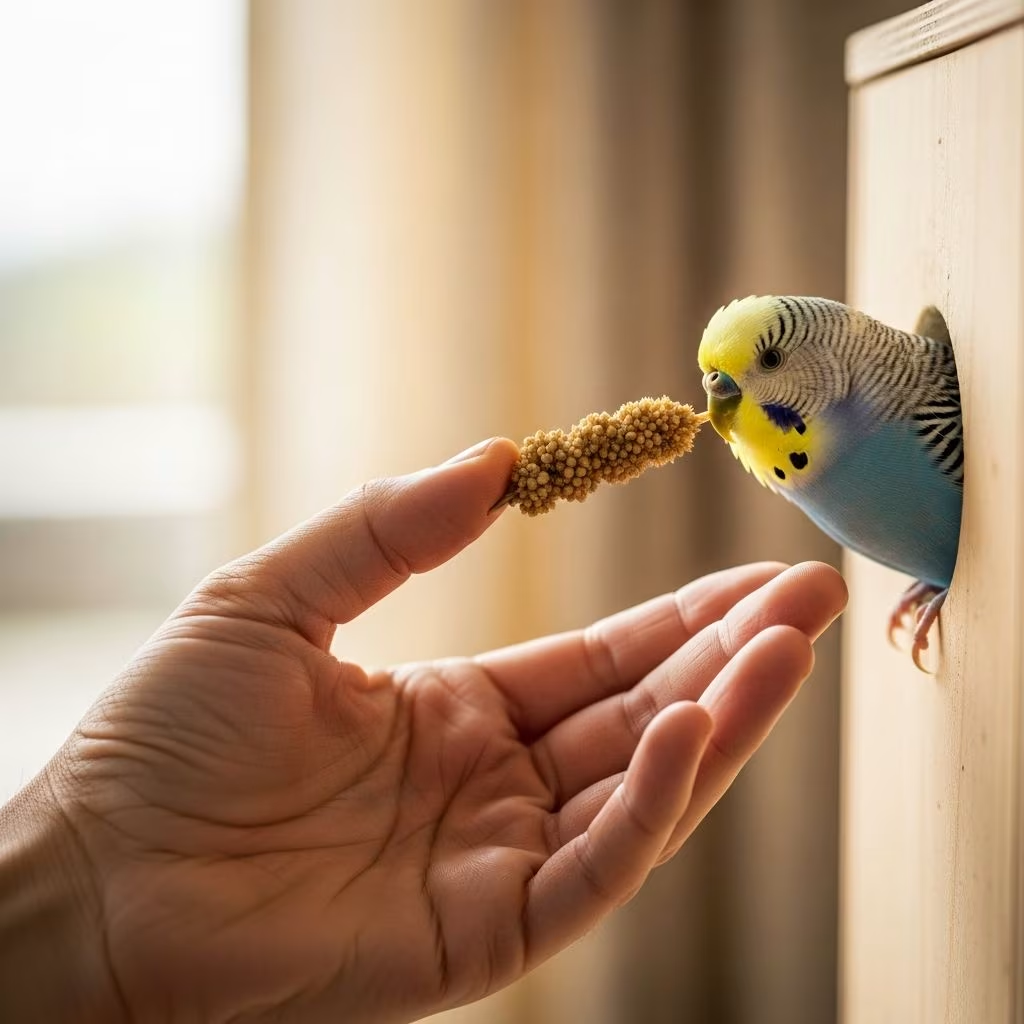
Understanding Pet Bird Hand Fear
Hand fear is one of the most common behavioral challenges pet bird owners face, yet it remains widely misunderstood. Many people assume that hand-reared or tame birds would naturally be comfortable with hands, but this is not always the case. Hand fear is fundamentally based on how a bird perceives hands themselves, regardless of the bird’s overall temperament or early socialization history. Even birds that have enjoyed years of positive interaction with their owners can develop sudden hand anxiety if they associate hands with painful or frightening experiences.
The key to identifying hand fear lies in observing your bird’s body language around different parts of your body. A bird experiencing hand fear will typically remain calm when you are nearby, but the moment your hands appear or approach, the bird exhibits clear signs of distress. This might manifest as slow movement away from the hand, sudden flight to escape, freezing in place, or aggressive lunging and biting behavior. These responses escalate as the bird perceives an increasing threat level and feels compelled to protect itself.
How Hand Fear Develops in Pet Birds
Understanding the origins of hand fear is crucial for effectively addressing it. Hand fear doesn’t develop randomly; it is typically conditioned through specific experiences or patterns of interaction.
Negative Reinforcement Cycles
One of the most common ways hand fear develops is through an unintended negative reinforcement cycle. When a bird bites your hand, your natural instinct is to pull away quickly. From the bird’s perspective, this teaches an incredibly effective lesson: biting makes hands go away. The bird has successfully removed the threat, and this reinforces the behavior pattern. If the owner continues to approach despite warning signs like lunging and backing away, the bird may eliminate these warning behaviors altogether and progress directly to biting on future encounters.
Painful Experiences
Birds possess remarkable memory for painful events associated with hands. Situations such as a veterinarian or owner extracting a twisted blood feather, a clipped bird falling painfully from a hand, or rough handling during restraint can create what behaviorists call “one-trial learning.” This means a single negative experience can establish a strong, lasting negative emotional response to hands. The bird’s brain creates an immediate association between hands and pain, and this association can persist for years without intervention.
Forced Handling and Restraint
Even well-intentioned owners can inadvertently create hand fear through forced handling. When birds are regularly restrained or removed from their cage against their will, they begin to perceive hands as restrictive and aversive. Over time, this can transform a previously comfortable bird into one that actively avoids hand contact.
Recognizing Hand Fear: Signs and Symptoms
Being able to identify hand fear is the first step toward addressing it. Look for these telltale indicators:
– Bird remains calm around your body but retreats when hands approach- Gradual or rapid movement away from approaching hands- Freezing behavior upon seeing hands (particularly common in Eclectus parrots)- Lunging or striking at hands- Biting when hands get close- Avoidance of stepping up or perching on hands- Heightened alertness or tension when hands are visible
The Good News: Hand Fear Is Highly Treatable
Perhaps the most encouraging aspect of hand fear is that it is one of the most manageable behavioral issues in pet birds. Even birds with decades-long fearful associations with hands, wild-caught birds, or those with intense phobias can be successfully rehabilitated. With the right approach—combining time, patience, keen observation of body language, and appropriate motivators—you can transform your bird’s relationship with hands from fearful to trusting.
Counter-Conditioning: The Core Strategy
Counter-conditioning is the most effective approach to overcoming hand fear. This technique works by changing your bird’s reinforcement history with hands from negative to positive. Instead of hands appearing and causing stress or pain, hands become predictors of good things happening.
Finding Your Bird’s Comfort Threshold
The first step in counter-conditioning is identifying exactly where your bird becomes uncomfortable with your hands. This requires developing a working knowledge of your bird’s body language. The ideal starting point is when your bird is looking at your hand with calm curiosity, showing mild wariness but not yet having decided whether to retreat or attack. At this precise point—not closer, not further—you introduce positive reinforcement.
Selecting High-Value Rewards
Success depends on choosing rewards your bird will actively work to obtain. Generic treats won’t suffice; you need something your bird genuinely values. This might be a favorite seed, fruit, nut, or even a preferred toy or interaction. Observe what truly motivates your individual bird and reserve these highest-value rewards exclusively for hand-training sessions.
Delivery Methods for Fearful Birds
If your bird is too fearful to accept treats directly from your hand initially, use alternative delivery methods:
– Drop treats into the food bowl while your hand is at a comfortable distance- Offer treats on a spoon or other extended object that doesn’t trigger the fear response- Use a target stick to encourage approach before offering the reward- Gradually transition to hand delivery as comfort increases
Step-by-Step Training Protocol
Stage 1: Building Comfort with Your Presence
Begin by approaching your bird’s cage calmly and slowly, avoiding sudden movements or loud noises. Maintain a distance where your bird shows no signs of stress—this might be several feet away initially. Avoid direct eye contact, as birds may interpret this as predatory behavior. Spend time simply being present without attempting any interaction. Repeat this daily for several sessions before progressing.
Stage 2: Gradual Approach and Hand Introduction
Once your bird remains calm with your presence, begin very slowly reducing the distance. Move incrementally closer over multiple sessions, always pausing before your bird shows signs of anxiety. Only when your bird remains calm should you progress further. Then, introduce your hand into view while keeping it stationary and non-threatening. Move your hands slowly and predictably around the bird’s space, allowing desensitization to occur naturally.
Stage 3: Hand Movement and Association
Begin moving your hands slowly around the bird’s vicinity while observing its reactions. When your bird is calm, immediately remove your hand and provide positive reinforcement. This teaches the bird that when it remains calm, threatening things disappear, but when it becomes agitated, they remain. Gradually bring your hand closer during calm periods, always maintaining this contingency.
Stage 4: Treat Association from Hand
Once your bird accepts your hand at closer distances, begin offering treats directly from your hand. Start by holding the treat in an open palm at a comfortable distance. As the bird becomes more confident, you can gradually bring your hand closer and begin conditioning hand movement near the bird’s head and body.
Stage 5: Progressive Training to Step-Up Behavior
With consistent repetition and patience, your “once scary” hand will lose its threat status entirely. Your bird will begin to anticipate and look forward to your hand’s appearance because it predicts positive experiences. At this point, you’re ready to introduce formal step-up training, and you’ll likely find your bird much more cooperative and happier overall.
Additional Desensitization Techniques
The Five-Minute Finger Technique
For birds with moderate hand fear, try leaving your finger inside the bird’s cage for five minutes daily without any expectation of interaction. Simply allow your bird to become accustomed to your finger’s presence in their space. Over time, this passive exposure reduces fear responses.
Flock-Like Behavior
Birds are social creatures that respond positively to flock-oriented activities. Engage your bird by splashing water with your finger during bath time, reading aloud to your bird, or simply spending quiet time nearby. These activities help your bird associate you with normal, non-threatening social activity and help it acclimate to your presence and voice.
Protected Contact Training
For birds that aren’t yet cage-comfortable with hands, practice hand movements and desensitization while the bird is still safely in or near its cage. This allows gradual exposure without forcing direct interaction.
Critical Mistakes to Avoid
Understanding what not to do is equally important as knowing what to do:
– Rushing the process: Hand fear rehabilitation cannot be hurried. Moving too quickly past your bird’s comfort threshold will cause regression and prolong the overall timeline.- Forcing interaction: Never forcibly remove a fearful bird from its cage or restrain it against its will. This reinforces the negative association with hands.- Reacting to bites: If your bird bites, do not yank your hand away dramatically. This rewards the behavior. Instead, respond calmly and matter-of-factly.- Inconsistent training: Skipping sessions or applying inconsistent techniques will confuse your bird and slow progress.- Ignoring warning signs: If you miss or ignore your bird’s initial signs of discomfort, the bird will escalate to biting. Learn and respect your bird’s body language.- Using low-value rewards: Generic treats won’t motivate a fearful bird. Identify what truly matters to your individual bird.
Timeline and Realistic Expectations
The time required to overcome hand fear varies considerably depending on the severity of the fear, the bird’s history, and your consistency. Some birds show improvement within days to weeks, while others may require months of patient, dedicated work. A bird that required only two weeks to progress from fleeing a nearby human to happily stepping onto a hand represents a typical moderate-fear scenario. Severely traumatized or wild-caught birds may require substantially longer, but improvement is almost always achievable with persistence.
When to Seek Professional Help
If your bird shows extreme aggression, self-injury, or no progress after several weeks of consistent effort, consider consulting an avian behaviorist. These professionals can identify subtle patterns you might miss and tailor approaches to your specific bird’s needs.
Frequently Asked Questions
Q: Can hand fear be prevented in hand-reared chicks?
A: Yes. Gentle, positive handling from an early age, avoiding pain-associated experiences, and never forcing interaction can significantly reduce the risk of hand fear developing. However, some birds may still develop hand anxiety later in life if they have a negative experience.
Q: Will my bird ever fully trust hands again after a traumatic experience?
A: In most cases, yes. Through counter-conditioning and patient desensitization, birds can overcome even significant trauma. The brain’s neuroplasticity allows for new associations to be formed and strengthened over time.
Q: How do I know if I’m progressing too quickly?
A: If your bird is consistently backing away, freezing, or showing any signs of distress, you’re moving too fast. Back up to the previous comfortable distance and proceed more gradually.
Q: Can I use food rewards if my bird isn’t food-motivated?
A: If food isn’t motivating, try other rewards like favorite toys, preferred social interactions, or access to favorite activities. Find what genuinely matters to your individual bird.
Q: Is hand fear permanent?
A: Hand fear is not permanent. It is highly trainable and manageable with appropriate techniques. Even older birds or those with lifetime fearful associations can learn to accept and even enjoy hand interaction.
References
- Overcoming Hand Fears in Companion Parrots — Parrot Life Australia. 2024. https://www.parrotlife.com.au/post/overcoming-hand-fears-in-companion-parrots
- How To Tame A Scared Bird: Parrot Training Guide — The Face Beak. 2024. https://www.thefacebeak.com/blog/howtotameascaredbird
- Tamed My Scared Bird in 3 Days – Here’s How — Bird Training Resources. 2024. https://www.youtube.com/watch?v=XZ0xVFq1baI



