

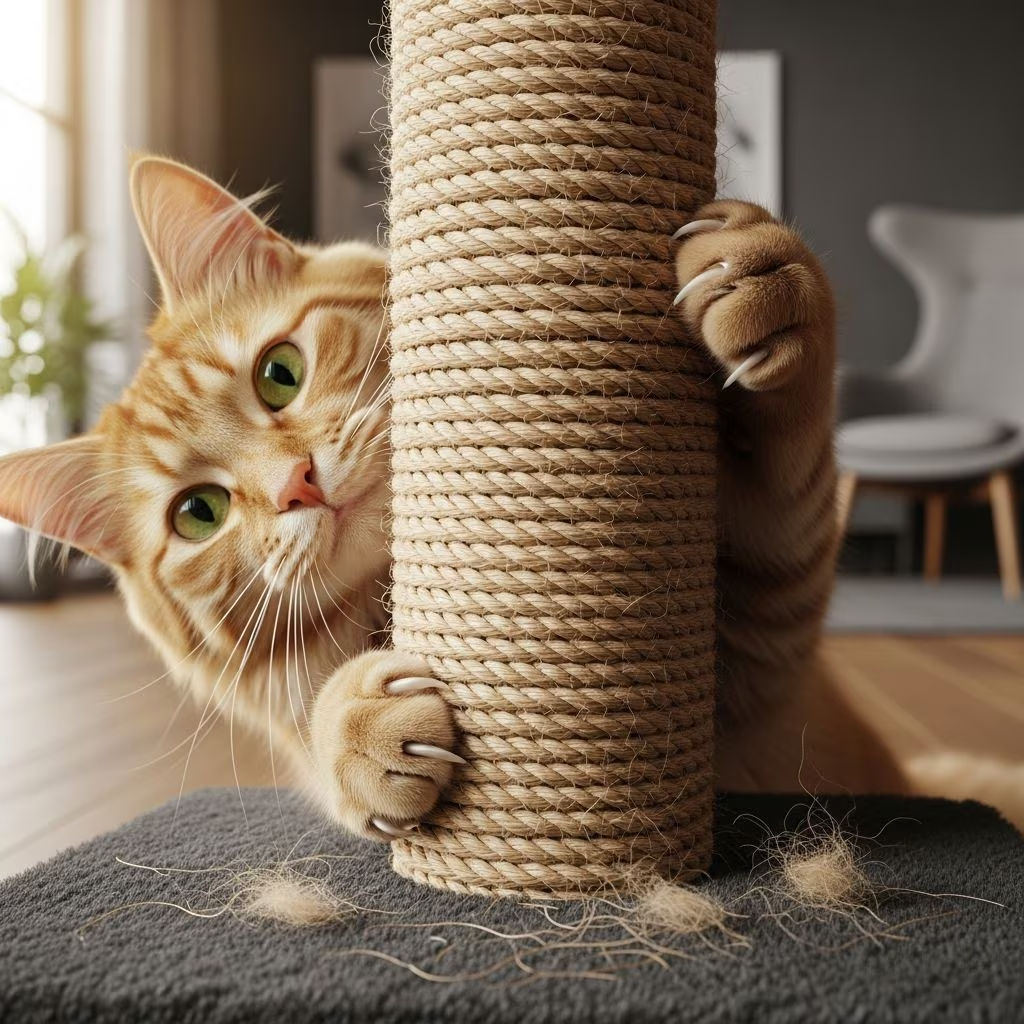
Cats scratch for essential reasons like claw maintenance, territory marking, and stress relief, but when it targets your sofa or curtains, it becomes a household headache. This guide equips you with practical, vet-approved methods to redirect this instinct, preserving your belongings while supporting your cat’s well-being.
Why Cats Scratch: Unpacking the Instinct
Scratching serves multiple biological purposes for felines. It removes dead claw layers, stretches muscles, and deposits pheromones from scent glands in their paws, signaling ownership. Without outlets, cats default to furniture mimicking ideal textures like upholstery or carpet. Indoor cats, lacking trees or rough surfaces, amplify this behavior, especially if bored or anxious.
Recognizing triggers helps: observe if scratching spikes during greetings, after meals, or in high-traffic areas. Multi-cat homes see more competition-driven marking. Addressing root causes prevents escalation.
Selecting the Perfect Scratching Solutions
Success hinges on providing appealing alternatives. Not all posts work equally; test varieties to match preferences.
- Sisal rope posts: Sturdy vertical options for upright scratchers, durable against heavy use.
- Cardboard scratchers: Horizontal pads ideal for carpet lovers, replaceable when worn.
- Cat trees with integrated posts: Combine scratching, climbing, and perching for all-in-one enrichment.
- Wood or corrugated surfaces: Mimic natural bark textures some cats prefer over fabric.
Position posts near problem spots and family zones—cats crave social proximity. Sprinkling catnip or toys entices initial use without force.
Strategic Placement for Maximum Appeal
Location trumps luxury. Place scratchers beside favored furniture in visible, accessible spots. High-traffic areas encourage adoption since cats integrate scratching into daily routines. Experiment: if a post sits unused in a corner, relocate it to the living room edge.
For multi-surface needs, offer both tall posts for stretching and flat pads for lounging scratches. Refresh with catnip weekly to maintain allure.
Positive Training Techniques That Stick
Reinforce good choices with rewards, avoiding punishment that breeds fear. When your cat uses a post, offer treats, praise, or play immediately.
| Method | How to Implement | Expected Outcome |
|---|---|---|
| Clicker Training | Click and treat on contact with post; pair with play. | Conditions cat to associate post with fun/rewards. |
| Modeling Behavior | Drag nails on post to create sound/vibration. | Sparks curiosity, prompting imitation. |
| Toy Integration | Attach dangling toys to post. | Draws cat for play, imprinting scent. |
Consistency yields results in weeks; track progress daily.
Humane Deterrents to Safeguard Belongings
Make forbidden surfaces unappealing without harm. Combine with positives for best effect.
- Sticky barriers: Double-sided tape like Sticky Paws repels via paw discomfort.
- Texture covers: Aluminum foil, plastic sheets, or vinyl guards alter feel/sound.
- Scent repellents: Citrus sprays or pheromone diffusers (e.g., Feliway) deter marking.
- Motion deterrents: Air hiss cans near furniture startle on approach.
Apply temporarily until habits shift; remove gradually to test retention.
Eliminating Scent Cues
Cats revisit scratched spots due to lingering pheromones. Enzymatic cleaners fully neutralize odors, breaking the cycle. Opt for pet-specific formulas like Citrus Magic; citrus bonus repels most cats. Clean weekly during training.
Claw Maintenance Essentials
Blunt claws minimize damage while preserving the instinct.
- Regular trims: Clip tips weekly using cat-specific clippers. Acclimate via paw massages and treats.
- Nail caps: Soft Claws or similar cover claws colorfully, lasting 4-6 weeks.
These pair with posts; alone, they don’t curb scratching urges.
Enrichment to Curb Excess Scratching
Boredom fuels destruction. Boost mental/physical stimulation:
- Interactive toys, laser pointers, wand play sessions twice daily.
- Window perches for bird-watching.
- Catios or harness walks for safe outdoor access.
- Vertical spaces like shelves or trees.
Enriched cats scratch less destructively, channeling energy appropriately.
Tailoring Solutions for Specific Scenarios
Sofa and Upholstery Woes
Drape throws or vinyl guards; pair with adjacent sisal post. Feliway spray mimics facial marking, discouraging paw scratches.
Carpet and Floor Targets
Horizontal cardboard scratchers nearby; enzymatic clean plus citrus spray. Nail caps excel here.
Curtains and Drapes
Shorten or remove temporarily; install floor-to-ceiling posts. Sticky tape on bases.
Multi-Cat Dynamics
One post per cat plus extras; space to reduce rivalry.
Frequently Asked Questions
Will declawing stop scratching?
No—declawing is amputation causing pain and behavior issues. Use humane alternatives.
How long until results?
2-4 weeks with consistency; patience key.
What if my cat ignores posts?
Try materials, locations, catnip; consult vet for medical issues.
Are nail caps safe?
Yes, when applied correctly; they grow out naturally.
Can sprays harm cats?
Pet-safe formulas like citrus or Feliway are non-toxic.
Sustaining a Scratch-Free Sanctuary
Monitor, refresh deterrents, rotate scratchers. Annual vet checks rule out arthritis or stress amplifying habits. Your proactive approach fosters harmony.
References
- Top 10 Tips – How to Stop Your Cat Scratching the Furniture or Carpet — Rum River Veterinary. 2022-02. https://rumrivervet.com/wp-content/uploads/2022/02/HowToTrainCatToStopScratchingFurniture.pdf
- How to Stop Cats from Scratching Your Furniture — Zoetis Petcare. N/A. https://www.zoetispetcare.com/blog/article/stop-cats-scratching-furniture
- How to Stop Cats From Scratching the Furniture — PetMD. N/A. https://www.petmd.com/cat/behavior/how-to-stop-cats-from-scratching-furniture
- Destructive Scratching — ASPCA. N/A. https://www.aspca.org/pet-care/cat-care/common-cat-behavior-issues/destructive-scratching
- Destructive Scratching – Prevention and Solutions — PAWS. N/A. https://www.paws.org/resources/destructive-scratching/



