

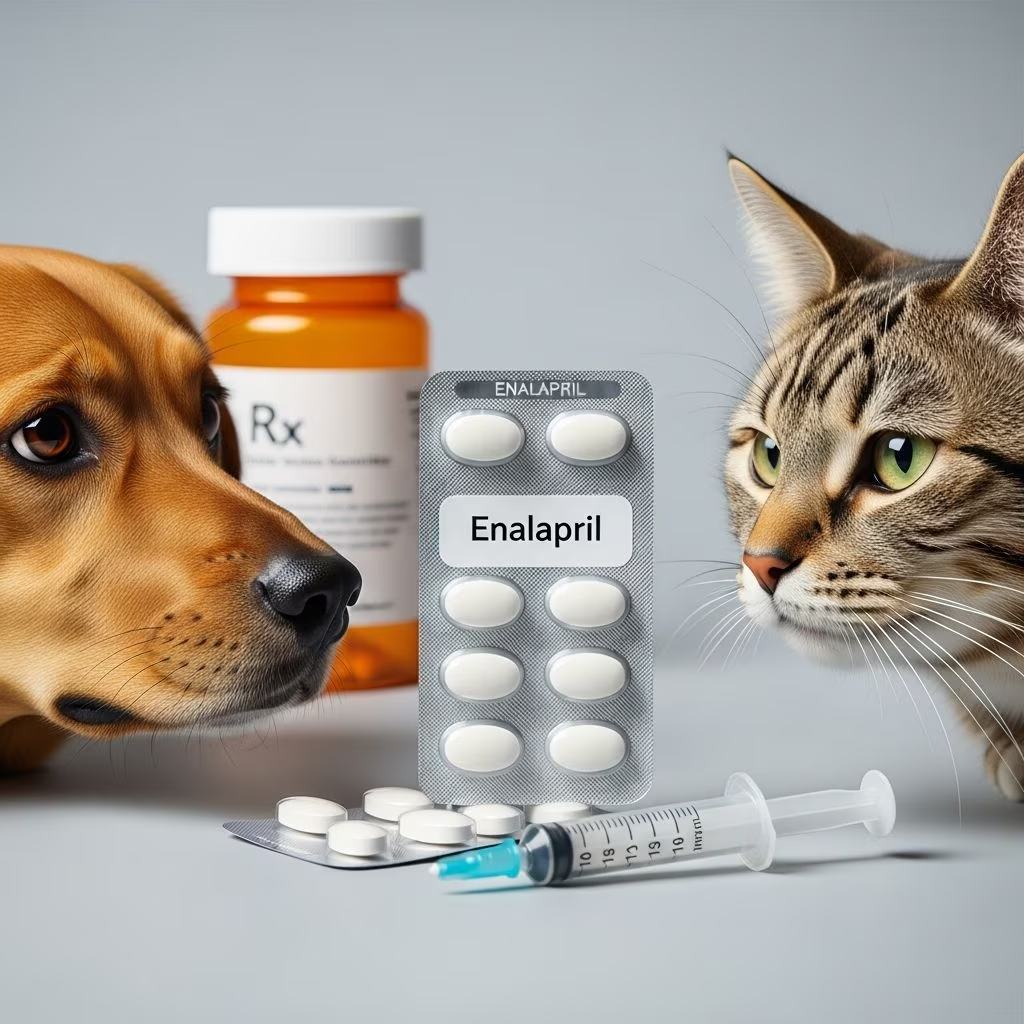
Understanding Enalapril: An ACE Inhibitor for Pets
Enalapril is a widely prescribed medication in veterinary medicine belonging to a class of drugs known as angiotensin-converting enzyme (ACE) inhibitors. This medication plays a crucial role in managing several cardiovascular and renal conditions in both dogs and cats. Enalapril works by blocking the production of angiotensin II, a hormone that constricts blood vessels and increases blood pressure, thereby allowing blood vessels to relax and widen, which ultimately reduces blood pressure and improves cardiac function.
Known by various brand names including Enacard, Vasotec, Glioten, Lotrial, Pres, Renitec, Reniten, Xanef, and Epaned, enalapril has become an essential tool in veterinary cardiology and nephrology. The medication is approved in the United States for treating congestive heart failure secondary to dilated cardiomyopathy and myxomatous mitral valve degeneration in dogs, making it one of the most commonly prescribed cardiac medications in veterinary practice.
Primary Medical Uses of Enalapril
Enalapril is utilized to treat multiple conditions in companion animals, with its primary applications centered on cardiovascular and renal health:
Heart Failure Treatment
Enalapril is particularly effective in managing congestive heart failure, where it increases cardiac output and decreases pulmonary capillary wedge pressure. Long-term treatment with enalapril produces measurable improvements in functional classification, exercise capacity, and ejection fraction. In patients with congestive heart failure that has proven refractory to conventional treatments like digitalis and diuretics, enalapril provides significant hemodynamic benefits.
Hypertension Management
The medication effectively controls blood pressure in both essential hypertension and renovascular hypertension without affecting heart rate or cardiovascular reflexes. This makes it an excellent choice for pets requiring antihypertensive therapy with minimal cardiovascular disruption.
Kidney Disease and Proteinuria
Enalapril is used to treat chronic kidney disease and protein in the urine, known as proteinuria. By dilating the efferent arterioles of the kidney glomerulus, enalapril reduces intraglomerular pressure and helps preserve renal function, making it particularly valuable in managing progressive kidney disease in aging pets.
How Enalapril is Administered
Enalapril offers multiple routes of administration, providing flexibility in treatment options based on individual patient needs and circumstances:
Oral Administration
The most common method of administration is oral, available in tablet or liquid formulations. Both tablets and oral liquids may be given with or without food, providing convenience for pet owners. However, if vomiting occurs after dosing on an empty stomach, future doses should be given with food or a treat to minimize gastrointestinal upset.
Injectable Form
In hospital settings, enalapril may be administered as an intravenous injection, useful for acute situations or when oral administration is not feasible.
Dosage Guidelines
The standard dosage of enalapril for dogs is 0.5 mg/kg administered orally every 12 to 24 hours. However, based on the medication’s half-life of approximately 11 hours with effects lasting 12 to 14 hours, a 12-hour dosing interval is recommended if continuous ACE inhibition is desired and well tolerated. For optimal results, precise measurement of liquid doses is essential, and pet owners should never stop this medication abruptly unless specifically instructed by their veterinarian.
General Administration Precautions
While taking enalapril, pets should always have access to plenty of clean water. If a dose is missed, it should be given as soon as remembered, followed by the next dose at the regularly scheduled time. Pet owners must never administer two doses at once or give extra doses to compensate for a missed dose.
Onset and Duration of Action
Understanding the timeline of enalapril’s effectiveness is important for monitoring pet health. The medication should take effect within one to two hours of administration; however, therapeutic effects may not be immediately noticeable. Laboratory tests may be required to evaluate the medication’s effectiveness in controlling blood pressure, reducing protein in urine, or improving cardiac function. This short-acting medication typically stops working within 24 hours, although effects may be prolonged in pets with liver or kidney disease due to altered drug metabolism and clearance.
Potential Side Effects in Pets
While enalapril is generally well tolerated, pet owners should be aware of potential adverse reactions that may occur during treatment.
Common Side Effects
In both dogs and cats, the most frequently reported side effects include loss of appetite, vomiting, diarrhea, and tiredness or lethargy. In cats specifically, lethargy and loss of appetite are particularly common. These mild side effects often diminish as the pet’s body adjusts to the medication, but they should be monitored and reported to the veterinarian if they persist or worsen.
Serious Adverse Reactions
While uncommon, serious adverse reactions may occur and require immediate veterinary attention. These include signs of infection such as fever, rash development, collapse, generalized weakness, low blood pressure (hypotension), kidney dysfunction, and elevated potassium levels. Any of these serious symptoms warrant immediate contact with a veterinarian.
Risk Factors and Contraindications
Enalapril is not appropriate for all pets and should be avoided or used with caution in certain circumstances.
Absolute Contraindications
Enalapril should NOT be used in pets that:
– Are allergic to the medication- Have an acute kidney injury- Have certain pre-existing heart conditions that may be exacerbated by ACE inhibition
Use with Extreme Caution
Enalapril should be used with extreme caution in pregnant or lactating pets, as ACE inhibitors can affect fetal development and may pass into milk.
Cautious Use
Enalapril should be used with caution in pets with:
– Kidney disease- Liver disease- Heart failure- Dehydration- Low sodium levels- Blood abnormalities- Collagen vascular disease- Those scheduled for gas anesthesia
In these situations, dose adjustments may be necessary. For instance, the half-life of enalapril is increased in animals with severe congestive heart failure (due to decreased renal perfusion) or renal failure, and dose reduction may be warranted to prevent drug accumulation.
Drug Interactions
Enalapril can interact with several other medications, potentially altering the effectiveness or safety of either drug. The following medications should be used with caution when given concurrently with enalapril:
– Anesthetics- Antacids- Other antihypertensive agents- Corticosteroids- Digoxin- Diphenhydramine- Diuretics- Erythropoietin- Nonsteroidal anti-inflammatory drugs (NSAIDs)- Opioids- Potassium supplements- Potassium-sparing diuretics- Sildenafil- Vasodilators
Pet owners should inform their veterinarian of all medications and supplements their pet is currently taking to avoid potentially harmful interactions.
Monitoring and Follow-Up Care
Regular monitoring is essential to ensure enalapril’s effectiveness and safety in pets receiving this medication.
Laboratory Monitoring
Veterinarians typically recommend the following monitoring schedule:
– Electrolytes, kidney values, and urine protein levels should be monitored 1 to 2 weeks after starting the medication- Once stable, these parameters should be rechecked every 3 months- Complete blood counts and blood pressure should also be monitored, depending on the specific reason for using this medication
Home Monitoring
Pet owners play an important role in monitoring their pets at home. They should watch for signs of congestive heart failure, including difficulty breathing, increased breathing rate, and persistent cough. Any concerning symptoms or serious side effects should be reported to the veterinarian immediately.
Veterinary Assessment
Regular veterinary examinations ensure that the medication is working effectively and that any emerging issues are identified early. The veterinarian will assess whether the current dose remains appropriate and whether any adjustments are needed based on the pet’s response to treatment.
Frequently Asked Questions About Enalapril
Q: Can enalapril be given with food?
A: Yes, enalapril tablets and oral liquid can be given with or without food. However, if vomiting occurs when given on an empty stomach, future doses should be administered with food or a treat.
Q: What should I do if I miss a dose?
A: If you miss a dose, give it as soon as you remember, then resume the regular dosing schedule. Never double-dose or give extra medication to make up for a missed dose.
Q: How long does it take for enalapril to work?
A: Enalapril should take effect within 1 to 2 hours; however, the clinical benefits may not be immediately noticeable. Laboratory tests may be needed to confirm the medication is working effectively.
Q: Is enalapril safe for pregnant pets?
A: Enalapril should be used with extreme caution in pregnant or lactating pets. Consult your veterinarian before using this medication in pregnant animals, as ACE inhibitors can affect fetal development.
Q: Can enalapril be stopped abruptly?
A: No, enalapril should not be stopped abruptly unless specifically instructed by your veterinarian. Sudden discontinuation may lead to rebound hypertension or worsening of heart failure symptoms.
Q: What are the signs of serious side effects I should watch for?
A: Serious side effects include fever, rash, collapse, weakness, low blood pressure, kidney dysfunction, and elevated potassium levels. Contact your veterinarian immediately if you observe any of these symptoms.
References
- The Clinical Pharmacology of Enalapril — National Center for Biotechnology Information (NCBI), PubMed. 1983. https://pubmed.ncbi.nlm.nih.gov/6100610/
- Enalapril — VCA Animal Hospitals. 2024. https://vcahospitals.com/know-your-pet/enalapril
- VASOTEC (Enalapril Maleate) Label — U.S. Food and Drug Administration (FDA). 2018. https://www.accessdata.fda.gov/drugsatfda_docs/label/2018/018998s083lbl.pdf
- Angiotensin-Converting Enzyme Inhibitors for Use in Animals — Merck Veterinary Manual. 2024. https://www.merckvetmanual.com/pharmacology/systemic-pharmacotherapeutics-of-the-cardiovascular-system/angiotensin-converting-enzyme-inhibitors-for-use-in-animals
- What is Enalapril Used for in Dogs? — SingleCare. 2024. https://www.singlecare.com/blog/enalapril-for-dogs/



