

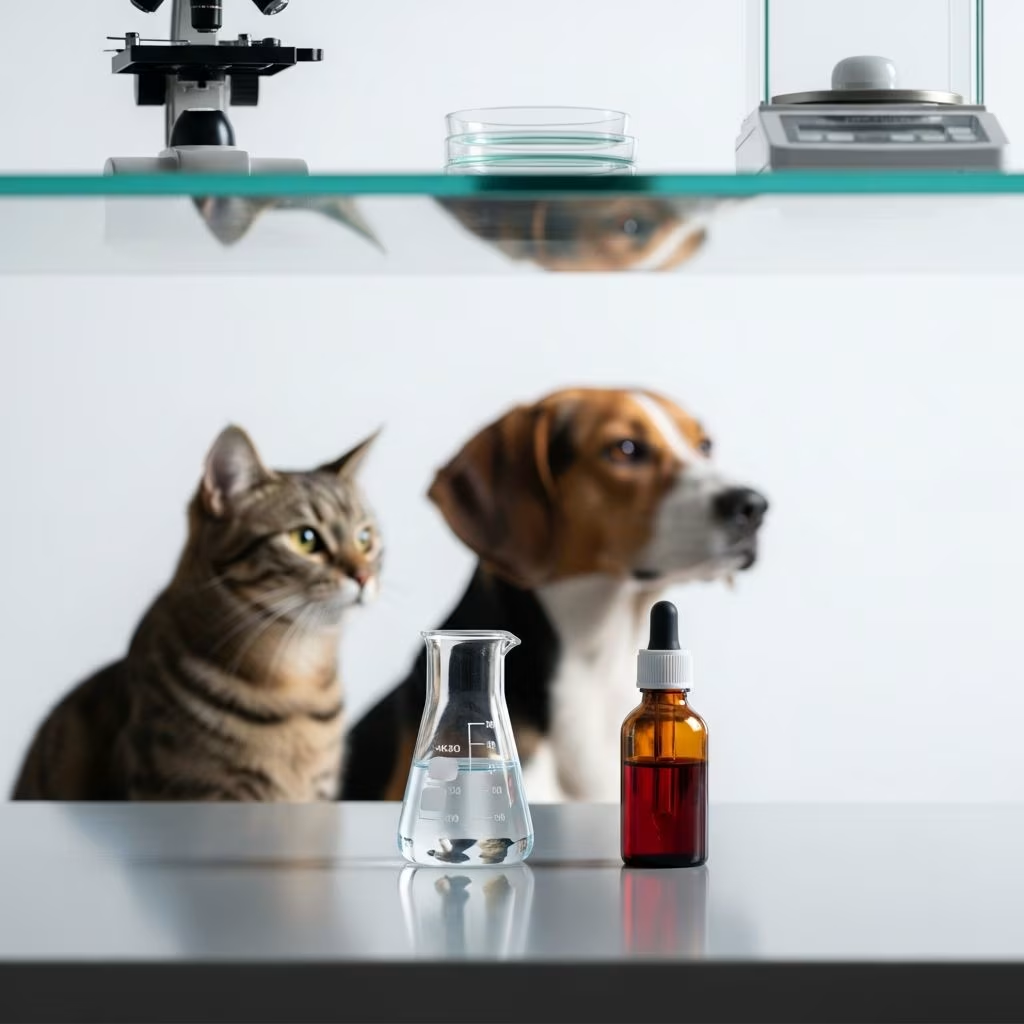
Vomiting in monogastric animals such as dogs and cats serves as a protective reflex to expel harmful substances from the stomach, but uncontrolled episodes can lead to dehydration, electrolyte imbalances, and aspiration risks. Veterinary professionals use emetics to induce vomiting strategically in toxin ingestions and antiemetics to suppress it when pathological. This article details the physiological basis, pharmacological options, dosing protocols, and clinical decision-making for these therapies in small animal practice.
Understanding the Vomiting Mechanism
The vomiting process involves coordinated neural and muscular actions. It begins with retrograde peristalsis in the proximal small intestine, slowing esophageal motility, and relaxing the lower esophageal sphincter. Retching follows, driven by abdominal muscle and diaphragm contractions, creating pressure gradients that propel gastric contents upward.
Central control resides in the brainstem’s vomiting center, influenced by receptors including serotonergic (5-HT3), adrenergic (α2), and neurokinergic (NK1). Inputs arrive via peripheral nerves like the vagus and glossopharyngeal from the GI tract and pharynx, or through the chemoreceptor trigger zone (CRTZ) in the fourth ventricle, which lacks a blood-brain barrier and responds to humoral toxins, drugs, and metabolic disturbances.
- Vestibular inputs: Motion sickness or ear infections stimulate M1, H1, and NK1 receptors.
- Higher brain centers: Cerebral cortex and limbic system trigger psychogenic vomiting.
- CRTZ activation: Dopaminergic (D2), serotonergic, and other receptors detect circulating emetogens.
Species differences matter: cats have more α2 receptors, enhancing xylazine’s emetic efficacy.
When to Induce Vomiting: Clinical Indications
Emesis induction removes up to 80% of gastric contents, ideal for recent toxin ingestions before absorption. Optimal timing is within 2-4 hours for rapid-dissolving substances, extending to 4-6 hours for sustained-release formulations.
Contraindications include:
- Corrosives (acids, alkalis) risking re-exposure injury.
- Petroleum distillates increasing aspiration pneumonia risk.
- Clinical signs like seizures, coma, or bradycardia.
- Non-vomiting species (horses, rabbits).
Monitor closely post-emesis to confirm expulsion and prevent reingestion.
Primary Emetic Agents for Dogs
Dogs respond well to several safe emetics. Hydrogen peroxide (3%) irritates the gastric mucosa, suitable for home or clinic use at 1-2 mL/kg orally (max 45 mL). Avoid in cats due to toxicity risks.
Apomorphine, a dopamine agonist, acts centrally via CRTZ at 0.02-0.1 mg/kg IV or 0.25 mg conjunctivally. Rapid onset (5-15 minutes) makes it clinic-preferred; walking enhances efficacy via vestibular stimulation. Rinse eyes if topical.
Ropinirole eye drops (3.75 mg total for small dogs) offer non-invasive alternative with high success (94%).
| Agent | Dog Dose | Route | Onset | Notes |
|---|---|---|---|---|
| Hydrogen Peroxide 3% | 1-2 mL/kg (max 45 mL) | PO | 10-15 min | Not for cats; repeat once if no vomit. |
| Apomorphine | 0.02-0.1 mg/kg | IV/SC/conjunctival | 5-15 min | Naloxone reverses overdose. |
| Ropinirole | 3.75-7.5 mg total | Ocular | 10-20 min | Single use; monitor for prolapse. |
Emetics Tailored for Cats
Cats require α2-agonists due to receptor density. Xylazine (0.4-0.5 mg/kg IV/IM) induces reliable emesis within 2-6 minutes. Dexmedetomidine serves similarly at lower doses. Atipamezole reverses effects.
Avoid hydrogen peroxide and apomorphine in felines due to poor response or risks.
Strategies to Suppress Vomiting
Antiemetics target specific pathways, selected by etiology (e.g., motion sickness vs. chemotherapy).
- Phenothiazines (Acepromazine, Chlorpromazine): Block D2 and H1 in CRTZ; 0.05-0.1 mg/kg IV/IM. Vasodilation requires fluids.
- Antihistamines (Diphenhydramine): H1 blockade for vestibular nausea; 2-4 mg/kg PO q6-8h.
- Opioids (Butorphanol): Kappa receptor antagonism; 0.2-0.4 mg/kg IM q6-12h.
- Metoclopramide: 5-HT3/D2 antagonist plus prokinetic; 0.2-0.5 mg/kg IV q6-8h. Avoid high doses causing extrapyramidal signs.
- Benzodiazepines (Diazepam): Vestibular effects; 0.2-0.5 mg/kg IV.
- Corticosteroids/Maropitant: NK1 antagonism for broad-spectrum control; effective in chemo-induced vomiting.
| Drug Class | Examples | Dose (Dogs/Cats) | Primary Target |
|---|---|---|---|
| Phenothiazines | Acepromazine | 0.05-0.1 mg/kg IV | CRTZ (D2/H1) |
| Opioids | Butorphanol | 0.2-0.4 mg/kg IM | Vomiting center (Kappa) |
| 5-HT3 Antagonists | Metoclopramide | 0.2-0.5 mg/kg slow IV | CRTZ/GI tract |
| NK1 Antagonists | Maropitant | 1 mg/kg SC/PO | Central pathways |
Practical Considerations in Therapy Selection
Diagnose underlying causes before antiemetics to avoid masking issues like infections or obstructions. Combine therapies judiciously: maropitant with metoclopramide for refractory cases.
Side effects vary: sedation with acepromazine, hypersalivation with capromorelin (appetite stimulant but noted for GI effects). Always hydrate patients and monitor vitals.
Case Examples in Small Animal Practice
Toxin Ingestion Dog: Recent chocolate exposure in a Labrador—administer apomorphine IV while preparing decontamination.
Motion Sickness Cat: Travel-induced vomiting—diphenhydramine premedication plus acclimation.
Chemo Vomiting: Maropitant SC daily prevents delayed emesis.
Frequently Asked Questions (FAQs)
Can I use hydrogen peroxide at home for my dog?
Yes, 3% solution at 1 mL/kg (max 45 mL), but only if within 2 hours of ingestion and no contraindications. Contact a vet first.
Why don’t cats respond to the same emetics as dogs?
Feline α2 receptor prominence favors xylazine; others like peroxide irritate without efficacy.
Is it safe to combine antiemetics?
Yes, under veterinary guidance—e.g., maropitant + ondansetron for multimodal control.
How long after toxin ingestion is emesis useless?
Beyond 2-4 hours for most; assess per substance.
What if induced vomiting fails?
Proceed to gastric lavage, activated charcoal, or specifics based on toxin.
Advances and Future Directions
NK1 antagonists like maropitant represent progress in broad antiemetic coverage. Ongoing research explores cannabinoids and novel 5-HT modulators for refractory cases, emphasizing evidence-based protocols.
References
- Vomiting and anti-emetic therapy in veterinary medicine — VetBloom. Accessed 2026. https://vetbloom.com/vomiting-and-anti-emetic-therapy-in-veterinary-medicine/
- Emetics in Small Animals — Today’s Veterinary Practice. Accessed 2026. https://todaysveterinarypractice.com/pharmacology/emetics-in-small-animals/
- Drugs Used in Gastrointestinal System Disorders — Veterian Key. Accessed 2026. https://veteriankey.com/drugs-used-in-gastrointestinal-system-disorders/
- Drugs That Affect Appetite in Monogastric Animals — MSD Veterinary Manual. Accessed 2026. https://www.msdvetmanual.com/pharmacology/systemic-pharmacotherapeutics-of-the-digestive-system/drugs-that-affect-appetite-in-monogastric-animals
- Table: Emetic Drugs — MSD Veterinary Manual. Accessed 2026. https://www.msdvetmanual.com/multimedia/table/emetic-drugs
- Table: Antiemetic Drugs — Merck Veterinary Manual. Accessed 2026. https://www.merckvetmanual.com/multimedia/table/antiemetic-drugs



