

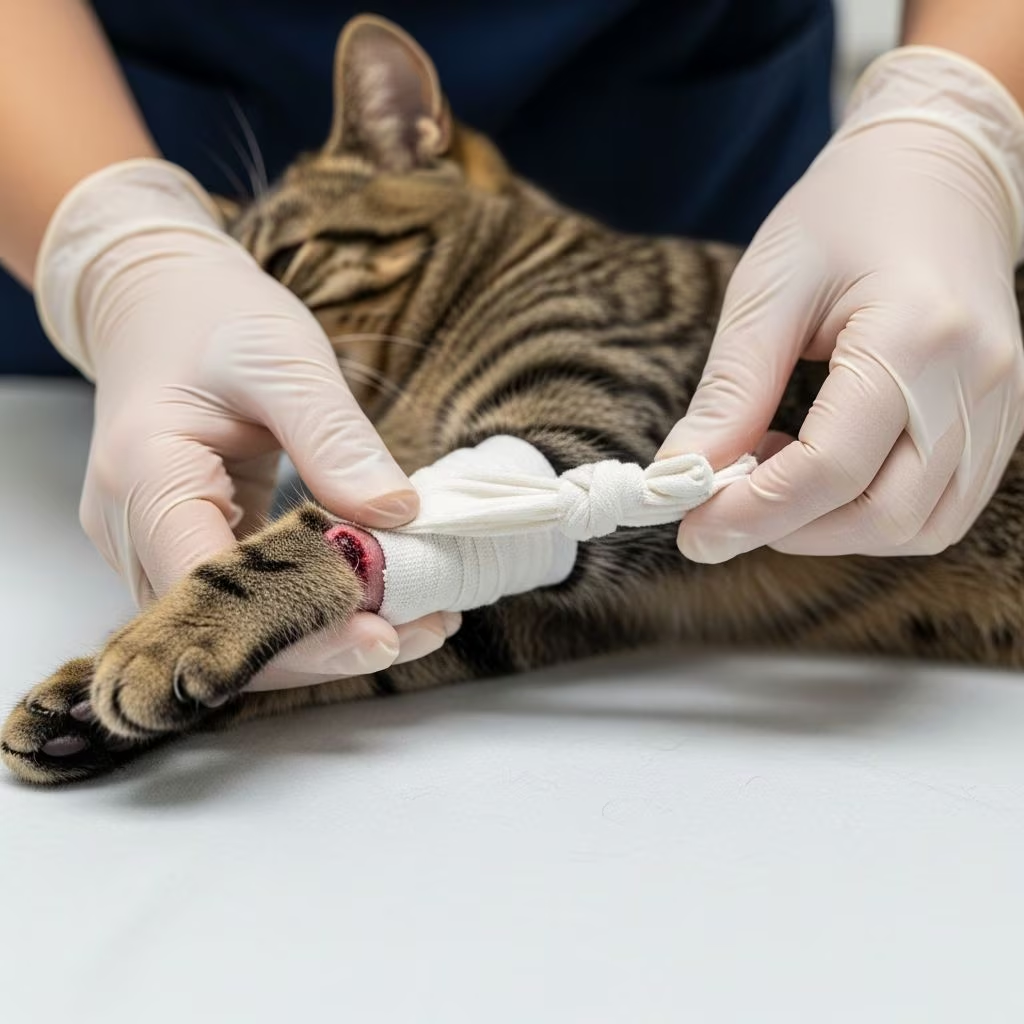
When your feline companion experiences severe bleeding from a traumatic injury, every second counts. While direct pressure and pressure bandages serve as the first line of defense in hemorrhage management, knowing how to apply a tourniquet can mean the difference between life and death. This guide provides cat owners and emergency responders with evidence-based techniques for tourniquet application during critical bleeding situations.
Understanding When a Tourniquet Becomes Necessary
A tourniquet represents an emergency measure reserved exclusively for life-threatening bleeding scenarios that resist other treatment methods. This intervention should never be your initial response to feline injuries. Instead, tourniquets function as a last-resort option when conventional bleeding control fails.
Severe bleeding warranting tourniquet consideration includes catastrophic limb injuries, partial or complete amputations, and wounds with profuse arterial hemorrhage. Minor cuts, abrasions, and controlled bleeding do not justify tourniquet use. The distinction between minor and severe bleeding is critical—tourniquets carry inherent risks of tissue damage and should only be deployed when the alternative is uncontrolled blood loss.
Before attempting tourniquet application, first try direct pressure using clean cloths or sterile dressings. Maintain firm pressure above the wound for several minutes. If bleeding persists despite sustained pressure, then consider transitioning to a tourniquet as your emergency measure.
Why Standard Human Tourniquets Fail for Cats
Commercial tourniquets designed for human emergency medicine prove unsuitable for feline patients. Human-sized tourniquets, including military-grade Combat Application Tourniquets (CAT), are too large to achieve adequate circumferential pressure around cat limbs. The smallest commercial tourniquets still cannot tighten sufficiently around feline legs and paws due to anatomical differences.
Attempting to use oversized equipment on cats creates dangerous complications. Loose or improperly fitted tourniquets fail to occlude blood vessels adequately, rendering them ineffective while potentially causing localized tissue trauma. This mismatch between equipment and anatomy necessitates improvisation using readily available household materials.
Selecting Appropriate Materials for Improvised Tourniquets
The material you choose for tourniquet construction directly impacts your cat’s safety and the technique’s effectiveness. Broad, soft materials that distribute pressure evenly across the limb represent the gold standard for improvised feline tourniquets.
Recommended materials include:
- Triangular bandages rolled into broad strips
- Elastic veterinary wraps (such as Vetrap)
- Torn strips from clean t-shirts or cotton fabric
- Scarves or soft cloth ties
- Clean handkerchiefs folded into wide bands
Materials to absolutely avoid:
- String, twine, or thin cordage
- Wire or metallic materials
- Rubber bands
- Narrow leather straps
- Any material that concentrates pressure into a thin line
Thin materials create tourniquet injury by cutting into skin, damaging underlying nerves and blood vessels, and potentially reaching bone. Even when applied with life-saving intent, narrow tourniquets cause permanent tissue damage exceeding the original injury’s harm. Always prioritize broad, soft materials that distribute pressure evenly across the limb’s circumference.
Step-by-Step Tourniquet Application Technique
Proper application technique determines whether your tourniquet successfully controls bleeding or causes additional harm. Follow these sequential steps during your feline emergency:
Position the Tourniquet Correctly
Apply the tourniquet on the limb between the wound and the body, positioning it just above the injury site. For forelimb injuries, place the tourniquet between the wound and the elbow. For hindlimb injuries, position it between the wound and the stifle (knee) joint. Never apply tourniquets across joints themselves, as this compromises effectiveness and increases nerve damage risk.
Wrap the Material Circumferentially
Encircle the entire limb with your broad bandage material, ensuring even contact around the full circumference. Use a smooth, continuous wrapping motion without gaps or overlapping sections. The bandage should sit snugly against the skin but not bite into tissue before tightening.
Create a Secure Anchor Point
After completing the wrap, tie the bandage ends together using a simple square knot. This creates your anchor point for the windlass mechanism. Ensure the knot sits securely without slipping or coming loose with movement.
Insert and Secure the Windlass
A windlass—any smooth, rigid object—provides the mechanical advantage needed to tighten the tourniquet sufficiently. Suitable windlass options include screwdrivers, wooden spoons, pencils, or specialized tourniquet tools. Insert the windlass through or over the bandage adjacent to your anchor knot, perpendicular to the limb’s long axis.
Twist Until Bleeding Stops
Rotate the windlass slowly and steadily, winding the bandage tighter with each rotation. Continue twisting until active bleeding ceases completely. You should observe the limb distal to the tourniquet becoming pale or blanched, indicating complete vascular occlusion. Do not over-tighten excessively once bleeding stops—achieving hemostasis is your goal, not maximum pressure.
Secure the Windlass in Place
Once adequate tightness is achieved, secure the windlass firmly so it cannot unwind. Use additional bandage material, tape, or cloth strips to hold the windlass in its final position. This prevents accidental loosening during transport or handling.
Critical Time Limitations and Monitoring
Tourniquet application creates an ischemic environment distal to the compression point. Tissue survival depends directly on tourniquet duration. Prolonged ischemia leads to permanent cellular damage, muscle death (necrosis), and gangrene development.
For feline patients, tourniquet duration should not exceed 15 to 20 minutes at one time without professional veterinary intervention. Beyond this window, irreversible tissue damage becomes likely. Document the exact time of tourniquet application clearly—write it on the tourniquet itself, on your cat’s body with a pen, or communicate it verbally to veterinary staff upon arrival.
If professional help is unavailable and bleeding recurs after removal, you may reapply the tourniquet. However, reinitiate direct pressure protocols and transport immediately to emergency veterinary care. Never remove a tourniquet yourself once applied unless directed by veterinary professionals. Premature removal can restart bleeding and complicate hemorrhage control during surgical intervention.
Transport Considerations and Professional Care Handoff
Once you have successfully applied and secured a tourniquet, your priority shifts to rapid veterinary transport. Call ahead to emergency veterinary clinics to alert them of your arrival with a severely injured cat requiring tourniquet management. This allows staff to prepare for immediate surgical or advanced bleeding control interventions.
During transport, keep your cat as still as possible to minimize limb movement that could loosen the tourniquet or restart bleeding. Support the injured limb gently but avoid unnecessary handling. Monitor for signs of tourniquet slippage, such as renewed bleeding, and secure it further if needed.
At the veterinary clinic, trained professionals will assess circulation below the tourniquet using doppler ultrasound, physical examination, and other diagnostic tools. They determine whether the affected limb can be salvaged or if amputation represents the only viable option. Veterinarians also clean the wound, provide antibiotics, manage pain, and address any secondary injuries sustained during the initial trauma.
Potential Complications and Why Professional Evaluation Matters
Tourniquet application, while life-saving for acute hemorrhage, carries inherent risks of complications. Nerve damage, muscle injury, and tissue necrosis can develop even with proper technique if duration extends too long. Ischemic injury occurs at the cellular level, with damage beginning almost immediately after blood flow cessation but becoming irreversible over time.
Cats are particularly sensitive to tourniquet complications due to their small limb diameter and delicate tissues. Even brief tourniquet application in felines warrants careful post-treatment monitoring for swelling, color changes, temperature differences, and neurological signs such as altered sensation or motor function.
Veterinary professionals evaluate tourniquet sites for compartment syndrome—a painful condition where fluid accumulation increases pressure within muscle compartments, further compromising circulation. They also monitor for reperfusion injury, which can occur when circulation is restored after prolonged ischemia, potentially causing systemic complications.
Prevention and Preparedness
While emergency preparation cannot prevent all injuries, maintaining a well-stocked feline first aid kit significantly improves your response capabilities. Include broad elastic bandages, triangular bandages, multiple clean cloths or gauze pads, and potential windlass tools such as smooth wooden spoons or specialized tourniquet devices.
Additionally, keep your veterinarian’s after-hours emergency contact information readily accessible. Many communities have 24-hour emergency veterinary hospitals—knowing their location and having their phone number saves precious time during actual emergencies. During calm periods, discuss tourniquet application with your veterinarian to clarify when this intervention becomes appropriate for your specific cat.
Distinguishing Between Pressure Bandages and Tourniquets
Many cat owners confuse pressure bandages with tourniquets, two distinct interventions serving different purposes. A pressure bandage applies firm compression to control bleeding while maintaining some circulation to the distal limb. It represents the preferred initial response to most bleeding scenarios.
A tourniquet, by contrast, completely occludes blood flow—both arterial inflow and venous outflow. This total vascular shutdown stops all bleeding but creates the ischemic environment discussed above. Pressure bandages can remain in place indefinitely if applied correctly, while tourniquets have strict time limitations.
Start with direct pressure and graduated compression. Only escalate to tourniquet application when bleeding continues despite sustained pressure efforts. This hierarchy minimizes tourniquet-related complications while maximizing your emergency response effectiveness.
Frequently Asked Questions About Feline Tourniquet Application
Can I use a human CAT tourniquet on my cat?
No. Human Combat Application Tourniquets are too large to achieve proper circumferential pressure on feline limbs. They cannot tighten sufficiently to occlude blood vessels in cats, rendering them ineffective. Improvised tourniquets using broad fabric materials are more appropriate for feline patients.
What if I cannot completely stop the bleeding?
Tighten the tourniquet further while ensuring the windlass remains stable. If bleeding persists despite maximum reasonable tightening, you may need to apply additional tourniquet material or seek alternative methods. However, your primary focus should be transporting your cat to emergency veterinary care immediately.
How often should I loosen the tourniquet during transport?
Modern guidelines recommend against routine loosening of emergency tourniquets. Previous protocols suggesting periodic relaxation are outdated and risk restarting bleeding. Only a veterinary professional should remove or adjust the tourniquet. Transport to professional care as quickly as possible with the tourniquet intact.
Will my cat lose the limb if I apply a tourniquet?
Tourniquet application does not automatically necessitate amputation. Limb salvage depends on the original injury severity, tourniquet duration, tissue damage extent, and veterinary intervention success. Many cats retain functional limbs even after tourniquet application, though rehabilitation may be required.
What signs indicate the tourniquet is working?
Effective tourniquets produce a visibly pale or blanched appearance distal to the compression point. Active bleeding should cease completely. The limb below the tourniquet may feel cooler than surrounding tissue due to arrested circulation. These signs indicate successful vascular occlusion.
References
- Emergencies in Cats — VCA Animal Hospitals. Updated 2025. https://vcahospitals.com/know-your-pet/emergencies-in-cats
- Wound Assessment — Veterinary Surgery Online. https://www.vetsurgeryonline.com/wound-assessment/
- Tourniquet Injury: A Case Report and Review of the Literature — International Journal of Applied Research in Veterinary Medicine, Vol. 4, No. 1. 2006. https://www.jarvm.com/articles/Vol4Iss1/Vol4Iss1HofferV4N1pp67-73.pdf
- What First Aid can I do for my cat? Part 2 — Goddard Veterinary Group. https://www.goddardvetgroup.co.uk/blog/what-first-aid-can-i-do-for-my-cat-part-2/
- Pets and Tourniquets – Emergency First Aid for Dogs – Stopping Severe Bleeding — YouTube. https://www.youtube.com/watch?v=CUmDCjwzLSg
- Tourniquet Use in Animal Attacks: An Analysis of News Media Reports — PubMed Central, National Center for Biotechnology Information. 2021. https://pmc.ncbi.nlm.nih.gov/articles/PMC8051424/



