

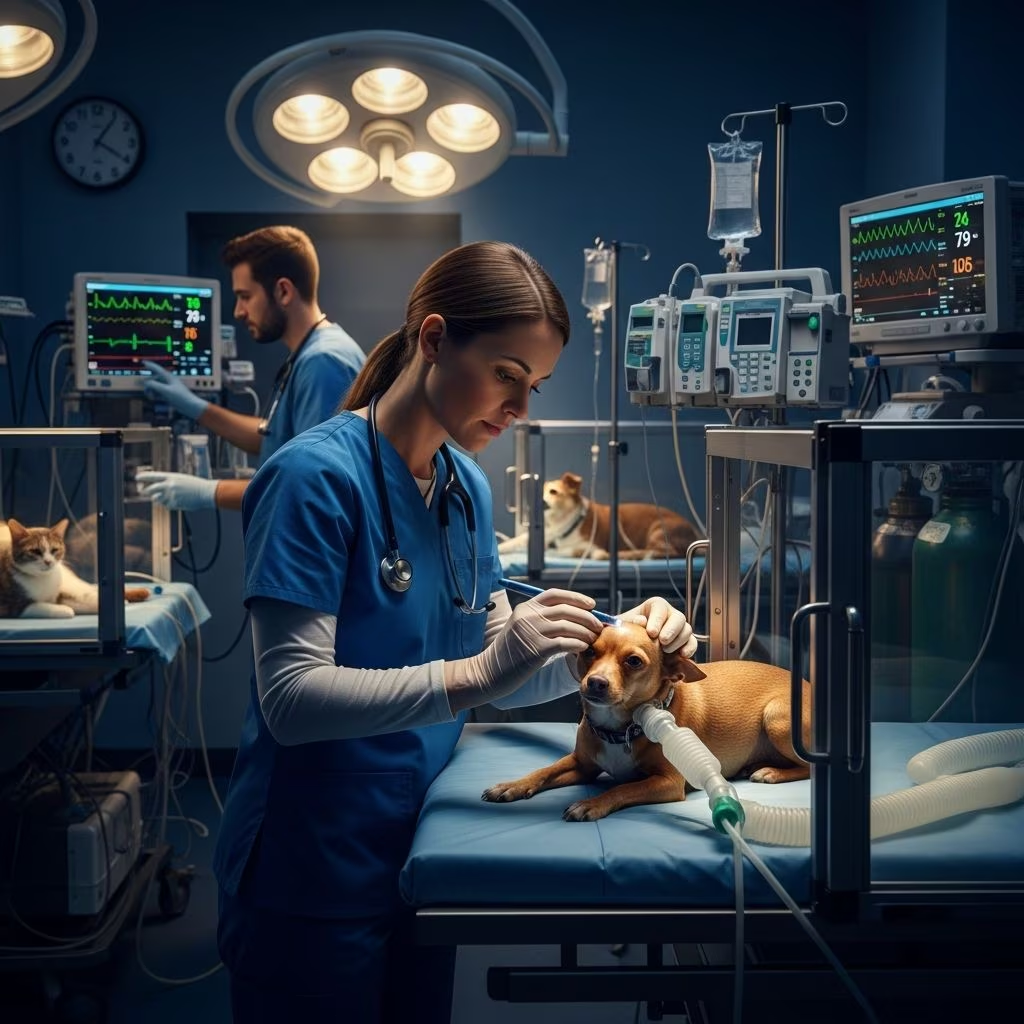
Emergency & Critical Care for Pets: Around-the-Clock Expert Support
When your beloved pet faces a life-threatening emergency, every moment counts. That’s why our emergency and critical care department operates 24 hours a day, 7 days a week, 365 days a year to provide immediate assistance when unexpected situations arise. Our team of board-certified criticalists, experienced veterinarians, and skilled technicians stands ready to handle any emergency your pet may face, delivering compassionate care as if they were part of our own families.
Pet ownership brings immeasurable joy, but it also comes with the responsibility of knowing where to turn when the unexpected happens. Our dedicated emergency care team understands the stress and uncertainty that accompanies urgent medical situations. We are here to welcome your pet with expert care, cutting-edge technology, and the compassion they deserve during their most critical moments.
What We Treat: Comprehensive Emergency Services
Our emergency and critical care department is equipped to manage a wide range of life-threatening conditions and urgent medical situations. Our experienced team provides specialized treatment for:
- Vehicular trauma and accident injuries
- Bite wound injuries from other animals
- Respiratory impairment and breathing difficulties
- Cardiac disease and heart emergencies
- Gastrointestinal emergencies and digestive crises
- Endocrine disorders requiring urgent intervention
- Surgical emergencies demanding immediate attention
- Toxin ingestion and poisoning cases
- Severe infections and sepsis
- Neurological emergencies
Whether your pet has experienced a traumatic accident, sudden illness, or any life-threatening condition, our team has the expertise and resources to provide immediate stabilization and ongoing critical care.
Meet Our Board-Certified Criticalists
The expertise available at our emergency care facility sets us apart. Our board-certified criticalists are veterinarians who have undergone extensive, hands-on training specifically in emergency and critical care medicine. The path to becoming a board-certified emergency and critical care specialist requires significant dedication and education:
- Completion of veterinary school (four years of intensive study)
- One-year internship at a referral practice or teaching hospital
- Three or more years of additional advanced training through residency programs
- Hands-on experience with leading specialists in the field
- Passage of rigorous board certification examinations
In total, board-certified criticalists have completed eight years or more of specialized training beyond high school to become experts in emergency and critical care medicine. This extensive background ensures that your pet receives care from some of the most qualified professionals in veterinary medicine.
Our Intensive Care Unit: Maximum-Level Care Technology
Our intensive care unit provides the maximum level of care and advanced technology available for critically ill dogs and cats. We recognize that seriously ill or injured pets require more than just medical expertise—they need access to the same sophisticated equipment that human emergency rooms use to save lives.
Much of the high-tech equipment available in human hospitals is also accessible at our facility to help your injured or critically ill pet recover. Emergency and critical care specialists are significantly more likely to have access to cutting-edge equipment and capabilities that can make the difference between recovery and tragedy.
Advanced Medical Equipment and Capabilities
Our intensive care unit features state-of-the-art technology including:
- Digital radiography and advanced imaging systems
- Ultrasound equipment for detailed diagnostic imaging
- Complete in-house laboratory facilities for rapid diagnostics
- Electrocardiogram (EKG) monitoring systems
- Mechanical ventilation support for respiratory emergencies
- Blood transfusion capabilities with typing and cross-matching
- Defibrillation equipment for cardiac emergencies
- Hyperbaric oxygen therapy chambers
- Multi-modal pain management systems
- Isolation wards for infectious disease cases
This comprehensive array of equipment ensures that your pet receives the most advanced diagnostic and therapeutic options available in veterinary medicine.
What to Expect When You Arrive
Understanding the emergency care process can help reduce anxiety during a stressful situation. Here’s what you can expect when you bring your pet to our emergency facility:
Initial Assessment and Triage
Upon arrival, you will be greeted by a staff member who will verify your information and perform an initial assessment to determine whether or not your pet is stable. Our triage system prioritizes patients based on the severity of their condition. Pets determined to be in stable condition may remain with you until a veterinarian is available for further evaluation.
Treatment Area Care
Patients requiring urgent care will be moved immediately to our treatment area for further evaluation and emergency intervention. The treatment area is restricted to employees only to ensure maximum safety and efficiency in providing care to critically ill or injured pets. Our trained triage staff will meet with you to obtain your pet’s medical history, including any pre-existing conditions, medications, and relevant background information.
Veterinary Examination and Treatment Plan
Your pet will be examined by one of our emergency room veterinarians or critical care specialists, depending on their condition and medical needs. Following the examination, our veterinarian will propose a comprehensive treatment plan tailored to your pet’s specific situation. We will provide you with an estimated cost of care so you can make informed decisions about your pet’s treatment options.
Limited Intake Protocol: Ensuring Quality Care During High-Volume Periods
During peak demand periods, emergency hospitals across the country experience surges in patient cases. To maintain our commitment to providing the highest quality care while managing patient caseload effectively, we have implemented a Limited Intake Protocol. This system helps us prioritize which emergency cases we are able to accept based on the severity of the condition and our current capacity.
Understanding Our Three-Level Intake System
Our Limited Intake Protocol categorizes emergency situations into three levels to help us direct resources appropriately and communicate clearly with pet owners about whether we can immediately assist their pets.
Level 1 Conditions: Life-Threatening Emergencies
Level 1 conditions indicate a life-threatening situation for your pet and should be assessed right away. If any of the following conditions apply to your pet, please call immediately at 310-473-1561:
- Severe trauma or vehicular accidents
- Loss of consciousness or unresponsiveness
- Severe difficulty breathing or gasping for breath
- Uncontrollable bleeding or hemorrhage
- Suspected poisoning or toxin ingestion
- Severe seizure activity
- Inability to urinate or defecate with obvious distress
- Pale or blue gums indicating poor circulation
- Signs of severe pain or distress
- Choking or airway obstruction
Please note that this is not a complete list of all potentially life-threatening emergencies. If you are concerned that your pet may be experiencing a life-threatening emergency, please call immediately.
Level 2 Conditions: Urgent But Not Immediately Life-Threatening
Level 2 conditions likely warrant evaluation and treatment, but are not expected to be immediately life-threatening. Please monitor your pet carefully for any decline in their condition and contact us if you believe your pet is deteriorating. You also have the option to contact other emergency hospitals to check their wait times and availability.
Level 2 situations include conditions such as:
- Vomiting or diarrhea lasting several hours
- Inability to eat or loss of appetite
- Lethargy or unusual behavior changes
- Mild to moderate lameness or limping
- Mild respiratory distress
- Suspected urinary issues without complete blockage
- Fever or signs of infection
- Minor wounds requiring stitches
If you are concerned that your pet may be experiencing a critical emergency and may not be stable to wait, please call us at 310-473-1561 immediately.
Level 3 Conditions: Non-Urgent Cases
Level 3 conditions are typically non-urgent under most circumstances. Most pet owners will first attempt to take their pet to their primary care veterinarian for Level 3 conditions, as these situations can usually wait for regular veterinary appointment slots.
Level 3 situations generally include:
- Minor skin irritations or allergic reactions
- Mild ear infections
- Routine wound care and bandaging
- Minor lameness without trauma
- Behavioral concerns
- Routine vaccinations or preventive care
- Weight management and nutritional counseling
However, if you are concerned that your pet may be experiencing a critical emergency and may not be stable to wait, please do not hesitate to call us.
Why Choose Our Emergency & Critical Care Department?
When facing a pet emergency, you want to know that your beloved companion is receiving care from the best qualified professionals using the most advanced equipment available. Several factors distinguish our emergency and critical care services:
24/7/365 Availability
We are open every single day of the year, around the clock. No matter what time of day or night your pet experiences an emergency, our team is standing by ready to help.
Board-Certified Specialists
Our veterinarians are board-certified specialists in emergency and critical care medicine, meaning they have undergone years of additional training beyond veterinary school specifically focused on emergency medicine.
Advanced Technology
Our facility features the same high-tech equipment that human hospitals use to treat critically ill patients, providing your pet with access to the most advanced diagnostic and therapeutic options.
Compassionate Care
We understand the emotional stress that accompanies a pet emergency. Our entire team is committed to treating your pet with the same care and compassion we would provide to our own family members.
Collaborative Approach
We work closely with your primary care veterinarian and any other specialists your pet may need, ensuring coordinated and comprehensive care throughout the emergency and recovery period.
Preparing for a Pet Emergency
While we hope you never need our emergency services, being prepared can help you respond quickly and effectively if your pet experiences a life-threatening situation:
- Know your veterinarian’s emergency protocols and after-hours contact procedures
- Keep the phone number of the nearest emergency veterinary facility easily accessible
- Ask your veterinarian about their referral relationships with emergency and critical care centers
- Maintain current medical records for each pet in your household
- Keep a list of any medications your pet is currently taking
- Know your pet’s medical history, including previous surgeries or chronic conditions
- Practice basic first aid and CPR for pets if possible
- Have a pet emergency kit prepared at home
What to Do in a Pet Emergency
If you believe your pet is experiencing a life-threatening emergency, immediate action is essential:
- Call your veterinarian immediately, even if it is after hours. Most veterinary practices have recorded messages that explain how to obtain emergency help when the practice is closed.
- Do not attempt to obtain advice online or through social media during a genuine emergency.
- Do not leave a voicemail message. In an emergency, your pet needs help immediately. Keep trying to reach a live person who can connect you with a veterinarian or direct you to an emergency facility.
- If you are away from home and cannot reach your regular veterinarian, consult the yellow pages of the local phone book or search online for the closest veterinary emergency facility in your area.
- Provide clear, concise information about your pet’s condition and symptoms when speaking with emergency personnel.
Frequently Asked Questions About Emergency & Critical Care
Q: Is your emergency department really open 24 hours a day?
A: Yes, our emergency and critical care department is open 24 hours a day, 7 days a week, 365 days a year. We are always ready to help, no matter what time your pet experiences an emergency.
Q: How are patients prioritized when I bring my pet in?
A: Patients are treated in order of severity. Pets with life-threatening conditions receive immediate attention, while stable patients may wait for a veterinarian. Our triage staff assesses each pet upon arrival.
Q: Do I need to call ahead before bringing my pet to the emergency department?
A: While we ask that you call us in advance when possible to allow our staff to prepare for your pet’s specific medical issues, we realize that sometimes there is not time to call. We welcome walk-ins at any time.
Q: What qualifications do your veterinarians have?
A: Our emergency and critical care veterinarians are board-certified specialists who have completed at least eight years of training including veterinary school, internships, residencies, and rigorous examinations in emergency and critical care medicine.
Q: What happens during the initial assessment?
A: A staff member will verify your information and perform an initial assessment to determine if your pet is stable. This helps us prioritize care and ensure that pets needing urgent attention receive it immediately.
Q: Why is the treatment area restricted to employees only?
A: The treatment area is restricted to ensure maximum safety and efficiency in providing care to critically ill or injured pets. This allows our team to work without distraction and maintain strict protocols for infection control and patient safety.
Q: What kind of equipment do you use in your intensive care unit?
A: Our intensive care unit features state-of-the-art equipment including digital radiography, ultrasound, EKG monitoring, mechanical ventilation, blood transfusion capabilities, defibrillation equipment, hyperbaric oxygen therapy, and multi-modal pain management systems.
Q: What should I do if my veterinarian doesn’t have an emergency referral relationship?
A: Make sure you know the location of the closest emergency referral center in your area ahead of time. You can search online, consult the yellow pages, or ask neighbors and friends for recommendations.
Q: Are there times when you cannot accept new emergency patients?
A: During periods of extremely high volume, we may implement our Limited Intake Protocol to ensure we can provide quality care. We prioritize Level 1 (life-threatening) conditions. If you have questions about whether we can treat your pet’s condition, please call us at 310-473-1561.
Q: How quickly will my pet be seen by a veterinarian?
A: Patients with life-threatening emergencies (Level 1 conditions) are moved immediately to the treatment area for evaluation. The timeline depends on the severity of your pet’s condition and current patient load.
References
- Emergency & Critical Care — VCA Animal Hospitals — VCA Animal Specialty Emergency Center. 2025-01-15. https://vcahospitals.com/animal-specialty-emergency/departments/emergency-critical-care
- Emergency & Critical Care — VCA Veterinary Specialty Center Madison — VCA Animal Hospitals. 2025-01-15. https://vcahospitals.com/veterinary-specialty-center-madison/departments/emergency-critical-care
- Emergency & Critical Care — VCA Advanced Veterinary Care Center — VCA Animal Hospitals. 2025-01-15. https://vcahospitals.com/advanced-veterinary-care-center/departments/emergency-critical-care
- Board Certification in Veterinary Emergency and Critical Care — American Board of Veterinary Specialties. 2024-12-01. https://www.abvs.org/
- 24 Hour Emergency Veterinary Care — VCA Animal Emergency Critical Care — The LifeCentre Veterinary Hospital. 2024-11-28. https://www.tlcvets.com/specialty-practices/24-hour-emergency/



