
Elizabethan Collars in Cats: Complete Care Guide
Everything cat owners need to know about E-collars and post-surgery wound protection.
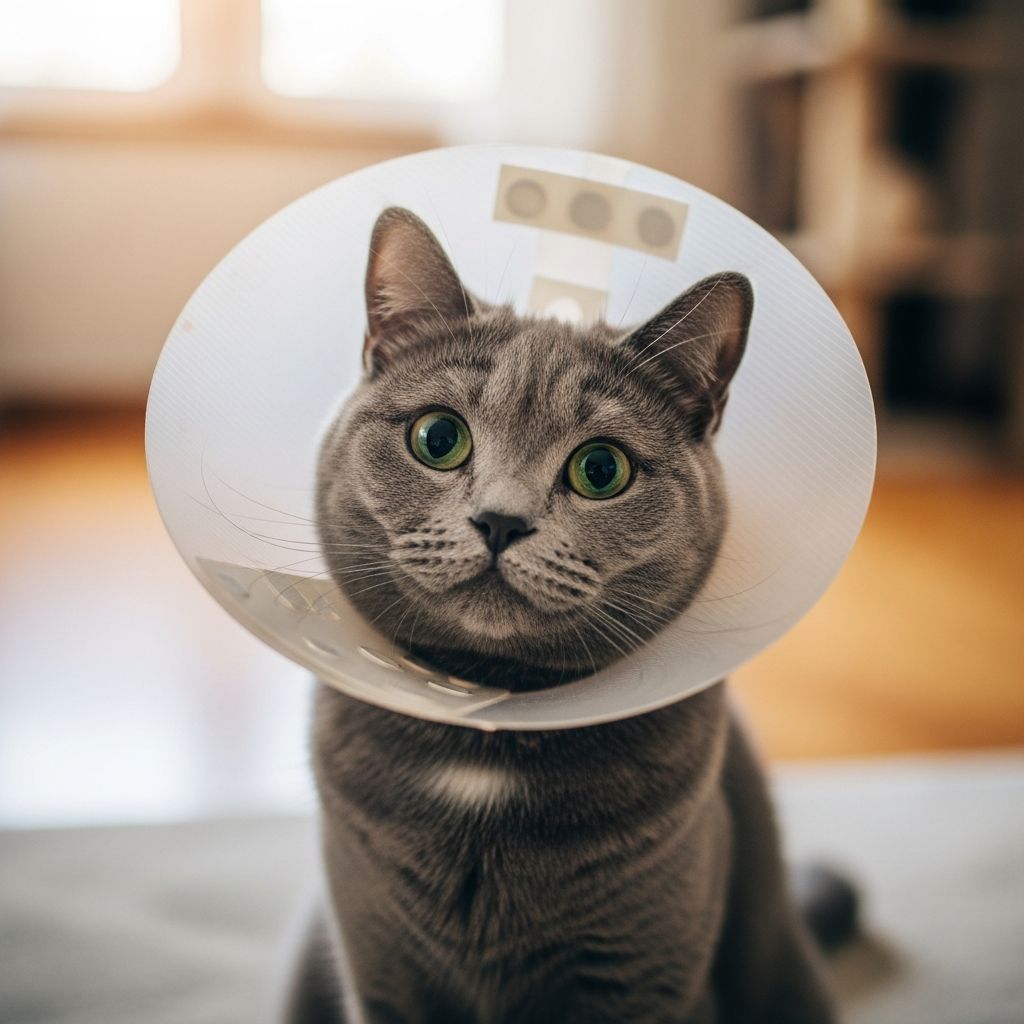
Understanding Elizabethan Collars for Cats
An Elizabethan collar, commonly referred to as an E-collar or “cone of shame,” is a protective medical device designed to prevent cats from engaging in self-harmful behaviors during recovery. This plastic or fabric cone is placed around a cat’s head to create a physical barrier that stops the animal from licking, chewing, or pawing at surgical sites, wounds, or medical dressings. The collar has been a staple in veterinary medicine since at least the 1960s, serving as one of the most effective methods for protecting vulnerable areas during the healing process.
While the appearance of an E-collar might seem restrictive or uncomfortable, it plays a crucial role in ensuring proper wound healing and preventing serious complications. Understanding the purpose, proper use, and care requirements for these collars can help cat owners support their pets through recovery with minimal stress.
Why Your Cat Needs an Elizabethan Collar
The primary purpose of an Elizabethan collar is to prevent your cat from directly traumatizing a surgical site or injured area of the body. Although it is completely natural for cats to lick their wounds as part of their grooming instinct, this behavior can be highly detrimental to the healing process. When cats lick or chew at a surgical site or wound, they can cause several serious complications:
– Delayed wound healing due to continuous disruption of the healing process- Dislodging of surgical stitches that were carefully placed by your veterinarian- Introduction of bacteria leading to wound infections- Reopening of wounds that were beginning to close- Increased pain and inflammation in the affected area- Extension of recovery time, requiring additional veterinary intervention
By wearing an E-collar, your cat maintains the integrity of the surgical site, allowing the body’s natural healing mechanisms to work effectively without interference. This is particularly important during the critical early stages of recovery when wounds are most vulnerable.
Duration of Collar Wear
The length of time your cat must wear an Elizabethan collar depends entirely on the nature and severity of the injury or surgical procedure. Following spaying, male cats typically need to wear the collar for 5 to 7 days, while female cats generally require 7 to 10 days due to the more invasive nature of the procedure. For other types of surgeries or injuries, the duration may be significantly different.
In general, the collar must be worn until the wound has fully healed, which could be as short as a few days for minor procedures or as long as several weeks for major surgeries or complicated wounds. To minimize the time your cat must wear the collar, it is essential to follow all instructions provided by your veterinarian carefully. Some cats with chronic or recurring skin issues may require long-term use of the collar on an intermittent basis.
Your veterinarian will provide specific guidance on when it is safe to remove the collar. If you are uncertain about the appropriate timeline for your cat’s particular situation, contact your veterinary practice rather than making independent decisions about collar removal.
Proper Fitting and Adjustment
Ensuring the E-collar fits properly is critical for both your cat’s safety and comfort. An improperly fitted collar can cause unnecessary stress, restrict breathing or swallowing, or fail to provide adequate protection. When fitting an Elizabethan collar on your cat, the most important rule is to maintain a two-finger gap between the collar and your cat’s neck.
To verify proper fit, gently slide two fingers between the collar and the neck area. You should be able to fit them comfortably without resistance, but the collar should not be so loose that it shifts or slides around. This sizing ensures that:
– Your cat can breathe freely without restriction- Your cat can swallow normally when eating or drinking- Circulation to the head is not compromised- The collar stays in proper position without excessive movement- Your cat’s comfort level is maximized
If the collar is too tight, your cat may experience discomfort or breathing difficulties. If it is too loose, your cat may be able to slip it off or manipulate it to access wound areas. With the help of a veterinary technician or veterinarian, you can select an E-collar size that provides a snug but not excessively tight fit for your cat’s specific head size and shape.
Can You Remove the Collar at Home?
Although the idea of removing the collar temporarily might seem appealing to reduce your cat’s stress, it is generally not advisable to take it off without veterinary guidance. Once removed, properly replacing and repositioning an Elizabethan collar on a cat can be challenging, and mistakes in refitting may compromise its effectiveness.
However, in some specific situations as advised by your veterinarian, you may be permitted to remove your cat’s collar for brief periods when you can offer close supervision. This might include mealtimes or grooming sessions, but only if your veterinarian has explicitly approved this practice. If you do remove the collar, always ensure it is correctly repositioned with the two-finger fit rule before returning it to your cat.
If you are unable to replace the collar properly after removal, contact your veterinarian immediately. Do not attempt to refit it multiple times, as this can frustrate both you and your cat. Your veterinary team can help ensure the collar is positioned correctly to protect your cat’s recovery.
Outdoor Safety and Restrictions
It is strongly recommended that cats wearing Elizabethan collars remain indoors and away from outdoor environments. The collar significantly alters your cat’s perception of their surroundings and creates multiple safety hazards:
– E-collars restrict a cat’s field of vision, limiting their ability to see potential dangers from the sides or above- The collar can easily become caught in plants, bushes, or outdoor obstacles- Your cat may be unable to navigate tight spaces or jump up or down safely- The reduced visibility increases risk from vehicles, predators, or other outdoor hazards- Your cat’s mobility and agility are compromised, making escape from danger more difficult
If your cat absolutely must go outdoors while wearing the collar, ensure they are either on a secure leash under your direct control or in a completely enclosed space where they cannot encounter hazards. Never allow an E-collar-wearing cat to roam freely outdoors, even in your own yard, as accidents can happen rapidly.
Special Care Requirements During Collar Wear
Caring for a cat wearing an Elizabethan collar requires attention to several important aspects of daily care to ensure comfort and prevent complications.
Eating and Drinking
A properly fitted E-collar should not prevent your cat from eating and drinking normally, though the initial adjustment period may be cumbersome and messy. Most cats quickly adapt to eating and drinking with the collar in place, though you may need to make some modifications to facilitate easier access to food and water.
Consider these adjustments if your cat is struggling:
– Elevate food and water bowls to bring them closer to mouth level- Change the shape of bowls to accommodate the wider circumference of the collar- Try using flat plates or saucers instead of traditional bowls, which some cats find easier to navigate- Place bowls in open areas rather than corners, allowing more space for the collar- Offer multiple water bowls in different locations to encourage hydration
Some cats may initially refuse to eat while wearing the collar due to stress or unfamiliarity. This typically resolves within a day or two as they adjust. However, if your cat stops eating for more than 24 hours, contact your veterinarian, as this could indicate a more serious problem.
Collar Hygiene and Inspection
The E-collar should be kept clean and free of debris to prevent skin irritation and maintain its effectiveness. Check the collar at least once daily to ensure it is not causing irritation or abrasions on your cat’s neck. Look for signs of:
– Redness or inflammation around the neck area- Hair loss or skin damage- Any discharge or swelling- Debris trapped between the collar and skin
If you notice any signs of irritation or abrasions, you may need to adjust the collar, use a different size, or add soft padding to friction points. Your veterinarian can recommend appropriate solutions if problems arise.
Grooming and Hygiene
Your cat will be unable to groom itself while wearing an Elizabethan collar, so regular grooming by you becomes essential. This is especially important for long-haired cats who cannot maintain their coat during recovery. Brush or gently groom your cat daily to:
– Remove loose hair and prevent matting- Maintain coat health and appearance- Check for any skin abnormalities- Provide comfort and bonding time with your cat- Prevent discomfort from neglected grooming needs
Environmental Adjustments and Safety
Many cats will inadvertently knock over objects or accidentally get stuck in confined spaces while adjusting to the collar, especially during the first few hours and days of wear. Before your cat comes home with an E-collar, take time to cat-proof your home:
– Remove or block access to small enclosed spaces where your cat could become trapped- Clear pathways of obstacles and trip hazards- Secure loose items that could be knocked over- Remove decorative elements from low surfaces- Ensure your cat cannot access confined areas like tight closets or spaces behind furniture- Keep water bowls and litter boxes in open, accessible areas
Some cats also become more nervous or easily startled while wearing the E-collar, since their peripheral vision is obstructed and they cannot see things to the sides and above themselves normally. Providing a calm, safe environment with familiar spaces and routines can help reduce stress during this adjustment period.
Supervision During Initial Wear
It is important to supervise your cat during the first few hours after initially putting on the E-collar to ensure they don’t injure themselves trying to remove it. Watch for signs of distress such as:
– Excessive pawing or scratching at the collar- Attempting to get a paw caught in the collar opening- Panic or extreme agitation- Difficulty breathing or unusual sounds- Refusal to move or complete immobility
Most cats quickly become accustomed to wearing the collar and will calm down after an initial adjustment period. Offering treats and positive reinforcement can help make the experience more positive for your cat. However, if your cat shows signs of serious distress or physical harm, contact your veterinarian immediately.
Alternative Options to Traditional E-Collars
While traditional plastic E-collars remain the most common and effective option, alternative protective devices are available that may provide additional comfort:
– Soft fabric E-collars that are more comfortable than rigid plastic versions- Inflatable collars that provide protection with a softer, bubble-like design- Protective bodysuits or recovery clothing for certain types of wounds- Light dressings or loose coverings that can be used in specific situations with veterinary approval
Discuss these alternatives with your veterinarian to determine which option is most appropriate for your cat’s specific injury or surgical procedure.
Frequently Asked Questions
Q: How do I know if the E-collar is too tight on my cat?
A: If you cannot fit two fingers comfortably between the collar and your cat’s neck, it is too tight. Signs of excessive tightness include difficulty breathing, choking sounds, or neck irritation. Contact your veterinarian to adjust the size.
Q: Can my cat sleep with the E-collar on?
A: Yes, cats can sleep with the E-collar on. However, some cats may find it uncomfortable initially. Ensure the collar is properly fitted and monitor your cat for any signs of distress during sleep.
Q: What should I do if my cat won’t eat with the collar on?
A: Try elevating food bowls, using flat plates, or placing food in open areas. Most cats adjust within 24 hours. If eating problems persist beyond this, contact your veterinarian for guidance.
Q: How can I help my cat adjust to wearing an E-collar?
A: Offer treats as positive reinforcement, maintain a calm environment, provide supervision during initial wear, and keep routines as normal as possible. Most cats adjust quickly with gentle encouragement.
Q: Can I leave the E-collar off at night?
A: Generally, no. The collar should remain on continuously unless specifically advised otherwise by your veterinarian. Leaving it off increases the risk of your cat licking or scratching the wound, potentially causing serious complications.
References
- Elizabethan Collars in Cats — VCA Animal Hospitals. 2024. https://vcahospitals.com/know-your-pet/elizabethan-collars-in-cats
- Pet E-Collar Fit and Tips — Green Valley Veterinary Care. 2024. https://www.greenvalleyveterinarycare.com/services/pet-e-collar-fit-and-tips
- How to Fit an Elizabethan Collar to Your Cat — Goddard Veterinary Group. 2024. https://www.goddardvetgroup.co.uk/blog/how-to-fit-an-elizabethan-collar-to-your-cat/
- E Collar for Cats 101: How to Help Your Cat Heal Happily — Neakasa. 2024. https://neakasa.com/blogs/all/e-collar-for-cats
- Should My Cat Wear a Cone All Day? Vet-Approved Healing Guide — Pet Care Shed. 2024. https://petcareshed.com.au/blogs/pet-supplies/should-my-cat-wear-a-cone-all-day
Similar Articles








Read full bio of medha deb




