

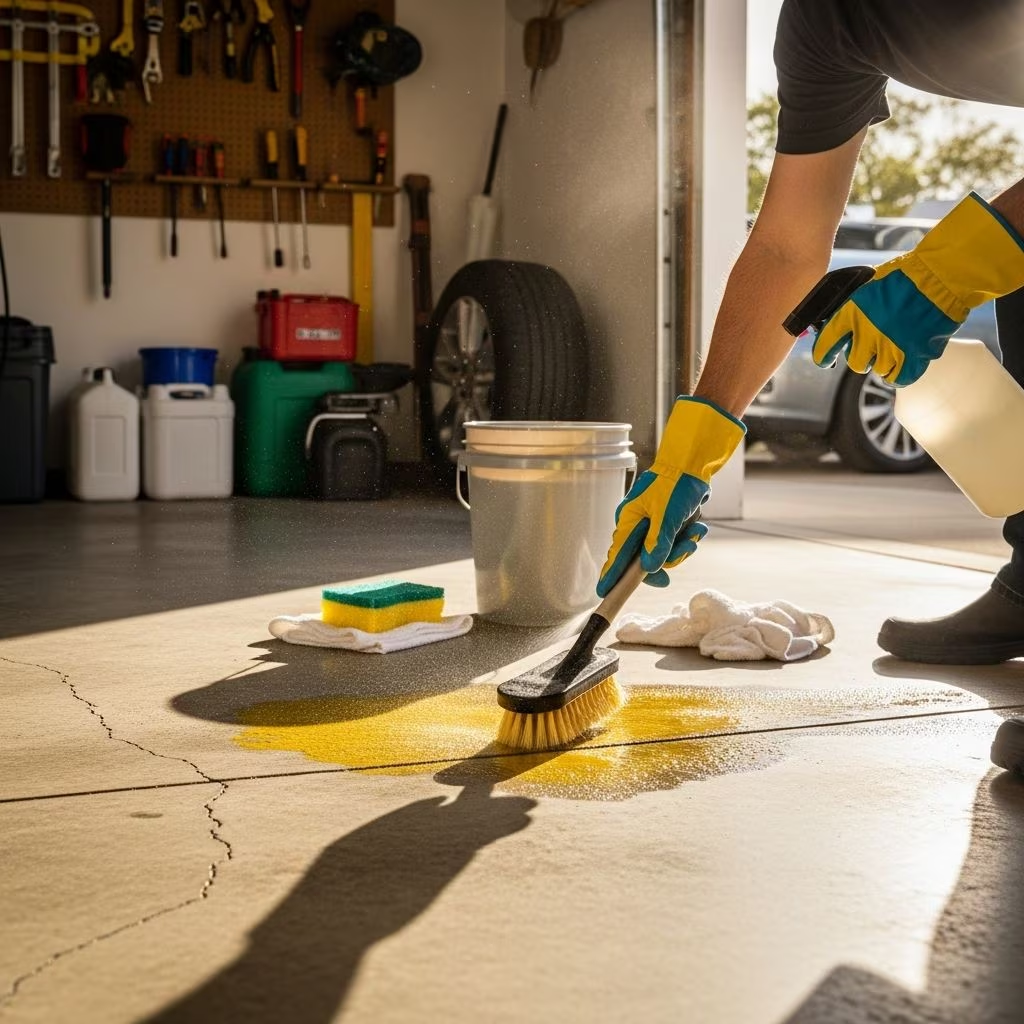
Concrete garages often become targets for dog accidents due to their durability and frequent use as play areas. The porous nature of concrete absorbs urine deeply, allowing bacteria to thrive and release persistent ammonia-like odors over time. Homeowners frequently report that surface cleaning fails to address the root cause, leading to recurring smells that deter use of the space. Effective removal requires targeting both the embedded bacteria and the material’s absorbency with specialized cleaners and protective treatments.
Why Concrete Garages Trap Dog Urine Smells
Concrete’s composition makes it highly susceptible to odor retention. Unlike smooth surfaces, it features microscopic pores that wick in liquids rapidly. When a dog urinates, the urine’s urea breaks down into ammonia via bacterial action, embedding deep within these pores. Standard soaps or disinfectants only clean the top layer, leaving subsurface bacteria to reactivate upon moisture exposure, perpetuating the cycle.
- Porosity factor: Unsealed concrete can absorb up to 5-10% of its weight in fluids, harboring odor sources indefinitely.
- Bacterial persistence: Urea-loving bacteria multiply in damp conditions, producing volatile compounds detectable even after drying.
- Environmental amplifiers: Garage humidity, temperature fluctuations, and foot traffic redistribute odors, making them more noticeable.
Addressing this demands a multi-step approach: deep cleaning to eliminate existing contaminants, followed by sealing to block future penetration. This not only neutralizes current smells but also simplifies ongoing maintenance.
Essential Tools and Materials for Odor Removal
Gathering the right supplies ensures success without repeated efforts. Focus on products designed for organic waste breakdown and concrete protection.
| Item | Purpose | Key Features |
|---|---|---|
| Enzyme cleaner with beneficial bacteria | Breaks down urea and eats odor-causing bacteria | Continues working post-drying for days; non-toxic |
| Deep-penetrating concrete sealer | Densifies surface, waterproofs pores | Water-based, pet-safe, VOC-free; soaks 4-8 inches deep |
| Gas-powered pressure washer (3200+ PSI) | Removes surface debris and rinses cleaners | Deeper clean than electric models |
| Deck brush or push broom | Agitates cleaner into pores | Stiff bristles for thorough scrubbing |
| Pump sprayer or wet/dry vacuum | Applies solutions evenly; extracts waste | 50/50 cleaner-water mix capacity |
These items are widely available at hardware stores. Prioritize enzyme products with live bacteria cultures, as standard enzymes deactivate upon drying, limiting efficacy.
Step-by-Step Deep Cleaning Process
Begin with preparation to maximize penetration. Work in sections for large garages to maintain wetness during treatment.
- Strip existing coatings: If sealed or painted, apply a soy-based stripper, agitate with a floor machine, and pressure wash away residues. This exposes raw concrete for better absorption.
- Initial pressure wash: Use high PSI to blast away loose dirt, oils, and surface urine crystals. Allow full drying to assess odor hotspots.
- Apply enzyme solution: Mix enzyme cleaner 1:1 with water in a sprayer. Saturate affected areas until pooling occurs. Scrub vigorously for 15-20 minutes with a deck brush, re-spraying to prevent drying. Beneficial bacteria will colonize pores, digesting organics over the next week.
- Rinse thoroughly: Pressure wash or vacuum extract dirty water multiple times until clear. Let dry completely (24-48 hours), allowing bacteria to finish neutralizing odors.
For severe cases, repeat enzyme application or use UV lights to identify hidden stains before treatment. Patience here prevents incomplete results.
Applying Protective Sealers for Long-Term Prevention
Post-cleaning, sealing transforms vulnerable concrete into a barrier. Deep-penetrating sealers react with lime in the slab, crystallizing to fill voids and repel water.
- Choose wisely: Opt for silane-siloxane or lithium-based formulas that migrate 4+ inches deep, unlike topical sealers that wear off quickly.
- Application method: Pour or spray evenly on clean, dry concrete. Spread with a roller or broom, allowing 15-30 minutes dwell time before excess removal. Full cure takes 24-72 hours.
- Benefits realized: Sealed surfaces shed urine atop, enabling simple rinsing with enzyme cleaner—no reabsorption or odor return.
This step is crucial for garages, where dogs may continue marking. Treated floors gain permanent density, resisting stains and simplifying upkeep.
Handling Stubborn or Fresh Accidents
New spots demand immediate action to prevent deep soakage. Blot excess urine promptly, then rinse with water. Apply enzyme cleaner undiluted, scrub, and rinse. On sealed concrete, odors dissipate rapidly since liquids bead up.
For entrenched odors, combine TSP (trisodium phosphate) pre-clean with enzymes. TSP degreases and opens pores, enhancing enzyme penetration. Saturate, dwell 1+ hour, then rinse. Avoid overusing TSP due to its harshness—rinse meticulously to protect pets.
Preventive Strategies to Avoid Future Issues
Proactive habits reduce accidents and ease maintenance.
- Train dogs to use designated outdoor potty areas with positive reinforcement.
- Install garage drainage or absorbent mats during playtime.
- Schedule annual resealing and deep cleans, especially in high-traffic pet zones.
- Monitor for health issues like UTIs causing frequent urination.
Combining these with behavioral training minimizes recurrence, preserving your garage’s usability.
Common Mistakes and How to Avoid Them
Many fail by overlooking concrete’s depth. Bleach kills surface bacteria but doesn’t digest urea, often worsening smells via chemical reactions. Vinegar provides temporary masking without bacterial elimination. Skipping sealing invites rapid recontamination.
- Mistake: Rushing drying times—always wait full cycles for cleaners and sealers.
- Mistake: Inadequate scrubbing—agitation drives solutions into pores.
- Fix: Test small areas first; multiple light applications outperform one heavy soak.
FAQs
Will these methods work on outdoor concrete patios too?
Yes, the process adapts perfectly to patios. Use the same enzyme and sealer steps, leveraging pressure washing for open-air rinsing.
How long until I smell no odor after treatment?
Initial improvement in 24-48 hours; full elimination in 3-7 days as bacteria complete breakdown. Sealing accelerates prevention.
Are enzyme cleaners safe for indoor garages?
Pet-safe formulas are non-toxic and odorless once dry. Ensure ventilation during application.
Can I DIY this or hire pros?
DIY suits most with basic tools; pros excel for vast areas or etched concrete, often using industrial-grade products.
What if odors return after sealing?
Rare, but spot-treat with enzyme rinse. Check for unsealed cracks or underlying moisture sources.
Safety and Environmental Considerations
Prioritize pet and family safety with low-VOC, water-based products. Wear gloves during chemical use, and keep dogs away until fully cured. Eco-friendly enzymes reduce harsh chemical runoff, benefiting garage-adjacent yards.
References
- How to Remove Dog Urine Smell From Concrete — CretoSeal. 2023. https://cretoseal.com/how-to-remove-dog-urine-smell-from-concrete/
- Removing Dog Urine Smell from a Concrete Patio – Full Tutorial — CretoSeal 2.0 (YouTube). 2025-07-27. https://www.youtube.com/watch?v=1J7UjFCL2ZE
- How To Remove Dog or Cat Urine Odor From Concrete For Good — Joseph K (YouTube). 2020-07-30. https://www.youtube.com/watch?v=B5fKLlATco4



