

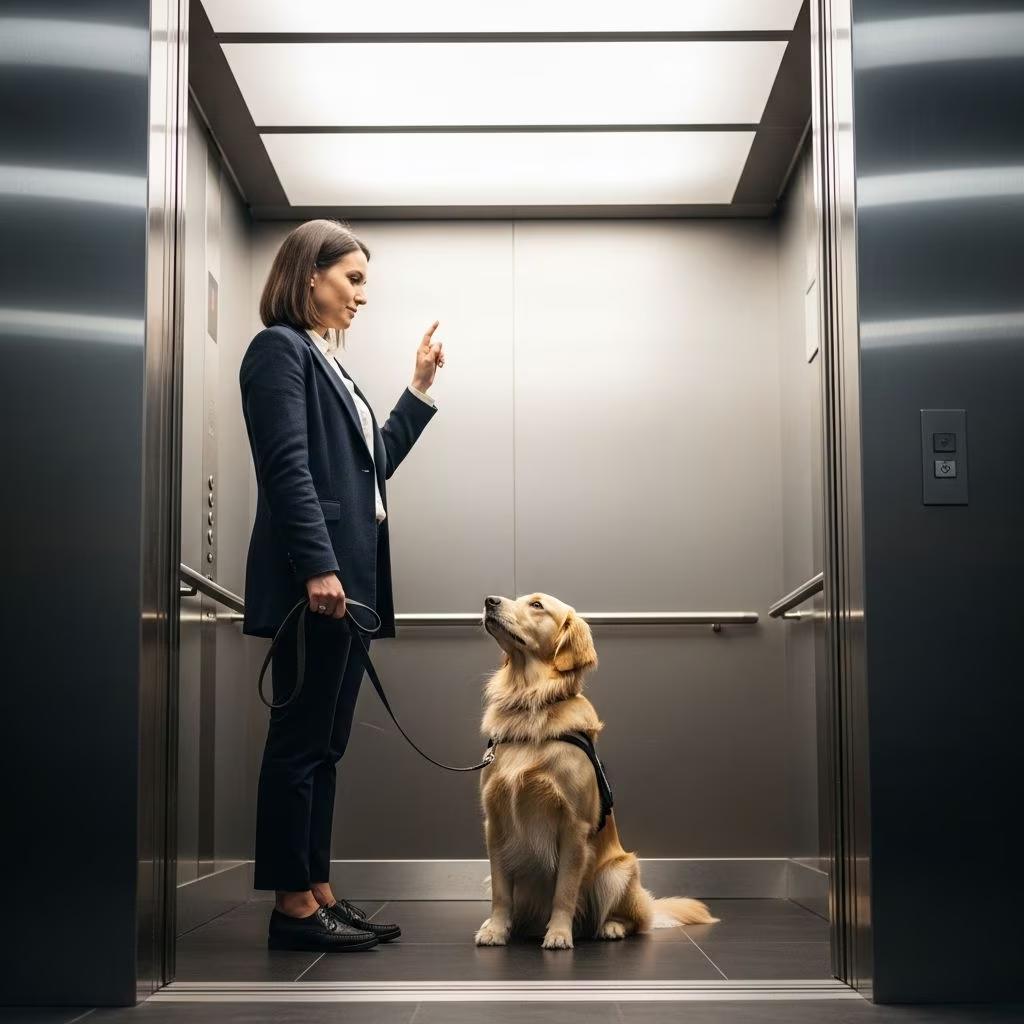
Urban living presents unique challenges for dog owners, particularly when navigating shared spaces like elevators. Many dogs experience anxiety around these enclosed environments, while others display excessive enthusiasm that can make the experience stressful for both pets and fellow passengers. Understanding how to properly prepare and manage your dog during elevator rides is crucial for ensuring safety, building confidence, and maintaining considerate behavior in multi-story buildings.
Understanding Your Dog’s Elevator Anxiety
Before implementing training techniques, it’s important to recognize why elevators pose challenges for many dogs. The enclosed space, mechanical sounds, sudden movements, and unfamiliar vibrations can trigger anxiety in even the most well-behaved pets. Some dogs experience genuine fear responses, while others become overly excited by the prospect of encountering new people or the motion itself.
The first step in addressing elevator challenges is recognizing your individual dog’s specific concerns. Some dogs hesitate at the threshold due to the gap between the floor and elevator platform, fearing their paws might slip into the opening. Others may feel claustrophobic in the confined space or become startled by the sensation of movement. Understanding these distinctions allows you to tailor your training approach to your dog’s unique needs.
Pre-Elevator Preparation and Familiarization
Successful elevator navigation begins long before your dog actually rides between floors. The preparation phase is essential for building your dog’s confidence and establishing positive associations with the elevator environment.
Starting in Low-Traffic Environments
Begin your training during times when elevator traffic is minimal or nonexistent. This could mean visiting your building’s elevator during early morning hours or scheduling practice sessions at a parking garage. Practice entering and exiting the elevator repeatedly without actually traveling between floors. This repetition helps your dog become comfortable with the mechanical sounds, lighting, and the physical act of crossing the threshold.
During these initial sessions, use positive reinforcement consistently. Each time your dog steps into the elevator, provide verbal praise, treats, or gentle petting. If your dog hesitates, never force them inside. Instead, allow them to investigate at their own pace. Some dogs may need several visits before they feel comfortable enough to fully enter the elevator car.
Addressing Threshold Anxiety
Many dogs exhibit concern about crossing the gap between the floor and the elevator entrance. This anxiety typically stems from the fear of their paw slipping into the opening or uncertainty about the stability of the surface. For small dogs, simply picking them up and carrying them across the threshold can eliminate this concern entirely. This approach also prevents potential injuries and removes a major source of anxiety.
For larger dogs, practice walking slowly and deliberately across the threshold during non-operational times. Use high-value treats to encourage forward movement. Once your dog crosses confidently, immediately reward the behavior with enthusiasm. Repeat this process multiple times until your dog moves across the gap without hesitation.
Essential Leash Management Strategies
Proper leash technique is fundamental to safe and courteous elevator use. The type of leash you choose and how you manage it significantly impacts both your dog’s safety and the comfort of other passengers.
Avoiding Retractable Leashes
Retractable leashes should never be used in or around elevators. These leashes can extend unexpectedly, potentially tangling around other passengers or creating hazardous situations as elevator doors close. Additionally, a distracted dog on a retractable leash could easily slip through the door or become caught as it closes.
Shortening Your Standard Leash
Before entering the elevator, shorten your dog’s leash significantly. A shortened leash prevents your dog from bounding ahead of you onto the elevator or wandering to the opposite side of the car to greet other passengers. More importantly, it ensures you and your dog enter together, eliminating the risk of your dog being left behind as the doors close.
Hold the leash close to your body, maintaining control without creating tension that might frighten your dog. The goal is confident, calm management rather than restrictive force. Your dog should feel secure but not constrained.
Training Specific Behavioral Commands
Teaching your dog specific commands designed for elevator environments creates predictability and helps maintain order in these shared spaces.
The “Sit” and “Stay” Foundation
Begin by teaching your dog to sit and maintain that position for extended periods. This command becomes invaluable in the elevator environment. When waiting for the elevator to arrive, position your dog at least three feet from the door and ask for a sit. This distance provides a buffer zone and demonstrates control to other passengers.
Once inside the elevator, ask your dog to sit or assume a down-stay position, particularly if sharing the space with other people. Reinforce these behaviors with calm praise and occasional treats. Avoid overly enthusiastic rewards, which might encourage your dog to jump up or become excited.
The “Wait” Command
Teaching your dog to wait before entering or exiting the elevator provides critical safety benefits. When the elevator doors open, ask your dog to wait while you check for passengers exiting or obstacles in the hallway. Only after you’ve confirmed it’s safe should you release your dog with a clear command like “Okay” or “Go ahead.”
This command requires patience during training but prevents potentially dangerous situations where your dog might rush out before you’re ready to exit safely.
Body Positioning and Physical Management
Your body position within the elevator directly influences your dog’s behavior and signals to other passengers that you maintain control of your pet.
Strategic Positioning in the Elevator
Position yourself and your dog in a corner of the elevator, preferably against a wall. This placement naturally limits your dog’s ability to wander or approach other passengers. Your body acts as a physical barrier between your dog and other people in the car.
Stand slightly between your dog and other passengers when possible. If your dog attempts to move toward someone, gently guide them back into position using your body as a block. This technique is particularly effective for dogs with strong social drives who want to greet everyone they encounter.
The Body-Block Technique
The body-block technique involves positioning yourself directly between your dog and other elevator occupants. This prevents unwanted interactions and communicates to your dog that they should remain focused on you rather than exploring the environment or meeting strangers.
Many dog owners find success pairing this technique with light conversation directed at their dog. Calmly explaining to your dog that not everyone wants to greet them helps nearby passengers understand that the situation is managed and that no threat exists.
Handling Dogs of Different Sizes
Elevator management strategies vary significantly based on your dog’s size and physical capabilities.
Managing Small Dogs
Small dogs present unique advantages and challenges in elevator settings. One primary strategy is simply picking up your dog and holding them during the elevator ride. This approach eliminates several concerns simultaneously: it prevents your dog from being accidentally stepped on, assures anxious passengers who might be uncomfortable around dogs, and removes any possibility of your dog darting out unexpectedly.
If your small dog exhibits hesitation about crossing the elevator threshold, pick them up before you step onto the platform. This prevents the dangerous situation where your dog freezes in the doorway as it begins to close.
Managing Large Dogs
Large dogs require different strategies focused on spatial awareness and controlled positioning. These dogs benefit most from the combination of shortened leash management, positional training, and the sit-stay command. Ensuring your large dog remains on the inside of the car (between you and the wall) provides protection from both accidental collisions and potential threats from other passengers or animals.
Progressive Training Through Elevator Movement
Once your dog is comfortable entering and exiting stationary elevators, gradually introduce movement. This phase requires patience and careful progression.
Starting with Minimal Distance
Begin by riding up just one floor. Before the elevator moves, feed your dog or provide treats to create a positive association with the elevator car. As the elevator begins moving, continue offering small rewards to maintain focus and prevent anxiety. Once you reach the destination floor, stop the treats and practice your exit commands.
Most dogs respond better to upward movement initially. Some experience downward motion as unsettling, similar to the sensation of falling. Repeat single-floor trips up multiple times before attempting downward movement.
Gradual Distance Increases
As your dog becomes more comfortable with single-floor trips, gradually increase the distance traveled. Move from one floor to two floors, then progressively longer journeys. Continue maintaining the feeding pattern: reward during movement, stop rewarding when movement ceases. This conditioning helps your dog maintain focus and positive associations with the elevator experience.
Managing Multi-Dog and Multi-Passenger Scenarios
Real-world elevator use often involves sharing the space with other people and potentially other animals. Preparing for these scenarios is essential.
Respecting Other Passengers
Not everyone welcomes interaction with dogs. Some passengers may be afraid of dogs, allergic, or simply prefer not to engage. Always maintain control of your dog and never allow unsolicited greetings. If someone expresses interest in meeting your dog, only proceed if your dog is calm and responding to your commands appropriately.
Step to the side of the elevator to allow maximum space for other passengers. This simple courtesy demonstrates respect and reduces tension in the confined space. If multiple people are exiting, wait patiently and allow everyone to leave before entering.
Multi-Dog Elevator Etiquette
When another dog is present in the elevator, resist the urge to allow your dog to greet them. Some dogs respond negatively to confined-space interactions, and elevators provide no escape route if tension develops. Keep your dog focused on you and maintain a respectful distance from other animals. Reserve social interactions for appropriate settings where dogs have adequate space.
Addressing Specific Behavioral Challenges
Despite proper training, some dogs continue exhibiting problematic behaviors in elevators. Understanding solutions for common issues helps overcome these obstacles.
Excessive Excitement and Jumping
Dogs who become overly excited in elevators may jump on passengers or lunge at the doors. Combat this by reinforcing calm behavior exclusively. Never reward excited behavior with attention, even negative attention. Instead, redirect focus to you through commands like sit or down. Reward calm compliance generously with treats and praise.
Pulling and Lunging Behavior
Some dogs attempt to pull toward doors or other passengers. Maintain a shortened, secure leash and use body positioning to prevent forward movement. If pulling occurs, stop moving and wait for calm behavior before proceeding. This teaches your dog that pulling prevents progress rather than enabling it.
Anxiety and Avoidance
For dogs displaying genuine anxiety, never force elevator use. Instead, focus on gradual desensitization and creating positive associations through treats and praise. Some dogs may benefit from simply avoiding elevators when possible. In multi-story buildings, using stairs or requesting lower-floor accommodations may be more appropriate than forcing anxious dogs into stressful situations repeatedly.
Creating Long-Term Success
Consistent practice and positive reinforcement establish lasting elevator competence in your dog.
Regular Practice Sessions
Even after your dog masters elevator use, periodic practice maintains these skills. Regular exposure prevents regression and keeps your dog confident in these environments. Brief, positive elevator rides during routine building access help maintain learned behaviors.
Maintaining Positive Associations
Always ensure elevator experiences remain positive. Offer calm praise, gentle petting, and occasional treats. Make the experience enjoyable rather than stressful. Your dog’s emotional state significantly influences their willingness to use elevators comfortably.
Adapting to Changing Circumstances
As your dog ages or circumstances change, reassess your elevator management strategy. Older dogs might benefit from being carried more frequently. Dogs experiencing new anxiety issues might need refresher training. Flexibility and ongoing attention to your dog’s needs ensure continued safe elevator use.
Benefits Beyond the Elevator
The training skills developed for elevator use extend to other aspects of your dog’s behavior. The impulse control, focus, and command responsiveness required for safe elevator navigation translate to improved overall obedience and better behavior in other confined or crowded spaces.
Urban dog ownership becomes significantly more manageable when your dog has mastered elevator navigation. The confidence your dog develops in these environments often generalizes to increased composure in various urban settings.
References
- Elevate Your Etiquette: Dogs in Elevators — Whole Dog Journal. Accessed March 2026. https://www.whole-dog-journal.com/training/elevate-your-etiquette-dogs-in-elevators/
- Training Your Dog to Ride an Elevator — Paws Abilities. February 8, 2016. https://paws4udogs.wordpress.com/2016/02/08/training-your-dog-to-ride-an-elevator/
- How to Train Your Dog to Behave in the Elevator — Applause Your Paws. Accessed March 2026. https://www.applauseyourpaws.com/how-to-train-your-dog-to-behave-in-the-elevator-miami-dog-and-puppy-training/
- What is the Elevator Etiquette for Dogs? — Pawtopia. Accessed March 2026. https://pawtopia.com/elevator-dog-eitiquette/
- Elevator Manners — KeenDog Training. Accessed March 2026. https://www.keendogtraining.com/blog/dog-training-101-elevator-manners
- Elevator Training and Etiquette for Service Dogs — Doggy University. YouTube. Accessed March 2026. https://www.youtube.com/shorts/uGFaEZE9L40



