

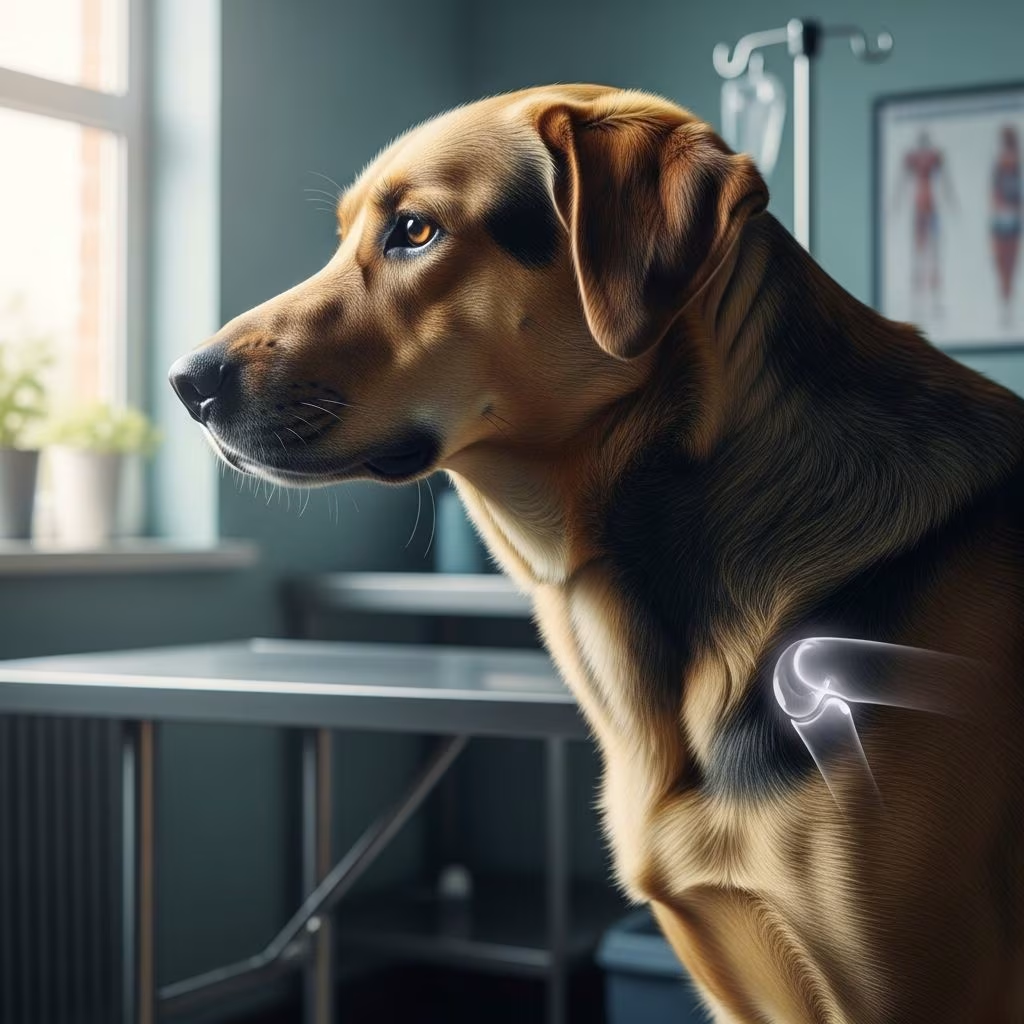
Elbow dysplasia represents one of the most prevalent developmental orthopedic conditions affecting dogs, particularly those of larger breeds. This multifaceted disorder involves abnormal growth and development of the elbow joint, leading to pain, lameness, and progressive arthritis if left unmanaged. Early recognition and intervention are crucial for maintaining a dog’s mobility and overall well-being throughout its life.
Understanding the Elbow Joint Anatomy
The canine elbow joint is a complex hinge formed by the humerus, radius, and ulna bones. In healthy dogs, these bones align perfectly to distribute weight and enable smooth movement. Disruptions in this alignment during growth phases can precipitate elbow dysplasia, where incongruities or fragmentations impair joint function. Key components include the medial coronoid process of the ulna, the humeral condyle, and the anconeal process, all of which are prone to the pathological changes seen in this condition.
Primary Causes and Developmental Factors
Elbow dysplasia arises from a combination of genetic predispositions and environmental influences during a puppy’s rapid growth period. Hereditary factors play a dominant role, with certain breeds showing higher susceptibility due to inherited skeletal traits. Rapid growth from overnutrition or excessive exercise on hard surfaces exacerbates these genetic vulnerabilities, leading to uneven bone development.
Specific pathologies include:
- Fragmented Medial Coronoid Process (FCP): The most frequent form, where the coronoid process cracks and fragments, causing instability and inflammation.
- Osteochondritis Dissecans (OCD): Failure of cartilage to ossify properly on the humeral condyle, resulting in flaps or loose fragments that irritate the joint.
- Ununited Anconeal Process (UAP): The anconeal process fails to fuse with the ulna, creating a loose fragment.
- Joint Incongruity: Mismatched growth between radius and ulna leads to uneven joint loading.
These issues often coexist, compounding joint degeneration.
Breeds Most Susceptible to Elbow Dysplasia
Large and giant breeds bear the brunt of this condition due to their size and growth rates. Common affected breeds include Labrador Retrievers, Golden Retrievers, German Shepherds, Rottweilers, Bernese Mountain Dogs, and Newfoundlands. Screening through programs like those from the Orthopedic Foundation for Animals (OFA) helps breeders reduce incidence by identifying at-risk lines.
| Breed | Risk Level | Typical Onset Age |
|---|---|---|
| Labrador Retriever | High | 5-12 months |
| German Shepherd | High | 4-10 months |
| Rottweiler | Moderate-High | 6-18 months |
| Golden Retriever | Moderate | 5-12 months |
Recognizing Early Warning Signs
Symptoms typically emerge between 4 and 18 months of age, though milder cases may appear later as arthritis develops. Owners often notice:
- Intermittent or persistent forelimb lameness, worsening after rest or exercise.
- Stiffness upon rising, with reduced enthusiasm for walks or play.
- Elbow joint swelling, effusion, or pain on manipulation.
- Abnormal gait, such as outward-turned front paws or held-out elbows.
- Decreased range of motion in the elbow.
Bilateral involvement is common, masking subtle signs if both legs are affected equally. Prompt veterinary consultation is essential upon observing these indicators.
Diagnostic Approaches for Confirmation
Diagnosis begins with a thorough physical exam, assessing gait, joint stability, and pain response. Imaging is pivotal:
- Radiography (X-rays): Reveals bone fragments, joint incongruity, or arthritis.
- CT Scans: Superior for detecting subtle coronoid lesions or early fragmentation.
- MRI or Arthroscopy: Provides detailed joint visualization, confirming soft tissue damage.
Advanced imaging like CT is recommended for precise lesion identification, guiding treatment decisions.
Conservative Management Strategies
For mild cases or post-surgical care, non-invasive approaches form the cornerstone:
- Weight Optimization: Reducing body weight alleviates joint stress, often yielding dramatic pain relief.
- Exercise Modification: Controlled, low-impact activities like swimming (hydrotherapy) build muscle without concussion.
- Pharmacotherapy: NSAIDs, joint fluid modifiers, and nutraceuticals (e.g., omega-3s, glucosamine) manage inflammation and support cartilage.
- Physical Rehabilitation: Therapy enhances mobility, strength, and proprioception.
These multimodal strategies can significantly improve quality of life without surgery.
Surgical Interventions for Advanced Cases
Surgery is indicated for moderate to severe dysplasia, aiming to remove debris, stabilize the joint, or realign bones. Options include:
- Arthroscopy: Minimally invasive; removes fragments, smooths cartilage (chondroplasty). Ideal for FCP and OCD in young dogs.
- UAP Removal or Proximal Ulna Osteotomy: Addresses ununited processes or incongruity.
- CORR or PAUL Procedures: Corrective osteotomies to offload damaged areas in mature joints.
Early arthroscopy in puppies under one year offers the best outcomes, though osteoarthritis progression may continue. Post-op recovery involves 4-6 weeks of restricted activity.
Lifelong Care and Arthritis Prevention
Elbow dysplasia has no cure; management focuses on slowing arthritis and preserving function. Ongoing protocols include:
- Regular veterinary check-ups for monitoring degeneration.
- Supplements like polysulfated glycosaminoglycans or platelet-rich plasma injections.
- Dietary management with joint-supportive nutrition.
- Avoiding high-impact activities; braces may aid stability in select cases but are not primary for dysplasia.
With diligent care, many dogs maintain active lives, though some face chronic pain requiring euthanasia in severe instances.
Prevention Through Responsible Breeding and Puppy Care
Genetic screening via elbow scoring prevents propagation. For puppies:
- Balanced, large-breed puppy food to moderate growth.
- Controlled exercise; avoid stairs, jumping, hard surfaces until maturity.
- Regular weigh-ins and joint health assessments.
Breeding only from dogs with certified healthy elbows is paramount.
Prognosis and Realistic Expectations
Outcomes vary by intervention timing and severity. Young dogs undergoing arthroscopy often regain near-normal function, while older ones benefit from pain mitigation. Lifelong management is required, but most dogs achieve good comfort levels with combined therapies.
Frequently Asked Questions (FAQs)
What is the cost of treating elbow dysplasia?
Treatment ranges from $500-$2,000 for conservative care to $3,000-$7,000 for surgery plus rehab, varying by case complexity and location.
Can small breeds get elbow dysplasia?
Rarely; it’s predominantly a large-breed issue due to growth dynamics.
Is surgery always necessary?
No, mild cases respond well to medical management; surgery for moderate-severe lameness.
How long does recovery take after surgery?
1-3 weeks for initial healing, 8-12 weeks for full rehab.
Does pet insurance cover elbow dysplasia?
Many policies cover diagnostics and treatments if not pre-existing; check hereditary condition clauses.
References
- Elbow Dysplasia in Dogs: Signs, Symptoms, Treatment — American Kennel Club. 2023-05-15. https://www.akc.org/expert-advice/health/elbow-dysplasia-in-dogs/
- Elbow Dysplasia in Dogs – Musculoskeletal System — Merck Veterinary Manual. 2024-01-10. https://www.merckvetmanual.com/musculoskeletal-system/arthropathies-and-related-disorders-in-small-animals/elbow-dysplasia-in-dogs
- Elbow Dysplasia in Dogs — People’s Dispensary for Sick Animals (PDSA). 2023-11-20. https://www.pdsa.org.uk/pet-help-and-advice/pet-health-hub/conditions/elbow-dysplasia-in-dogs
- Symptoms and Treatment for Elbow Dysplasia in Dogs — WebMD Pets. 2024-02-05. https://www.webmd.com/pets/dogs/what-is-elbow-dysplasia-in-dogs
- Elbow Dysplasia — Cornell University College of Veterinary Medicine. 2023-09-12. https://www.vet.cornell.edu/departments-centers-and-institutes/riney-canine-health-center/canine-health-topics/elbow-dysplasia
- Canine Elbow Dysplasia Diagnosis and Treatment — Bridger Veterinary Specialists. 2023-07-28. https://www.bridgervetspecialists.com/services/canine-unicompartment-elbow.html



