

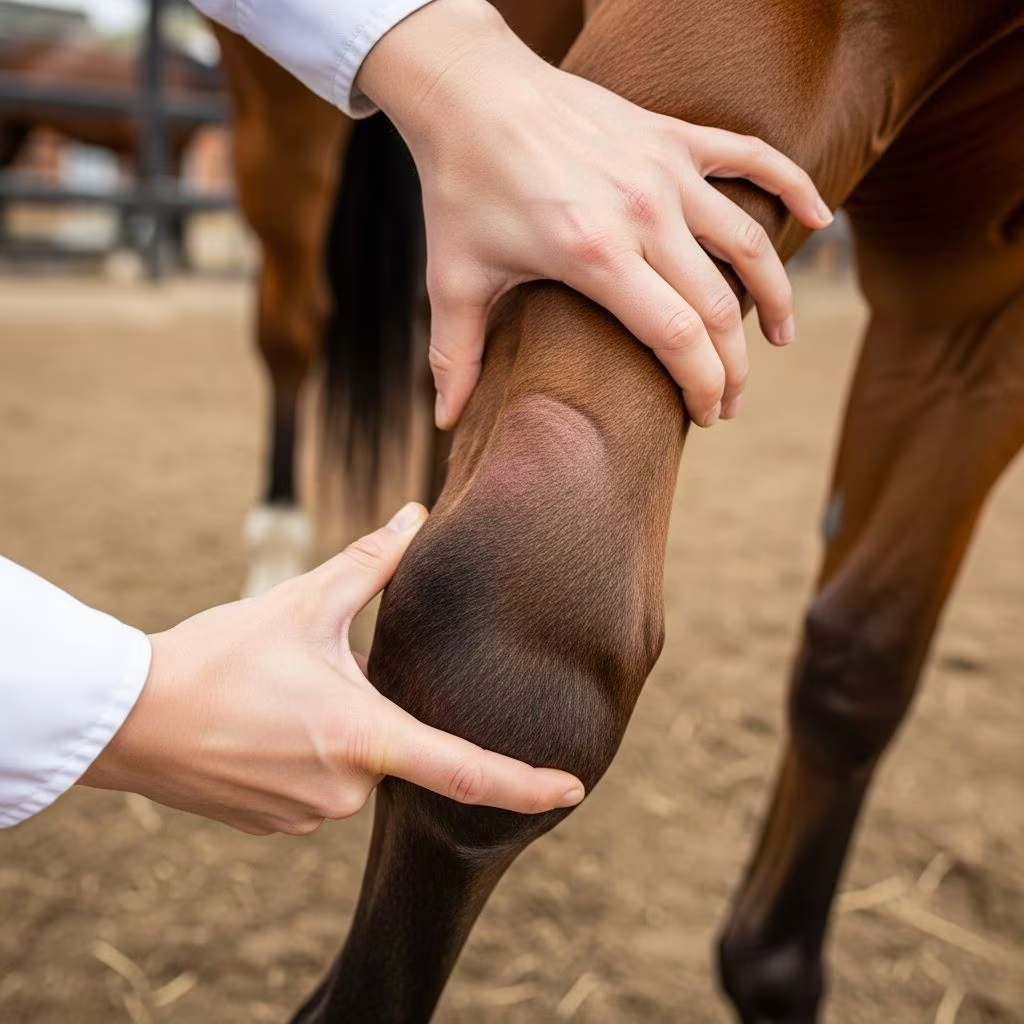
The elbow joint plays a critical role in a horse’s forelimb movement, enabling efficient locomotion during various activities. Composed primarily of the humerus, radius, and ulna, this hinge joint is stabilized by medial and lateral collateral ligaments. While elbow-related lameness is not as frequent as issues in lower limbs, it can significantly impair performance and welfare when it occurs. Understanding the anatomy, common pathologies, diagnostic approaches, and management strategies is essential for equine veterinarians and horse owners alike.
Anatomy and Function of the Equine Elbow
The equine elbow functions as a ginglymus joint, allowing primarily flexion and extension. The olecranon process of the ulna articulates with the trochlea of the humerus, providing stability. Key supporting structures include the triceps brachii muscle, which attaches to the olecranon, and the collateral ligaments that prevent excessive varus or valgus stress. This design supports weight-bearing during trotting, galloping, and jumping, but its superficial position makes it vulnerable to trauma.
Disruptions in this joint often manifest as non-weight-bearing lameness or a characteristic ‘dropped elbow’ posture, where the horse struggles to fully extend the limb due to triceps dysfunction. Early recognition through clinical signs like swelling, heat, or abnormal gait is vital for timely intervention.
Common Traumatic Injuries
Trauma remains the leading cause of elbow pathology in horses, often from kicks, falls, or collisions. These incidents can lead to fractures, soft tissue damage, or secondary inflammation.
Olecranon Fractures
Fractures of the olecranon are among the most prevalent elbow injuries, particularly in young horses under two years. These can be simple, comminuted, articular, or non-articular. Clinical presentation includes acute, severe lameness, a dropped elbow stance, and inability to extend the carpus fully. Palpation reveals crepitus or instability.
Diagnosis relies on physical exam and radiography, requiring at least mediolateral and craniocaudal views to assess fracture configuration. Nondisplaced, nonarticular fractures may respond to conservative management with 8 weeks of stall rest and splinting. However, tension-band wiring or internal fixation offers superior outcomes, especially for displaced or articular fractures. Prognosis is favorable with appropriate surgical intervention, with many horses returning to function.
Other Fractures and Luxations
- Ulnar Physeal Fractures: Common in foals up to 36 months, these Salter-Harris type I or II injuries may cause epiphyseal avulsion, often missed on standard radiographs.
- Elbow Luxation: Typically secondary to ulnar fractures, requiring surgical reduction and fixation.
- Stress Fractures: Seen in racehorses at the craniodistal humeral metaphysis; detected via scintigraphy or ultrasound before radiographic changes.
Developmental Conditions
Developmental orthopedic diseases (DOD) affecting the elbow are less common in horses compared to other species but can predispose to long-term issues. Subchondral cystic lesions in the distal humerus or proximal radius, and osteochondrosis of the anconeal process, may cause insidious lameness.
Young performance horses, especially jumpers, are at risk for subchondral bone stress. Diagnosis involves joint fluid analysis (synoviocentesis) and imaging. Conservative therapy yields fair to good results if osteoarthritis is absent; surgery is indicated after 90 days of failed rest. Arthroscopy is limited due to poor access to proximal radial areas.
Degenerative and Inflammatory Diseases
Osteoarthritis
Osteoarthritis (OA) of the elbow often follows trauma or DOD, presenting with variable lameness grades. Unlike distal joints, elbow OA is challenging to manage due to limited arthroscopic access. Intra-articular anesthesia confirms localization. Radiography and ultrasonography may show minimal changes despite pain, suggesting subchondral involvement.
Treatment includes systemic and intra-articular anti-inflammatories, hyaluronic acid, or polysulfated glycosaminoglycans. Older athletic horses are predisposed, and progression can limit athletic careers.
Septic Arthritis
Infection enters via penetrating wounds or hematogenously, more common in foals under 4 months. Signs include joint effusion, severe lameness, and fever. Aggressive lavage, antibiotics, and regional perfusion are key. Prognosis depends on early detection.
Olecranon Bursitis
Also known as capped elbow, this results from repetitive trauma over the olecranon, causing bursal effusion. It rarely affects the joint but can lead to hygromas or fistulas. Treatment involves protection, aspiration, and anti-inflammatories.
Ligamentous Injuries
Collateral ligament desmitis affects medial or lateral ligaments, diagnosed via ultrasonography showing fiber disruption or enthesiophytes on radiographs. Scintigraphy highlights hotspots at origins/insertions. Severe cases cause instability, with abduction/adduction tests aiding presumptive diagnosis.
Management entails stall rest (3-6 months), monitored by serial ultrasounds, followed by gradual hand-walking. Partial tears carry better prognosis than complete ruptures with subluxation.
Diagnostic Approaches
Localizing lameness to the elbow requires systematic exclusion of distal sources. Synoviocentesis via lateral or caudal approaches, followed by anesthetic blockade, is gold standard.
| Modality | Purpose | Advantages |
|---|---|---|
| Radiography | Bone fractures, OA | Readily available, cost-effective |
| Ultrasonography | Ligaments, joint margins | Dynamic, real-time assessment |
| Scintigraphy | Stress fractures, early pathology | High sensitivity |
| Arthroscopy | Intra-articular lesions | Direct visualization (limited) |
Thermography aids in identifying inflammation.
Treatment Strategies and Prognosis
Treatments vary by condition:
- Conservative: Rest, NSAIDs, splinting for minor fractures/bursitis.
- Surgical: Fixation for olecranon fractures, debridement for cysts/OA.
- Rehabilitation: Controlled exercise post-healing, physiotherapy.
Prognosis is good for surgically repaired olecranon fractures, guarded for advanced OA or complete ligament tears. Thoroughbreds and young horses face higher risks.
Prevention Tips
- Stall padding to prevent kicks/shoe boils.
- Balanced nutrition to avoid DOD.
- Regular farriery and biomechanics assessment.
- Early lameness exams in performance horses.
Frequently Asked Questions (FAQs)
What causes a dropped elbow in horses?
A dropped elbow typically indicates olecranon fracture disrupting triceps function, leading to inability to extend the limb fully.
Can horses recover from elbow fractures?
Yes, with internal fixation, most achieve good outcomes and return to work.
How is elbow lameness diagnosed?
Through joint blocks, radiography, ultrasound, and scintigraphy.
Is elbow OA common in horses?
Relatively uncommon but seen in older athletes post-trauma.
What is the best imaging for ligaments?
Ultrasonography provides detailed ligament evaluation.
References
- Disorders of the Elbow in Horses — Merck Veterinary Manual. 2023. https://www.merckvetmanual.com/musculoskeletal-system/disorders-of-the-shoulder-and-the-elbow-in-horses/disorders-of-the-elbow-in-horses
- Elbow joint: disease – overview in Horses — Vetlexicon. 2024. https://www.vetlexicon.com/equis/musculoskeletal/articles/elbow-joint-disease-overview/
- Elbow and Shoulder — Veterian Key. 2022. https://veteriankey.com/elbow-and-shoulder/
- Elbow pain – more common than you might think — The Functional Horse. 2023. https://www.thefunctionalhorse.com/blog/elbow-pain-more-common-than-you-might-think
- Diagnostic imaging and successful outcome of a lateral collateral… — BEVA (Equine Veterinary Journal). 2023-10-01. https://beva.onlinelibrary.wiley.com/doi/10.1111/eve.14136



