
Elaeophorosis In Animals: Essential Guide For Livestock
Understanding the impact, diagnosis, and control of Elaeophora-induced skin and vascular diseases in livestock and wildlife.
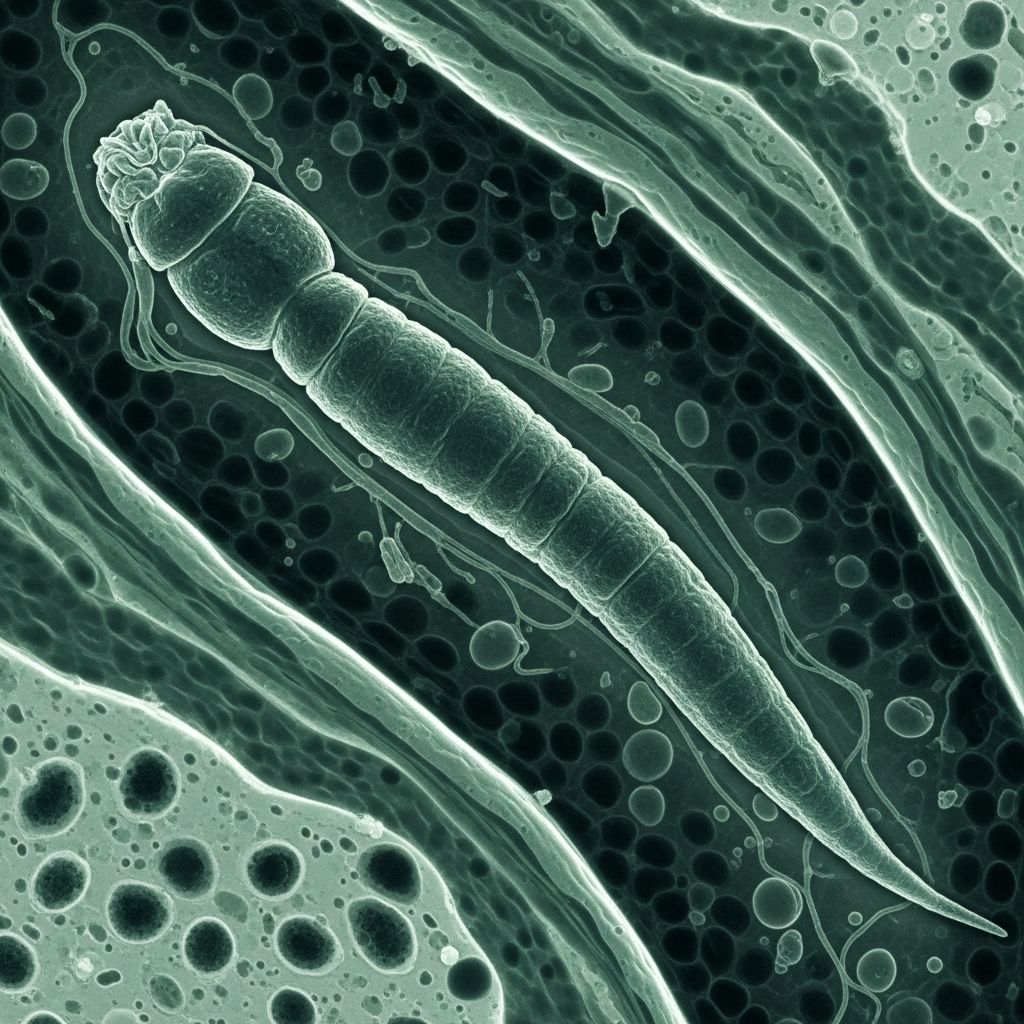
Elaeophorosis represents a significant parasitic disease primarily impacting ruminants such as sheep, goats, deer, and elk. Caused by nematodes of the genus Elaeophora, this condition leads to vascular damage, neurological deficits, and dermatological issues. Understanding its biology, clinical manifestations, and control measures is crucial for affected regions, particularly in North America.
Biology and Life Cycle of Elaeophora Parasites
The primary pathogen, Elaeophora schneideri, inhabits the carotid arteries of definitive hosts like mule deer and elk. Adult worms, measuring several inches in length, produce microfilariae that circulate in the blood. These larvae are ingested by tabanid flies (horse flies) during feeding. Within the fly, microfilariae develop over 2-4 weeks into infective third-stage larvae.
Transmission occurs when infected flies bite susceptible hosts, depositing larvae near the skin. Larvae migrate through tissues to reach major arteries, maturing into adults within months. This indirect life cycle underscores the role of insect vectors in perpetuating infections.
- Definitive hosts: Deer, elk – site of adult worms.
- Intermediate hosts: Tabanid flies – development of infective larvae.
- Susceptible animals: Sheep, goats – develop severe disease from larval migration.
Species-Specific Impacts and Clinical Signs
In Sheep and Goats
Sheep and goats suffer the most dramatic effects due to aberrant larval migration. Microfilariae and developing worms provoke intense inflammation in small facial arteries and skin capillaries. Common signs include:
- Facial edema and pruritus leading to wool or hair loss.
- Corneal opacity and blindness from anterior eye lesions.
- Unilateral or bilateral facial paralysis, drooping ears, and lips.
- Occasional fatal ruptures of carotid arteries in heavy infections.
Symptoms peak in summer when fly activity is high, aligning with larval deposition seasons.
In Deer and Elk
Native hosts often remain asymptomatic, harboring adult worms without overt disease. However, high microfilarial loads can cause mild dermatitis or ear lesions. Chronic infections may contribute to reduced fitness in wildlife populations.
| Host Species | Primary Lesions | Severity |
|---|---|---|
| Sheep/Goats | Facial paralysis, blindness, skin nodules | High |
| Deer/Elk | Arterial granulomas, mild dermatitis | Low |
Pathophysiology: From Vascular Invasion to Tissue Damage
Larvae trigger eosinophilic arteritis upon entering vessels. Immune responses form granulomas around worms, obstructing blood flow. In sheep, this affects ophthalmic and facial arteries, causing ischemia to eyes, ears, and muzzle. Skin involvement manifests as hyperemia, petechiae, and crusting ulcers. Secondary bacterial infections exacerbate dermatitis.
In severe cases, microfilariae embolize to capillaries, inducing thrombosis and infarction. This explains the characteristic “polioencephalomalacia-like” neurological signs in small ruminants.
Diagnostic Approaches for Accurate Identification
Diagnosis combines clinical suspicion with confirmatory tests:
- Clinical exam: Look for seasonal facial asymmetry, blindness, and vector exposure history.
- Skin biopsies: Reveal larvae, microfilariae, or eosinophilic inflammation in dermis.
- Buffy coat smears: From ear veins; microfilariae visible under microscope (distinguish from other filariae by morphology).
- Serology: ELISA detects antibodies, useful for screening herds.
- Necropsy: Adult worms in carotid arteries confirm in wildlife.
Differential diagnoses include bacterial meningoencephalitis, vitamin A deficiency, or listeriosis, but vascular lesions are pathognomonic.
Treatment Strategies and Therapeutic Options
Anthelmintic therapy targets adult worms and microfilariae. Ivermectin (0.2 mg/kg subcutaneously) effectively kills microfilariae and immature stages, reducing clinical signs within weeks. Multiple doses may be needed for adults. Supportive care includes anti-inflammatories for edema and antibiotics for secondary infections.
In goats, responses vary; some require higher doses or alternatives like doramectin. Wildlife treatment is impractical, focusing on habitat management.
Prevention and Control Measures
Vector control is paramount:
- Apply insect repellents (permethrin-based) to animals.
- Use fly traps, screens on livestock areas.
- Avoid pasturing near deer habitats during fly season.
- Quarantine new sheep/goats; test via serology.
Herd management includes culling affected animals and rotational grazing to break transmission cycles.
Epidemiology and Geographic Distribution
Elaeophorosis predominates in western U.S. states (Utah, Wyoming, Colorado) where deer-fly ecosystems overlap with livestock ranges. Outbreaks occur post-spring fly emergence, affecting young stock most severely. Prevalence in deer exceeds 50% in endemic zones, driving spillover to domestic herds.
Research Advances and Future Directions
Ongoing studies explore vaccine candidates targeting microfilarial antigens. Genomic sequencing of E. schneideri aids drug resistance monitoring. Integrated pest management combining biological controls (e.g., entomopathogenic fungi) shows promise for sustainable fly suppression.
Frequently Asked Questions (FAQs)
What animals are most at risk for elaeophorosis?
Sheep and goats in regions with deer and horse flies; deer/elk are carriers.
Can elaeophorosis be transmitted directly between animals?
No, requires tabanid fly vectors.
How quickly do symptoms appear after fly bites?
2-6 months for larval maturation and migration.
Is ivermectin safe for pregnant sheep with elaeophorosis?
Generally yes, but consult a vet for dosing.
Does elaeophorosis affect meat or milk quality?
No direct impact, but treat before slaughter to resolve lesions.
Key Takeaways for Livestock Owners
- Monitor for summer facial issues in at-risk areas.
- Prioritize fly control year-round.
- Seek veterinary confirmation via biopsies or smears.
- Integrate anthelmintics with environmental management.
References
- Overview of Helminths of the Skin in Animals — Merck Veterinary Manual. 2025-01. https://www.merckvetmanual.com/integumentary-system/helminths-of-the-skin/overview-of-helminths-of-the-skin-in-animals
- Parafilaria Infection in Animals — MSD Veterinary Manual. Accessed 2026. https://www.msdvetmanual.com/integumentary-system/helminths-of-the-skin/parafilaria-infection-in-animals
- Stephanofilaria stilesi — Western College of Veterinary Medicine, University of Saskatchewan. 2026. https://wcvm.usask.ca/learnaboutparasites/parasites/stephanofilaria-stilesi.php
- Georgis’ Parasitology for Veterinarians — Elsevier (via Merck Manual reference). 2021. https://www.merckvetmanual.com/integumentary-system/helminths-of-the-skin/overview-of-helminths-of-the-skin-in-animals
Similar Articles








Read full bio of medha deb


