

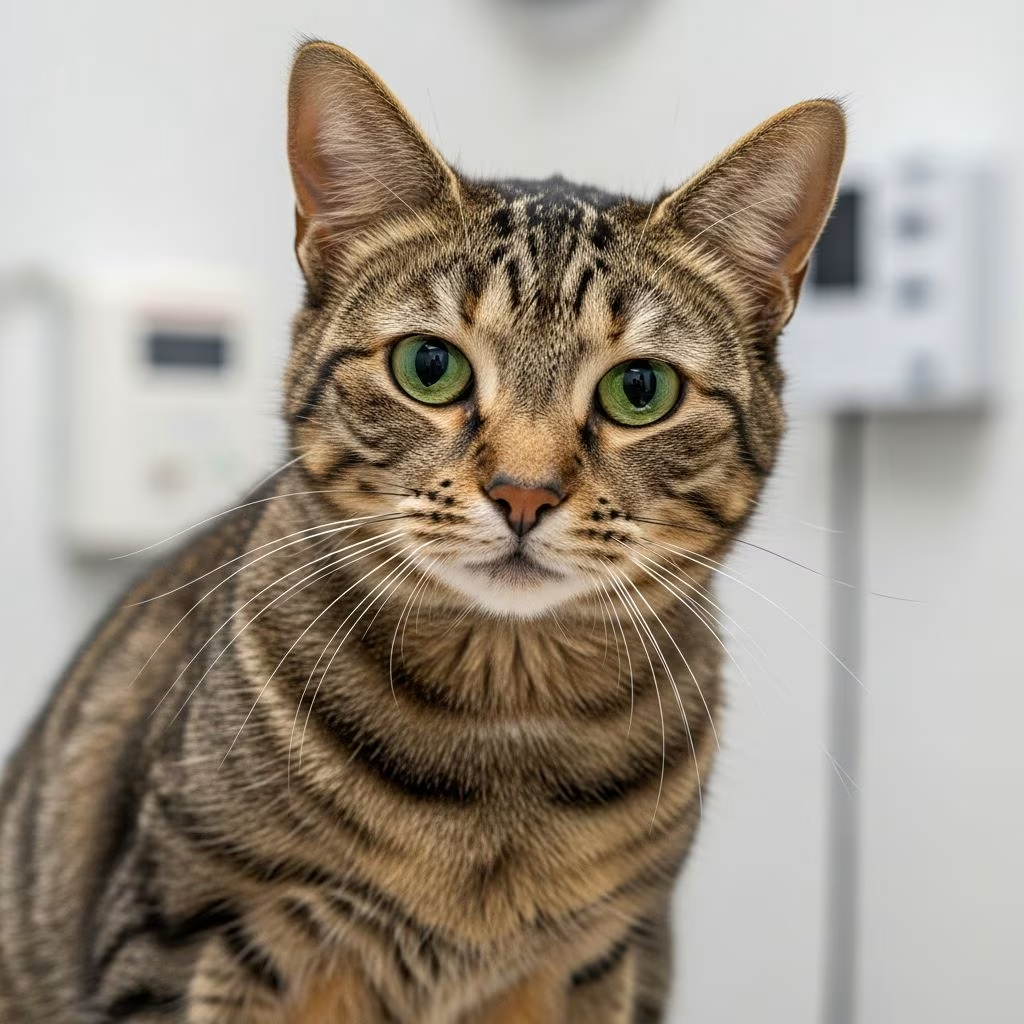
This rare genetic condition, known as Ehlers-Danlos syndrome (EDS) or feline cutaneous asthenia, disrupts collagen production, resulting in abnormally stretchy and fragile skin in cats. Affected felines often face lifelong challenges with skin tears, slow healing, and joint looseness, requiring vigilant care from owners.
Understanding the Genetic Foundations of EDS
EDS stems from inherited mutations affecting collagen, the protein that provides strength and structure to skin, joints, and other tissues. In cats, this leads to defective collagen fibers that are thinner, fewer, or disorganized, compromising tissue integrity from birth.
Breeds like Burmese and Himalayan appear predisposed, with cases documented in veterinary literature showing familial patterns. The mutation passes from parents to offspring, making breeding history a key factor. Unlike humans, where multiple EDS subtypes exist, feline cases typically present as a cutaneous asthenia form focused on skin fragility.
Collagen defects reduce skin’s tensile strength, causing it to stretch excessively—sometimes over 19% of body length—and tear easily. This also impacts ligaments, leading to hypermobile joints. Environmental factors do not cause EDS; it’s purely hereditary, though trauma exacerbates symptoms.
Recognizing Early Warning Signs in Your Cat
Symptoms emerge as early as 8 weeks, often during play with littermates, when minor scratches cause disproportionate wounds. Owners may first notice excessive skin sagging, especially on the abdomen, flanks, or neck, resembling loose folds that swing pendulously.
- Fragile skin: Tears from minimal contact, like grooming or jumping.
- Hyperextensibility: Skin stretches far beyond normal limits without snapping back.
- Delayed healing: Wounds close rapidly but form thin, atrophic scars prone to reopening.
- Bruising and hematomas: Blood pools under skin, creating firm lumps after knocks.
- Joint laxity: Loose elbows, hips, or shoulders causing wobbly gait or lameness.
Additional signs include eschars (blackened scabs), alopecia in scarred areas, and hypersensitivity to touch. Severely affected kittens show symptoms at birth, while milder cases may go unnoticed until injuries accumulate. Eyes, heart valves, or vessels can rarely be involved due to widespread collagen issues.
How Veterinarians Confirm the Diagnosis
Diagnosis relies on clinical observation rather than biopsies, which often appear normal histologically. A vet performs a thorough physical exam, palpating skin for elasticity and fragility, and checking joints for instability.
The cornerstone test is the Skin Extensibility Index (SEI): Skin on the dorsal midline is gently pinched and stretched to its comfortable maximum, measured vertically, then divided by the cat’s length from skull base to tail base, multiplied by 100. Normal cats score under 19%; higher values confirm EDS severity.
| SEI Value | Indication |
|---|---|
| <19% | Normal |
| 19-25% | Mild EDS |
| >25% | Severe EDS |
Histopathology may reveal sparse, irregular collagen but isn’t definitive. Differential diagnoses include allergies, infections, or nutritional deficiencies, ruled out via bloodwork and imaging. Genetic testing remains unavailable for cats.
Daily Management Strategies for Affected Cats
No cure exists, so management focuses on injury prevention and wound care. Create a low-trauma environment by padding furniture edges, removing scratch posts with rough surfaces, and supervising play.
- Use soft bedding to prevent pressure sores on elbows or hocks.
- Apply protective vests or bandages over high-risk areas like the back.
- Switch to claw caps instead of declawing to avoid welfare issues.
- Clean wounds promptly with antiseptics; use e-collars to deter scratching.
Nutrition supports collagen health: High-quality diets rich in vitamin C, zinc, and omega-3s aid healing, though evidence is anecdotal. Regular vet check-ups monitor for complications like infections or organ involvement. Pain management is rare, as joint laxity seldom causes overt discomfort.
Prognosis: From Mild Cases to Severe Outcomes
Severity dictates lifespan. Mildly affected cats can live normal spans (10-15 years) with diligent care, enjoying indoor lives free of rough play. Moderate cases face recurrent tears, requiring constant vigilance.
Severe kittens often succumb early to infections or euthanasia due to poor quality of life—constant pain from wounds, mobility limits, and owner burden. Studies note many owners choose humane euthanasia when injuries become unmanageable.
Long-term survivors benefit from controlled environments, but risks persist: Scarring leads to cosmetic changes and further fragility. Breeders should screen pedigrees to reduce incidence.
FAQs About Ehlers-Danlos Syndrome in Cats
Is EDS contagious or preventable?
No, it’s genetic and not contagious. Prevention involves not breeding affected lines.
Can surgery help cats with EDS?
Surgery risks excessive bleeding and poor healing; it’s avoided unless critical.
What breeds are most at risk?
Burmese, Himalayan, and Siamese show higher prevalence, but any cat can inherit it.
How do I know if my kitten has EDS?
Watch for skin tears during weaning; consult a vet for SEI testing by 8-12 weeks.
Are there home remedies for skin tears?
Gentle cleaning and vet-prescribed topicals; avoid human products.
References
- Ehlers-Danlos Syndrome in Cats: Vet Answer — Catster. 2023. https://www.catster.com/ask-the-vet/ehlers-danlos-syndrome-in-cats-vet-answer/
- Himalayan – Ehlers-Danlos Syndrome (Cutaneous Asthenia) — UFAW (Universities Federation for Animal Welfare). 2022. https://www.ufaw.org.uk/cats/himalayan—ehlers-danlos-syndrome-cutaneous-asthenia-
- Cutaneous asthenia (Ehlers–Danlos-like syndrome) of Burmese cats — von N Hansen et al. PMC. 2015. https://pmc.ncbi.nlm.nih.gov/articles/PMC10816250/
- Ehlers-Danlos Syndrome (EDS) in Cat — BAVD Veterinary Clinic. 2023. https://www.bavd.bg/en/publication/ehlers-danlos-syndrome-eds-in-cat/
- Stretchy, Saggy, Painful Skin in Cats — PetMD. 2024. https://www.petmd.com/cat/conditions/skin/c_ct_cutaneous_asthenia



