

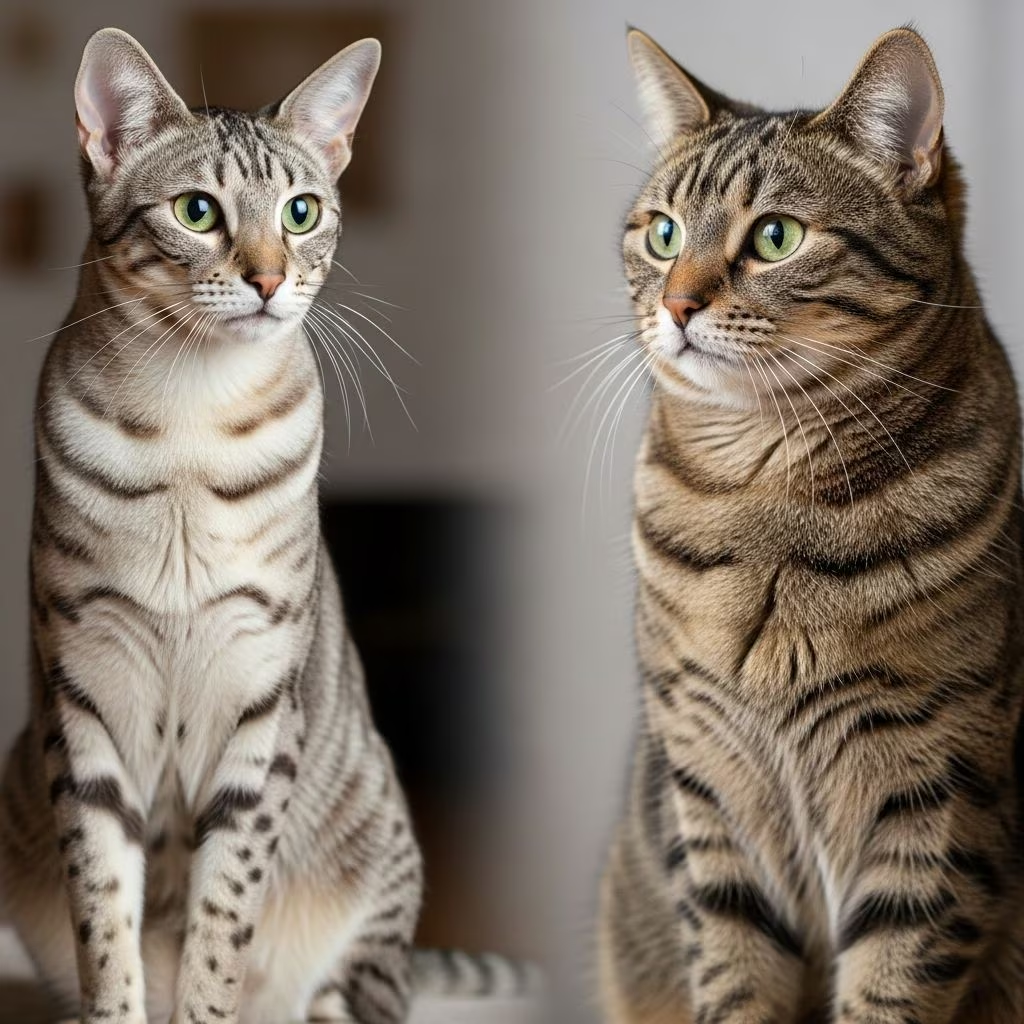
The Egyptian Mau and the tabby cat often spark confusion among cat lovers due to their similar coat patterns. However, the Egyptian Mau is a distinct, rare breed with ancient Egyptian roots and unique traits, while tabby simply refers to a coat pattern found in many domestic cats. This comprehensive comparison covers origins, appearance, temperament, care requirements, health, and more to help you decide which cat aligns with your lifestyle.
Egyptian Mau vs Tabby Cat: Overview
The **Egyptian Mau** stands out as one of the few naturally spotted domestic cat breeds, boasting a history tied to ancient Egypt and a speed rivaling wild cats. In contrast, a **tabby cat** is not a breed but a pattern—striped, spotted, or swirled—seen across countless mixed-breed cats worldwide. Egyptian Maus are prized for their athletic build, gooseberry-green eyes, and dog-like loyalty, while tabbies vary widely in personality and build depending on their genetic background.
Key distinctions emerge in rarity, conformation, and heritage: Egyptian Maus are formally recognized by bodies like the Cat Fanciers’ Association (CFA) since 1977, with fewer than 200 kittens registered annually in some registries, making them rare. Tabbies, ubiquitous in shelters and homes, lack breed standards but charm with adaptability.
Egyptian Mau vs Tabby Cat: At a Glance
| Feature | Egyptian Mau | Tabby Cat |
|---|---|---|
| Breed Status | Purebred, rare | Pattern, not a breed |
| Origin | Ancient Egypt (1950s import to West) | Worldwide, natural mutation |
| Coat Pattern | Naturally spotted tabby | Striped (mackerel), classic, spotted |
| Size | Medium (6-14 lbs) | Varies (4-20 lbs) |
| Speed | Up to 30 mph | Average domestic speed |
| Eye Color | Gooseberry green | Varies |
| Temperament | Athletic, loyal, vocal | Varies widely |
| Grooming | Low (weekly brush) | Low to medium |
| Lifespan | 12-15 years | 12-18 years |
| Price | $800-$2,500 | $50-$500 (adoption/mixed) |
History of the Egyptian Mau
The Egyptian Mau traces its lineage to ancient Egypt, where spotted cats adorned temple walls over 5,000 years ago. Modern Maus descend from cats imported in the 1950s: Princess Natalie Trubetskoy brought foundational cats like Baba from Cairo to Italy, then the U.S., establishing the breed. Recognized by the Cat Fanciers’ Federation in 1968, CFA in 1977, and The International Cat Association in 1979, the breed remains rare globally, with only 39 kittens registered by the UK’s GCCF in 2022.
Genetic studies confirm their natural spotting, unlike bred patterns in Ocicats or Bengals. Breeders emphasize preserving the ‘M’ forehead scarab mark and random spots.
History of the Tabby Cat
Tabby patterns evolved as a natural camouflage mutation in wild cats, spreading worldwide. The name ‘tabby’ derives from an Arabic silk cloth mimicking the striped pattern. Mackerel (striped), classic (swirled), and spotted tabbies appear in domestic shorthairs everywhere. Unlike the pedigreed Mau, tabbies lack formal history, thriving as resilient street and home cats for centuries.
Appearance Comparison: Egyptian Mau vs Tabby
Both feature tabby-like markings, but the Egyptian Mau’s are uniquely refined. The Mau’s coat shows spots only on hair tips, with ticking (banded hairs) creating shimmer. Colors include silver, bronze, smoke, black, and pewter, always with an ‘M’ on the forehead. Their muscular, racy build—longer hind legs, flank flap for speed—enables bursts over 48 km/h (30 mph), the fastest domestic cat.
Tabby cats display bolder stripes or spots across breeds and mixes. Mackerel tabbies have narrow stripes; spotted tabbies mimic Maus superficially but lack uniform spotting and breed conformation. Tabbies vary in size, build, and eye color, without the Mau’s green-eyed elegance or athletic poise.
- Mau hallmarks: Random spots, scarab ‘M’, green eyes, tiptoe stance.
- Tabby hallmarks: Consistent stripes/spots, varied colors/eyes.
Temperament & Personality
Egyptian Maus blend cat independence with dog-like devotion: playful, loyal, and interactive. They chirp, trill, and follow owners, thriving on activity. Their high energy demands toys, climbing, and runs—ideal for active homes. Socialized early, they’re gentle with families but reserved with strangers.
Tabby cats’ personalities depend on breeding: some cuddly, others aloof. As mixed breeds, they adapt well to apartments or farms, often more laid-back than athletic Maus. No universal tabby temperament exists, but many are friendly and resilient.
Egyptian Mau vs Tabby Cat: Care & Grooming
Both boast low-maintenance coats. Brush Maus weekly to enhance sheen; bathe rarely. Their short-to-medium fur sheds minimally. Provide scratching posts and toys for their speed and agility—leash training suits their outdoor curiosity.
Tabby grooming mirrors this: brush to reduce hairballs, trim nails monthly. Tabbies tolerate varied diets/environments better, suiting budget-conscious owners.
Egyptian Mau vs Tabby Cat: Health & Wellness
Egyptian Maus enjoy robust health, living 12-15 years, though longer gestation (73 days vs. 64-67) signals uniqueness. Watch for patellar luxation or pyruvate kinase deficiency in lines; reputable breeders screen.
Tabby health varies by genetics: mixed tabbies often outlive purebreds (12-18 years), dodging breed-specific issues but prone to obesity/common ills like dental disease.
Egyptian Mau vs Tabby Cat: Exercise & Lifestyle Fit
Maus demand vigorous play—laser pointers, puzzle feeders—to channel speed. They’re sprinters, not marathoners, excelling in interactive homes over sedentary ones.
Tabbies need moderate exercise: daily play suffices. Versatile, they fit apartments, families, or seniors.
Egyptian Mau vs Tabby Cat: Cost of Ownership
Egyptian Mau kittens cost $800-$2,500 from breeders, plus premium food/vet care. Rarity inflates expenses.
Tabby adoptions run $50-$200; purebred tabby-patterned cats (e.g., American Shorthairs) $400-$1,000. Lower ongoing costs for mixes.
Pros & Cons
Egyptian Mau
- Pros: Stunning looks, loyal personality, athletic grace, hypoallergenic potential.
- Cons: High energy, rare/expensive, needs stimulation.
Tabby Cat
- Pros: Affordable, adaptable, varied personalities, easy to find.
- Cons: No breed guarantees, potential health variability, less exotic appeal.
Frequently Asked Questions
Is an Egyptian Mau a type of tabby?
Yes, technically a spotted tabby, but a specific breed unlike generic tabbies.
Are Egyptian Maus faster than tabby cats?
Yes, clocked at over 30 mph due to unique anatomy.
Do tabby cats make good pets?
Absolutely—adaptable and loving, perfect for most homes.
How rare is the Egyptian Mau?
Very; ranks low in registries like CFA (27/45 in 2018).
Can Egyptian Maus live with other pets?
Yes, if socialized, but their energy suits active companions.
What’s the gestation period for Egyptian Maus?
73 days, longer than standard cats.
This guide highlights why the Egyptian Mau offers exotic allure for enthusiasts, while tabby cats provide reliable companionship for everyday joy. Choose based on your commitment to activity and budget.
References
- The Egyptian Mau Cat Looks Like a Tabby, Acts Like a Dog — HowStuffWorks. Accessed 2026. https://animals.howstuffworks.com/pets/egyptian-mau-cat.htm
- Egyptian Mau — Wikipedia. Accessed 2026. https://en.wikipedia.org/wiki/Egyptian_Mau
- Difference between a Mackerel Tabby vs Egyptian Mau? — TheCatSite. Accessed 2026. https://thecatsite.com/threads/difference-between-a-mackeral-tabby-vs-egyptian-mau.251067/
- Spots Before Your Eyes? — Cat Fanciers’ Association. Accessed 2026. https://cfa.org/cat-talk/spots-before-your-eyes/



