

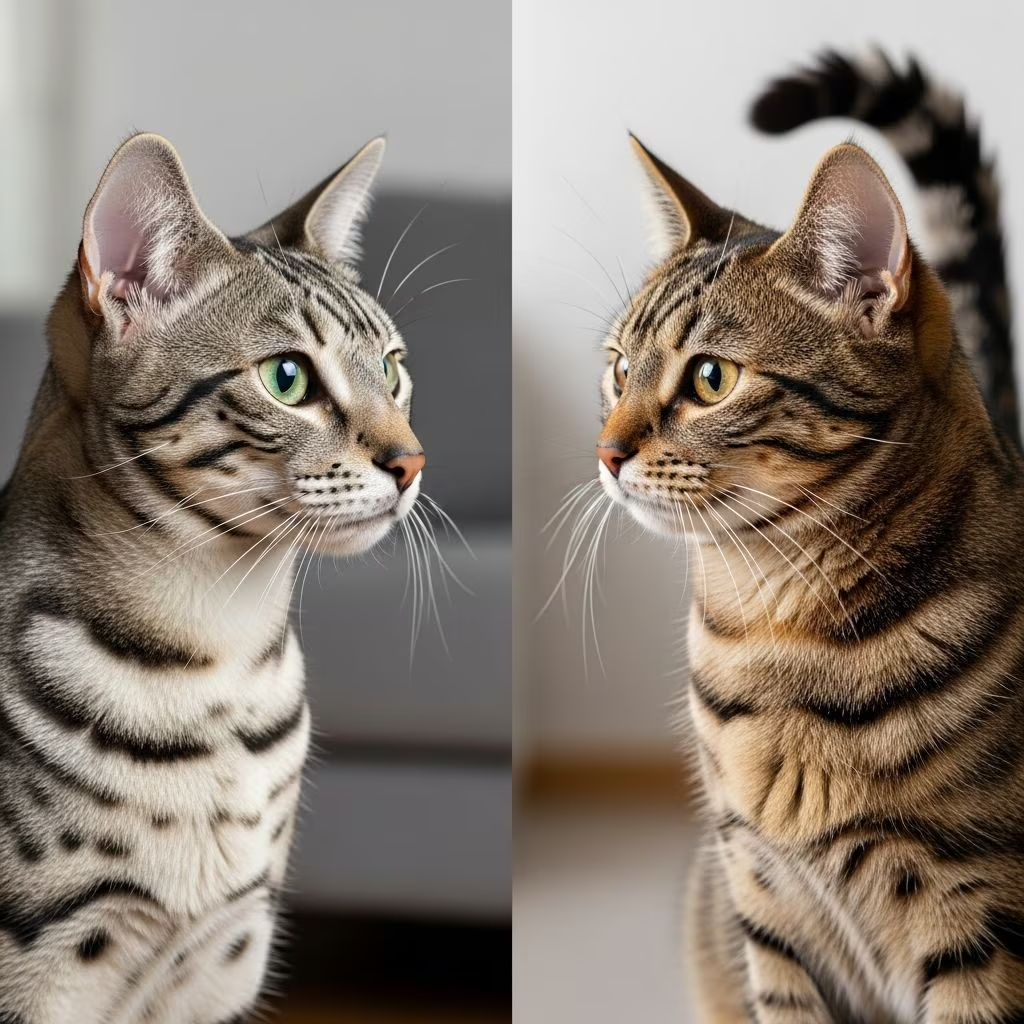
Egyptian Mau vs. Tabby Cat: Understanding the Differences
When deciding on a feline companion, many people struggle to distinguish between an Egyptian Mau and a standard tabby cat. While these breeds may appear similar at first glance, particularly due to the Egyptian Mau’s tabby-like markings, they are distinctly different breeds with unique characteristics, origins, and personalities. Understanding these differences is essential for anyone considering adopting one of these cats or simply wanting to expand their knowledge of feline breeds.
What Is an Egyptian Mau?
The Egyptian Mau is a small to medium-sized, short to medium-haired cat breed that stands out as one of the few naturally spotted breeds of domesticated cats. The name “Mau” comes from the Egyptian word for cat, reflecting the breed’s ancient origins. These elegant cats are distinguished by their muscular build and unique physical characteristics that set them apart from standard tabby cats.
Egyptian Maus possess a distinctive appearance with a body structure described as a balance between the compactness of a Burmese and the slim elegance of a Siamese. Their medium-length bodies are muscular, with notably longer hind legs compared to the front legs, giving them the distinctive appearance of standing on their tiptoes when upright.
Understanding Tabby Cats
A tabby cat is not a specific breed but rather a pattern or coat marking that appears in many domestic cat breeds and mixed-breed cats. Tabby patterns are characterized by distinctive markings, stripes, spots, or swirls on the cat’s coat. The most recognizable feature of tabby cats is the “M” marking that appears on their foreheads, similar to Egyptian Maus. However, tabby cats come in various coat patterns, including mackerel tabbies (with stripes), spotted tabbies, classic tabbies, and patched tabbies.
Physical Appearance: Key Differences
Coat Pattern and Markings
One of the most significant differences between Egyptian Maus and tabby cats lies in their coat patterns. According to cat breeder Betsy Whitlock, the Egyptian Mau is technically called a “spotted tabby.” However, while both breeds display the characteristic “M” marking on their foreheads and stripes around their eyes and legs, the Egyptian Mau differs in a crucial way: the stripes on their body have broken apart into distinct spots.
In contrast, standard tabby cats typically display continuous striping patterns across their bodies. The mackerel tabby, the most common pattern, features prominent stripes running vertically down the cat’s sides. This fundamental difference in coat patterning is one of the easiest ways to distinguish between the two.
Spotted Coat Characteristics
The Egyptian Mau’s spots are unique in that they occur only on the tips of the hairs of its coat, creating a distinctive appearance. Additionally, Egyptian Maus come in six distinct colors, from most to least common: silver, bronze, smoke, black, and blue/pewter. Each color variation maintains the characteristic spotted pattern.
The Egyptian Mau’s coat also features two or more bands of ticking, which contributes to the depth and complexity of their coloring. Some Egyptian Maus may also have a stripe running down their lower spine and tail.
Body Structure and Size
While tabby cats vary greatly in size and build depending on their breed or mixed heritage, Egyptian Maus have a standardized, distinctive physique. The Egyptian Mau is muscular with a head that is gently rounded and of medium size. Their ears are medium to moderately large, broad at the base with a slight point at the tip.
Most notably, Egyptian Maus possess a unique anatomical feature: a loose flap of skin extending from the flank to the knee of the hind legs. This skin flap is not present in regular tabby cats and serves an important functional purpose in the breed’s athleticism.
Eyes and Facial Features
Egyptian Maus are characterized by round, large eyes that are typically light green in color, though kittens may initially have amber eyes. This distinctive eye coloring, combined with their rounded eye shape, gives Egyptian Maus a recognizable expression. Standard tabby cats may have any eye color depending on their genetic makeup and breed heritage.
The Remarkable Speed of Egyptian Maus
One of the most impressive characteristics of the Egyptian Mau is their extraordinary speed and athleticism. The Egyptian Mau is the fastest of all domestic cats, capable of running at speeds exceeding 48 kilometers per hour (30 miles per hour).
This exceptional speed is made possible by several anatomical features unique to the breed. Their longer hind legs, combined with the previously mentioned flap of skin extending from the flank to the back knee, allow the legs to stretch back farther during running, providing greater agility and length of stride. These cats are natural sprinters with incredible acceleration and agility that far exceeds that of standard tabby cats.
Origin and History
Egyptian Mau Heritage
The Egyptian Mau breed has a fascinating documented history. Originally well-adapted street cats in Egypt, these cats were first brought to international attention in 1953 when Princess Natalie Trubetskoy encountered a cat belonging to the Egyptian ambassador to Italy. Impressed by this remarkable feline, she persuaded the ambassador to help her obtain a cat from Cairo. She acquired a female named Baba, who was later bred with the ambassador’s cat, producing a male bronze tabby that was subsequently bred back with his mother to create a female named Lisa.
These progenitors were first exhibited publicly in 1955 at the Rome Cat Show. Princess Natalie later traveled to the United States in 1956 with her three Maus, and in 1957, Baba became a champion. By the 1990s, breeders of Egyptian Maus had established themselves in North America, Europe, and Japan. The breed did not reach Britain until 1998.
Breed Recognition Timeline
The Egyptian Mau received official championship recognition in 1968 from the Cat Fanciers Federation. This was followed by recognition from the Cat Fanciers’ Association in 1977 and The International Cat Association in 1979. The Governing Council of the Cat Fancy (GCCF) granted full recognition in 1990, eight years before the breed arrived in Britain.
Tabby Cat Origins
In contrast, tabby cats are not a specific breed with a singular origin story. Rather, the tabby pattern is a natural genetic trait that appears across numerous domestic cat breeds and mixed-breed populations. The tabby pattern has been present in cat populations for centuries and is one of the most common coat patterns found in domestic cats worldwide.
Personality and Temperament
Egyptian Mau Personality
Egyptian Maus are known for having a personality that extends far beyond their striking appearance. Often described as acting like dogs rather than typical cats, Egyptian Maus are highly interactive and devoted companions. They tend to form strong bonds with their owners and are known for being particularly affectionate and loyal. These cats are alert, intelligent, and interactive, making them engaging household companions.
The breed’s dog-like personality means they are often more responsive to their owners, more willing to engage in interactive play, and more devoted in their affection compared to many other cat breeds.
Tabby Cat Personality
The personality of tabby cats varies significantly depending on the specific breed or genetic background of the individual cat. A tabby cat could be a Maine Coon tabby (large, friendly, and sociable), a Bengal tabby (active and wild-looking), an Abyssinian tabby (energetic and playful), or a domestic shorthair tabby (with highly variable personality traits). Therefore, generalizations about tabby personality are less meaningful than those about Egyptian Maus, as the tabby pattern itself does not determine temperament.
Rarity and Availability
Egyptian Mau Rarity
Egyptian Maus are considered a relatively rare breed worldwide. According to recent statistics, fewer than 200 kittens are registered with the GCCF each year. In 2022, only 39 Mau kittens were registered at the GCCF, ranking the breed at position 27 out of 40 recognized cat breeds in popularity. In the United States, the Egyptian Mau ranked at position 27 out of 45 cat breeds registered with the Cat Fanciers’ Association in 2018.
This rarity means that Egyptian Mau kittens can be more difficult to find and typically command higher prices than standard tabby cats.
Tabby Cat Availability
Tabby cats, on the other hand, are among the most common and readily available cats. Virtually every animal shelter contains tabby cats, and they represent a substantial portion of free-roaming cat populations. This accessibility makes tabby cats an excellent choice for those seeking an affordable, immediately available feline companion.
Reproduction and Gestation
Another fascinating difference between Egyptian Maus and standard cats involves their reproductive cycle. While the typical gestation period for a regular house cat is 64 to 67 days, the Egyptian Mau has a notably longer gestation period of 73 days. This extended pregnancy is another distinctive feature of the breed and should be considered by breeders and prospective owners.
Breeding and Genetic History
Egyptian Mau Breeding
The Egyptian Mau is a naturally occurring spotted breed, meaning the spots developed naturally through the breed’s evolution rather than being artificially selected from other breeds. This makes the Egyptian Mau unique among spotted domestic cats and contributes to their rarity and premium value in the cat fancy.
Attempts to Replicate the Breed
Interestingly, English cat fanciers attempted to reproduce the Egyptian Mau’s striking appearance by breeding Abyssinians, Siamese, and tabby cats together, which resulted in the creation of a new breed entirely: the Ocicat. This indicates how difficult it has been for breeders to naturally produce the Egyptian Mau’s distinctive spotted appearance through selective breeding of other existing breeds.
Frequently Asked Questions
Q: Is an Egyptian Mau the same as a tabby cat?
A: No, they are not the same. While the Egyptian Mau is technically called a “spotted tabby,” it is a distinct, rare breed with specific physical characteristics, origin story, and standardized breed traits. A tabby cat is a coat pattern found in many different breeds and mixed-breed cats.
Q: How can I tell if my cat is an Egyptian Mau or a tabby?
A: The primary visual difference is the coat pattern. Egyptian Maus have spotted coats rather than striped coats, and they have specific physical characteristics including a unique skin flap on their hind legs, larger ears, and distinctive eye shape. Additionally, Egyptian Maus are recognized pedigree cats, so they would come with documentation from a breeder.
Q: Are Egyptian Maus more expensive than tabby cats?
A: Yes, Egyptian Maus are typically significantly more expensive than tabby cats due to their rarity, specialized breeding requirements, and pedigree status. Tabby cats, especially those found in shelters, are usually free or very inexpensive.
Q: How fast can an Egyptian Mau run?
A: Egyptian Maus are the fastest domestic cats and can run at speeds exceeding 48 kilometers per hour (30 miles per hour), thanks to their longer hind legs and unique skin flap anatomy.
Q: Do Egyptian Maus make good pets?
A: Yes, Egyptian Maus make excellent pets for those who can provide proper care. Their dog-like personality makes them affectionate, loyal, and interactive companions. However, they require responsible breeders and may not be ideal for very young children due to their active nature.
Q: What is the longest gestation period among domestic cats?
A: The Egyptian Mau has an unusually long gestation period of 73 days compared to the standard 64–67 days for other domestic cats.
Summary: Egyptian Mau vs. Tabby Cat Comparison
The Egyptian Mau and tabby cat represent two very different categories within the feline world. The Egyptian Mau is a rare, naturally spotted breed with a documented history, distinctive physical features, and a predictable, affectionate personality. Tabby cats, conversely, are a common coat pattern found across numerous breeds and mixed-breed populations, with highly variable characteristics depending on their specific genetic makeup.
Whether you prefer the exotic appeal of a rare Egyptian Mau or the accessibility and affordability of a tabby cat, understanding these key differences will help you make an informed decision about which feline companion is right for your lifestyle and preferences.
References
- The Egyptian Mau Cat Looks Like a Tabby, Acts Like a Dog — HowStuffWorks. Accessed January 2026. https://animals.howstuffworks.com/pets/egyptian-mau-cat.htm
- Egyptian Mau — Wikipedia. Accessed January 2026. https://en.wikipedia.org/wiki/Egyptian_Mau
- Difference between a Mackerel Tabby vs Egyptian Mau? — TheCatSite. Accessed January 2026. https://thecatsite.com/threads/difference-between-a-mackeral-tabby-vs-egyptian-mau.251067/



