

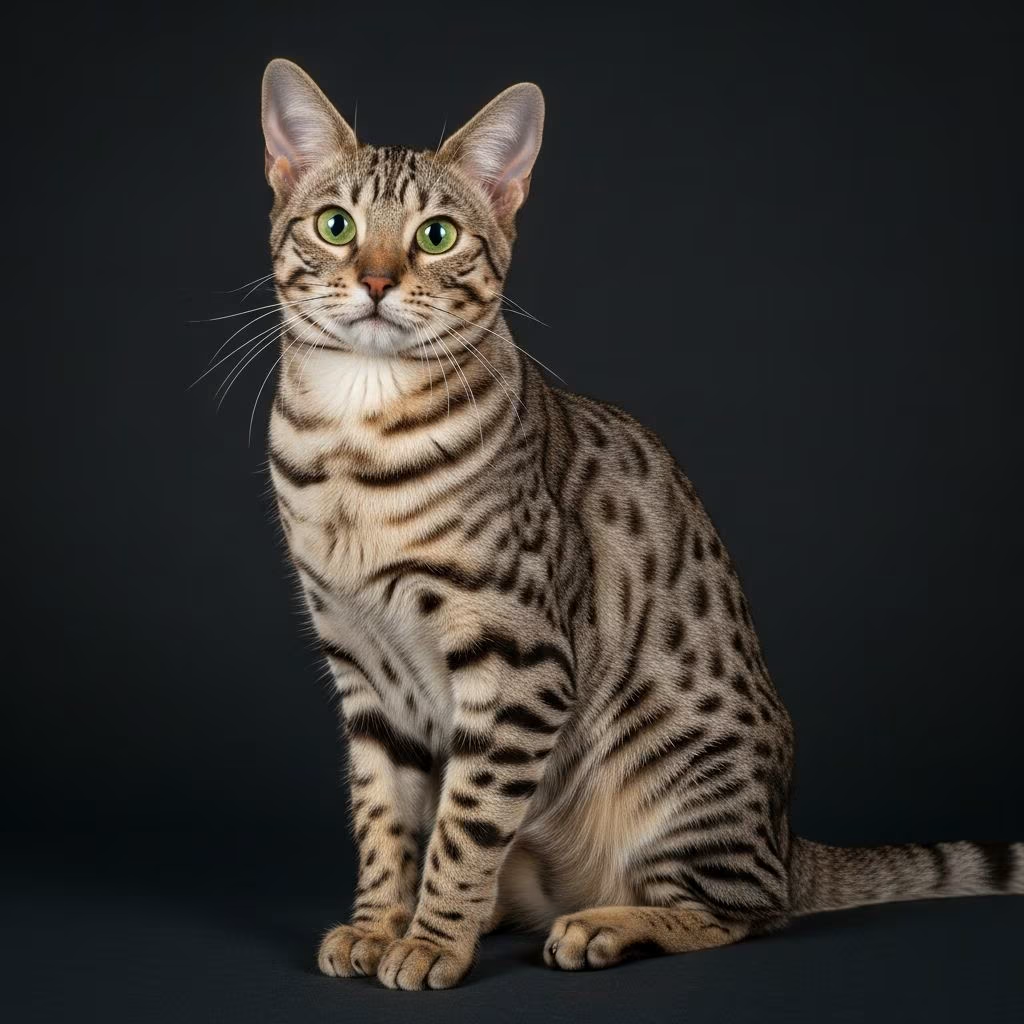
The Egyptian Mau stands out as one of the most distinctive domestic cat breeds, renowned for its naturally occurring spots and graceful athleticism. Originating from ancient Egypt, this medium-sized feline combines historical allure with a vibrant personality, making it a captivating choice for cat enthusiasts.
Ancient Roots and Modern Development
Depictions of spotted cats resembling the Egyptian Mau appear in Egyptian artworks dating back over 3,000 years, often shown hunting birds alongside humans. These ancient felines were integral to Egyptian society, bred in temples and valued for their skills, though myths of widespread worship have been overstated—many were mummified as offerings. Genetic studies confirm their descent from African wildcats that migrated from regions like Ethiopia, placing them among the earliest domesticated cats.
The modern breed traces to the 20th century when Princess Nathalie Troubetskoy imported spotted cats from Egypt and the Middle East to Italy in the 1930s. She established a breeding program, producing silver, bronze, and smoke variants, though early pedigrees likely concealed outcrosses to maintain genetic health amid small numbers. Post-World War II, the breed nearly vanished in Europe but was revived in the U.S. through these lines.
In the 1980s, breeder Jean Mill introduced ‘Indian lines’ from stray cats at New Delhi Zoo, adding richer bronze tones, rufousing, and a glitter effect to the coat. This infusion sparked debate but was accepted by registries like CFA by arguing ancient trade routes linked Egyptian cats to India, preserving the ‘natural breed’ status without formal outcrosses. Later imports from Egypt in the 1980s-1990s bolstered diversity, introducing larger, hardier stock.
British breeders took a different path due to quarantine laws, recreating the Mau using Abyssinians and Siamese, emphasizing a scarab mark between the ears unique to their standard. Today, organizations like TICA and CFA recognize the breed, with genetic analyses linking it closely to Middle Eastern street cats and breeds like Turkish Angora.
Distinctive Physical Appearance
Egyptian Maus exude elegance with a medium build, well-muscled frame, and alert posture. Their hind legs are notably longer than the front, creating a ‘tiptoe’ stance that enhances their graceful, statuesque presence. A key feature is the primordial pouch—a flap of skin from the ribcage to hind legs—allowing extended stride length for speed.
The coat is short and dense, featuring random, asymmetrical spots in round or oblong shapes, never forming lines—a hallmark of natural spotting unique among pedigreed cats. Colors include silver (silvery-white with black spots), bronze (warm copper with brown-black spots), smoke (dark sepia on silver undercoat), and occasional black or blue. An ‘M’ scarab mark adorns the forehead, alongside mascara-like lines accentuating gooseberry-green eyes and a concerned brow expression.
| Feature | Description |
|---|---|
| Size | Medium; 8-14 lbs |
| Coat | Short, spotted tabby; silver, bronze, smoke |
| Eyes | Gooseberry green, almond-shaped |
| Unique Traits | Spots, scarab mark, longer hind legs, brow lines |
Temperament and Behavioral Traits
Egyptian Maus are lively, loyal companions with a strong bond to family members, often selecting one favorite human. Their alert, intelligent nature shines in play, where they excel at retrieving toys and high jumps, mimicking ancient hunting instincts. Gentle yet energetic, they enjoy interaction but respect personal space, suiting active households.
These cats vocalize with a distinctive trill or chirp rather than meows, expressing excitement or affection. Social with other pets if introduced young, they retain a wild-like agility, reaching speeds up to 30 mph thanks to their unique anatomy. Early socialization ensures well-adjusted adults, though their ‘worried’ expression belies a confident demeanor.
- Affectionate: Forms deep attachments without clinginess.
- Playful: Loves fetch, laser pointers, and climbing.
- Alert: Natural watchfulness makes them good companions.
- Trainable: Responds to clicker training and commands.
Grooming and Everyday Care
Low-maintenance, the Egyptian Mau’s short coat requires weekly brushing to distribute natural oils and reduce shedding. Their glitter effect on bronze coats enhances with minimal effort. Bathe only as needed, and trim nails biweekly. Dental care via brushing and toys prevents issues common in cats.
Provide vertical spaces like cat trees and interactive toys to channel energy. A high-protein diet supports muscle tone; fresh water and litter training come naturally. They thrive indoors but appreciate secure enclosures for supervised outdoor time.
Health Considerations and Lifespan
Robust genetics yield a lifespan of 12-15 years, with fewer hereditary issues than many breeds due to natural origins. Watch for pyruvate kinase deficiency (PKD), a rare anemia linked to some lines—responsible breeders screen. Hypertrophic cardiomyopathy (HCM) and hip dysplasia occur sporadically; annual vet checks are advised.
Diversification via Egyptian imports has improved vitality, reducing inbreeding risks from early programs. Maintain ideal weight to protect joints, given their active build.
Bringing Home an Egyptian Mau
Acquire from reputable breeders adhering to TICA/CFA standards, prioritizing health testing and pedigrees tracing to foundation lines. Kittens cost $800-$2,000, reflecting rarity. Rescues occasionally feature Maus or mixes. Prepare with scratching posts, puzzle feeders, and a quiet adjustment space.
Fun Facts About Egyptian Maus
- Only naturally spotted domestic breed; spots are random, not bred-in patterns.
- Ancient Egyptians trained them to retrieve game, a skill preserved in modern playfulness.
- Genetic studies by experts like Leslie Lyons confirm Egyptian wildcat ancestry.
- British Maus uniquely require a scarab beetle head marking.
- Capable of 30 mph sprints, fastest among house cats.
Frequently Asked Questions (FAQs)
Are Egyptian Maus good with children?
Yes, their gentle nature makes them patient with kids, though supervision prevents rough play.
Do Egyptian Maus shed a lot?
Minimal shedding; weekly brushing suffices for their short coat.
Can Egyptian Maus live outdoors?
Prefer indoors for safety, but enjoy leashed walks or enclosures.
What colors are accepted in shows?
Silver, bronze, smoke, black; blue emerging.
How do I find a breeder?
Check TICA/CFA directories for ethical sources with health guarantees.
References
- EGYPTIAN MAU HISTORY – THE MESSYBEAST — Messybeast. Accessed 2026. http://messybeast.com/egyptian-mau-history.htm
- Egyptian Mau Facts – Cat Breeds – Wisdom Panel — Wisdom Panel. Accessed 2026. https://www.wisdompanel.com/en-us/cat-breeds/egyptian-mau
- History and Origins – The Egyptian Mau Society — Egyptian Mau Society. Accessed 2026. https://www.egyptianmausociety.co.uk/history-and-origins
- Egyptian Mau – TICA – The International Cat Association — TICA. Accessed 2026. https://tica.org/breed/egyptian-mau/
- Egyptian Mau Cat: Facts, Personality, & Breed Guide – Litter-Robot — Litter-Robot. Accessed 2026. https://www.litter-robot.com/blog/egyptian-mau/
- Egyptian Mau – The Cat Fanciers’ Association — CFA. Accessed 2026. https://cfa.org/breed/egyptian-mau/



