
Undefined Egg Production In Backyard Chickens: Up To 300 Eggs
Master the essentials of chicken egg laying, breeding, and care for thriving backyard flocks and bountiful harvests.
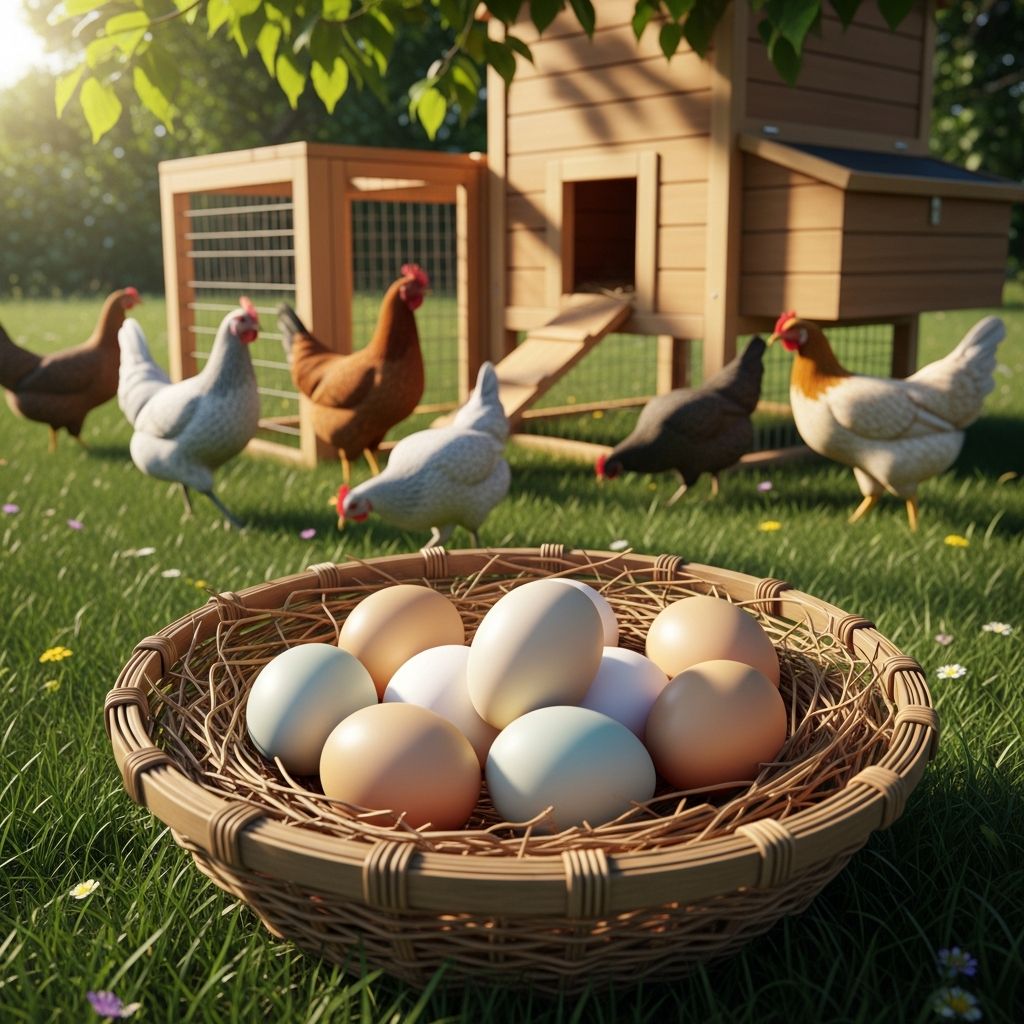
Backyard chicken keeping offers fresh eggs and the joy of self-sufficiency, but understanding the reproductive cycle is key to success. Hens form eggs through a precise biological process involving ovulation, oviduct travel, and shell formation, typically completing one every 24-26 hours under ideal conditions.
The Biological Journey of Egg Formation
A hen’s ovary holds thousands of tiny yolks at birth, with mature ones rupturing every 25 hours to enter the oviduct funnel, a process known as ovulation that happens shortly after laying the prior egg. The yolk then travels a two-foot oviduct, gaining layers: first thick and thin albumen for cushioning, then membranes in the isthmus, followed by a calcium shell in the shell gland over 20 hours, and finally a protective cuticle.
This assembly line ensures eggs are robust for survival. Fertilization occurs early if sperm from a rooster is present, as hens store viable sperm for weeks, allowing one male to service multiple females efficiently. The cloaca, a multi-purpose vent, expels the egg without contamination, as the shell gland everts to protect it during passage.
Factors Triggering Onset of Laying
Pullets, or young hens, typically begin laying at 18-22 weeks, influenced by breed, nutrition, and light exposure. Increasing daylight to 14 hours stimulates the reproductive system in spring, aligning with natural cycles for summer growth. Artificial lighting extends production into winter, though it doesn’t increase total annual output.
- Light Management: Provide 14-16 hours daily via timers to mimic spring conditions and prevent pauses.
- Nutrition Boost: High-protein feeds (16-18%) and calcium sources like oyster shells support early maturity.
- Breed Variations: Leghorns start sooner than heavier breeds like Orpingtons.
Out-of-season pullets may mature faster with rising light, risking issues like prolapse if rushed.
Mating Dynamics in Flocks
Roosters perform a courtship dance, tidbitting and wing-dragging before mounting for the ‘cloacal kiss,’ a brief cloaca-to-cloaca sperm transfer without penetration. This efficient method suits small flocks, where one rooster fertilizes 8-12 hens. Hens lay unfertilized eggs solo, ideal for egg production without chicks.
| Aspect | With Rooster | Without Rooster |
|---|---|---|
| Egg Type | Fertile (hatchable) | Unfertilized (table eggs) |
| Flock Benefits | Protection, fertilization | Simpler management |
| Sperm Storage | Up to 4 weeks | Not applicable |
Broodiness and Its Management
Broody hens obsess over nests, halting production to incubate eggs hormonally driven by prolactin. This lasts 3-4 weeks untreated, common in heritage breeds. Break it by isolating in a dark, ventilated cage for 2-3 days or using cold water baths.
- Encourage broodiness in spring for natural hatching.
- Prevent in layers by frequent egg collection and breed selection.
Nutrition for Peak Egg Output
Calcium deficits cause thin shells; supplement free-choice grit and oyster shells alongside 16% protein layer feed. Peak production hits 70-80% in year one, declining after 72 weeks as hens molt annually for 8-12 weeks, pausing lay.
Molting renews feathers; support with higher protein (20%) during this phase. Expect 250-300 eggs yearly from good layers.
Incubating Eggs for Hatching
Fertile eggs store 7-10 days at 55°F before 99-100°F incubation with 50-60% humidity. Turn every 6 hours until day 18 for chickens (21-day hatch), then lock down. Candle at 7-10 days: viable eggs show veins and embryo shadows; remove clears or quitters.
| Species | Incubation Days | Humidity (Incubate/Hatch) |
|---|---|---|
| Chicken | 21 | 50-60% / 65-70% |
| Duck | 28 | 55-65% / 70-80% |
| Quail (Bobwhite) | 23-24 | 45-55% / 60-65% |
| Guinea Fowl | 27-28 | 50-60% / 65-70% |
Post-hatch, chicks need 95°F brooder heat, dropping 5°F weekly.
Common Disorders Affecting Reproduction
Prolapse occurs in young, obese, or calcium-poor pullets from over-sized first eggs; prevent with balanced diet and rest. Egg binding blocks the vent; soak in warm water and lubricate. Internal laying bypasses the shell, causing infections—vet intervention needed.
- Signs of Issues: Lethargy, straining, soft shells.
- Prevention: Dust baths for parasites, clean nests weekly.
Optimizing Flock Longevity and Yield
Hens lay well for 2-3 years, then as broodies or pets. Rotate roosters yearly to avoid inbreeding. Track production logs to spot declines early.
Winter lighting sustains 50-60% output; summer heat stress cuts it—provide shade and electrolytes.
Frequently Asked Questions
Do hens need roosters to lay eggs?
No, hens produce unfertilized eggs independently, perfect for egg-focused flocks.
How long does egg formation take?
About 24-26 hours from ovulation to lay, with shell taking the longest.
Why do hens stop laying in winter?
Short days signal rest; supplemental 14-hour light resumes production.
How to tell if eggs are fertile?
Candle after 7 days: fertile show dark spots and veins.
What’s the best age for peak laying?
First year post-maturity, yielding 250+ eggs.
Seasonal Management Calendar
| Season | Key Actions |
|---|---|
| Spring | Increase light, collect fertile eggs, manage broodies |
| Summer | Shade, ventilation, monitor heat stress |
| Fall | Boost protein for molt, plan lighting |
| Winter | 14-16 hr light, insulated coops |
References
- How Do Chickens Lay Eggs? — Backyard Poultry (Countryside). 2023. https://backyardpoultry.iamcountryside.com/eggs-meat/how-do-chickens-lay-eggs/
- Chickens Mating: A Look at Roosters and Hens — Nutrena World. 2024. https://nutrenaworld.com/blog/poultry/how-do-chickens-mate-chicken-reproduction-love-is-in-the-coop-a-guide-to-chicken-reproduction/
- How do Chickens Make Eggs: A Guide for Backyard Owners — Chicken Coop Company. 2023. https://www.chickencoopcompany.com/a/blog/how-do-chickens-make-eggs
- Laying and Reproduction in Backyard Poultry — Merck Veterinary Manual. 2025-02-01. https://www.merckvetmanual.com/exotic-and-laboratory-animals/backyard-poultry/laying-and-reproduction-in-backyard-poultry
- From Egg to Egg-Layer: The Life Cycle of a Chicken — YouTube (Backyard Farming Channel). 2024. https://www.youtube.com/watch?v=Kr94tGgWwmY
- Backyard Flock Production — Oklahoma State University Extension. 2022-06-15. https://extension.okstate.edu/fact-sheets/backyard-flock-production.html
- How Do Chickens Lay Eggs — Purina Animal Nutrition. 2024. https://www.purinamills.com/chicken-feed/education/detail/how-do-chickens-lay-eggs-understanding-your-egg-laying-chickens
Similar Articles








Read full bio of Sneha Tete


