

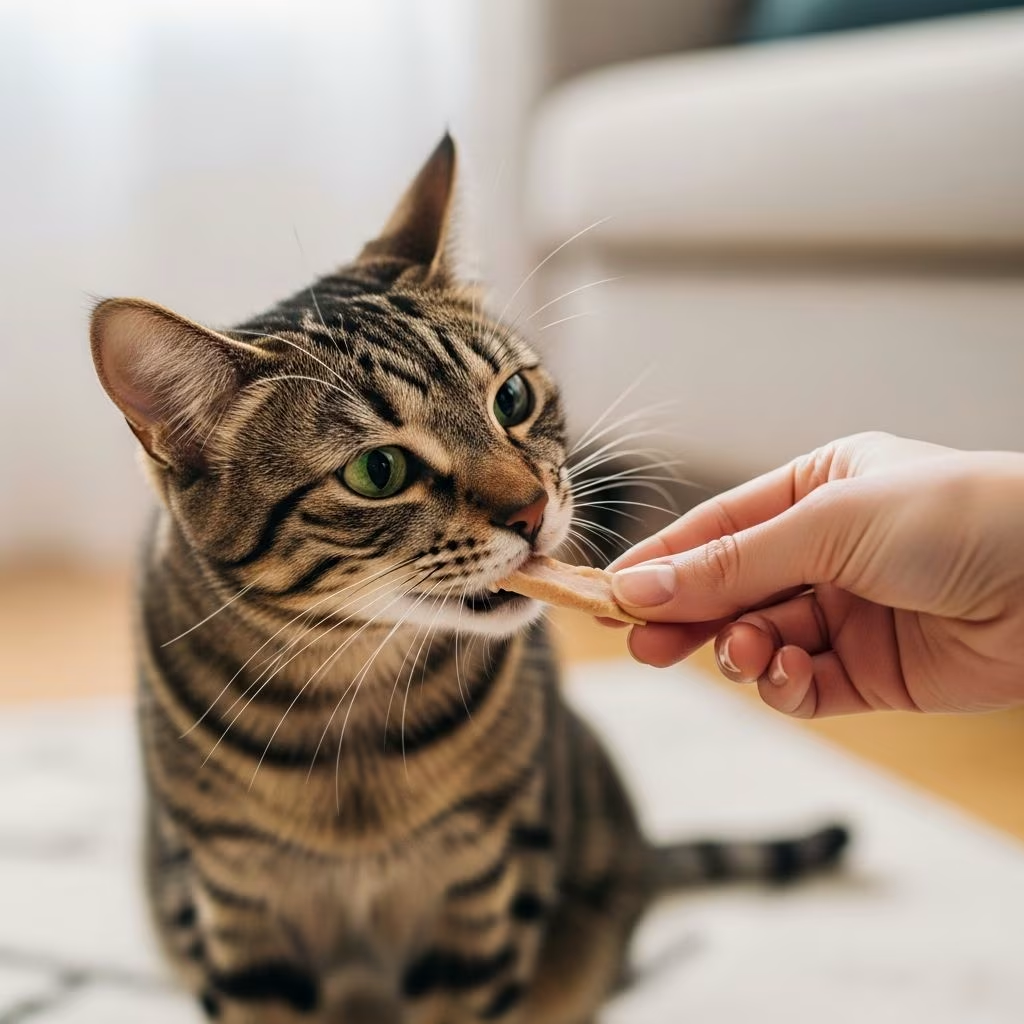
Training cats requires patience and insight into their natural instincts rather than human-style discipline. By focusing on positive reinforcement and environmental adjustments, owners can encourage desirable actions while gently discouraging unwanted ones, strengthening the human-feline bond in the process.
Why Traditional Discipline Fails Cats
Cats operate on instincts shaped by evolution, not pack dynamics like dogs or reasoning like children. Attempts at physical correction or loud scolding often backfire, leading to fear, avoidance, or escalated aggression. Cats struggle to link punishment to specific actions, instead associating discomfort with their owner, which erodes trust essential for effective training.
Scientific principles of operant conditioning reveal four quadrants of behavior modification: positive reinforcement (adding rewards), negative punishment (removing rewards), positive punishment (adding aversives), and negative reinforcement (removing aversives). The first two promote learning with minimal stress, while the latter pair risks fallout like anxiety or resentment.
Core Principles of Feline Behavior Modification
Behavior stems from instinct, environment, and interactions. Cats scratch to mark territory and maintain claws, jump for high vantage points, and play aggressively to hone hunting skills. Addressing root causes—such as unmet needs for play or scratching outlets—prevents issues before they arise.
- Instinct-Driven Actions: Scratching, biting, and counter-surfing fulfill biological needs.
- Environmental Triggers: Boredom or inaccessible resources amplify problems.
- Interaction Patterns: Inconsistent responses reinforce bad habits, like rewarding meowing with food.
Positive Reinforcement: The Foundation of Success
Positive reinforcement involves delivering a reward immediately after a desired behavior, making it more likely to repeat. Treats, praise, or play sessions work best when timed precisely.
For instance, when a cat uses a scratching post, offer a small treat or affectionate petting right away. Over time, the cat connects the post with pleasure, choosing it over furniture. Consistency across household members amplifies results.
| Behavior | Reward Example | Timing Tip |
|---|---|---|
| Using litter box | Treat or verbal praise | Within 3 seconds |
| Scratching post use | Catnip toy session | During the action |
| Calm sitting | Gentle strokes | Immediate follow-up |
Negative Punishment: Withdrawing Attention
This gentle method removes something enjoyable to reduce unwanted behavior. If a cat nips during play, stand up and walk away silently for a few minutes. The loss of interaction teaches that rough play ends fun, without confrontation.
Apply this to attention-seeking bites or pouncing: ignore completely until calm behavior resumes, then resume engagement. Cats quickly learn that polite interactions yield attention.
Environmental Management for Lasting Change
Modify surroundings to make bad choices inconvenient and good ones appealing. Place aluminum foil or double-sided tape on counters to deter jumping; the unpleasant texture prompts retreat without owner intervention.
- Install sturdy scratching posts near problem areas, rubbed with catnip.
- Use motion-activated air puffers near no-go zones like keyboards.
- Provide vertical spaces like shelves to satisfy climbing urges.
For multi-cat homes, separate resources—litter boxes, food stations—to curb territorial aggression.
Addressing Specific Behavioral Challenges
Scratching Furniture
Supply multiple sisal or cardboard posts matching texture and height preferences. Demonstrate use by scratching alongside, then reward investigations. Trim nails regularly to minimize damage.
Aggressive Play or Biting
Redirect to toys like wand teasers mimicking prey. Use hiss or sharp “no” followed by timeout if needed, but prioritize scheduled play sessions to burn energy. Persistent cases warrant vet checks for pain.
Counter Jumping and Surfacing
Remove access by storing items and using deterrents like cookie sheets that rattle on landing. Reward floor lounging with treats to reinforce alternatives.
Inappropriate Elimination
Rule out medical issues first via vet visit. Ensure clean, private litter boxes (one per cat plus one extra) with unscented, clumping litter. Enzyme cleaners eliminate scent cues.
Common Mistakes and How to Avoid Them
Avoid yelling, spraying water, or physical restraint—these heighten stress and generalize fear to owners or environments. Never free-feed; scheduled meals build hunger for training rewards.
Inconsistency undermines progress; all family members must align on rules. Track behaviors in a journal to spot patterns and measure improvement.
Building a Routine for Optimal Behavior
Daily structure prevents issues: morning play, midday puzzle feeders, evening grooming sessions. Enrichment toys like treat balls keep minds engaged, reducing mischief.
Patience is key—changes take weeks. Celebrate incremental wins to stay motivated.
Health Checks and Professional Help
Sudden behavior shifts signal pain or illness; consult vets promptly. For complex cases, certified behaviorists offer tailored plans.
Frequently Asked Questions (FAQs)
Can cats be trained like dogs?
Cats respond best to reward-based methods respecting their independence, differing from dog pack training.
How long does behavior change take?
Weeks to months with consistency; track progress weekly.
Is a spray bottle ever okay?
No—it risks fear association with you, not the behavior.
What if my cat ignores rewards?
Experiment with high-value treats like tuna; ensure basic needs are met first.
Multiple cats fighting—help?
Slow introductions, ample resources, and pheromone diffusers aid harmony.
References
- Cat Behavior Training: Positive & Negative Reinforcement — Catastrophic Creations. 2023. https://www.catastrophicreations.com/blogs/articles/cat-behavior-training-positive-negative-reinforcement
- How to Discipline a Cat and Stop Bad Behavior — Purina. 2024-05-15. https://www.purina.com/articles/cat/behavior/training/how-to-discipline-a-cat
- How to Discipline a Cat Properly — Hill’s Pet Nutrition. 2023-11-20. https://www.hillspet.com/cat-care/routine-care/how-to-discipline-a-cat
- Preventing Unwanted Cat Behaviors — American Association of Feline Practitioners (catvets.com). 2025-12. https://catvets.com/wp-content/uploads/2025/12/FelineVMA_Preventing_Unwanted_Behaviors_Handout.pdf



