
EEE Virus In Birds: Prevention Guide For Poultry Flocks
Understanding the deadly Eastern Equine Encephalitis threat to poultry and wild birds, from transmission to prevention strategies.
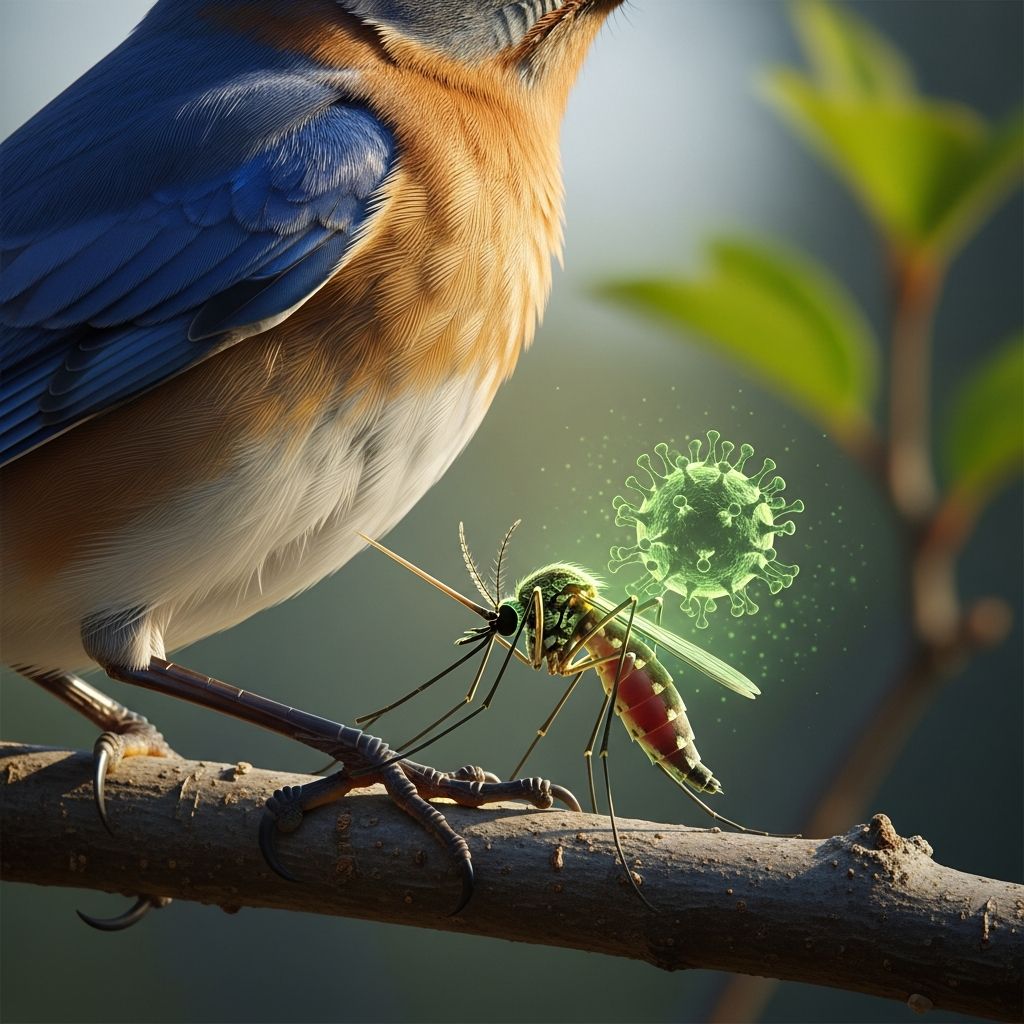
Eastern Equine Encephalitis (EEE) virus poses a significant threat to avian populations, particularly poultry and game birds. This mosquito-borne arbovirus cycles primarily between wild birds and vectors, occasionally spilling over to cause devastating outbreaks in domestic flocks.
The Nature of the EEE Virus
Belonging to the Alphavirus genus in the Togaviridae family, EEE virus thrives in wetland environments where its primary vector, Culiseta melanura mosquitoes, proliferates. Wild passerine birds serve as the main reservoir hosts, maintaining the virus without overt symptoms in most cases.
The virus’s lifecycle hinges on mosquito blood meals from infected birds, allowing it to amplify and spread. While birds are natural amplifiers, mammals like horses and humans act as dead-end hosts due to insufficient viremia for further transmission.
Transmission Dynamics in Avian Populations
EEE spreads exclusively through infected mosquito bites, with no evidence of direct bird-to-bird contact under natural conditions. Bridge vectors, other mosquito species, facilitate spillover from wild bird reservoirs to poultry.
- Primary cycle: Culiseta melanura mosquitoes feed on viremic wild birds.
- Spillover: Poultry exposed in areas overlapping with endemic swamps and hardwood forests.
- Secondary spread: Rare cannibalism in flocks may exacerbate outbreaks once introduced.
Geographic hotspots include eastern U.S. coastal regions, with climate factors enhancing mosquito breeding.
Susceptible Bird Species and Mortality Patterns
While most wild birds remain asymptomatic, certain domestic and exotic species face high fatality rates. Non-native gallinaceous birds are especially vulnerable.
| Bird Type | Mortality Risk | Key Examples |
|---|---|---|
| Game Birds | High | Pheasants, chukar partridges, quail |
| Ratites | High | Emus, ostriches |
| Poultry | Moderate to High | Turkeys, penguins (captive) |
| Wild Birds | Low | Passerines (reservoirs) |
Pheasants often suffer pronounced encephalitis, contrasting with viscerotropic disease in others leading to organ necrosis.
Clinical Manifestations in Infected Birds
Symptoms emerge 9-11 days post-infection, targeting the central nervous system. Early signs include fever and lethargy, progressing rapidly to severe neurological deficits.
- General signs: Reduced appetite, depression, weakness.
- Neurological: Tremors, ataxia, paralysis, head tilting, blindness.
- Terminal: Convulsions, recumbency, death within days.
In pheasants, leg paralysis and neck twisting predominate; turkeys exhibit drowsiness and inability to swallow.
Pathogenesis: From Bite to Brain Damage
Upon mosquito bite, EEE replicates in local tissues, enters the bloodstream, and breaches the blood-brain barrier. This triggers intense neuroinflammation involving microglia and astrocytes, causing neuronal death.
High viremia in susceptible birds amplifies tissue damage, particularly in the brain and viscera. Survivors often endure permanent deficits like paralysis.
Diagnosis Challenges in Poultry Settings
Confirming EEE requires ruling out differentials like West Nile virus, rabies, or other encephalitides. Methods include:
- Viral isolation from brain tissue.
- RT-PCR for viral RNA.
- Serology for antibodies (IgM/ELISA).
Necropsy reveals meningoencephalitis, with perivascular cuffing and neuronal necrosis.
No Cure: Focus on Prevention Strategies
Absence of antiviral treatments underscores proactive measures. Core tactics target vector reduction and host immunity.
Mosquito Control Essentials
- Eliminate standing water in farm vicinities.
- Apply approved insecticides to breeding sites.
- Use fine-mesh netting on enclosures during peak seasons (late summer).
Vaccination Protocols
Equine EEE vaccines, adapted at 1/10th dose, protect pheasants and other high-risk birds. Administer annually before mosquito season; efficacy confirmed in trials.
Economic and Public Health Implications
Outbreaks devastate game bird operations, with losses from mass mortality and trade restrictions. Proximity to equine and human cases heightens surveillance needs.
Poultry farms in endemic zones must integrate integrated pest management (IPM) to safeguard flocks and communities.
Emerging Risks from Climate Shifts
Warming trends expand mosquito habitats, potentially increasing EEE incidence. Recent detections in novel areas signal need for vigilant monitoring.
Frequently Asked Questions (FAQs)
What birds are most at risk from EEE?
Pheasants, emus, chukar partridges, and turkeys face the highest mortality, unlike resilient wild passerines.
How can I protect my poultry flock?
Implement mosquito control, vaccinate susceptible species, and monitor for early neurological signs.
Is EEE transmissible from bird to human?
No direct transmission; only via infected mosquitoes biting amplified hosts.
What’s the survival rate in affected birds?
Often under 20% in vulnerable species, with survivors showing lasting impairments.
When is EEE season?
Peak transmission in late summer to fall, aligning with mosquito activity.
Monitoring and Surveillance Best Practices
Collaborate with veterinary labs for sentinel bird testing. Report suspect cases to state animal health officials promptly.
In summary, EEE remains a formidable challenge for avian health, demanding layered defenses from environmental management to immunization.
References
- Eastern Equine Encephalitis — Cornell Wildlife Health Lab. Accessed 2026. https://cwhl.vet.cornell.edu/resource/eastern-equine-encephalitis
- Disease Alert: Equine Encephalitis (EEE/WEE/VEE) — USDA APHIS. Accessed 2026. https://www.aphis.usda.gov/livestock-poultry-disease/equine/encephalitides
- Equine encephalomyelitis (Eastern) — World Organisation for Animal Health (WOAH). Accessed 2026. https://www.woah.org/en/disease/equine-encephalomyelitis-eastern/
- Vector-borne Eastern Equine Encephalitis and West Nile Virus — Michigan State University College of Veterinary Medicine. 2018-06-01. https://cvm.msu.edu/vdl/client-education/newsletter/summer-2018/vector-borne-eastern-equine-encephalitis-and-west-nile-virus-threaten-horses-and-other-mammals-including-humans
- Eastern equine encephalitis virus: Pathogenesis, immune response — PubMed Central (PMC). Accessed 2026. https://pmc.ncbi.nlm.nih.gov/articles/PMC11869868/
- Eastern Equine Encephalitis in Poultry — Poultry Extension. Accessed 2026. https://poultry.extension.org/articles/poultry-health/common-poultry-diseases/eastern-equine-encephalitis-in-poultry/
- Eastern Equine Encephalomyelitis — Georgia Department of Agriculture. 2008-05-22. https://www.agr.georgia.gov/sites/default/files/documents/animal-health/eastern-equine-encephalomyelitis.pdf
Similar Articles








Read full bio of Sneha Tete


