

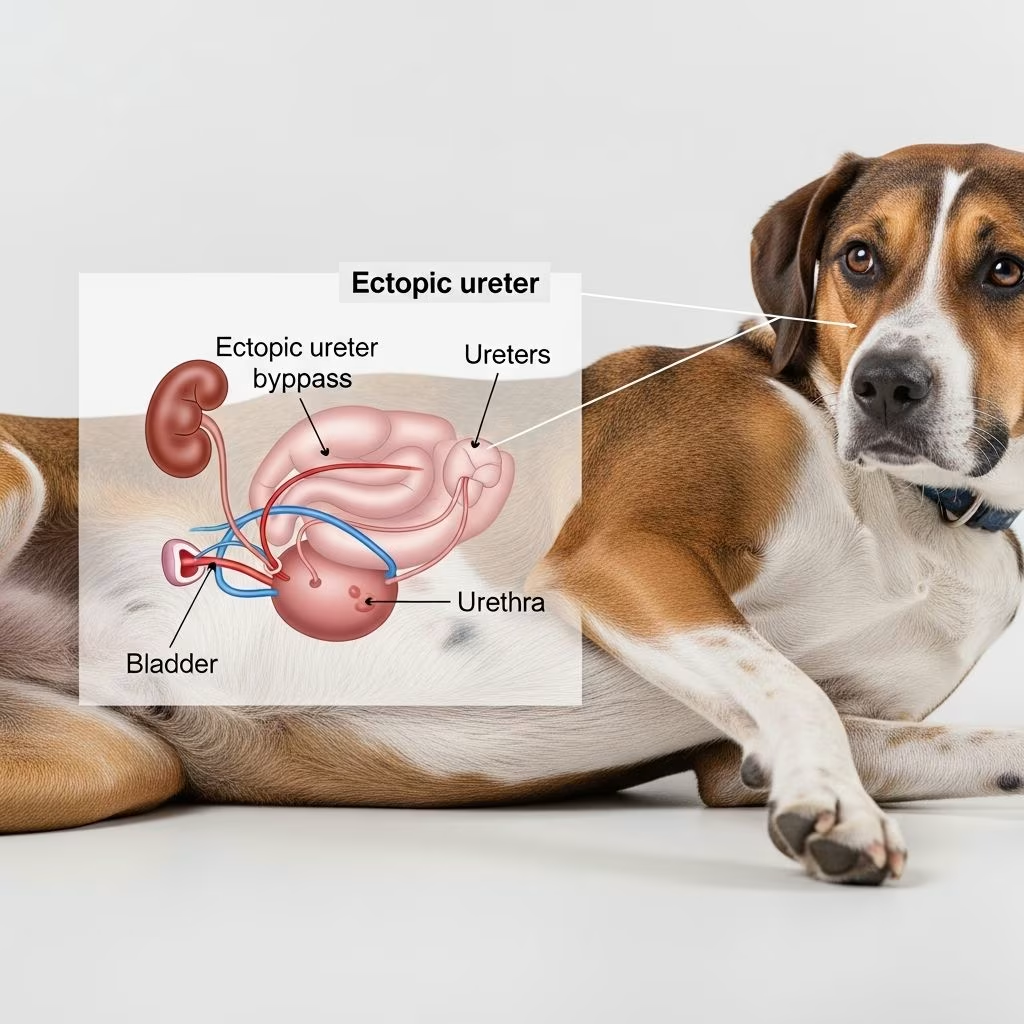
Ectopic Ureters in Dogs: A Complete Guide
Ectopic ureters represent a congenital urinary anomaly that affects a dog’s ability to control urination. This condition occurs when the ureter—the tube responsible for carrying urine from the kidney to the bladder—is positioned abnormally and opens in the wrong location within the urinary tract. Instead of connecting to the bladder where it should, the ectopic ureter may bypass the bladder entirely or enter the urethra at an incorrect angle, leading to continuous or intermittent urine leakage.
Understanding this condition is essential for dog owners because early identification and appropriate treatment can significantly improve a dog’s quality of life. While ectopic ureters are classified as a rare condition, they disproportionately affect certain breeds and are significantly more common in female dogs than males.
Understanding Ectopic Ureters: Prevalence and Risk Factors
Ectopic ureters demonstrate a notable gender disparity in canine populations. The condition is up to nine times more common in female dogs than in male dogs, making it an important consideration during diagnostic evaluations of female puppies with urinary symptoms. While the condition is usually identified in young dogs, affected male dogs may not develop urinary incontinence until they reach adulthood, which can complicate early diagnosis in male patients.
This congenital abnormality develops during fetal development when the urinary system is forming. The exact cause of ectopic ureter development remains not entirely understood, but it is recognized as a developmental anomaly that occurs in utero. Certain breeds appear to have a genetic predisposition to this condition, making it more prevalent in specific dog populations.
In affected dogs, there are often other urinary abnormalities present in addition to the ectopic ureter. These associated conditions may include reduced urethral tone, short urethra, intrapelvic bladder, reduced bladder muscle tone, and renal abnormalities. These concurrent issues can significantly impact treatment outcomes and post-operative continence.
Recognizing the Symptoms
The primary clinical sign of ectopic ureters is urinary incontinence, which manifests as continuous urine leakage or intermittent dribbling. The severity and pattern of incontinence can vary considerably between individual dogs. Some dogs may experience constant leakage, while others may leak urine primarily when resting or sleeping.
Common Clinical Presentations
Affected dogs often display the following symptoms:
– Continuous or intermittent urine leakage and dribbling- Excessive licking at the genitals- Discolored or stained hair around the genital area- Frequent urination- Secondary skin infections around the genital region due to persistent moisture and urine exposure- Increased susceptibility to urinary tract infections
Some dogs with ectopic ureters may be asymptomatic, particularly early in the disease process or when only one ureter is affected mildly. This asymptomatic presentation can delay diagnosis in some cases.
Urinary leakage causes significant skin irritation and can lead to painful dermatitis around the genital area. The constant moisture creates an ideal environment for bacterial growth and secondary skin infections, which may require additional treatment beyond the primary urological correction.
Dogs with ectopic ureters are at significantly higher risk for urinary tract infections due to the abnormal placement of the ureters and the altered urine flow dynamics. Symptoms of urinary tract infections include frequent urination, discomfort when urinating, and abdominal pain. If a young dog experiences recurrent urinary tract infections, veterinary evaluation to rule out anatomical abnormalities such as ectopic ureters becomes crucial.
Complications Associated with Untreated Ectopic Ureters
If ureteral outflow becomes restricted before or after attempted surgical correction, urine can back up into the kidneys and cause hydronephrosis, which is a serious and potentially life-threatening condition characterized by fluid accumulation in the kidneys. This condition can cause loss of appetite, lethargy, excessive thirst and urination, bloody urine (hematuria), bad breath (halitosis), mouth sores, vomiting, and abdominal distention.
Diagnostic Approach and Testing
Accurate diagnosis of ectopic ureters requires a systematic and thorough diagnostic approach. The first step in diagnosing a possible case of ureteral ectopia is a comprehensive physical examination, including close examination of the urogenital area. Your veterinarian will assess the dog’s urinary control and look for signs of skin irritation or infection.
Diagnostic Procedures
Following the physical examination, your veterinarian will typically recommend the following tests:
– Urinalysis to assess urine composition and identify abnormalities- Urine culture to detect bacterial infections- Blood work to evaluate kidney function and overall health status- Diagnostic imaging such as ultrasound or radiography- Cystoscopy, which allows direct visualization of the bladder interior and ureter opening
These tests help rule out other causes of incontinence such as urinary tract infections, diabetes, kidney disease, or behavioral issues. Ectopic ureter(s) are definitively identified with diagnostic imaging or cystoscopy, with the latter sometimes allowing for simultaneous correction during the diagnostic procedure.
Abdominal ultrasound is particularly useful for identifying ectopic ureters, as it can visualize the abnormal path of the ureter and assess for secondary complications such as hydroureter or hydronephrosis. Advanced imaging techniques may be recommended for complex cases or when planning surgical intervention.
Treatment Options and Surgical Approaches
Treatment for ectopic ureter is primarily surgical, designed to connect the affected ureter(s) to the correct location in the bladder or to completely remove the abnormal ureter with its attached kidney. Multiple surgical approaches exist, each selected based on the specific characteristics of the ectopic ureter and the individual dog’s anatomy.
Surgical Techniques
Three primary surgical techniques have been described for correcting ectopic ureters:
– Neoureterostomy: Repositioning and reimplantation of the affected ureter into the bladder at the correct anatomical location- Nephroureterectomy: Surgical removal of the kidney and its associated ectopic ureter- Ureteroneocystostomy: Creation of a new connection between the ureter and bladder
The choice of surgical technique depends on whether the ectopic ureter is intramural (tunneling along the bladder wall) or extramural (originating from outside the bladder).
Minimally Invasive Techniques: Laser Ablation
Modern veterinary medicine has revolutionized ectopic ureter treatment with minimally invasive techniques. Cystoscopically guided laser ablation is now available as an alternative to traditional open surgery and is particularly effective for intramural ectopic ureters. During this procedure, a specialized endoscope is inserted into the bladder, allowing the surgeon to visualize the ectopic ureter opening. The laser is then used to ablate (cut/burn) the ectopic ureter back into the bladder, creating a correct drainage pathway.
The laser ablation procedure is extremely successful for correcting the abnormally positioned ureter. Most patients are able to leave the hospital within 12-24 hours after the procedure, representing a significant advantage over traditional surgery requiring multiple-day hospitalization. Recovery is very quick, and dogs typically resume normal activities rapidly.
For dogs in the 5-10% of patients who have an extramural ectopic ureter, traditional surgical approaches including laparoscopic ureteroneocystostomy may be required for optimal correction.
Pre-Operative Preparation
Proper preparation before surgery significantly improves outcomes. Your veterinarian will likely recommend urinalysis and urine culture performed within 2 weeks of your appointment. If the urine culture is positive for bacterial infection, your dog should be on an appropriate antibiotic for a minimum of 5 days prior to the surgical procedure.
If your veterinarian is unable to obtain a urine sample from your pet—which is common in dogs with ectopic ureters—antibiotic therapy (such as amoxicillin or Clavamox) is typically recommended approximately 5-7 days prior to surgery to prevent post-operative infections.
Post-Operative Recovery and Expectations
Most dogs will have significant improvement in their urinary incontinence following the procedure. However, realistic expectations regarding post-operative outcomes are important. While the laser ablation procedure is highly successful for correcting the abnormally positioned ureter, most dogs with ectopic ureter(s) have other urinary tract abnormalities that may cause them to continue to have urinary incontinence following correction of the ureter(s).
Expected Outcomes by Gender
| Factor | Success Rate ||——–|————-|| Male dogs achieving continence | Approximately 80% || Female dogs achieving continence without additional treatment | 47-50% || Overall continence with additional medical management | 75-77% || Dogs requiring medication for continence | 40-50% of females || Dogs with persistent incontinence despite treatment | 20-30% |
Approximately 50% of dogs may need the addition of medications to help strengthen urethral tone (such as phenylpropanolamine/PPA) to achieve full continence. Some dogs—approximately 20-30%—may still continue to have urinary incontinence even with the procedure and additional medications, although incontinence should be improved compared to pre-operative levels.
Prognosis is generally good, though expectations should be realistic. Individual variation in outcomes is significant, and factors such as the presence of other urinary tract abnormalities, the severity of secondary changes in the urinary system, and the dog’s individual physiology all influence final continence outcomes.
Medical Management of Persistent Incontinence
Persistent incontinence can be successfully managed with medications in many cases. Phenylpropanolamine (PPA) is commonly prescribed to increase urethral muscle tone and improve continence. Other medications may also be recommended based on the individual dog’s response and specific urinary dynamics.
Regular monitoring with urinalysis and urine culture at appropriate intervals helps identify any recurring urinary tract infections and ensures that medications are appropriately prescribed and adjusted for optimal continence.
Supportive Care and Follow-Up
Beyond surgical correction or medication, comprehensive supportive care is essential for optimal outcomes. This includes treating external rashes caused by urine leakage, maintaining proper perineal hygiene, and providing assisted urination when necessary. Regular follow-up appointments allow your veterinarian to monitor healing, assess continence improvements, and adjust treatment plans as needed.
Urinalysis and urine culture follow-ups at regular intervals are strongly recommended to detect any urinary tract infections early and ensure appropriate antimicrobial treatment when indicated.
Prevention and Breeding Considerations
As ureteral ectopia is a congenital condition that occurs during fetal development, the only prevention possible is to avoid breeding affected dogs or their close relatives. Responsible breeding practices help reduce the incidence of this heritable condition in dog populations. Dogs diagnosed with ectopic ureters should not be used for breeding purposes, and their littermates or immediate relatives should be carefully screened before breeding decisions are made.
Frequently Asked Questions
Q: What exactly is an ectopic ureter?
A: An ectopic ureter is a congenital abnormality where the tube that carries urine from the kidney to the bladder (ureter) opens in the wrong location within the urinary tract, often bypassing the bladder or opening into the urethra instead. This causes urine to leak involuntarily.
Q: How is ectopic ureter diagnosed?
A: Diagnosis begins with a physical examination and history. Your veterinarian will then perform urinalysis, urine culture, and blood work. Definitive diagnosis requires diagnostic imaging such as ultrasound, radiography, or cystoscopy, which allows direct visualization of the urinary tract.
Q: Is ectopic ureter an emergency?
A: Ectopic ureters in dogs are not typically considered an emergency, but they can cause serious health issues if left untreated. If they are causing severe symptoms such as urinary incontinence or recurrent urinary tract infections, prompt veterinary evaluation and treatment will likely be necessary.
Q: What is the success rate for ectopic ureter surgery?
A: Success rates vary depending on surgical technique and gender. Approximately 80% of male dogs achieve full continence after surgery, while 47-50% of female dogs achieve continence without additional treatment. Overall, 75-77% of treated dogs achieve continence with or without additional medication.
Q: Can ectopic ureters cause other health problems?
A: Yes, ectopic ureters can lead to recurrent urinary tract infections, skin infections around the genital area, and potentially hydronephrosis (fluid backup into the kidneys) if urine flow becomes obstructed. These complications emphasize the importance of prompt diagnosis and treatment.
Q: Will my dog be incontinent forever if surgery doesn’t achieve full continence?
A: Many dogs with persistent incontinence after surgery can be successfully managed with medication that strengthens urethral muscle tone, such as phenylpropanolamine. Even those with residual incontinence typically see significant improvement compared to pre-operative levels.
Q: How long does recovery take after laser ablation surgery?
A: Most dogs are able to leave the hospital within 12-24 hours after laser ablation, and recovery is very quick. Dogs typically resume normal activities rapidly compared to traditional open surgery, which requires longer hospitalization and recovery periods.
References
- Ectopic Ureter in Dogs – Causes, Treatment and Associated Conditions — Vetster. 2024. https://vetster.com/en/conditions/dog/ectopic-ureter
- Ectopic Ureter — MU Veterinary Health Center, University of Missouri College of Veterinary Medicine. 2024. https://vhc.missouri.edu/small-animal-hospital/small-animal-internal-medicine/diseases-and-treatments/ectopic-ureter/
- Minimally Invasive Surgical Techniques for the Treatment of Dogs with Ectopic Ureters — PubMed Central, National Institutes of Health. 2024. https://pmc.ncbi.nlm.nih.gov/articles/PMC12028389/
- Urinary Incontinence in Dogs — UC Davis School of Veterinary Medicine. 2024. https://healthtopics.vetmed.ucdavis.edu/health-topics/canine/urinary-incontinence-dog
- Ureteral Anomalies in Animals — Merck Veterinary Manual. 2024. https://www.merckvetmanual.com/urinary-system/congenital-and-inherited-anomalies-of-the-urinary-system/ureteral-anomalies-in-animals
- Ectopic Ureter — American College of Veterinary Surgeons. 2024. https://www.acvs.org/small-animal/ectopic-ureter/



