

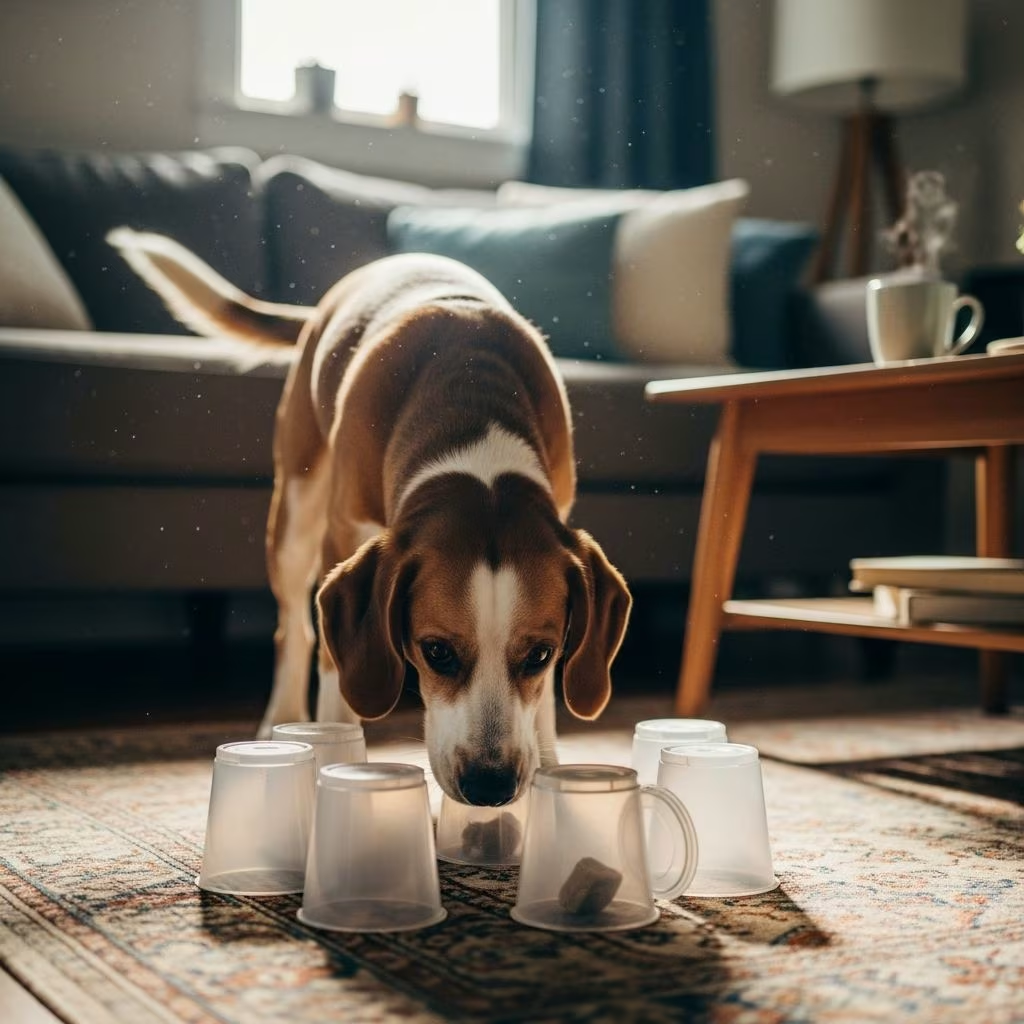
Your dog experiences the world through their nose. Scent training (also called nosework or scent work) turns that natural talent into a fun game you can play together at home. It is low-impact, suitable for almost every dog, and backed by research as a powerful way to provide mental enrichment and reduce stress.
This guide walks you through what scent training is, why it matters, what you need to get started, and step‑by‑step scent games you can set up in your living room or yard—no special equipment required.
What Is Scent Training?
Scent training is any structured activity where your dog uses their nose to locate a specific scent, object, or hidden reward and is reinforced for finding it. In formal sports, dogs learn to search for target odors like birch, anise, or clove; at home, you can start with something simple, like your dog’s regular treats or a favorite toy.
Most dogs naturally sniff and track smells on walks, but scent training turns this into a clear game with rules:
- Your dog learns that finding a particular smell “pays” with treats or play.
- You gradually increase difficulty, building focus, independence, and problem‑solving.
- You guide the game, but your dog leads with their nose, not by following your hands or body cues.
Why Scent Training Is So Good for Dogs
Dogs have around 200–300 million scent receptors compared with about 5–6 million in humans, and the brain areas devoted to smell are far larger than ours. Engaging this sense provides:
- Intense mental exercise: Ten minutes of focused sniffing can be as tiring as a much longer walk for many dogs.
- Stress reduction: Studies show that letting dogs sniff and perform nosework can lower heart rate and promote more relaxed behavior.
- Confidence building: Shy or reactive dogs can safely practice problem‑solving without close contact with people or dogs.
- Better focus on you: If you provide the most interesting scent games, your dog has a reason to check in with you instead of the environment.
- Accessibility: Scent work is suitable for puppies, seniors, disabled dogs, and high‑energy dogs who cannot always get long physical exercise.
Getting Started: Supplies and Setup
You do not need professional gear to begin scent training at home. Many trainers and organizations recommend simple household items for early sessions.
Basic Scent Training Kit
- High‑value treats (or a favorite toy) your dog loves and is willing to work for.
- Small containers with lids and holes (plastic food tubs, yogurt pots, or clean mint tins).
- Boxes or household items to hide things in, such as cardboard boxes, laundry baskets, or cushions.
- Optional target odor for later stages (e.g., birch essential oil, a herb like thyme, or catnip).
- Clicker or verbal marker like “Yes!” to mark the moment your dog finds the scent.
Choosing a Safe Training Area
Pick a quiet, uncluttered space where your dog can move comfortably:
- Start indoors in a small room to keep distractions low.
- Clear hazards (wires, fragile items, slippery rugs).
- Have a way to briefly restrain your dog (baby gate, tether, or asking them to wait) while you set up searches.
How Scent Training Works: From Food to Target Odors
Most home programs follow the same progression used in classes and working‑dog foundations:
| Stage | What the Dog Finds | Goal |
|---|---|---|
| 1. Food Finds | Visible or easy‑to‑locate food in containers | Build enthusiasm for searching |
| 2. Hidden Food Searches | Food in harder locations or under objects | Encourage problem‑solving and persistence |
| 3. Food + Target Odor | Food and a distinct odor together | Teach that the special odor predicts rewards |
| 4. Target Odor Only | Target odor with no food at the hide | Dog hunts purely for odor, paid from your hand |
Step‑by‑Step Scent Games to Play at Home
The following exercises are inspired by common beginner scent work protocols used by training organizations and humane societies.
Game 1: Simple Container Search (Food Only)
Goal: Teach your dog that searching pays off and that putting their nose into a container is rewarding.
You need: 1 container with holes, a handful of treats.
- Step 1 – Show and release: With your dog briefly restrained, let them watch as you drop a few treats into the open container. Place it 1–3 meters away, say your cue (e.g., “Search”), and release them.
- Step 2 – Reward at the source: As your dog reaches the container, say “Yes!” and drop extra treats right into or on top of the container. This builds the idea that keeping their nose at the source is worthwhile.
- Step 3 – Reset: Remove the container once they finish the last treat, then repeat from slightly different spots.
Practice several short repetitions until your dog runs enthusiastically to the container as soon as you say “Search.”
Game 2: Make the Container Harder to Find
Goal: Gradually increase difficulty without overwhelming your dog.
Add challenge bit by bit:
- Place the container just around a corner or behind a chair so it is not immediately visible.
- Set up multiple empty boxes and hide the food container in only one.
- Keep rewarding at the source so your dog stays committed and is less likely to give up.
Do not put food directly in boxes you will reuse, as the lingering smell can contaminate the search area and make future puzzles confusing.
Game 3: Introduce a Target Odor
Goal: Teach your dog that a particular smell—like birch oil or a herb—predicts rewards, even when food isn’t present.
Choose a target odor:
- Birch essential oil (used in many formal nosework programs).
- A specific herb (e.g., thyme) or safe plant material.
- Catnip or another distinctive, easily available scent.
Steps:
- Apply a small amount of the chosen odor to a cotton swab and place the swab inside the same container that still contains food.
- Let your dog search as before. Reward generously at the container each time they find it.
- Over several sessions, your dog learns that this new smell is always present where food appears.
Game 4: Phase Out the Food in the Container
Goal: Help your dog switch from searching for food to searching for the target odor itself.
- Gradually remove pieces of food from the container over multiple searches.
- Eventually, the container holds only the target odor (cotton swab, herb, etc.).
- When your dog finds the now food‑free container, mark “Yes!” and deliver treats from your hand at the source.
Most dogs will naturally offer some kind of indication—such as freezing, staring, pawing, or sitting at the odor source. You can choose to reinforce a particular indication (for example, a clear sit) by only rewarding when the dog offers that behavior at the hide.
Game 5: Simple Scent Trail with Food or Toys
Goal: Teach your dog to follow a ground scent trail to a hidden reward.
You need: Small food pieces or a toy that holds food.
- Drag a piece of food or a food‑stuffed toy along the ground for a few meters to create a trail.
- Hide it at the end of the trail behind an object or under a towel.
- Bring your dog to the start of the trail, cue “Search,” and allow them to follow the scent with their nose down.
- When they find the item, reward by letting them eat the food or enjoy a brief game with the toy.
In hunting and tracking contexts, trainers often start with straight or L‑shaped trails and use wind direction to help dogs focus on ground scent rather than airborne odor.
Training Tips for Successful Scent Work
Following a few simple guidelines will keep your scent sessions fun and effective.
Keep Sessions Short and Positive
- Train for 5–10 minutes at a time, especially with beginners.
- End while your dog still wants more; this builds excitement for the next session.
- Mix easy and slightly harder searches in each session and always finish on an easy win.
Manage Odor and Contamination
- Use dedicated containers for scented items and avoid spreading the odor onto furniture or hands.
- If using essential oils, handle scented swabs with tweezers and dispose of gloves or tissues outside your training area to keep the odor “novel”.
- Try not to store scented items where you regularly train, so the search area stays clean.
Watch Your Dog’s Body Language
- Look for nose‑led behavior: sniffing in the air, zig‑zagging, slowing down, or sudden head snaps when they pick up odor.
- If your dog looks confused or disengaged, simplify the problem (shorter distance, fewer boxes, or partially visible hides).
- Celebrate small successes, especially with nervous or inexperienced dogs.
Adapting Scent Work for Different Dogs
Scent training is flexible and can be tailored to age, physical ability, and temperament.
Puppies
- Use very short games (2–3 minutes) with highly visible containers.
- Focus on enthusiasm, not precision; let them move and explore.
- Avoid potent essential oils; start with food or mild natural scents.
Adult Active Dogs
- Use scent work as a warm‑up before walks to put them in a thinking mindset.
- Increase difficulty more quickly by adding multiple rooms or outdoor searches.
- Combine nosework with obedience cues (such as a sit indication at the find) for mental challenge.
Senior or Mobility‑Limited Dogs
- Keep hides low and easy to reach—no jumping or climbing.
- Shorter, more frequent sessions to avoid fatigue.
- Use soft surfaces and non‑slip flooring.
Shy, Fearful, or Reactive Dogs
- Set up searches in quiet spaces with no social pressure.
- Let the dog choose how close to come to you; reward any confident investigation.
- Scent work can become a safe routine that gradually builds resilience and focus.
Sample Weekly Scent Training Plan
Here is an example of how you might structure your first week of scent games at home.
| Day | Activity | Focus |
|---|---|---|
| Day 1 | Simple container search (food only) | Build enthusiasm for the search cue |
| Day 2 | Containers slightly hidden or around corners | Encourage persistence and problem‑solving |
| Day 3 | Multiple empty boxes with one food container | Teach discrimination and independent searching |
| Day 4 | Introduce target odor with food in the same container | Pair odor with reward |
| Day 5 | Gradually reduce food in the odor container | Transition toward odor‑only searching |
| Day 6 | Short scent trail with food or toy | Practice following ground scent |
| Day 7 | Mix easy container finds and one odor‑only hide | Maintain confidence, test understanding |
Frequently Asked Questions (FAQs)
Q: Is scent training safe for all dogs?
Most healthy dogs can enjoy scent work, including seniors and dogs with mobility issues, because it is low‑impact. If your dog has respiratory problems, significant anxiety, or medical concerns, consult your veterinarian before starting any new activity.
Q: How long should a scent training session last?
Short, focused sessions of 5–10 minutes are usually best. Stop before your dog loses interest and build up slowly as their stamina and enthusiasm grow.
Q: What treats work best for scent training?
Use soft, high‑value treats with a strong smell, such as tiny pieces of cooked meat or commercial soft training treats. The more your dog loves the reward, the more motivated they will be to search.
Q: Do I need special oils like birch or anise to start?
No. You can begin with food or a favorite toy and add a distinct target odor later if you want to move toward sport nosework or more advanced training.
Q: How often should I practice scent games?
Many dogs benefit from 3–5 short scent sessions per week. You can also integrate very simple searches—like one quick container find—into daily walks or indoor playtime.
References
- How to Teach Your Dog Scent Work — American Kennel Club. 2021-03-29. https://www.akc.org/expert-advice/training/how-to-teach-your-dog-scent-work/
- Scent Work at Home — All Pets Education and Training. 2020-08-10. https://www.allpetseducationandtraining.com.au/scent-work-at-home.html
- The Beginner’s Guide to Scent Training for Dogs — Tug-E-Nuff / UK Sniffer Dogs. 2022-06-01. https://us.tug-e-nuff.com/blogs/news/scent-training-for-dogs
- A Beginner’s Guide to Scent Training for Dogs — Mossy Oak. 2020-04-15. https://www.mossyoak.com/our-obsession/blogs/how-to/a-beginners-guide-to-scent-training-for-dogs
- Scent Work 1 E-Book — Berkeley Humane. 2021-05-01. https://berkeleyhumane.org/wp-content/uploads/2021/05/Scentwork-1-E-Book-Combo-1.pdf



