
Easter Pet Safety Guide
Protect your cats and dogs from common Easter dangers like toxic chocolate, lilies, and decorations with these essential safety tips.
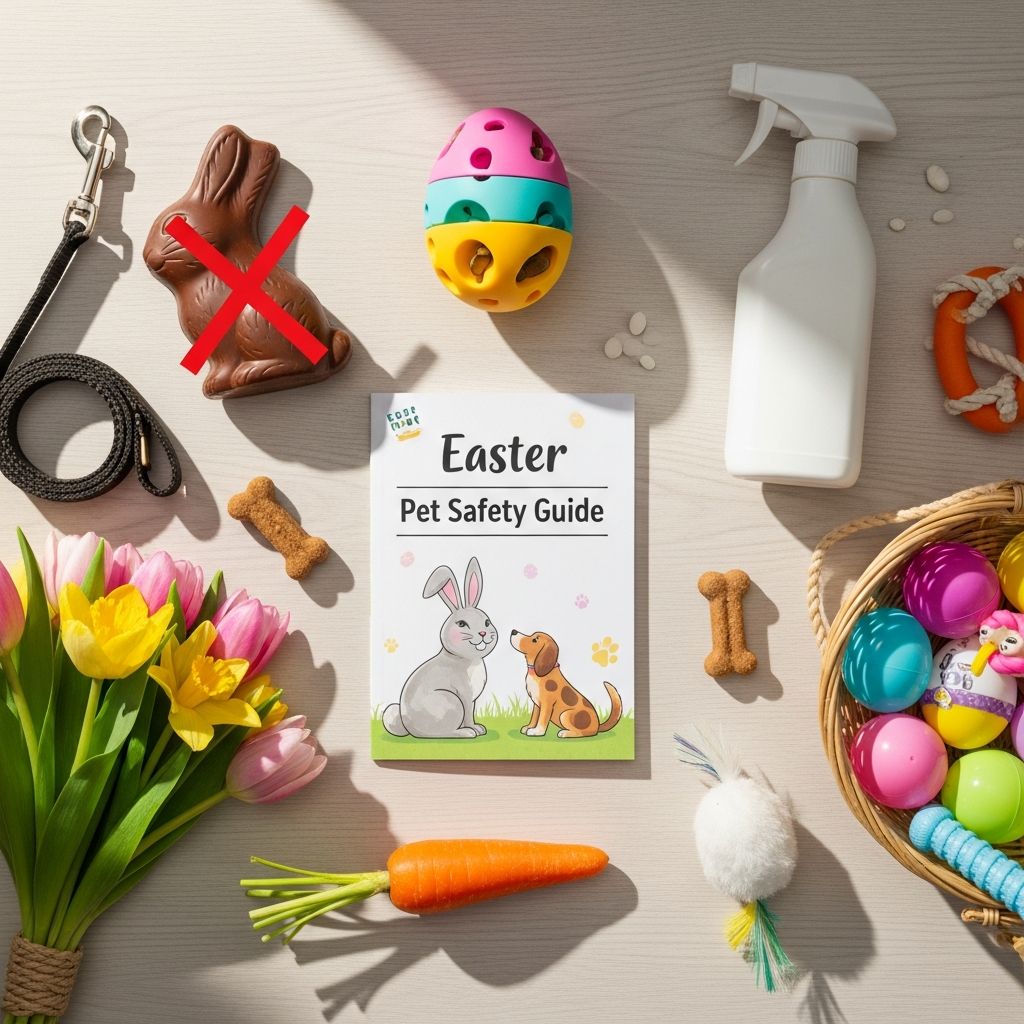
Every year, Easter brings joy with egg hunts, family gatherings, and festive decorations, but it also introduces unique risks for cats and dogs. Common household items like chocolate treats, spring flowers, and plastic fillers can lead to serious health issues if ingested. This guide outlines the primary threats and offers practical steps to safeguard your pets during the season.
Understanding Seasonal Pet Risks
Holidays amplify exposure to toxins because homes fill with new items that attract curious pets. Dogs often scavenge food scraps, while cats may nibble on plants or play with strings. Awareness of these behaviors helps prevent accidents. Veterinary centers report spikes in calls around Easter for issues like gastrointestinal blockages and poisoning cases.
Toxic Treats to Avoid
Easter baskets overflow with candies that spell trouble for pets. Chocolate tops the list due to theobromine, a stimulant dogs and cats metabolize poorly.
- Chocolate varieties: Dark and baking types pose the highest risk, causing vomiting, rapid heart rate, tremors, and seizures. Even milk chocolate can trigger pancreatitis or hyperactivity.
- Other candies: Sugar-free options with xylitol lead to hypoglycemia and liver failure. Wrappers may cause obstructions if swallowed.
- Baked goods: Hot cross buns contain raisins, sultanas, or currants, linked to kidney failure in dogs. Recent data shows raisin cases surged 117% over chocolate during Easter periods.
Store all confections in elevated, secure spots. Educate children on the dangers, as they might share unwittingly.
Harmful Plants and Flowers
Spring blooms symbolize renewal but harbor toxins. Lilies, especially Easter varieties, are catastrophic for cats.
| Plant | Risk to Cats | Risk to Dogs | Symptoms |
|---|---|---|---|
| Easter Lily (Lilium sp.) | Acute kidney failure from any part, including pollen or vase water | Gastrointestinal upset | Vomiting, lethargy, kidney damage |
| Daylily (Hemerocallis sp.) | Same as Easter lily | Mild upset | Similar to above |
| Tulips, Daffodils | Moderate toxicity | Vomiting, drooling | Abdominal pain, cardiac issues |
Opt for pet-safe alternatives like fake lilies or roses. If exposure occurs, rinse the pet’s mouth and seek immediate veterinary care, as kidney failure can onset within hours.
Decorative Dangers in Disguise
Bright Easter setups tempt playful pets. Plastic grass and eggs mimic toys but lead to emergencies.
- Plastic grass: Indigestible, it balls up in intestines, causing blockages. Watch for vomiting, diarrhea, pain, or lethargy. Cats face higher injury risk.
- Hollow eggs and toys: Swallowed pieces create obstructions requiring surgery.
- Strings and ribbons: Cats chew them, risking linear foreign bodies that saw through intestines.
Swap plastic for paper shreds, which pass naturally if nibbled. Supervise hunts and clean up promptly.
Table and Meal Hazards
Festive feasts feature rich foods pets crave but can’t handle.
- Fatty meats: Ham or lamb scraps provoke pancreatitis—painful inflammation with vomiting and dehydration.
- Onions and garlic: In sides or gravies, they damage red blood cells, causing anemia.
- Bones: Cooked ones splinter, leading to choking or perforations.
Feed regular meals only. Designate a quiet feeding area away from the table. Politely remind guests: no sharing.
Outdoor and Yard Threats
Easter weekend sparks gardening, introducing chemicals and bulbs.
- Fertilizers and herbicides: Skin absorption or ingestion causes burns, seizures, or organ damage. Apply when pets are indoors, then water thoroughly.
- Spring bulbs: Hyacinths and crocuses underground are toxic if dug up.
Store products locked away. Walk dogs on leashes during yard work.
Stress and Behavioral Concerns
Company and noises unsettle sensitive pets. Signs include hiding, aggression, or refusal to eat.
- Provide quiet retreats with familiar bedding.
- Maintain routines for meals and play.
- Consider calming aids like pheromone diffusers, vet-approved.
Extra supervision prevents stress-induced mischief like counter surfing.
Emergency Response Protocols
Act fast if ingestion happens. Symptoms vary: vomiting, diarrhea, tremors, weakness.
- Don’t induce vomiting unless vet instructs—risks aspiration.
- Call your veterinarian or ASPCA Poison Control at (888) 426-4435.
- Note what, when, and how much was consumed.
- Bring packaging or samples.
For lilies in cats, IV fluids within hours can save lives.
Pet-Friendly Easter Celebrations
Make holidays inclusive safely.
- DIY treats: Bake plain carrot biscuits or freeze yogurt licks (xylitol-free).
- Toys: Stuff eggs with kibble for hunts.
- Decor: Use wool balls or fabric shreds.
Plan pet-free zones for guests if needed.
Frequently Asked Questions
Is white chocolate safe for dogs?
No, though low in theobromine, it often has xylitol or high fat, risking pancreatitis or toxicity.
What if my cat licks lily pollen?
Rush to a vet—even trace amounts cause kidney failure. Wash pollen off immediately.
Can small chocolate amounts harm pets?
Yes, dependent on pet size. Puppies and small breeds are vulnerable to tiny doses.
Are fake plants okay?
Yes, artificial lilies pose no toxicity risk.
How to handle plastic grass ingestion?
Monitor for blockages; surgery may be needed if symptoms persist.
Proactive Measures Summary
Scan your home pre-Easter: elevate treats, ban lilies, ditch plastic decor. Routine vet checkups ensure baseline health. Informed pet parents prevent 90% of holiday ER visits.
References
- Beyond the bunny: other Easter hazards to remember! — VCA Animal Hospitals. Accessed 2026. https://vcahospitals.com/resources/lifestyle-cat/hazards-safety/beyond-the-bunny-and-other-easter-hazards-to-remember
- Pet Safety Hazards During Easter — Total Veterinary Care. Accessed 2026. https://www.totalveterinarycare.com/blog/pet-safety-hazards-during-easter/
- Keeping Your Pet Safe This Easter — Medivet Group. Accessed 2026. https://www.medivetgroup.com/pet-care/pet-advice/easter-hazards-for-pets/
- Easter dangers to dogs — The Kennel Club. 2023. https://www.royalkennelclub.com/health-and-dog-care/health-dog-care/health/health-and-care/a-z-of-health-and-care-issues/easter-dangers/
- Top Four Easter Hazards for Pets — ASPCA. Accessed 2026. https://www.aspca.org/news/top-four-easter-hazards-pets
- Top Seven Easter Safety Tips for Pet Owners — MedVet. Accessed 2026. https://www.medvet.com/top-seven-easter-safety-tips-for-pet-owners/
Similar Articles








Read full bio of Sneha Tete


