

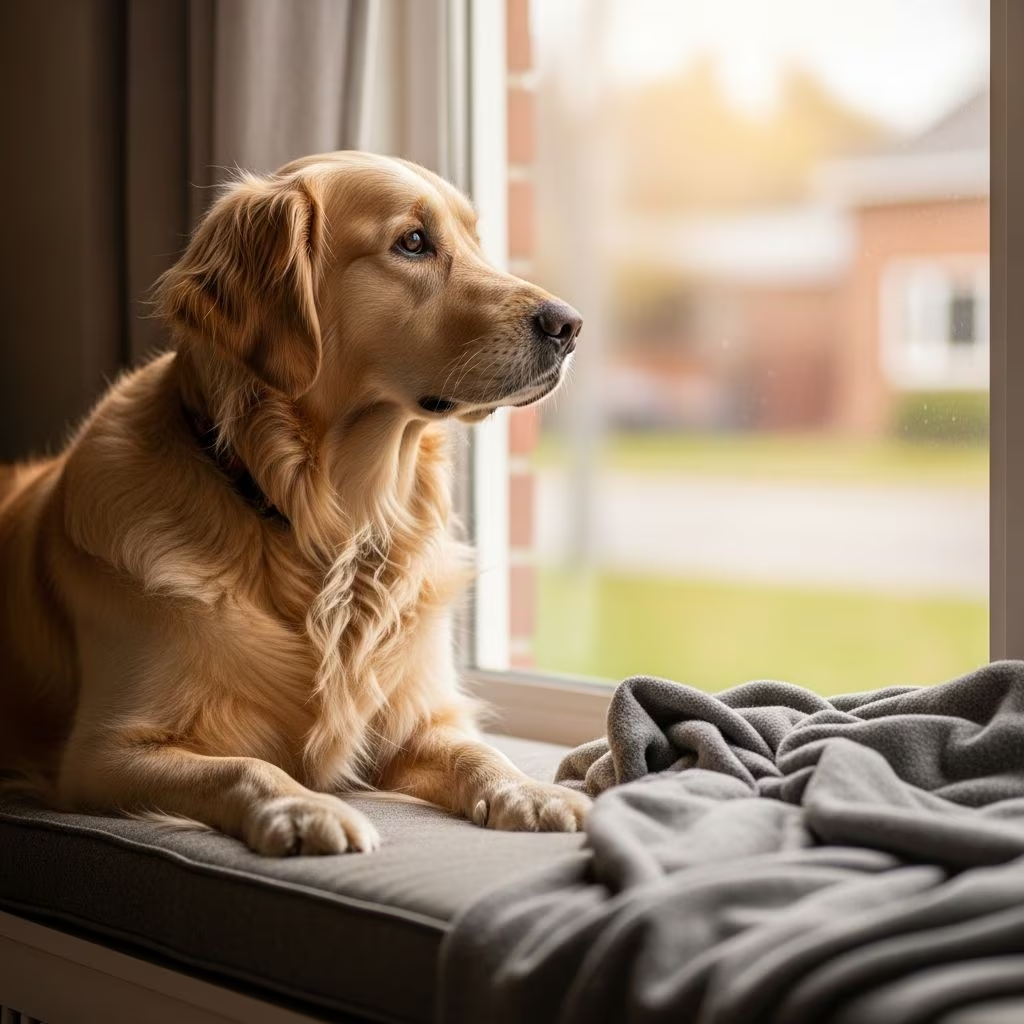
Dogs often form deep bonds with their owners, making time apart challenging. Many experience distress when left alone, showing signs like whining, destructive chewing, or pacing. Addressing this early through structured training helps dogs develop confidence and comfort in solitude. This guide outlines comprehensive approaches drawn from veterinary and behavioral expertise to foster secure, independent pets.
Recognizing Early Signs of Distress
Spotting separation issues begins with observing subtle behaviors. Dogs may follow owners room-to-room, become overly excited upon return, or eliminate indoors inappropriately when alone. These actions stem from fear of abandonment rather than spite. Veterinary sources note that mild cases, termed separation intolerance, involve restlessness without severe panic, while full anxiety leads to intense reactions.
Monitor patterns: Does your dog pant excessively before departures? Excessive barking or howling signals rising stress. Early detection allows intervention before habits solidify, preventing escalation.
Building a Strong Foundation in Puppyhood
Prevention starts young. Puppies need gradual exposure to solitude alongside socialization. Introduce alone time in short bursts during play or naps, rewarding calm behavior. VCA Animal Hospitals recommends crate training with positive associations, ensuring pups learn self-entertainment.
Socialize broadly: Expose young dogs to varied environments, people, and animals positively. This builds resilience. Bond Vet emphasizes fun introductions to sights and sounds, halting if fear appears and retrying slowly. A confident puppy transitions better to adult independence.
Establishing Daily Routines for Predictability
Consistency calms anxious minds. Set fixed schedules for meals, walks, play, and rest. Align alone practice with typical departure times. ASPCA advises predictable patterns so dogs anticipate attention versus solitude.
Ignore attention-seeking during ‘inattention’ periods. Reward settling independently with treats or praise. This reinforces desired behaviors without reinforcing clinginess.
Desensitization: Gradual Alone Time Training
Systematic desensitization changes perceptions of departure. Start with micro-absences: Step out of sight for 1-2 seconds, return before stress builds, then praise calm.
- Begin in low-stress settings, like another room.
- Extend durations incrementally, always sub-threshold—no panic allowed.
- Incorporate pre-departure cues: Jingle keys or grab your bag without leaving, mixing with stays.
PetMD highlights professional guidance for tailored plans, progressing at the dog’s pace. Counterconditioning pairs solitude with positives, like special toys, associating alone time with joy.
Counterconditioning with Positive Associations
Shift emotional responses by linking departures to rewards. DovePress research supports combining desensitization with classical conditioning: Present high-value food during triggers, making anxiety incompatible with eating.
For mild cases, offer puzzle toys pre-departure. Caution for severe anxiety—food cues might heighten distress if uneaten. Vary rewards: Rotate toys to maintain novelty.
Sample Training Progression Table
| Stage | Duration Alone | Action | Reward |
|---|---|---|---|
| 1 | 1-5 seconds | Leave room | Praise on return |
| 2 | 10-30 seconds | Step outside door | Treat if calm |
| 3 | 1-5 minutes | Full departure routine | Interactive toy |
| 4 | 10+ minutes | Real absences | Gradual increase |
This table illustrates a paced buildup, adjustable per dog.
Boosting Physical and Mental Enrichment
Active dogs cope better alone. Morning exercise tires bodies for naps. Bond Vet suggests walks or play before leaving, enhancing emotional health.
Mental stimulation prevents boredom-fueled anxiety. Puzzle feeders dispense kibble slowly; stuff with peanut butter for licking challenges. Scent games or ‘find it’ exercises engage noses. Joybound recommends safe zones with toys and water for daily practice.
- Long-lasting chews or frozen treats.
- Rotate items to sustain interest.
- Avoid over-reliance on departure-only toys.
Neutralizing Departure and Arrival Cues
Dogs read routines like books. Desensitize cues: Practice grabbing keys, shoes on, door opens—without leaving. ASPCA details mixing cues randomly, even sitting back down.
Enter and exit calmly—no big greetings. Ignore until settled, then reward quietude. This prevents reinforcement of drama.
Creating a Comfortable Solo Space
Designate a safe haven: Crate, gated room, or mat with bed, water, toys. VCA stresses rewarding quiet play there. University of Illinois advises scheduled enrichment without constant attention.
Use calming aids sparingly: Pheromone diffusers like Adaptil mimic maternal scents. Train independence by occasionally ignoring nearby dogs.
Addressing Severe Cases Professionally
Persistent issues warrant experts. Veterinary behaviorists craft custom protocols. Medication may bridge training gaps, per VCA. Track progress with videos to refine methods.
Common Pitfalls to Avoid
- Punishing destruction—amplifies fear.
- Rushing training—backtracks gains.
- Comforting during stress—reinforces it.
- Inconsistent routines—confuses dogs.
FAQs
Can all dogs be trained out of separation anxiety?
Most respond well to consistent methods, though severe cases benefit from pros.
How long until improvement?
Weeks to months, depending on case severity and adherence.
Is crating helpful?
Yes, if positively trained; forces bad for anxiety.
What if my dog escapes?
Safety first—secure space, consult vet for underlying issues.
Puppies vs. adults?
Puppies prevent easier; adults need patience but succeed.
Long-Term Independence Strategies
Sustain gains with ongoing practice. Vary alone durations unpredictably. Integrate doggy daycare or walkers for socialization without dependence. Monitor life changes—moves or schedules—as triggers.
Ultimately, empowered dogs view solitude positively, enriching owner-pet bonds. Patience yields relaxed, happy companions.
References
- How to Prevent Separation Anxiety in Dogs — Bond Vet. 2023. https://bondvet.com/blog/how-to-prevent-separation-anxiety-in-dogs
- How To Help a Dog With Separation Anxiety — PetMD. 2024. https://www.petmd.com/dog/training/how-help-dog-separation-anxiety
- Separation Anxiety and How to Prevent It — Joybound People & Pets. 2023. https://joybound.org/blog/separation-anxiety-and-how-to-prevent-it/
- Separation Anxiety in Dogs — VCA Animal Hospitals. 2024. https://vcahospitals.com/know-your-pet/separation-anxiety-in-dogs
- Separation Anxiety — ASPCA. 2023. https://www.aspca.org/pet-care/dog-care/common-dog-behavior-issues/separation-anxiety
- Preventing Separation Anxiety in Puppies — Blue Cross. 2024. https://www.bluecross.org.uk/advice/dog/behaviour-and-training/preventing-separation-anxiety-in-puppies
- Preventing Separation Anxiety — University of Illinois College of Veterinary Medicine. 2021-12-01. https://vetmed.illinois.edu/wp-content/uploads/2021/12/Preventing-Separation-Anxiety-compressed.pdf
- Canine separation anxiety: strategies for treatment and management — Dove Medical Press. 2019. https://www.dovepress.com/canine-separation-anxiety-strategies-for-treatment-and-management-peer-reviewed-fulltext-article-VMRR



