

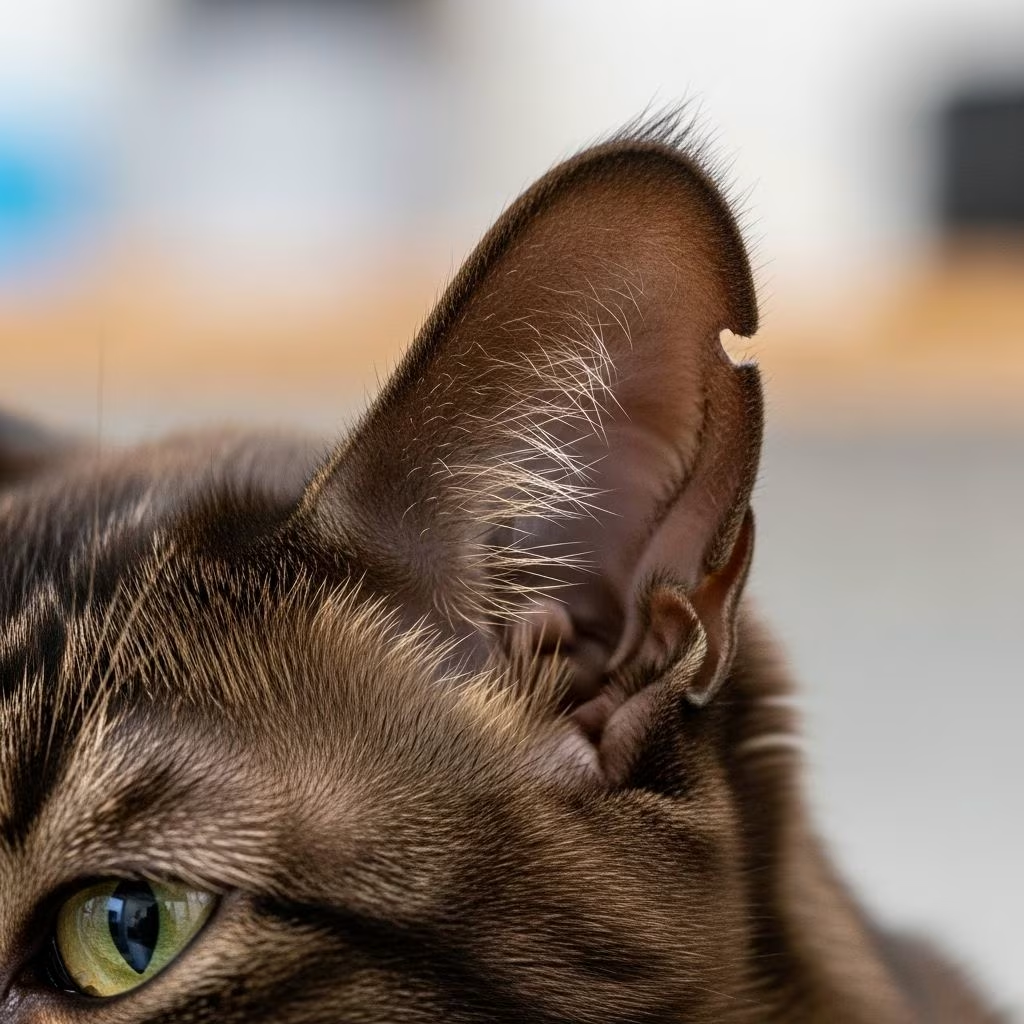
Ear tipping serves as a standard visual marker for cats that have undergone sterilization in trap-neuter-return (TNR) programs, involving the precise removal of a small ear segment while the animal is anesthetized. This method enables quick identification of treated feral cats from afar, preventing redundant captures and surgeries.
The Fundamentals of Ear Tipping
In community cat management, ear tipping entails cutting off about one-quarter of the left ear’s tip—roughly 3/8 inch or 1 cm in adults, scaled down for kittens—establishing a permanent, noticeable sign of surgical alteration. Performed exclusively by trained professionals during spay or neuter operations, it integrates seamlessly into TNR protocols designed to curb overpopulation humanely.
The choice of the left ear maintains uniformity across programs, facilitating instant recognition by caregivers, veterinarians, and authorities. Unlike temporary tags or collars that feral cats often lose, this alteration endures weather, fights, and time, offering reliability without ongoing maintenance.
Why Ear Tipping Matters in Feral Cat Programs
TNR initiatives trap free-roaming cats, sterilize and vaccinate them, then release them to their territories, stabilizing populations without euthanasia. Ear tipping is pivotal here: it spares cats repeated trapping stress, which involves fear, injury risks, and anesthesia exposure.
- Population Control: Sterilized cats cease breeding, gradually reducing colony sizes naturally.
- Resource Efficiency: Avoiding re-trapping cuts costs for clinics and rescuers, extending aid to more animals.
- Caregiver Support: Volunteers spot tipped ears from distances, monitoring health without disturbance.
Microchips, while useful for owned pets, demand scanners post-capture, making them impractical for visual feral identification. Ear tipping bridges this gap effectively.
Step-by-Step: How Ear Tipping is Performed
The procedure occurs immediately post-surgery while the cat remains under anesthesia, ensuring no added pain or awareness. Veterinary teams follow strict steps for safety and precision.
- Position a straight hemostat clamp across the left ear tip, exposing no more than 3/8 inch in adults (less for kittens) to avoid excess tissue loss.
- Sever the tip with a scalpel or electrocautery device, retaining the clamp to staunch blood flow.
- Apply styptic powder or allow coagulation to seal the edge, minimizing bleeding.
- Maintain the clamp until recovery transfer, typically 10 minutes, confirming hemostasis.
Placement precision prevents complications: too high obscures the mark, too low risks cartilage exposure and infection, angled cuts distort recognition. Videos from organizations like International Cat Care demonstrate clean execution with tools like electrocautery for seamless cuts.
| Aspect | Adult Cat | Kitten |
|---|---|---|
| Tip Size Removed | 3/8 inch (1 cm) | Proportionally smaller |
| Ear Side | Left | Left |
| Bleeding Control | Hemostat + styptic | Hemostat + styptic |
| Healing Time | Quick, 1-2 weeks | Quick, 1-2 weeks |
Addressing Welfare Concerns: Is It Painful?
Common misconceptions equate ear tipping to cosmetic dog ear cropping, but key distinctions exist: tipping happens under full anesthesia during essential surgery, not for aesthetics, with minimal tissue removal. There’s scant bleeding, no sutures needed, and pain is negligible as the cat recovers simultaneously from spay/neuter.
The thin ear edge lacks dense nerves, healing rapidly without scarring or infection when done correctly. Post-procedure, cats resume normal behaviors swiftly, with tipped ears blending aesthetically into feral profiles. Major welfare groups, including Alley Cat Allies, endorse it unanimously as humane.
Pros and Cons of Ear Tipping
| Pros | Cons |
|---|---|
| Instant visual ID prevents re-trapping | Minor initial bleeding (controlled) |
| Cost-effective for TNR scaling | Potential misplacement if untrained |
| Endorsed by experts, low pain | Aesthetic change (minimal impact) |
Healing Process and Aftercare
Post-tipping, the site scabs over within days, fully healing in 1-2 weeks without intervention. Caretakers observe for rare swelling or discharge, signaling vet checks, but most cats show no issues. Avoid touching the ear during early recovery to prevent irritation.
Long-term, tipped ears withstand environmental rigors, remaining legible years later, aiding sustained colony management. Some programs tip right ears for females or add notches for vaccinations, but left-tip universality prevails.
Alternatives to Ear Tipping: Do They Measure Up?
Options like microchipping require handling for verification, failing distance ID needs. Collars or tattoos fade or get lost; paint marks wash off. No alternative matches ear tipping’s balance of permanence, visibility, and simplicity.
- Microchips: Scan-dependent, invisible externally.
- Notches/Tattoos: Less standardized, harder to spot.
- Digital Apps: Need tech access, impractical for ferals.
Expert Consensus and Global Adoption
Organizations worldwide, from Alley Cat Allies to Ireland’s TNR Manual, affirm ear tipping’s necessity. It’s integral to successful programs reducing kitten births by 66% in monitored colonies. Veterinary bodies prioritize it in feral guidelines, emphasizing trained execution.
FAQs on Cat Ear Tipping
What does a tipped ear indicate?
It signals the cat is spayed/neutered, often vaccinated, via TNR.
Which ear is tipped?
Standard is the left ear for uniformity.
Does it hurt the cat?
No, done under anesthesia with quick healing.
Can any cat be ear tipped?
Primarily community/feral cats in TNR; not pets.
Is ear tipping legal everywhere?
Yes, as standard humane practice in TNR.
Getting Involved in TNR
Communities thrive with local TNR: trap humanely, transport to certified clinics, support recovery, and monitor. Partner with shelters offering low-cost services. Ear-tipped cats become ambassadors for sustainable feral management.
By embracing ear tipping, we prioritize cat welfare, curbing suffering from overbreeding while honoring their wild lives.
References
- Eartipping Factsheet – Ireland’s TNR Manual — TNRIreland.ie. Accessed 2026. https://tnrireland.ie/tnr/how-to/for-veterinary-clinics/vet-pack/eartipping-factsheet/
- Community Cat TNR Protocol: Eartipping — Alley Cat Allies. Accessed 2026. https://www.alleycat.org/resources/feral-cat-protocol-eartipping/
- Trap neuter return (TNR) – 7. Ear tipping — International Cat Care (iCatCare). 2015-08-24. https://www.youtube.com/watch?v=g_9iL8q-DX0
- About ear tipping — Spay/Neuter Your Pet (SNYP). Accessed 2026. https://spayneuter.org/wordpress/community-cats-old/about-ear-tipping/
- Ear-Tipping Cats: What It Is and Why It’s Done — Best Friends Animal Society. Accessed 2026. https://bestfriends.org/pet-care-resources/ear-tipping-cats-what-it-and-why-its-done
- The Importance of Ear Tipping — Petfix Hawaii. Accessed 2026. https://www.petfixbigisland.org/general-9



