

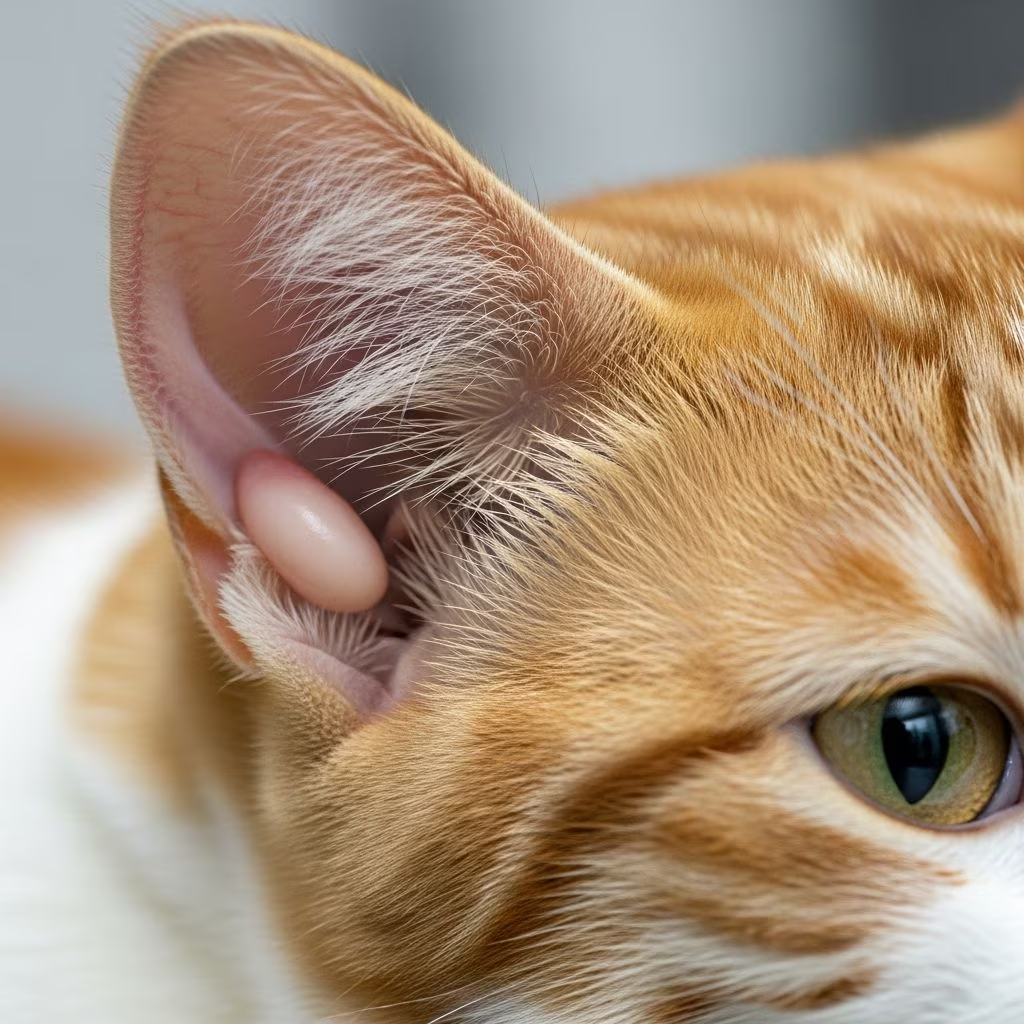
Ear polyps in cats are benign growths of inflammatory tissue that commonly develop in the middle ear or nasopharynx, primarily affecting young cats under two years old. These polyps cause significant discomfort through symptoms like head shaking, ear discharge, and balance issues, requiring prompt veterinary diagnosis and treatment including medications, traction removal, or surgery to prevent complications and recurrence.
What Are Ear Polyps in Cats?
Ear polyps, also known as inflammatory or nasopharyngeal polyps, are non-cancerous, fleshy growths originating from the mucous membranes lining the ear canal, middle ear (bulla), or Eustachian tube extending to the throat. They consist of a stalk attached to the middle ear and a bulbous head that protrudes into visible areas, leading to chronic inflammation and secondary infections.
These growths are most prevalent in cats aged 1-5 years, with no strong breed predisposition though Siamese and Persians may show slightly higher incidence. Unlike malignant tumors, polyps respond well to removal but have a 15-50% recurrence rate if the base isn’t fully excised.
- Benign nature: Not cancerous, but can mimic tumors via imaging.
- Location specifics: 80% originate in the middle ear bulla; others in nasopharynx.
- Composition: Fibrovascular tissue with inflammatory cells, covered by epithelium.
Symptoms of Ear Polyps in Cats
Cats with ear polyps exhibit progressive signs stemming from ear canal obstruction, middle ear infection, and potential neurological effects. Early detection through owner observation is crucial as symptoms worsen over weeks to months.
| Symptom | Description | Severity Indicator |
|---|---|---|
| Head shaking/scratching | Persistent shaking or pawing at affected ear | Mild to moderate; constant in advanced cases |
| Ear discharge | Brown/yellow exudate, often foul-smelling | Moderate; indicates secondary infection |
| Head tilt | Tilt toward affected side, worsens with movement | Moderate to severe; vestibular involvement |
| Balance issues | Ataxia, falling, circling | Severe; middle ear extension |
| Respiratory signs | Coughing, gagging, nasal discharge (nasopharyngeal polyps) | Severe; throat obstruction |
| Pain/sensitivity | Hissing, aggression when ears touched | Variable; inflammation-driven |
Untreated polyps lead to chronic otitis media, eardrum rupture, Horner syndrome (drooped eyelid, constricted pupil), or nystagmus (eye flicking). Nasopharyngeal polyps uniquely cause stertorous breathing or dysphagia.
Causes of Ear Polyps in Cats
The exact etiology remains idiopathic, but chronic inflammation plays a central role. Proposed mechanisms include:
- Chronic otitis media: Bacterial/fungal infections trigger polyp formation.
- Viral predisposition: Early upper respiratory infections (herpesvirus, calicivirus) may initiate.
- Immune dysregulation: Overactive response to antigens in middle ear.
- Anatomical factors: Narrow feline Eustachian tube facilitates spread from nasopharynx.
No genetic link confirmed, though young age suggests developmental immune factors. Allergies exacerbate but rarely cause primary polyps.
How Are Ear Polyps in Cats Diagnosed?
Veterinary diagnosis combines history, otoscopy, imaging, and cytology. Steps include:
- Physical/otoscopic exam: Visualizes pink fleshy mass in canal or tympanum.
- Video otoscopy: Under sedation, reveals polyp stalk and bulla involvement.
- Imaging: CT/MRI confirms middle ear origin (gold standard); radiographs show bulla thickening.
- Cytology/culture: Discharge analysis rules out neoplasia, identifies infections.
- Biopsy: Rarely needed; confirms inflammatory tissue.
Differential diagnoses: neoplasia (squamous cell carcinoma), granulomas, foreign bodies. Advanced imaging differentiates polyp from tumor.
Treatment for Ear Polyps in Cats
Medical Management
Medications control symptoms and secondary infections but rarely resolve polyps alone.
- Anti-inflammatories: Prednisolone (1-2 mg/kg/day) reduces swelling.
- Antibiotics: Clavamox, marbofloxacin (4-8 weeks based on culture).
- Ear drops: Steroid-antibiotic combos (e.g., Mometamax, Otomax); 4-8 drops daily post-cleaning.
- Antifungals: Clotrimazole, fluconazole for resistant cases.
- Pain relief: Buprenorphine, gabapentin.
- Ear cleaners: TrizEDTA, Epi-Otic (2-3x/week).
Surgical Removal
Definitive treatment via excision.
| Method | Description | Recurrence Rate | Pros/Cons |
|---|---|---|---|
| Traction avulsion | Gentle pulling via otoscopy/forceps under anesthesia | 15-50% | Minimally invasive; high recurrence if stalk remains |
| Ventral bulla osteotomy (VBO) | Incision into tympanic bulla for complete removal | <10% | Gold standard; major surgery, 2-4 week recovery |
| Lateral ear canal resection | Partial canal removal for access | Variable | For severe cases; alters ear anatomy |
Post-op: Steroids/antibiotics 1 month reduce regrowth (Colorado State study).
Recovery and Aftercare for Cats with Ear Polyps
Expect 7-14 days cone collar use, e-collar. Monitor for swelling, discharge, anorexia.
- Cleaning: Daily initially, then weekly.
- Medications: Complete full course.
- Follow-up: Cytology at 2 weeks, CT at 3 months for high-risk.
- Activity: Restrict jumping 2 weeks post-VBO.
Success: 90% symptom resolution; appetite returns in 48 hours.
Preventing Ear Polyps in Cats
No guaranteed prevention, but strategies minimize risk:
- Early ear infection treatment.
- Bi-annual vet ear exams for at-risk cats.
- Allergy management (hypoallergenic diet).
- Vaccination against respiratory viruses.
- Weekly ear cleaning if prone.
Prognosis for Cats with Ear Polyps
Excellent with treatment: >90% resolve symptoms. Recurrence managed with repeat VBO. Untreated leads to permanent vestibular damage.
Frequently Asked Questions (FAQs)
Q: Can ear polyps in cats be cancerous?
A: No, inflammatory ear polyps are benign. Biopsy differentiates from rare malignant tumors.
Q: How much does ear polyp surgery cost for cats?
A: Traction: $500-1500; VBO: $2000-5000 depending on location/specialist.
Q: Do ear polyps cause permanent head tilt in cats?
A: Most resolve post-treatment; persistent tilt indicates nerve damage.
Q: Can medications alone cure ear polyps?
A: Rarely; they manage symptoms but surgical removal is needed for cure.
Q: At what age do cats get ear polyps?
A: Primarily kittens/young adults under 2 years.
References
- Inflammatory Polyps in Cats — Merck Veterinary Manual. 2023. https://www.merckvetmanual.com/ear-disorders/tumors-of-the-ear-in-small-animals/inflammatory-polyps-in-cats
- Nasopharyngeal Polyps in Cats — VCA Animal Hospitals. 2024. https://vcahospitals.com/know-your-pet/nasopharyngeal-polyps-in-cats
- Inflammatory Ear Polyps in Cats — BluePearl Pet Hospital. 2023. https://bluepearlvet.com/medical-articles-for-pet-owners/inflammatory-ear-polyps-in-cats/
- The Complete Guide to Inflammatory Polyps in Pets — Your Vet Wants You To Know (citing Colorado State University). 2024. https://yourvetwantsyoutoknow.com/polyps/
- Feline Inflammatory Polyps — Animal Surgical Center of Michigan. 2023. https://www.animalsurgicalcenter.com/nasopharyngeal-polyps–feline-inflammatory-polyps
- Nasopharyngeal Polyps — Cornell University College of Veterinary Medicine. 2023. https://www.vet.cornell.edu/departments-centers-and-institutes/cornell-feline-health-center/health-information/feline-health-topics/nasopharyngeal-polyps
- Ear Polyps in Cats — The Pet Vet. 2024. https://thepetvet.com/ear-polyps-in-cats/



