

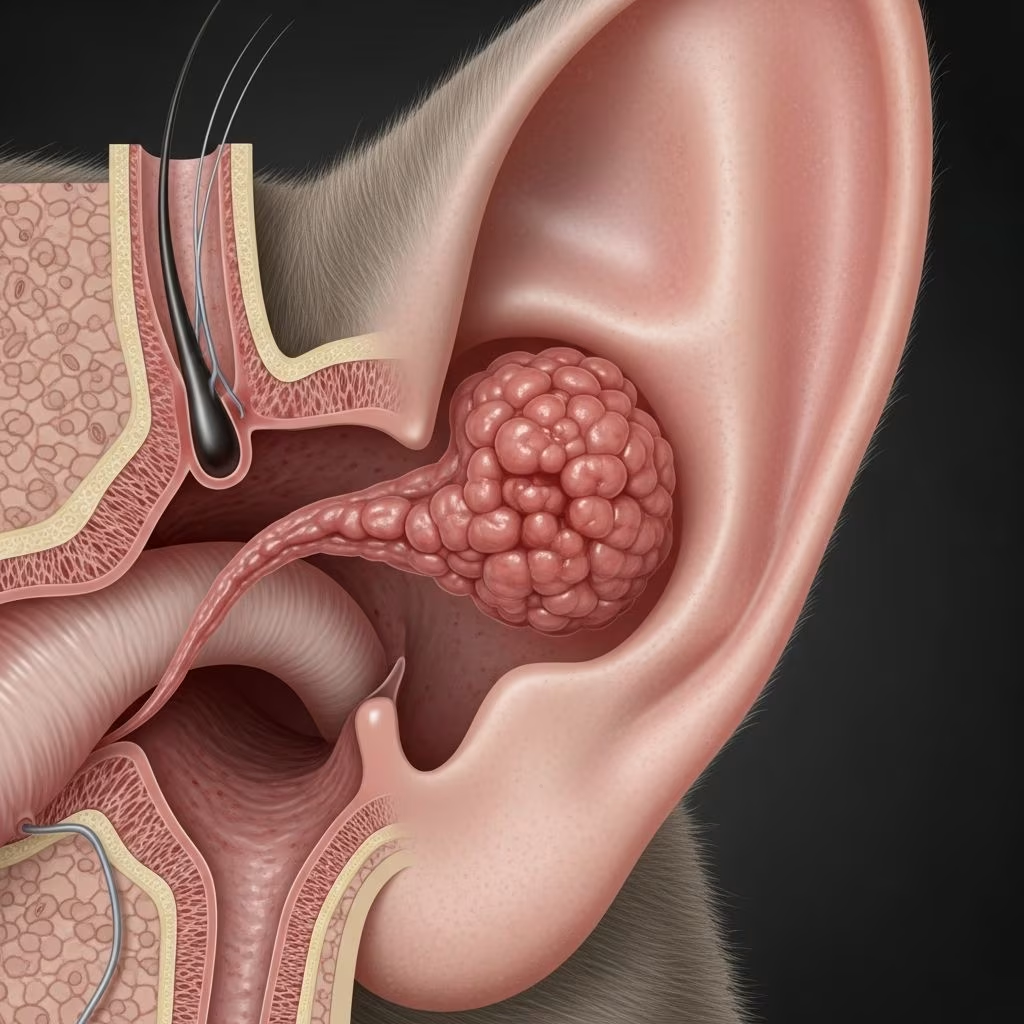
Ear canal tumors represent a significant health concern for cats, particularly as they age, manifesting through persistent ear issues that mimic common infections but require specialized intervention. These growths arise from various tissues within the ear structure and demand prompt veterinary evaluation to distinguish them from benign conditions.
Understanding the Anatomy of the Feline Ear
The feline ear comprises three main sections: the external ear canal, the middle ear with its bulla, and the inner ear responsible for balance and hearing. Tumors most frequently originate in the external canal’s lining, including skin, ceruminous glands that produce wax, and supportive tissues. This region’s narrow, L-shaped anatomy predisposes it to blockages and secondary infections when masses develop.
Chronic irritation in this confined space can transform normal cells into abnormal proliferations, highlighting the ear’s vulnerability to neoplastic changes.
Primary Types of Ear Canal Neoplasms
Cats develop several distinct tumor varieties, with malignancy more prevalent than in dogs. Key categories include:
- Ceruminous Gland Tumors: These arise from wax-producing glands and appear as firm, pinkish nodules, often ulcerated. Benign adenomas occur, but adenocarcinomas dominate in older cats, exhibiting aggressive local invasion.
- Squamous Cell Carcinomas (SCC): Comprising aggressive epithelial cancers, SCC frequently invades the middle and inner ear, leading to neurological complications. Studies confirm its prevalence in feline aural neoplasia.
- Nasopharyngeal Polyps: Benign inflammatory masses linked to infections, common in younger cats, extending from the middle ear into the canal or nasopharynx.
- Other Malignancies: Rare instances involve lymphoma, fibrosarcomas, or basal cell tumors, typically affecting deeper ear structures.
| Tumor Type | Benign/Malignant | Common Location | Prevalence in Cats |
|---|---|---|---|
| Ceruminous Gland | Mostly Malignant | External Canal | High |
| Squamous Cell Carcinoma | Malignant | External to Inner Ear | High |
| Nasopharyngeal Polyps | Benign | Middle Ear/Extension | Younger Cats |
| Lymphoma/Fibrosarcoma | Malignant | Middle/Inner Ear | Rare |
Risk Factors and Potential Causes
Although precise etiologies remain elusive, multiple factors elevate susceptibility. Middle-aged to senior cats over 11 years face heightened risks, with chronic otitis externa or media serving as a precursor through persistent inflammation that fosters cellular mutations. Bacterial overgrowth from upper respiratory infections may exacerbate glandular hyperactivity, promoting oncogenesis.
Additional contributors encompass:
- Prolonged sun exposure, particularly for light-coated cats, increasing SCC incidence on ear pinnae and canals.
- Genetic predispositions in certain breeds, though not firmly established in felines unlike canines.
- Historical polyps transforming into neoplastic growths over time.
Environmental carcinogens and gender show inconclusive links, but vigilance in infection-prone cats is paramount.
Recognizing Clinical Manifestations
Early detection hinges on owners noting subtle shifts. Initial signs often resemble infections: unilateral dark, waxy, purulent, or sanguineous discharge with a malodorous quality. Affected cats exhibit vigorous head shaking, intense scratching, and facial swelling beneath the ear.
Progression yields more severe indicators:
- Visible canal protrusions or abscesses.
- Auditory deficits or unilateral deafness.
- Neurological disturbances like head tilt, ataxia, nystagmus, or circling if middle/inner ear involvement occurs.
- Orofacial pain, drooling, or eating difficulties from temporomandibular extension.
Unresponsive unilateral otorrhea mandates tumor investigation, as benign treatments fail.
Diagnostic Approaches
Veterinarians employ a multimodal strategy. Otoscopic examination reveals masses, though stenosis may necessitate video otoscopy. Cytological scrapings offer preliminary insights, but biopsy via incision or aspiration confirms histopathology.
Advanced imaging includes:
- CT or MRI for delineating tumor extent, bulla involvement, and lymph node metastasis.
- Radiography for initial middle ear assessment.
- Complete blood counts and chemistries to gauge overall health.
Staging protocols mirror human oncology, integrating TNM classifications for prognostic accuracy.
Treatment Modalities
Management prioritizes tumor excision, pain mitigation, and infection control, tailored to type, stage, and patient status.
Surgical Interventions:
- Ventral bulla osteotomy (VBO) for middle ear access, excising polyps or contained masses.
- Total ear canal ablation (TECA) with bulla osteotomy (TECA-BO) for extensive external/middle canal tumors, preserving hearing if inner ear spares.
Adjunctive Therapies:
- Radiation for inoperable or residual disease, yielding median survivals of 12-18 months in SCC cases.
- Chemotherapy (e.g., piroxicam, carboplatin) for metastatic spread, though response rates vary.
- Cryotherapy or laser ablation for superficial lesions.
Polyps in juveniles respond excellently to traction avulsion post-infection clearance.
Prognosis and Long-Term Outlook
Outcomes diverge by tumor nature. Benign polyps boast near-100% resolution post-surgery, while malignant ceruminous adenocarcinomas or SCC confer guarded prognoses. Local recurrence post-TECA-BO occurs in 20-30%, with metastasis to nodes or lungs reducing survival to under a year without multimodal care.
Early intervention markedly enhances quality of life, emphasizing proactive monitoring.
Preventive Strategies and Home Care
Mitigate risks through routine ear inspections, prompt infection treatment, and sun protection via hats or shade for outdoor cats. Maintain hygiene sans over-cleaning, and schedule senior wellness exams biannually.
Post-treatment, monitor for recurrence via owner checks and vet follow-ups including cytology.
Frequently Asked Questions (FAQs)
Can ear tumors in cats be benign?
Yes, nasopharyngeal polyps and some ceruminous adenomas are benign, especially in younger cats, contrasting malignant forms prevalent in seniors.
Is surgery the only option for feline ear cancer?
No, radiation and chemotherapy supplement surgery, particularly for advanced SCC, though surgery remains curative cornerstone for localized disease.
How quickly do ear canal tumors progress?
Variable; benign growths slow, but malignancies like SCC invade rapidly, causing neuro signs within months.
Do all chronic ear infections indicate tumors?
No, but unilateral, treatment-resistant cases warrant imaging and biopsy to exclude neoplasia.
What is the survival rate post-TECA surgery?
Excellent for benign tumors (near 100%); 50-70% one-year survival for malignancies with clean margins.
References
- Tumors of the Ear Canal in Cats — Merck Veterinary Manual. 2023. https://www.merckvetmanual.com/cat-owners/ear-disorders-of-cats/tumors-of-the-ear-canal-in-cats
- Ear Canal Tumors in Cats: Types, Causes, Diagnosis, and Treatment — PetCareRx. 2024. https://www.petcarerx.com/article/ear-canal-tumors-in-cats-types-causes-diagnosis-and-treatment/6943
- Ear Canal Tumors in Dogs & Cats — Canton Animal Hospital. 2023. https://cantonvets.com/resources/ear-canal-tumors/
- Ear Canal Tumors in Cats — Vetster. 2024. https://vetster.com/en/conditions/cat/ear-canal-tumors
- Clinical presentation and outcome in cats with aural squamous cell carcinoma — PMC (PubMed Central). 2024-01-15. https://pmc.ncbi.nlm.nih.gov/articles/PMC10812305/



