

Ear Canal Tumors in Dogs and Cats: A Comprehensive Guide
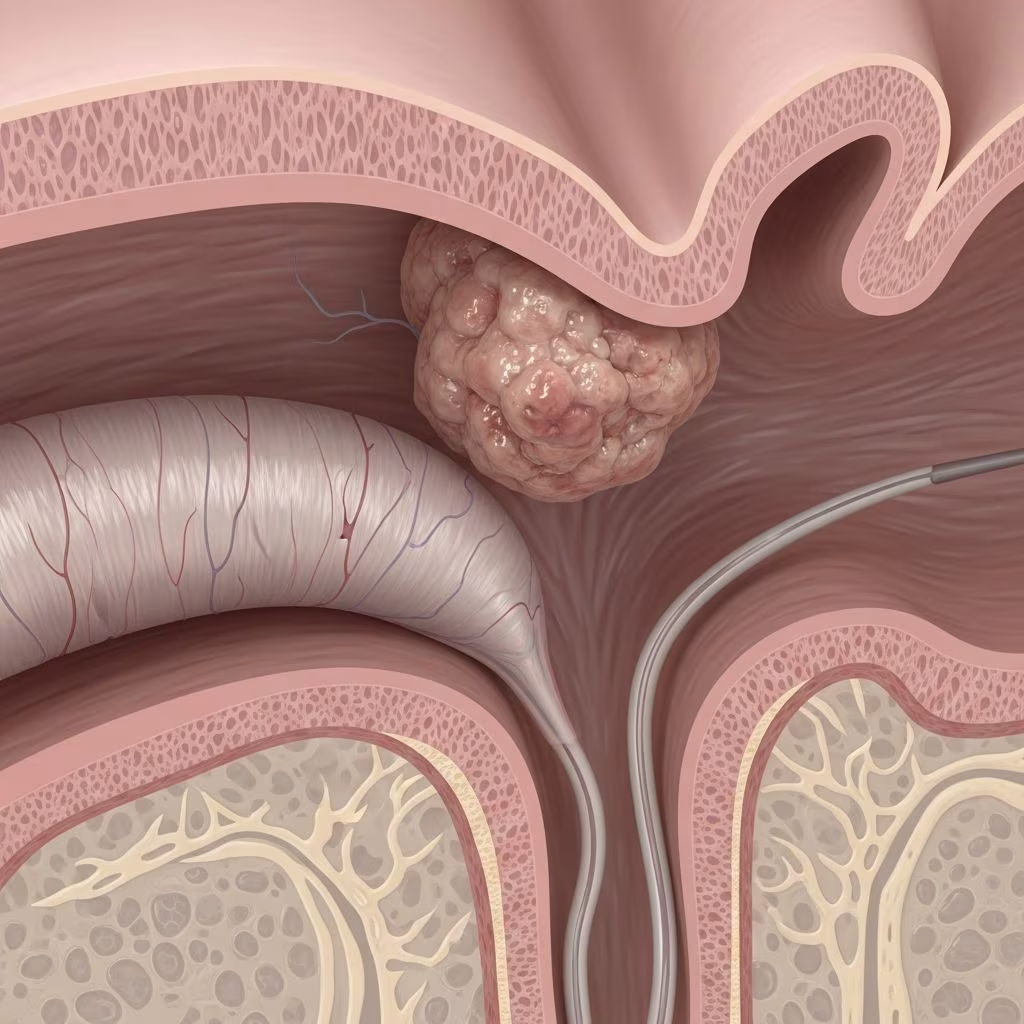
Ear canal tumors are abnormal growths that develop within the external ear canal of dogs and cats. These growths can range from benign, slow-growing masses to aggressive malignant tumors that require immediate veterinary intervention. Understanding the nature of these tumors, their symptoms, and available treatment options is essential for pet owners who want to protect their companions’ health and quality of life.
Ear canal tumors arise from the structures that line and support the ear canal, including the specialized ceruminous glands (also called apocrine glands) that produce earwax, the outer layer of skin, and the surrounding connective tissues. While these tumors are relatively uncommon compared to skin tumors on other parts of the body, they require prompt diagnosis and treatment to prevent complications and ensure the best possible outcomes.
Types of Ear Canal Tumors
The types of ear canal tumors vary significantly between dogs and cats, with different species showing predisposition to different tumor types. Understanding these differences helps veterinarians and pet owners recognize potential health risks specific to their pets.
Common Tumors in Dogs
In dogs, ear canal tumors can be classified by their location and tissue origin. The external ear canal most frequently develops ceruminous gland adenomas (benign tumors) and adenocarcinomas (malignant tumors), which are the predominant tumor types in this species. Other tumors occasionally found in dogs’ ear canals include inflammatory polyps, papillomas, sebaceous gland adenomas, histiocytomas, and mast cell tumors. Additionally, lymphoma, fibrosarcoma, and squamous cell carcinomas are sometimes observed in the middle or inner ear structures of dogs.
Among these tumors, ceruminous gland adenomas are generally benign and grow slowly, while ceruminous gland adenocarcinomas are malignant but have a somewhat less aggressive behavior in dogs compared to cats. Notably, less than 10% of malignant ear canal tumors in dogs spread beyond the local area, making them primarily a concern for local invasion rather than distant metastasis.
Common Tumors in Cats
Cats display a different spectrum of ear canal tumors compared to dogs. The most common external ear canal masses in cats include nasopharyngeal polyps, squamous cell carcinomas, and ceruminous gland adenocarcinomas. Young cats, typically between 3 months and 5 years old, are more likely to develop inflammatory polyps, which are benign growths. In contrast, middle-aged and older cats are predisposed to both benign and malignant ear canal tumors, with malignant tumors being significantly more common in this age group than in dogs.
The middle and inner ear of cats can also develop lymphoma, fibrosarcoma, and squamous cell carcinomas, though these are less frequently encountered than tumors of the external ear canal. Notably, squamous cell carcinoma and ceruminous gland adenocarcinoma represent the most locally aggressive malignant tumors in cats and carry a poorer prognosis.
Risk Factors and Predisposing Conditions
Several factors increase the likelihood that a dog or cat will develop ear canal tumors. Chronic ear disease is one of the most significant risk factors contributing to tumor development in both species.
Chronic Otitis and Ear Infections
There is a well-established increased risk for tumors in animals with a history of chronic otitis, or chronic ear infections. The mechanism behind this association involves the tumor’s obstruction of the ear canal, which decreases the lumen diameter and impairs drainage of inflammatory exudates and volatile fatty acids. When chronic infection and inflammation persist unresolved, neoplastic changes continue to develop over time, eventually leading to tumor formation. This cycle underscores the importance of managing ear infections promptly and effectively to prevent long-term complications.
Breed Predisposition
American Cocker Spaniels have a particularly increased risk for both benign and malignant ear tumors compared to other dog breeds. This predisposition is likely attributable to the breed’s susceptibility to chronic ear disease, ceruminous gland hyperplasia, and inflammatory conditions that accompany otitis in this breed. Recognizing this breed-specific risk allows veterinarians to recommend more frequent monitoring and preventive care strategies for Cocker Spaniels.
Age-Related Risk
Age plays an important role in tumor development. Middle-aged dogs and cats are more likely to develop benign otic tumors, whereas animals older than 11 years are more likely to develop malignant tumors. The higher incidence of malignancy in older animals appears to be attributable more to the chronicity of ear disease rather than age alone. This distinction is important because it suggests that managing chronic ear conditions throughout a pet’s life may reduce the risk of malignant tumor development in senior years.
Clinical Signs and Symptoms
Early recognition of ear canal tumor symptoms is crucial for prompt diagnosis and treatment. Pet owners should be alert to any persistent ear problems, particularly when symptoms affect only one ear or fail to respond to standard ear infection treatments.
External Ear Symptoms
The most common signs of ear canal tumors include:
- Ear discharge that is waxy, pus-filled, or bloody, typically in one ear
- Foul or unpleasant odor from the affected ear
- Persistent head shaking or head scratching
- Visible swelling around the ear canal or ear flap
- Draining abscesses in the region below the affected ear
- Pink, white, or purple masses visible in the ear canal
These symptoms often resemble those of chronic ear infections, which is why some ear canal tumors are initially misdiagnosed. The key distinguishing feature is that symptoms typically affect only one ear and do not respond to standard infection treatments.
Neurological Signs
When tumors involve the middle or inner ear, more serious neurological symptoms may develop. These include loss of balance or coordination, head tilt, deafness, and other neurological signs indicating involvement of the vestibular system or cranial nerves. The presence of these symptoms at the time of diagnosis indicates a poorer prognosis, particularly in cats.
Diagnosis and Diagnostic Procedures
Accurate diagnosis of ear canal tumors requires a combination of physical examination and advanced imaging techniques. Veterinarians must distinguish between tumors and chronic ear infections to ensure appropriate treatment.
Initial Examination
Diagnosis begins with examination of the vertical and horizontal ear canals using an otoscope, an instrument that allows the veterinarian to visualize deep into the ear canal. This examination is typically performed while the pet is sedated or anesthetized to allow thorough visualization. In some cases, pus-filled discharge may need to be gently suctioned from the ear canal to visualize the underlying mass. The veterinarian will note the appearance, location, and characteristics of any mass observed.
Biopsy and Tissue Analysis
A biopsy is essential for definitive diagnosis, allowing the veterinarian to determine whether the tumor is benign or malignant. Tissue samples can be obtained during the initial examination or via surgery, and histopathology will identify the specific tumor type and grade. This information is critical for determining the most appropriate treatment approach and providing accurate prognosis information to pet owners.
Advanced Imaging
Additional diagnostic tests are typically performed in patients with malignant tumors to assess the extent of disease and determine if the cancer has metastasized. These may include computed tomography (CT) or magnetic resonance imaging (MRI), which provide detailed visualization of the ear structures and surrounding tissues. Chest X-rays are also performed to screen for pulmonary metastasis, and lymph node aspirates or biopsies may be recommended to assess for regional lymph node involvement.
Treatment Options
The treatment approach for ear canal tumors depends on several factors, including whether the tumor is benign or malignant, the extent of involvement, and the pet’s overall health status. Multiple treatment modalities may be combined for optimal outcomes.
Surgical Excision
Surgical removal is the treatment of choice for ear canal tumors and can be curative, particularly for benign tumors. For benign tumors, surgical excision can often be accomplished by removing part of the ear canal. Less invasive surgical techniques, including laser surgery and video otoscopy (using a special camera to visualize the ear canal), have also been successfully used and are helpful in most cases unless there is involvement of the bone structures behind the ear.
For malignant ear canal tumors, more extensive surgical intervention is required. Completely opening the ear canal and surgically dividing the bone in the middle ear may be necessary to achieve complete tumor removal. Aggressive surgical excision is the most effective approach for managing malignant tumors, though the goal of complete removal is not always achievable.
Radiation Therapy
Radiation therapy may be recommended when malignant tumors cannot be completely removed surgically or when there is evidence of incomplete excision. This modality can slow tumor growth and provide pain relief. When used for incomplete malignant earwax gland tumors, radiation therapy has demonstrated a 56% one-year survival rate. Radiation may also be considered for curative intent when surgical excision is incomplete.
Chemotherapy
Chemotherapy may be recommended if the tumor appears to be aggressive based on biopsy findings or if there is evidence of metastasis. While less commonly used than surgery and radiation, chemotherapy can be part of a multimodal treatment approach for aggressive tumors.
Prognosis and Survival
The prognosis for ear canal tumors varies significantly between benign and malignant tumors and differs between dogs and cats.
Dogs with Ear Canal Tumors
In dogs, ear canal tumors are more likely to be benign than malignant, and the overall prognosis tends to be more favorable. The median survival time for dogs with malignant aural tumors is greater than 58 months, significantly longer than in cats. The average survival time for animals with malignant ear canal tumors has been reported to be almost 5 years in dogs; however, dogs with extensive tumor involvement have a less favorable outlook. When malignant tumors are detected early and treated aggressively with surgical excision, many dogs can enjoy extended survival times and good quality of life.
Cats with Ear Canal Tumors
Cats face a more challenging prognosis overall. Malignant tumors are more common in cats than in dogs, and the median survival time for cats with malignant aural tumors is considerably shorter at 11.7 months. A poor prognosis in cats is indicated by neurologic signs at the time of diagnosis, diagnosis of squamous cell carcinoma or carcinoma of undetermined origin, and invasion into lymphatics or blood vessels.
Prognostic Indicators
Several factors influence prognosis in both species. Extensive tumor involvement and the specific tumor type significantly affect outcomes. Squamous cell carcinoma and carcinoma of undetermined origin tend to be the most locally aggressive tumors. While malignant tumors of the ear canal have a propensity for local invasion, they tend not to metastasize to distant organs, which is favorable compared to many other tumor types.
Prevention and Early Detection
While not all ear canal tumors can be prevented, several strategies can help reduce risk and enable early detection. Regular ear cleaning and prompt treatment of ear infections can help minimize chronic inflammation. For breeds at increased risk, such as American Cocker Spaniels, routine veterinary examination of the ears is recommended to detect early signs of disease.
Pet owners should be alert to any persistent ear problems, particularly single-ear discharge or symptoms that do not respond to treatment. In such cases, veterinary evaluation including potential imaging or biopsy is warranted. Catching tumors early, before they cause neurological signs or extensive invasion, generally leads to better treatment outcomes and longer survival times.
Frequently Asked Questions About Ear Canal Tumors
Q: Are ear canal tumors common in dogs and cats?
A: Ear canal tumors are relatively uncommon compared to skin tumors elsewhere on the body. However, malignant tumors are more common in cats than in dogs. The incidence increases significantly in older animals and those with a history of chronic ear infections.
Q: What should I do if my pet shows signs of an ear problem?
A: Any persistent ear discharge, foul odor, head shaking, or ear scratching should be evaluated by a veterinarian. While many ear problems are infections rather than tumors, prompt evaluation is important to identify the cause and prevent complications.
Q: Can ear canal tumors be cured?
A: Benign tumors can often be cured through surgical removal. Malignant tumors may be managed through a combination of surgery, radiation, and chemotherapy, though complete cure depends on early detection and complete tumor removal. Many pets can achieve good long-term survival and quality of life with appropriate treatment.
Q: Is one ear more likely to be affected than the other?
A: Ear canal tumors typically affect only one ear. If both ears are involved, the veterinarian will consider other diagnoses such as bilateral ear infections.
Q: What is the difference in prognosis between dogs and cats?
A: Dogs generally have a more favorable prognosis, with median survival times exceeding 58 months for malignant tumors. Cats have shorter median survival times of approximately 11.7 months for malignant tumors, though individual outcomes vary based on tumor type and extent of involvement.
References
- Evaluation of dogs and cats with tumors of the ear canal — National Center for Biotechnology Information (NCBI), PubMed Central. 1995-08-01. https://pubmed.ncbi.nlm.nih.gov/8635990/
- Ear Canal Tumors in Dogs and Cats — Ryan Veterinary Hospital, University of Pennsylvania, Clinical Oncology Service. 2025-05-01. https://www.vet.upenn.edu/wp-content/uploads/2025/05/ear-canal-tumors_ek-ks.pdf
- Overview of Tumors of the Ear in Small Animals — Merck Veterinary Manual. 2024. https://www.merckvetmanual.com/ear-disorders/tumors-of-the-ear-in-small-animals/overview-of-tumors-of-the-ear-in-small-animals
- Tumors of the Ear Canal in Cats — MSD Veterinary Manual. 2024. https://www.msdvetmanual.com/cat-owners/ear-disorders-of-cats/tumors-of-the-ear-canal-in-cats
- Tumors of the Ear Canal in Dogs — Merck Veterinary Manual. 2024. https://www.merckvetmanual.com/dog-owners/ear-disorders-of-dogs/tumors-of-the-ear-canal-in-dogs
- Benign aural tumors: inflammatory polyp, papilloma, basal cell tumor, and ceruminous gland adenoma — Veterinary Society of Surgical Oncology (VSSO). 2024. https://vsso.org/ear-tumors-feline



